
TL;DR
Ukraine’s Delta system has become a leading case of software-defined warfare, fusing drone feeds, satellite imagery, sensors and vetted reports into a live battlefield map. The model gives frontline units faster shared awareness, but its reliance on cloud hosting, connectivity and data quality also creates clear risks.
Ukraine’s Delta battlefield system is being cited as a leading example of software-defined warfare because it gives troops a shared live map of enemy positions, drone feeds, satellite imagery, sensors and vetted reports on ordinary browser-based devices, according to a July 1 ISR Briefing and prior reporting cited by the brief.
Delta is described as a situational-awareness and battlefield-management system built through an unusual Ukrainian coalition involving Aerorozvidka, Ukraine’s Defense Ministry structures and the Ministry of Digital Transformation. Its purpose is to combine battlefield inputs from reconnaissance units, drones, sensor networks, satellite imagery, partner intelligence and vetted reports into one geolocated operating picture.
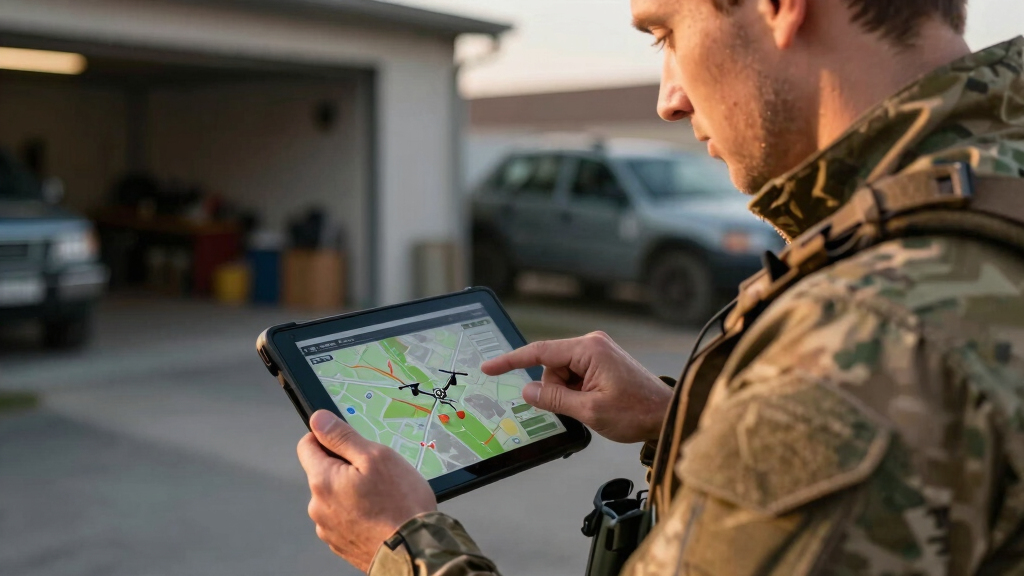
The confirmed design shift is that Delta’s backend is cloud-native while its client can run on phones, laptops, tablets and standard browsers. The ISR Briefing says the cloud environment is deliberately hosted outside Ukraine to reduce the chance that a missile strike or domestic infrastructure attack could disable the system.
Ukrainian officials have claimed the platform helps process large volumes of battlefield targets, including a figure of 1,500 targets per day. The brief attributes that number to Ukraine’s Defense Ministry and says it is not independently verified.
Software-defined warfare: how Ukraine’s Delta turned the battlefield into a shared, real-time map
A soldier opens a browser and sees the fused war — drones, satellites, sensors and vetted reports on one live map. The backend is a cloud deliberately hosted abroad so a missile can’t take it down. The clearest case yet of treating warfare as software.
Optical sensors go blind in cloud & dark; an all-weather SAR radar layer — the kind VigilSAR produces — slots into a picture like this as one resilient, sovereign input. vigilsar.com · And note the paradox: to survive missiles & cyberattack, Ukraine hosted its crown-jewel cloud outside its own borders — trading physical sovereignty for operational survivability. Resilience through distribution.
Delta’s lasting lesson isn’t a piece of software — it’s a model of how to build: commodity clients, cloud backend, open standards, relentless iteration, fusion over hardware, and resilience through distribution. It’s why a wartime NGO out-shipped procurement bureaucracies on a fraction of the budget. The platform mattered less than the picture — and the picture is software. Own the fusion layer, own the sovereign feeds into it, and get it to the edge.
Delta Moves Power To Software
The Delta case matters because it shows how battlefield advantage can depend less on a single weapon platform and more on data fusion, software speed, and the ability to push a trusted picture to frontline units. In that model, drones and sensors are only part of the system; the scarce asset is the layer that turns many inputs into usable shared awareness.
For readers outside Ukraine, the issue reaches beyond one military tool. Delta points to a wider procurement challenge for NATO and other forces: whether defense systems can be built and updated at software tempo while still meeting security, reliability and command requirements. The ISR Briefing argues that Ukraine’s approach outpaced slower legacy defense IT by relying on commodity clients, open standards and rapid iteration.
As an affiliate, we earn on qualifying purchases.
NATO Roots, Wartime Scaling
Delta traces its roots to a 2017 NATO-linked effort to break Soviet-style information siloing and improve shared battlefield awareness, according to the source material. Russia’s full-scale invasion in 2022 turned the system from a modernization project into a wartime command tool.
The platform’s coalition model also matters. The ISR Briefing describes Delta as a product of military users, a wartime technology community and Ukraine’s digital ministry, rather than a conventional long procurement cycle. That history helps explain why the system is often discussed in analyses of Ukraine’s battlefield adaptability.
“A soldier opens a browser and sees the fused war.”
— ISR Briefing, July 1, 2026
Cyber, Jamming And Data Risks
Several key points remain unresolved. It is not clear from the supplied material how many units currently use Delta, how often the battlefield picture is updated under heavy jamming, or how the system separates reliable reports from mistaken or hostile inputs at scale.
The risks are also confirmed as a matter of system design, even if their battlefield impact is hard to measure. A cloud-connected command platform can become a major cyber target, connectivity can be degraded by jamming, and crowdsourced or partner-fed data can create exposure to data poisoning. The brief also says the claimed target-processing figure remains unverified.
Allies Watch The Delta Model
The next stage is likely to be watched in two places: on Ukraine’s battlefield and inside allied procurement systems. For Ukraine, the question is whether Delta can keep working under missile attacks, cyber pressure, electronic warfare and changing Russian tactics.
For NATO and partner militaries, the test is whether the lessons of browser-based access, cloud resilience, open data standards and fast software updates can be adapted without exposing command systems to new weaknesses. The central issue is no longer whether software belongs in combat operations; it is how much command authority and battlefield awareness should rely on it.
Key Questions
What is Ukraine’s Delta system?
Delta is a Ukrainian battlefield-management and situational-awareness system that fuses drone feeds, satellite imagery, sensors, intelligence and vetted reports into a shared live map for military users.
Why is Delta linked to software-defined warfare?
It shifts value toward software, data fusion and rapid updates rather than specialized hardware alone. Its client can run through ordinary browsers on common devices.
Is the 1,500-targets-a-day figure confirmed?
No. The supplied material says the figure is a Ukrainian Defense Ministry claim and is not independently verified.
What are Delta’s main risks?
The main risks are cyberattacks, connectivity loss from jamming, possible bad data entering the system, and the operational danger of faster targeting loops.
Why was Delta’s cloud hosted outside Ukraine?
The ISR Briefing says the cloud was hosted abroad to improve survivability, reducing the risk that attacks on Ukrainian soil could take the system offline.
Source: Thorsten Meyer AI