Off-roading brings together several skills: choosing a capable vehicle, maintaining its mechanical systems, preparing for changing terrain, and carrying the right safety and recovery equipment. Whether you ride an ATV, explore on an adventure motorcycle, maintain a two-stroke machine, or build trail-ready vehicles in your garage, good preparation matters more than chasing unnecessary upgrades.
This hub is an orientation point for off-road drivers, riders, and home mechanics. It covers the fundamentals of vehicle setup, tires, engine care, communications, protective gear, garage work, and trip planning. Use it to identify what deserves attention first, then follow the linked guides for deeper help choosing equipment.
Start With Your Vehicle and Intended Terrain
There is no single ideal off-road setup. A machine suited to slow, rocky trails may feel very different from one prepared for sand, mud, forest roads, or long-distance exploration. Before buying parts, define where and how you expect to travel.
- ATVs offer compact dimensions and maneuverability on narrow trails, farms, dunes, and rough recreational terrain.
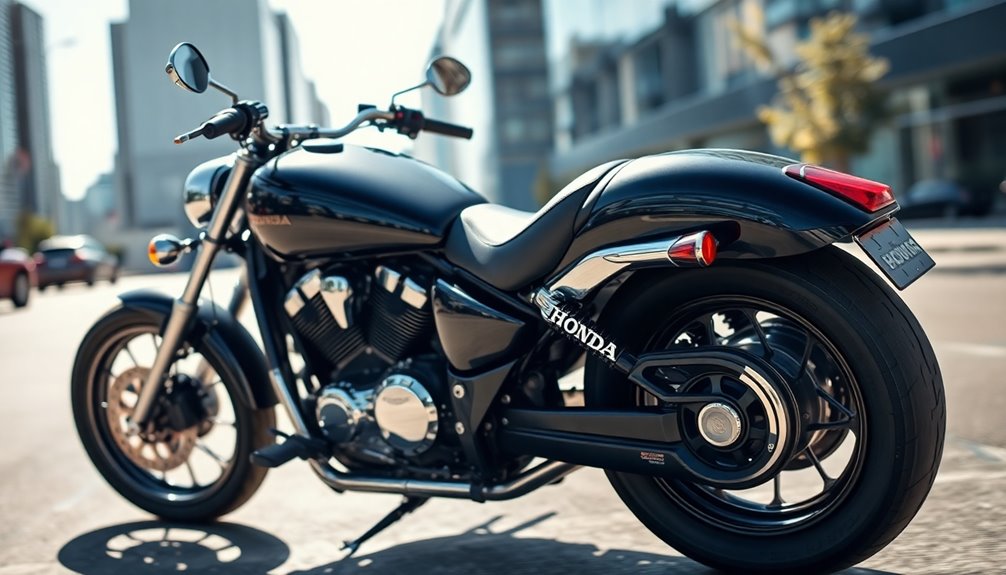
- Adventure motorcycles combine road range with varying degrees of off-pavement capability, but demand appropriate riding technique and protective equipment.
- Two-stroke motorcycles, ATVs, and utility machines require close attention to lubrication, fuel quality, and maintenance intervals.
- Trucks, SUVs, and side-by-sides can carry more recovery equipment and camping gear, although their weight and size may become liabilities on tight or soft terrain.
Be realistic about ground clearance, traction, fuel range, payload, and operator experience. Modification cannot compensate for poor route selection or a lack of basic recovery skills. A well-maintained standard vehicle on suitable tires is often a better starting point than a heavily modified machine with unresolved mechanical problems.
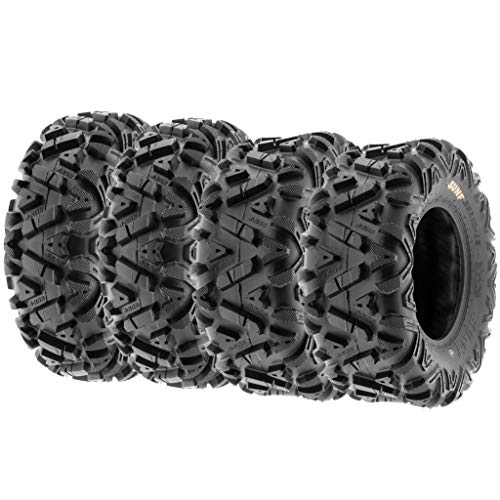
Set of 4 SunF Power.I ATV UTV all-terrain Tires 25×8-12 Front & 25×10-12 Rear, 6 PR, Tubeless A033
- Front Tire Size: 25×8-12
- Rear Tire Size: 25×10-12
- Wheel Diameter: 12 inches
As an affiliate, we earn on qualifying purchases.
As an affiliate, we earn on qualifying purchases.
Tires: The Main Connection to the Trail
Tires influence traction, steering, braking, ride quality, and resistance to trail damage. Their importance is difficult to overstate because nearly every other performance system ultimately depends on the contact patch.
Match the Tread to the Surface
Open, aggressive tread patterns can clear mud and loose material, while closer tread arrangements may provide a smoother ride on packed trails and pavement. Sand, rock, snow, hardpack, and mixed-surface travel each place different demands on tread design and construction. Riders who regularly cross several terrain types usually need a balanced option rather than the most specialized tire available.
ATV owners can begin with this guide to the best ATV tires for off-road adventures. When comparing options, confirm the required wheel diameter, tire dimensions, load capability, and directional mounting instructions for your machine.
Manage Pressure Carefully
Tire pressure affects the size and behavior of the contact patch. Lower pressure may improve conformity and traction in some off-road situations, but excessive deflation can increase heat, damage, poor handling, or the chance of losing the bead. Vehicle weight, tire construction, speed, load, and terrain all matter. Follow the vehicle and tire manufacturers’ guidance, use an accurate gauge, and inspect pressures when conditions change.
Before every trip, look for cuts, embedded objects, cracked rubber, damaged sidewalls, uneven wear, and loose or missing valve caps. Check lug fasteners according to the service information for the vehicle, especially after wheel removal.
Engine Lubrication and Routine Maintenance
Reliable off-road performance begins in the garage. Dust, water, vibration, heat, and low-speed operation can be demanding on engines and drivetrains. Maintenance should follow the machine’s manual, with additional inspections after unusually wet, dusty, or difficult outings.
Two-Stroke Lubrication
Two-stroke engines depend on the correct lubricant and mixing or injection arrangement. Using the wrong oil type or an incorrect premix ratio can create serious problems. Always follow the engine manufacturer’s specification rather than relying on a universal ratio or trail-side guesswork.
The guide to the best 2-stroke oils for performance and durability provides a useful comparison starting point. Check whether an oil is intended for premix, injection, or the particular operating standard required by your engine. Store oil in a sealed, labeled container, measure carefully, and avoid mixing unknown lubricants.
Oil and Filter Service
Four-stroke motorcycle engines need timely oil and filter changes. The correct filter must fit properly, seal correctly, and suit the application. Consult the service manual for oil grade, capacity, filter installation, tightening procedures, and replacement intervals. If you are selecting a service component, review these motorcycle oil filter options before confirming compatibility with your exact model.
A sensible maintenance routine also includes the air filter, cooling system, brakes, chain or belt, wheel bearings, suspension, battery, and fasteners. Clean or replace air filtration components as directed, because dust entering the engine can accelerate wear. After water crossings, inspect fluids and components for signs of contamination instead of assuming the vehicle remained sealed.
Fuel Delivery and Troubleshooting
Fuel problems can resemble ignition, compression, or electrical faults. Before replacing parts, work methodically. Confirm that the machine has the correct fresh fuel, adequate flow, open ventilation, sound lines, secure electrical connections, and no obvious leaks.
Low-pressure fuel pumps are used in specific carbureted and transfer applications, but pressure, flow, voltage, fittings, fuel compatibility, and mounting requirements vary. The overview of low-pressure fuel pumps for reliable performance can help narrow the field. Final selection must be based on the requirements of the engine and fuel system, not appearance alone.
Fuel work requires caution. Work away from flames, sparks, hot components, and other ignition sources. Provide ventilation, contain spills, and inspect for leaks before starting the engine. If diagnosis involves unfamiliar wiring, pressurized fuel, damaged tanks, or major modifications, professional assistance is the safer choice.
Protective Gear for Adventure Motorcycling
Adventure riding may combine pavement speed, gravel, dust, heat, rain, standing riding positions, and low-speed falls. Protective gear should suit this mixed environment while fitting correctly enough to remain comfortable and secure throughout the ride.
Choosing a Helmet
A helmet should be appropriate for the riding activity, meet applicable safety requirements in your region, and fit the rider’s head shape without unstable movement or concentrated pressure. Ventilation, visor operation, eye-port dimensions, weight, noise management, and compatibility with eyewear or communications equipment can also affect real-world usability.
Use the guide to the best adventure motorcycle helmets to explore the category, then verify sizing and current certification details directly. Whenever possible, try a helmet on properly. Replace any helmet according to manufacturer guidance and after an impact when required, even if external damage appears limited.
Complete the Riding Kit
A helmet is only one part of the system. Suitable boots, gloves, abrasion-resistant clothing, and impact protection help address different risks. Bright or reflective elements may improve visibility to other road users, while weather layers help the rider remain focused when temperatures change. Carrying spare gloves or a dry layer can be valuable on longer routes.
Electronic accessories can add navigation or information without requiring the rider to look far away from the travel path. However, displays must not become distractions. Anyone considering this category can review these motorcycle heads-up display units. Check mounting security, helmet compatibility, power needs, controls, and local rules before use.
Communications Beyond Mobile Coverage
Cellular service is unreliable in many off-road areas. A communication plan should account for the route, group size, terrain, legal requirements, and the possibility of separation. It should also include a clear meeting procedure if radio contact is lost.
GMRS radios are one option for group communications where their use is permitted. Range depends on terrain, obstructions, antenna position, radio configuration, and other conditions, so advertised maximum figures should not be treated as guaranteed trail performance. Compare practical features in this guide to the best GMRS radios for staying connected.
Learn how to select channels, adjust volume, lock controls, monitor battery condition, and make concise calls before departure. Confirm the licensing and operating rules that apply in your location. Radios are useful, but they do not replace an emergency beacon or satellite communication device where the remoteness and risk justify one.
Recovery and Trail-Side Preparedness
Recovery gear must match the vehicle and expected conditions. A basic kit may include rated recovery points, appropriately selected straps or ropes, shackles, traction aids, a shovel, gloves, a tire repair kit, inflation equipment, and essential tools. Heavier vehicles and specialized terrain can require more extensive equipment.
Inspect recovery equipment for wear, cuts, corrosion, deformation, and missing labels. Learn safe procedures before becoming stuck. Keep people clear of loaded recovery lines, avoid attaching equipment to unsuitable suspension or body components, and never assume an unmarked hook or loop is a rated recovery point.
Trail-side preparation should also include water, food, weather protection, illumination, navigation, first-aid supplies, required medication, and enough fuel for delays or route changes. Tell a dependable person where you are going, who is traveling, and when to expect your return.
Comfort and Camping Without Excess Bulk
Off-road camping rewards disciplined packing. Every item adds weight and occupies space, particularly on motorcycles and ATVs. Prioritize shelter, sleep, water, food, tools, safety equipment, and weather protection before comfort accessories.
A small chair can make breaks and camps more comfortable without consuming excessive cargo capacity. The comparison of compact camp chairs for easy packing is a useful place to assess portable seating. Consider packed dimensions, assembly method, stability, carrying convenience, and whether the feet are suitable for soft ground.
Secure all luggage so it cannot contact hot exhaust components, interfere with steering, obstruct lights, or shift into wheels and driveline parts. Recheck straps after the first portion of the trip and after rough sections. Keep frequently needed items accessible rather than buried beneath the entire load.
Build a Practical Home Garage
A capable garage does not need every specialty tool. Begin with equipment required for routine inspection and service: quality hand tools, accurate pressure gauges, suitable stands or lifting equipment, a torque wrench used correctly, fluid containers, lighting, cleaning supplies, and organized storage.
Keep the work area level, ventilated, and free of ignition hazards. Support vehicles only at approved points with equipment rated for the load. Label fluids, store batteries and chemicals safely, and dispose of oil, fuel, coolant, filters, and damaged batteries through appropriate local programs.
Record service dates, operating hours or mileage, installed parts, fluid specifications, and observations from each inspection. These notes make recurring issues easier to identify and help prevent forgotten maintenance. A service manual for the exact model remains one of the most valuable garage resources.
A Simple Pre-Ride and Pre-Drive Checklist
- Inspect tires, wheels, pressures, and visible fasteners.
- Check engine oil, coolant, fuel, and signs of leakage.
- Test brakes, steering, throttle return, lights, and controls.
- Inspect the chain, belt, driveshaft, or other exposed drivetrain components.
- Confirm tools, recovery equipment, first aid, water, and navigation are packed.
- Charge radios, phones, navigation devices, and emergency communications equipment.
- Secure luggage and confirm it does not interfere with vehicle operation.
- Review weather, access restrictions, fire conditions, and route difficulty.
- Share the trip plan and expected return time with someone off-site.
Make Reliability the First Upgrade
The strongest off-road build is a complete system: appropriate tires, sound maintenance, dependable fuel delivery, suitable protective gear, effective communication, safe recovery equipment, and a realistic plan. Address known faults before adding accessories, and choose every component for the actual machine and intended terrain.
Develop skills gradually, inspect the vehicle consistently, and turn back when conditions exceed the capability of the rider, driver, or equipment. Thoughtful preparation may be less visible than a dramatic modification, but it is what makes off-road travel safer, more repeatable, and more enjoyable.