

Airbox placement really matters, especially when you face shallow water crossings that look easy. A low airbox can easily intake water, risking hydrolocking and engine damage. You need proper airflow for peak performance, and poor design can lead to power issues. By positioning the airbox higher, you minimize water intrusion. Regular checks and adjustments are key to keeping your engine running smoothly in challenging conditions. Stick around to uncover more tips on maintaining your engine’s health.

Get business pricing on garage and car supplies
- Business-only prices and quantity discounts
- Tax-exempt purchasing
- Multiple users, one account, clear invoices
Key Takeaways
- Airbox placement is crucial for preventing water intrusion, especially when water crossings appear shallow and manageable.
- Low airbox positioning can lead to hydrolocking, risking severe engine damage during unexpected splashes.
- Proper airflow design is essential to maintain engine performance and responsiveness, particularly in challenging terrains.
- Regular assessments of airbox placement and design can mitigate risks associated with water crossings.
- Anticipating conditions and positioning the airbox higher can significantly enhance engine safety and reliability.
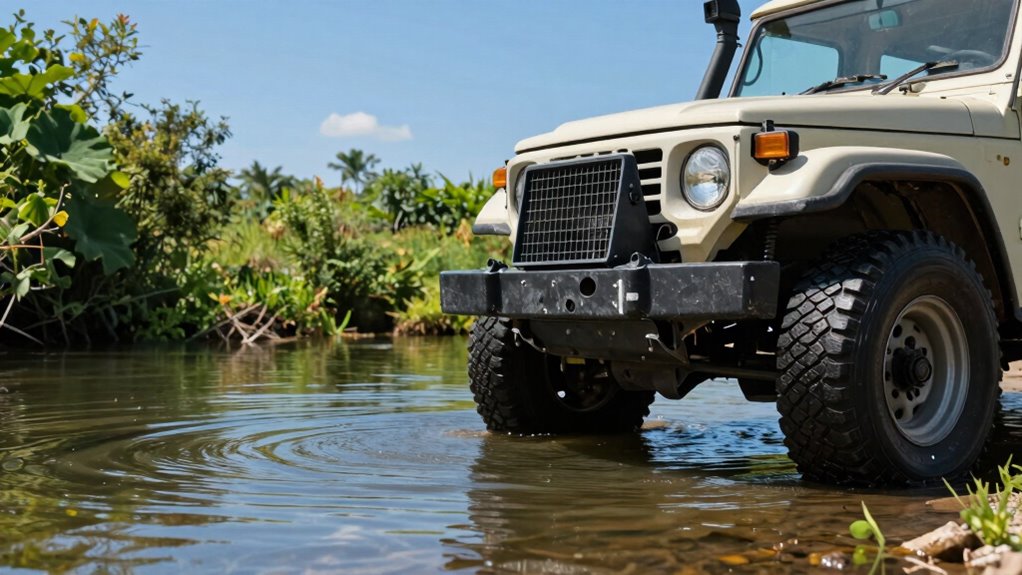
When it comes to maximizing your engine’s performance, airbox placement matters more than you might think. The airbox serves as the gateway for air intake, playing a critical role in how efficiently your engine breathes. If you’re planning on tackling water crossings, you need to take into account how your airbox design can impact your vehicle’s performance in these scenarios. A poorly placed airbox can lead to serious consequences, from stalling to costly engine damage.
Airbox placement is crucial for engine performance, especially in water crossings; improper design can lead to stalling and costly damage.
You might assume that a water crossing looks easy, but the reality is often different. Even shallow water can pose a threat if your airbox is situated too low or in the wrong spot. During these crossings, water can easily splash up, making its way into the airbox and potentially hydrolocking your engine. This is where the importance of airbox design comes into play. By positioning your airbox higher up, you minimize the risk of water intrusion. It’s about anticipating the conditions you might face and adjusting your setup accordingly.
Think about the airflow as well. An airbox that’s designed with ideal airflow in mind can provide your engine with the necessary oxygen, enhancing its performance. If the airbox is poorly designed or obstructed, you’ll notice a significant dip in power, especially when you’re pushing your vehicle through challenging terrains. Proper airflow management can ensure your engine remains responsive even in demanding situations. Additionally, understanding engine performance factors can help you optimize your vehicle’s setup for diverse conditions. Being aware of potential water intrusion risks is essential for maintaining engine health and avoiding unexpected breakdowns. Furthermore, considering how water entry points are managed can significantly reduce the chances of water damage during crossings.
As an affiliate, we earn on qualifying purchases.
Frequently Asked Questions
How Does Airbox Placement Affect Engine Performance in Wet Conditions?
Airbox placement greatly affects engine performance in wet conditions. If you position it too low, water can enter, causing engine tuning issues and potential damage. A well-placed airbox enhances water resistance, helping maintain ideal airflow and preventing stalling. You’ll want to make sure it’s elevated to keep moisture at bay, allowing your engine to perform efficiently even during water crossings. Proper placement guarantees reliable power and protects your engine from the elements.
What Materials Are Best for a Waterproof Airbox?
You might think any old plastic will keep your airbox dry, but that’s a rookie mistake! The best waterproof materials for an airbox include high-density polyethylene and ABS plastic, known for their durability and resistance to moisture. When considering airbox design, make certain it’s sealed properly with gaskets or silicone to prevent water intrusion. Choosing the right materials and design not only protects your engine but boosts its performance in wet conditions!
Can Airbox Placement Impact Fuel Efficiency?
Yes, airbox placement can impact fuel efficiency. When you optimize airflow dynamics, you enhance the engine’s ability to breathe, leading to better combustion. If you position the airbox too close to heat sources or restrict airflow, it can negatively affect engine tuning and overall performance. By ensuring proper placement, you maximize airflow, which not only boosts fuel efficiency but also improves throttle response and power output. So, pay attention to where you install it!
How Do I Know if My Airbox Is Properly Sealed?
To know if your airbox is properly sealed, you should regularly check for any cracks or gaps. Inspect the sealing techniques, like rubber grommets and clamps, ensuring they’re intact and secure. During airbox maintenance, look for any signs of dirt or moisture inside the box, which could indicate leaks. If you find any issues, address them promptly to maintain peak engine performance and efficiency. Always trust your instincts—if something seems off, it probably is.
What Are Common Mistakes in Airbox Installation?
When you’re installing your airbox, visualize it snugly nestled in place, like a puzzle piece fitting perfectly. Common mistakes include poor airbox alignment, which can lead to leaks, and overlooking proper installation techniques, such as securing all clamps tightly. You might also forget to check for obstructions that could disrupt airflow. Take your time to guarantee everything’s in line; a small misstep can lead to bigger issues down the road.
Conclusion
So, while you might think a simple water crossing is a breeze, ignoring airbox placement could turn your ride into a soggy disaster. It’s ironic, isn’t it? You’re cruising along, feeling invincible, only to find your engine gasping for breath because you didn’t think ahead. In the end, the real challenge isn’t the water but how well you prepare for it. Keep that airbox high and dry, and you’ll ride through like a champ, not a drowned rat.
Columbus Day / Indigenous Peoples' Day Picks
long weekend sales
As an affiliate, we earn on qualifying purchases.