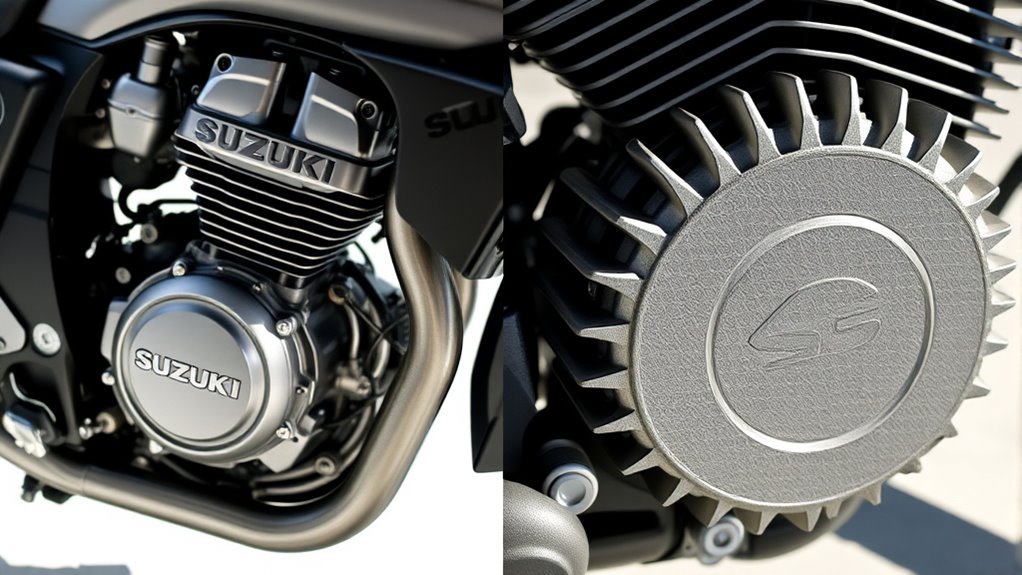

Suzuki engines with oil cooling use a dedicated oil circuit and radiator to keep temperatures stable, making them effective during high-stress or long rides. Air cooling relies on fins and airflow, which can vary with speed and weather conditions, and is simpler but less consistent. While oil cooling offers better temperature management, air cooling is lighter and easier to maintain. To understand how these systems impact your bike’s performance, explore the details further.
Key Takeaways
- Oil cooling uses a dedicated oil circuit and radiator to maintain consistent engine temperature, ideal for high-stress riding.
- Air cooling relies on fins and airflow, making it simpler, lighter, and easier to maintain but more sensitive to external conditions.
- Oil cooling offers better temperature stability and engine efficiency during prolonged or intense use.
- Air cooling’s performance varies with ambient temperature and riding speed, potentially leading to overheating in hot weather or slow traffic.
- Oil cooling systems require regular oil changes and inspections, while air cooling mainly needs fin cleanliness for optimal airflow.
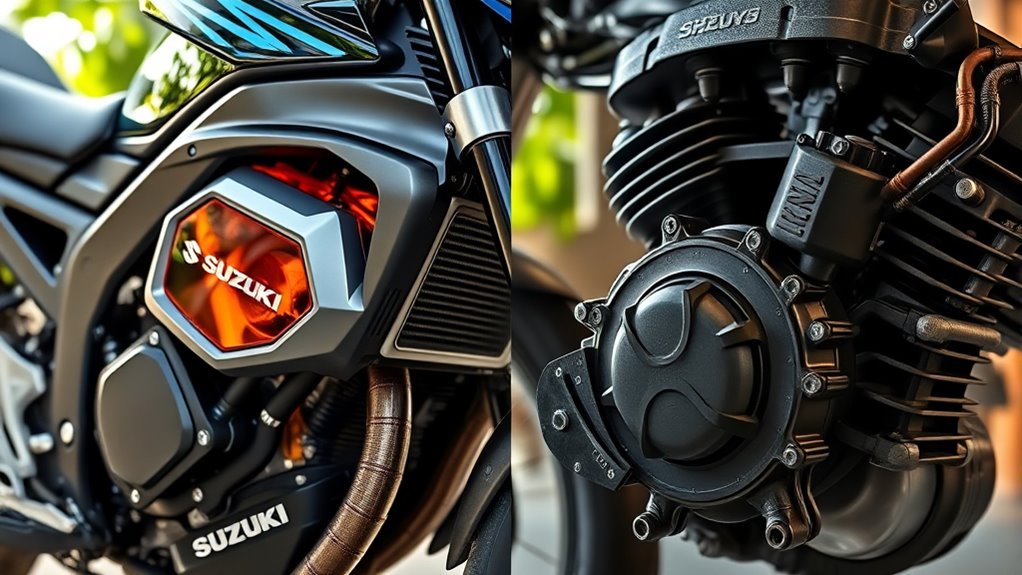
When choosing between oil cooling and air cooling for your Suzuki motorcycle or vehicle, understanding how each system manages engine temperature is vital. Your engine’s temperature regulation directly impacts performance, longevity, and maintenance needs. With oil cooling, the system uses a dedicated oil circuit to absorb and carry away heat from the engine components. This approach maintains a more consistent and ideal engine temperature, especially during high-stress riding or prolonged operation. Because the oil circulates through a radiator-like system, it effectively dissipates heat, preventing the engine from overheating. This results in a more stable operating temperature, which can boost engine efficiency and reduce the risk of damage caused by excessive heat.
In contrast, air cooling relies on air flowing over fins attached to the engine to dissipate heat. As the motorcycle moves, air passes over these fins, carrying away heat and keeping the engine within safe temperature limits. This system is simpler, with fewer components, making it lightweight and easier to maintain. However, air cooling is more sensitive to external conditions like ambient temperature and riding style. During hot weather or slow traffic, the engine might run hotter than desired, potentially impacting performance and causing increased wear over time. You’ll need to pay attention to how your engine temperature varies and ensure airflow remains unobstructed for ideal cooling.
Maintenance requirements differ between these systems. Oil-cooled engines generally demand more regular oil changes, as the oil not only lubricates but also acts as the primary heat transfer medium. Over time, the oil can break down or become contaminated, reducing its effectiveness and requiring timely replacement to keep the cooling system functioning properly. Additionally, the oil cooling system’s radiator and associated plumbing require periodic inspection for leaks, blockages, or corrosion. Conversely, air-cooled engines tend to require less ongoing maintenance related to the cooling system itself. Your main focus should be on checking the fins for dirt, debris, or damage, and ensuring that airflow is not obstructed by dirt or mud.
Frequently Asked Questions
How Does Oil Cooling Impact Motorcycle Maintenance Costs?
Oil cooling helps reduce your motorcycle’s maintenance expenses by better regulating engine temperature, which minimizes wear and tear. This system tends to be more durable, leading to fewer repairs over time. While initial costs might be higher, you’ll save money on parts and labor in the long run. Plus, improved system durability means your bike stays reliable longer, reducing the need for frequent maintenance and ensuring smoother rides.
Are Oil-Cooled Engines More Environmentally Friendly Than Air-Cooled?
You’ll find oil-cooled engines are generally more environmentally friendly than air-cooled ones, primarily because they regulate temperature more efficiently, reducing emissions. Remarkably, oil cooling also cuts noise pollution, making rides quieter. This improved thermal management means less energy waste and a smaller environmental footprint. So, if you’re aiming for a greener ride, oil-cooled engines not only perform better but also help you stay eco-conscious.
What Are the Common Signs of Cooling System Failure?
You’ll notice cooling system failure if your engine starts overheating, which can cause overheating issues. Watch for coolant leaks around hoses or the radiator, as these indicate a failure in the system. You might also hear unusual noises or see steam escaping. If your temperature gauge rises unexpectedly, it’s time to check for leaks and verify the coolant level is adequate to prevent further damage.
Can Oil Cooling Systems Be Retrofitted Into Older Motorcycles?
Installing an oil cooling system in your older motorcycle is like fitting a new engine part—it can be done, but it’s not always straightforward. You’ll face retrofit challenges and compatibility issues, especially with mounting points and plumbing. Before proceeding, evaluate if your bike’s design supports the upgrade. Consulting a professional ensures you avoid costly mistakes and get the most benefit from the oil cooling upgrade.
How Does Climate Influence the Choice Between Oil and Air Cooling?
Climate substantially influences your choice between oil and air cooling because it affects cooling efficiency. In hot, humid environments, oil cooling offers better climate adaptation by maintaining consistent engine temperatures, preventing overheating. Conversely, in cooler climates, air cooling often suffices and keeps things simple. Your decision should consider how well each system manages heat in your typical riding conditions, ensuring ideal engine performance and longevity.
Conclusion
Ultimately, you’ll find that both oil and air cooling have their subtle charms, each offering a gentle balance of efficiency and simplicity. While oil cooling whispers of refined control, air cooling softly reminds you of rugged reliability. Neither is perfect, yet both guide you along your journey, quietly shaping your experience. Embrace the nuances, and you’ll discover that sometimes, the quietest approach leaves the deepest impression on your ride.