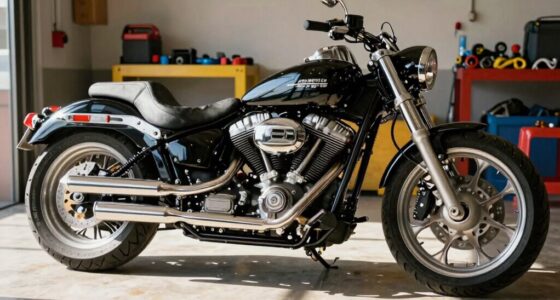

Big-bike rake and trail might seem complicated, but they play a vital role in your riding experience. Rake is the fork angle, affecting steering feel—larger rakes lead to relaxed handling, while smaller ones offer a snappier response. Trail measures the distance from the front wheel to the steering axis; longer trails provide stability at speed and shorter ones enhance agility. Understanding these elements can transform your ride, and there’s much more to explore about optimizing your motorcycle setup.

Get business pricing on garage and car supplies
- Business-only prices and quantity discounts
- Tax-exempt purchasing
- Multiple users, one account, clear invoices
Key Takeaways
- Rake affects steering feel: larger rake offers stability for cruising, while smaller rake enables quicker handling for sportier rides.
- Trail enhances stability: longer trail provides better control at high speeds, while shorter trail allows for nimble city maneuvering.
- Rake and trail interact: their combination determines overall bike behavior, assisting in tailoring setups for different riding styles and conditions.
- Understanding these dynamics improves riding experience: knowledge of rake and trail enhances comfort and performance across various terrains.
- Customizing bike geometry can boost enjoyment: fine-tuning rake and trail ensures a smoother ride for both highway and urban environments.
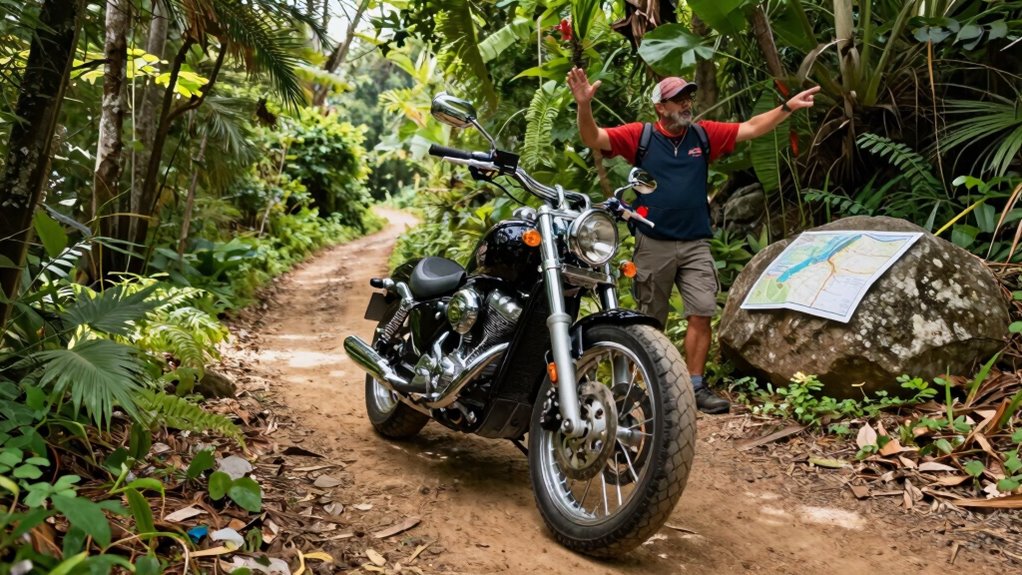
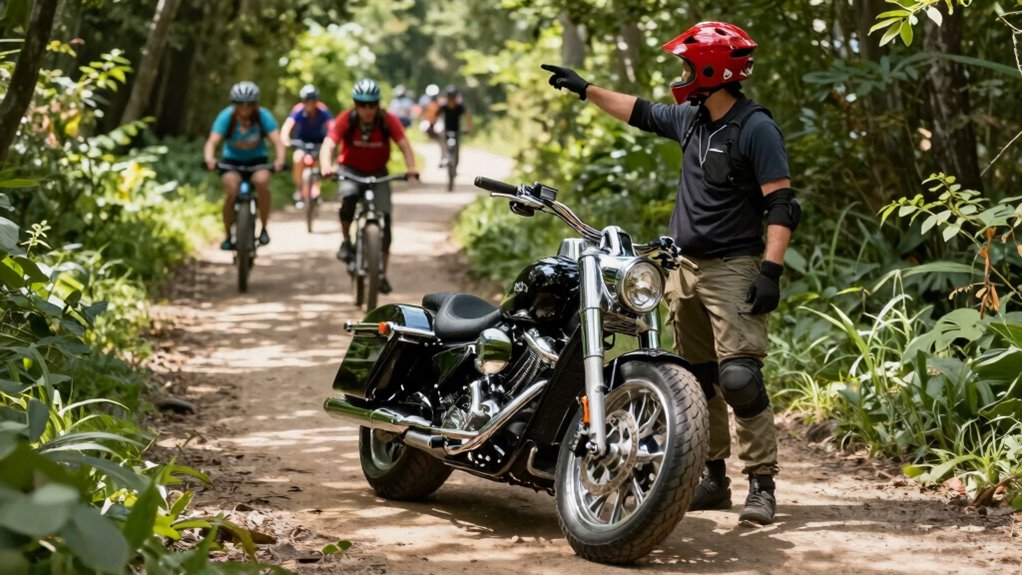
When you hop on a big bike, understanding rake and trail can elevate your riding experience. You might’ve heard these terms thrown around, but deciphering them doesn’t have to be confusing. Let’s break down rake mechanics and trail dynamics so you can ride with more confidence and control.
Rake refers to the angle of the fork in relation to the ground. When you lean your bike into a turn, rake helps determine how quickly or smoothly you maneuver that corner. A larger rake means a more relaxed steering feel, which is ideal for cruising. On the flip side, a smaller rake offers quicker, more responsive handling, great for tight turns and aggressive riding. You’ll find that different bikes have varying rakes, tailored to specific riding styles. So, understanding how these rake mechanics fit into your bike’s design can help you choose the right setup for your rides. Recognizing the importance of handling characteristics can enhance your overall riding experience.
Next, let’s explore trail dynamics. Trail is the distance from where the front wheel touches the ground to the point where an imaginary line through the steering axis meets the ground. This measurement plays an essential role in your bike’s stability. A longer trail provides enhanced stability at higher speeds, making it easier to maintain control on straightaways. Conversely, a shorter trail delivers a more nimble feel, ideal for city riding or maneuvering through tight spaces. By grasping trail dynamics, you can tailor your riding style to match your bike’s characteristics. Additionally, understanding the geometry of your bike can help you better appreciate how rake and trail influence handling. Knowing how bike geometry affects handling can help you optimize your riding setup and comfort. A proper understanding of bike setup can also assist in customizing your ride to better suit different terrains and riding preferences.
Understanding how rake and trail work together can also help you fine-tune your bike’s handling characteristics for different riding conditions. Combining rake and trail gives you a thorough understanding of how your bike behaves. For example, if you ride a big bike with a considerable rake and a longer trail, you’ll likely experience a stable, comfortable ride that’s perfect for long distances. However, if you opt for a sportier setup with a smaller rake and shorter trail, expect a more agile experience that thrives in corners.
You’re not just understanding numbers and angles; you’re gaining insight into how these factors impact your ride. Whether you’re cruising down the highway or weaving through city streets, knowing how rake and trail work together will enhance your overall experience. So next time you hop on your big bike, remember that understanding these mechanics can lead to smoother rides and greater enjoyment on every journey. Embrace the knowledge, and ride with confidence!
motorcycle fork rake adjustment kit
As an affiliate, we earn on qualifying purchases.
As an affiliate, we earn on qualifying purchases.
Frequently Asked Questions
What Is the Purpose of Rake and Trail in Motorcycle Design?
Rake geometry and trail measurement play essential roles in motorcycle design, influencing stability and handling. When you adjust the rake angle, you’re changing how the front wheel aligns with the bike’s frame, affecting steering response. A longer trail generally enhances stability, making the ride smoother, while a shorter trail provides quicker steering. Understanding these concepts helps you choose a bike that matches your riding style, ensuring a more enjoyable experience on the road.
How Do Rake and Trail Affect Handling on Different Terrains?
Rake and trail considerably affect your motorcycle’s handling characteristics across different terrain types. On smooth roads, a longer trail provides stability, making it easier to maintain control at high speeds. However, on twisty or rough terrains, a shorter trail enhances maneuverability, allowing sharper turns. You’ll find that adjusting rake and trail can help your bike feel more responsive or stable, depending on the riding conditions you face.
Can Rake and Trail Be Adjusted on Existing Motorcycles?
Yes, you can adjust rake and make trail modifications on existing motorcycles, much like tuning a musical instrument for the perfect sound. Rake adjustments can change your bike’s handling characteristics, affecting stability and cornering. While some motorcycles allow for easy modifications, others may require aftermarket parts or professional help. Before diving in, consider your riding style and the terrain you tackle most often to guarantee you get the desired performance.
What Are the Safety Implications of Incorrect Rake and Trail?
Incorrect rake and trail can seriously impact your motorcycle’s handling stability and steering response. If the angles aren’t right, you might find your bike feels unstable at high speeds or overly twitchy in turns. This could lead to accidents, as you may struggle to control your ride effectively. It’s essential to guarantee these measurements are correct to maintain safety and performance, giving you the confidence you need on every ride.
How Do Rake and Trail Influence Rider Comfort and Stability?
Rake and trail greatly influence your comfort and stability while riding. When they’re balanced correctly, you get better rider feedback and improved suspension dynamics, allowing you to handle corners and bumps smoothly. If the rake or trail is off, you might feel twitchy or unstable, which can lead to discomfort. By understanding these factors, you can enhance your overall riding experience, making it more enjoyable and secure.
Conclusion
In understanding big-bike rake and trail, you’re empowered to enhance your ride and improve your control. You’ve learned how rake affects handling and how trail influences stability. By grasping these concepts, you can choose the right bike for your needs, enjoy smoother rides, and tackle diverse terrains with confidence. So, embrace this knowledge, apply it to your biking adventures, and ride with clarity. With the right tools in hand, you’re ready to conquer the road ahead!
Halloween Picks
halloween
As an affiliate, we earn on qualifying purchases.