
A notchy feel in your steering head bearings indicates wear or looseness that can compromise control and lead to dangerous crashes. When you notice resistance or bumps while turning, it’s a sign the bearings may need inspection or replacement. Ignoring this can cause sudden steering failure and accidents. Proper maintenance, checking for play, and ensuring smooth, responsive handling are essential. Keep going to understand how to spot and fix these issues before they threaten your safety.
Key Takeaways
- A notchy or rough steering feel indicates worn or damaged head bearings, compromising handling safety.
- Regularly checking for subtle notches can help predict and prevent steering failure or crashes.
- Excessive play or resistance in the handlebars signals the need for immediate bearing inspection and adjustment.
- Ignoring a notchy sensation increases the risk of sudden steering loss, especially at high speeds.
- Proper maintenance, including inspection and lubrication, can detect early bearing wear and prevent dangerous riding conditions.
What Do Steering Head Bearings Do and Why Are They Important?
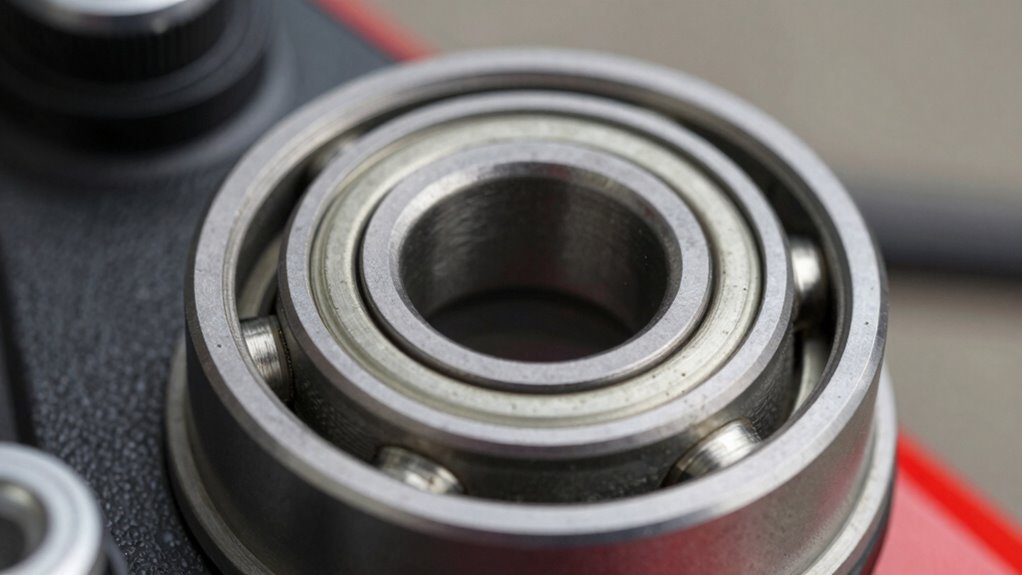
Steering head bearings play a vital role in ensuring smooth and stable steering on your motorcycle or bicycle. They support the steering column, allowing it to turn freely while maintaining control. Proper torque adjustment is essential; if the bearings are too tight, steering becomes stiff, and if too loose, it feels imprecise. Regular bearing lubrication is crucial to prevent corrosion and reduce friction, which keeps steering responsive. Over time, lack of lubrication or incorrect torque can cause the bearings to wear out or become loose, leading to steering issues. Maintaining the right torque and ensuring bearings are well-lubricated keeps your steering smooth and predictable. This not only enhances safety but also prolongs the lifespan of your steering components, making every ride safer and more enjoyable.
How to Spot a Notchy or Rough Steering Feeling
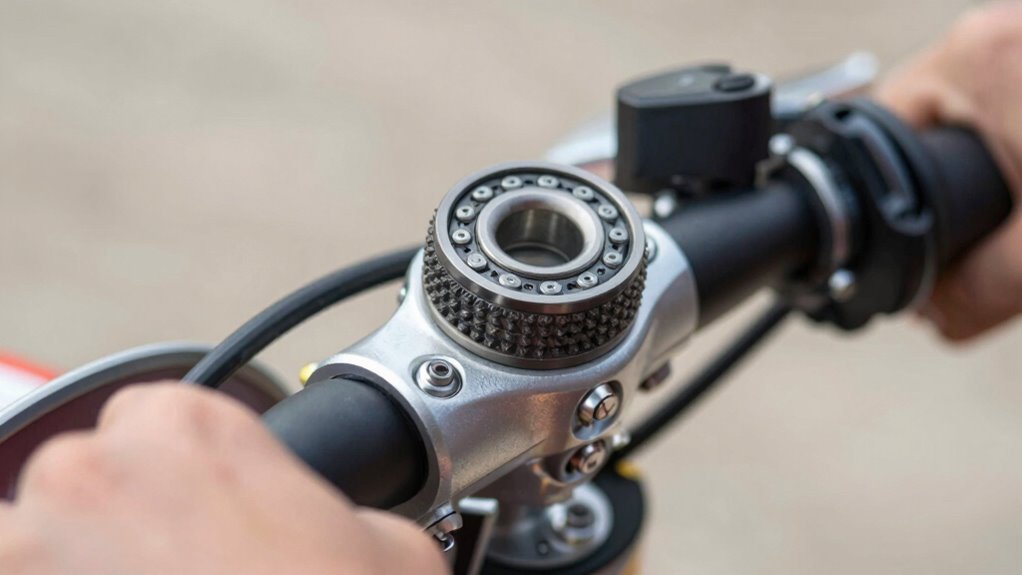
If your motorcycle or bicycle starts to feel stiff or jerky when you turn the handlebars, it could be a sign that your steering head bearings are not functioning properly. Recognizing a notchy or rough feeling is vital for safety. Regular inspection and proper bearing lubrication can keep steering smooth and responsive. Proper maintenance ensures the bearings remain smooth and responsive, preventing further damage. Additionally, a notchy steering feeling can indicate worn or damaged bearings that require replacement to maintain safe handling.
What Causes Steering Head Bearings to Wear Out?
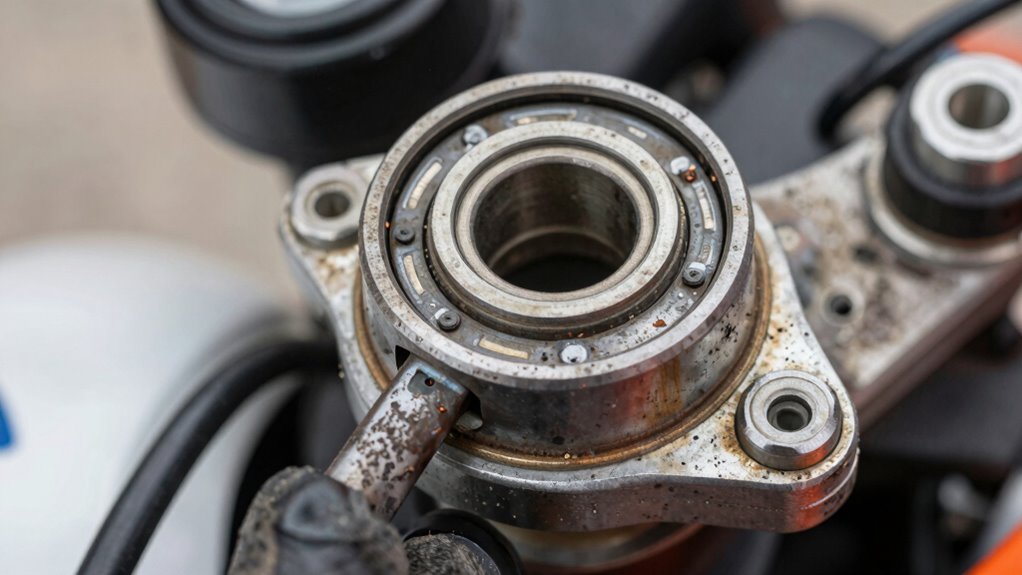
Your steering head bearings wear out mainly due to excessive load impacts, which put stress on the components. Lack of proper lubrication accelerates this process, causing parts to grind and deteriorate faster. Additionally, corrosion and rust from exposure to moisture can weaken the bearings over time, leading to premature failure. Incorporating local automation can help monitor and manage maintenance schedules to prevent such issues. Regular inspections and timely replacements are essential to avoid sudden failures that could result in dangerous crashes. Ensuring proper maintenance practices can significantly extend the lifespan of steering head bearings and improve overall safety.
Excessive Load Impact
Excessive load impacts are a common cause of steering head bearing wear, especially when the bike encounters rough terrain or heavy loads. When you push your bike beyond its limits, stress on the bearings increases, leading to faster deterioration. Poor wheel alignment or incorrect tire pressure can amplify this effect, causing uneven weight distribution and additional strain. Additionally, using energy-efficient components and proper maintenance can help reduce overall wear and extend the lifespan of your bearings. Proper bearing lubrication is also essential to minimize friction and prevent premature failure. Regularly inspecting and maintaining your bike’s load distribution can further help prevent uneven stress on the bearings. Understanding natural wear processes can assist you in identifying early signs of bearing fatigue before more serious issues develop. Consider these warning signs: 1. Sudden, sharp notches when turning, indicating bearing fatigue. 2. Increased effort needed to steer, hinting at overload. 3. Vibrations or wobbling that worsen on rough surfaces. Being aware of bearing wear indicators can help you take timely action to avoid potential accidents.
Lack of Lubrication
When steering head bearings lack proper lubrication, they become more vulnerable to wear and damage. Without regular lubrication maintenance, friction increases between the bearing components, accelerating deterioration. Over time, this friction causes the bearings to develop a notchy feel and reduces steering smoothness. Inadequate lubrication can also lead to metal-on-metal contact, further hastening wear. Proper bearing adjustment is essential to guarantee ideal pressure and prevent unnecessary strain that can wipe out lubrication faster. If you notice a rough or gritty sensation while turning, it’s a sign that lubrication has dried out or become contaminated. Regularly checking and maintaining proper lubrication and bearing adjustment is crucial to prolonging the lifespan of your steering head bearings and ensuring safe, smooth handling. Understanding bearing wear is key to recognizing early signs and preventing costly repairs. Additionally, proper maintenance can significantly extend the lifespan of these bearings, ensuring safety and performance. Regular lubrication is a simple yet vital step in preventing bearing failure and maintaining optimal steering response. Consistent inspection and timely lubrication are essential to avoid bearing damage and ensure safe driving conditions.
Corrosion and Rust
Corrosion and rust are significant factors that accelerate the wear of steering head bearings. When moisture and dirt combine, they cause corrosion, weakening the bearings’ metal surfaces. This deterioration leads to increased friction, resulting in a notchy feel that can signal impending failure. To prevent this, you must focus on corrosion prevention through regular cleaning and applying protective coatings. Rust removal is essential if rust begins to form, restoring the bearings’ smoothness. Be vigilant for these warning signs:
- Sudden stiffness or roughness in steering
- Visible rust spots on bearing surfaces
- Unusual noises or resistance during movement
Regular maintenance and understanding the home cleaning systems involved can also help you identify early signs of component wear. Proper corrosion protection methods are vital for extending the lifespan of your bearings. Addressing corrosion early can prolong bearing life and help you avoid dangerous steering issues, ensuring your ride remains safe and responsive. Incorporating preventive maintenance routines can significantly reduce the risk of corrosion-related failures.
How to Check Your Bike’s Steering for Play and Notchiness
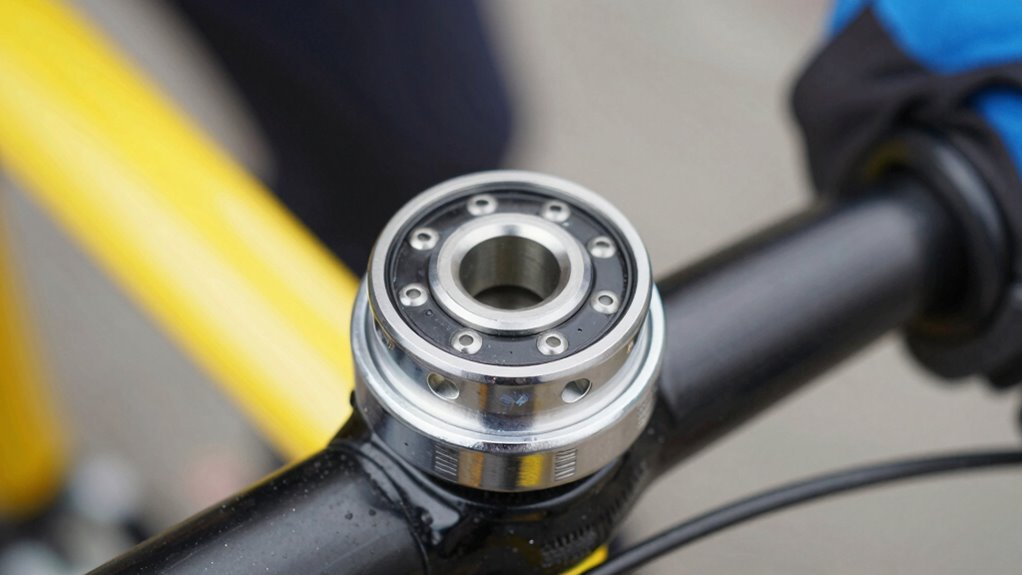
Start by gently moving the handlebar back and forth to check for any excessive play. Pay attention to feel for notches or rough spots as you turn it. Finally, inspect the steering to see if there’s any looseness or wobble when you shake the handlebar. Understanding bike mechanics can help you better identify issues that may require professional attention.
Check Handlebar Movement
Have you ever noticed your handlebars feel loose or not turn smoothly? That’s a warning sign you should check your handlebar movement. To do this, follow these steps:
- Grip the handlebar firmly and gently rock it back and forth. Feel for any looseness or notchiness.
- Observe the handlebar alignment, ensuring it lines up properly with the front wheel.
- Watch for wheel wobble as you turn the handlebars—excessive wobbling can indicate steering issues or uneven handlebar movement.
- Regularly inspecting and maintaining your steering components can help prevent dangerous play and ensure smooth handling. Proper bearing adjustment is essential for safe and responsive steering. Keeping your steering system well-maintained can also extend the lifespan of your components.
- If you detect play or uneven movement, it might be time to tighten or replace your bearings. Correct handlebar alignment and smooth steering are vital for safe riding and preventing accidents.
Feel for Notches
When checking your handlebar movement, it’s also important to feel for any notches or rough spots that indicate wear in the steering components. To do this, gently rotate the handlebars and pay close attention to any resistance or catch. Notches often feel like slight bumps or roughness, which can signal inadequate bearing lubrication or worn bearings. Your riding posture can influence how you sense these issues; a relaxed, steady grip helps detect subtle notches. If you notice any unevenness or roughness, it’s a sign that the steering head bearings may need attention. Proper lubrication keeps bearings smooth and reduces notching, preventing further damage. Regularly inspecting bearing wear and understanding how to identify early signs can extend the life of your steering components. Consistently feeling for these notches helps you catch early signs of wear before they escalate into dangerous steering problems.
Inspect for Play
Wondering how to tell if your steering head bearings are in good shape? Here’s what to do:
- Grip the front brake, lift the bike, and gently rock the handlebars side to side. Feel for any notchiness or excessive play, which signals worn bearings.
- Check your wheel alignment and tire pressure first—incorrect settings can mimic bearing issues, so make sure they’re proper before inspection.
- With the bike on a stand, observe the steering movement—smooth and free is good; any resistance or movement gaps indicate you need to replace the bearings.
Why Ignoring a Notchy Feel Could Lead to a Crash
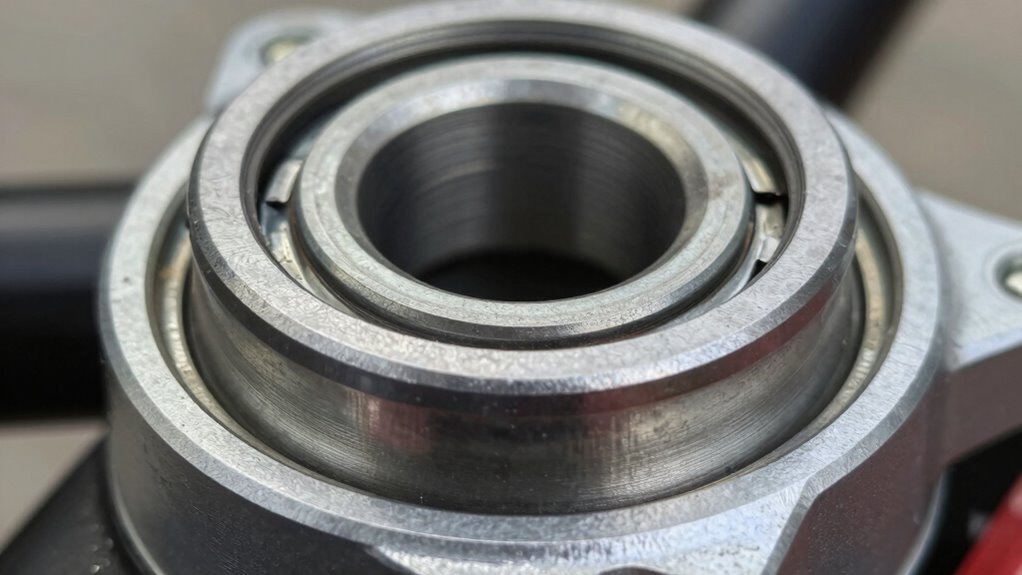
A notchy feel in your steering head bearings might seem minor, but ignoring it can have serious consequences. If you dismiss it, you risk sudden steering failure or loss of control, especially at high speeds. This instability can lead to an accident, often when you least expect it. Proper brake maintenance and correct tire pressure are essential to safe riding, but worn bearings compromise your control regardless. Here’s a quick picture:
| Symptom | Possible Cause |
|---|---|
| Notchy steering feel | Worn or damaged bearings |
| Uneven tire wear | Misalignment, bearing issues |
| Vague steering | Loose or worn components |
Ignoring the warning signs makes crashes more likely, so take action before your ride turns dangerous.
How to Inspect and Diagnose Worn Steering Head Bearings
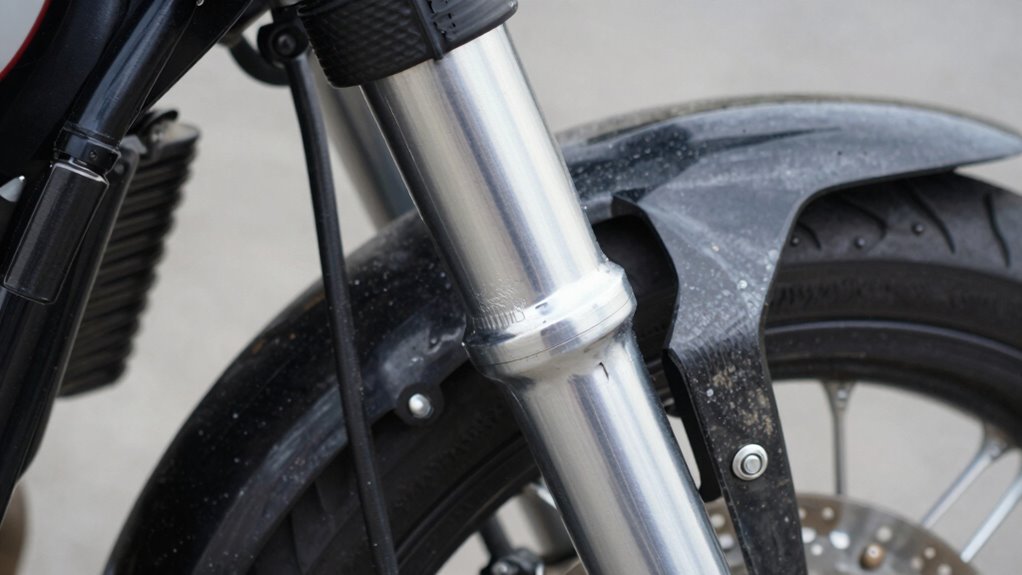
To effectively diagnose worn steering head bearings, start by performing a visual inspection and physical test. Check for uneven wear, rust, or damage around the bearings and steering tube. Then, do a gentle shake of the handlebars: if you feel looseness or grinding, it’s a warning sign. Remember, proper brake maintenance and correct tire pressure are essential for accurate handling and safety, which can mask or reveal steering issues.
Here are three key steps:
- Feel for any notchiness or play in the steering, indicating bearing wear.
- Inspect for corrosion or debris that could affect movement.
- Test ride cautiously, noting any unusual looseness or resistance.
Addressing these signs early prevents accidents and keeps your bike responsive.
When and How to Replace Your Bike’s Steering Head Bearings
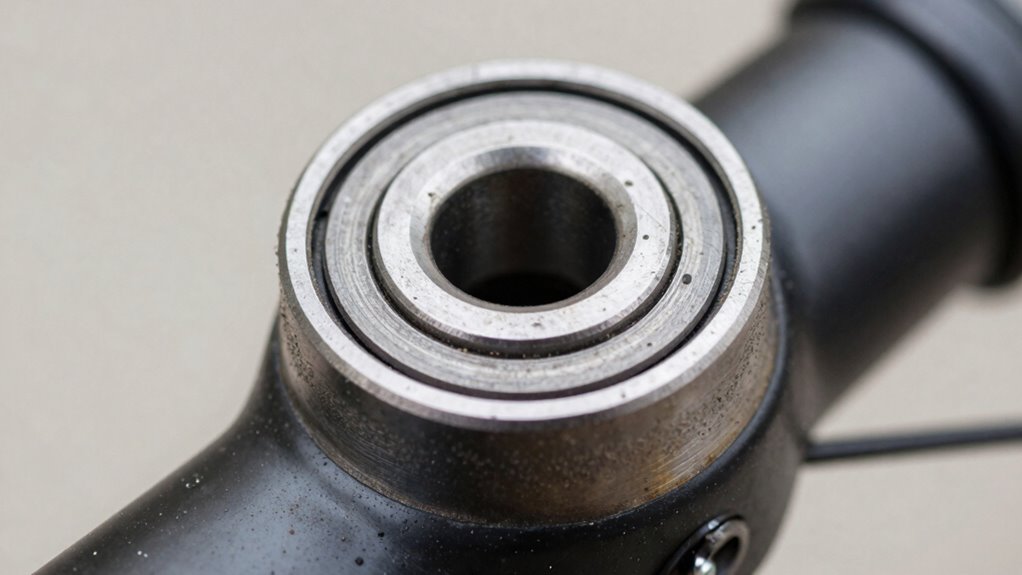
Knowing when to replace your bike’s steering head bearings is essential for maintaining safe and smooth handling. If you notice a persistent notchiness, looseness, or if the steering feels uneven even after adjustments, it’s time for a replacement. Before installing new bearings, verify your wheel alignment is correct and your tire pressure is at the recommended level, as these factors influence steering feel. To replace the bearings, loosen the top and bottom triple clamps, then carefully remove the old bearings using a bearing puller or appropriate tools. Clean the head tube thoroughly, check for any damage, and install new bearings, making sure they seat properly. Reassemble everything, tighten the clamps to spec, and verify smooth, responsive steering.
Tips for Maintaining Healthy Bearings and Smooth Steering
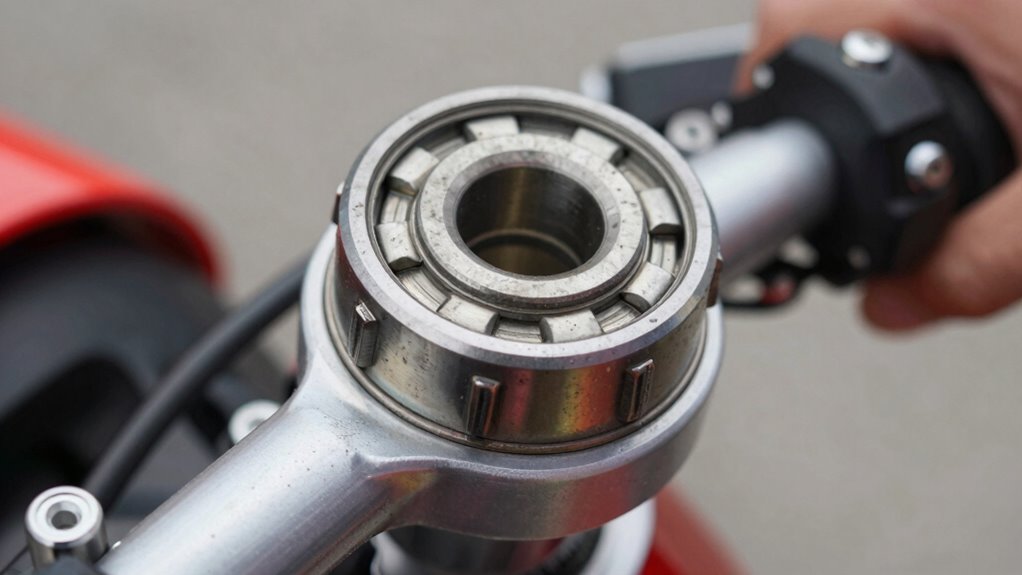
Regular maintenance is key to keeping your steering head bearings in top shape and ensuring smooth handling. Proper lubrication techniques prevent rust and reduce friction, helping bearings last longer. Choose a lubricant suited to your bearing material—metal or composite—to optimize performance. Here are three tips to maintain healthy bearings:
Regular maintenance and proper lubrication are essential for smooth, long-lasting steering head bearings.
- Regularly inspect and clean the bearings, removing dirt and debris that can cause uneven wear.
- Use appropriate lubrication techniques—apply just enough grease or oil to avoid over-lubrication, which can attract dirt.
- Replace worn bearings promptly to prevent a notchy feel and potential crashes.
How to Prevent Bearing Wear and Keep Your Bike Handling Safe
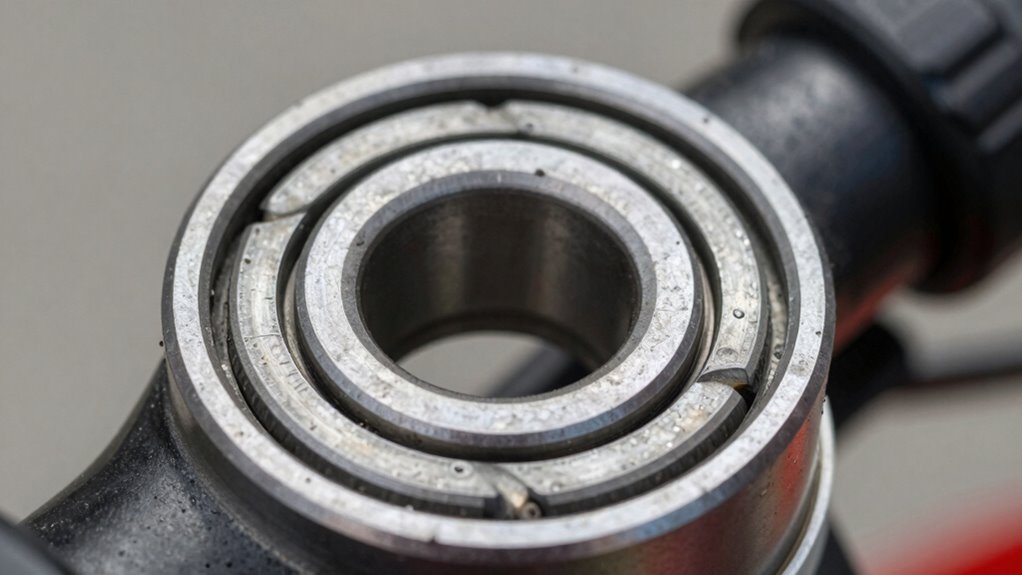
Preventing bearing wear is essential for maintaining safe and responsive bike handling. Regular bearing lubrication reduces friction and prevents dirt and moisture from causing corrosion or damage. Make sure to check and lubricate your steering head bearings periodically, especially after riding in wet or dusty conditions. Proper riding posture also plays a key role; keep your weight balanced and avoid sudden, aggressive steering inputs that can put unnecessary stress on the bearings. Adjust your riding style to be smooth and controlled, which minimizes wear and prolongs bearing life. Maintaining the correct torque on your top and bottom races ensures even load distribution. By staying attentive to bearing lubrication and practicing good riding posture, you’ll keep your steering smooth, safe, and free from the notchy feeling that signals impending wear.
Frequently Asked Questions
Can Steering Head Bearings Cause Vibrations During Riding?
Yes, steering head bearings can cause vibrations while riding. If they’re worn or not adjusted properly, you might feel wheel wobble or uneven steering. This often leads to increased suspension stiffness, making your ride less smooth and more difficult to control. Regularly check and maintain your bearings to prevent vibrations, improve handling, and guarantee a safer, more comfortable ride.
How Often Should Steering Head Bearings Be Lubricated?
Lubrication frequency for steering head bearings is like watering a delicate plant—you shouldn’t wait until they’re completely dry. You should inspect the bearings regularly, at least every 5,000 to 10,000 miles, and lubricate them if needed. Proper bearing inspection guarantees smooth handling and prevents notchy feelings. If you notice any resistance or roughness, it’s time to re-lubricate and check for wear to keep your ride safe.
Are There Different Types of Steering Head Bearings?
Yes, there are different types of bearing types, including tapered roller bearings, ball bearings, and cartridge bearings. Your maintenance schedule depends on the bearing type and riding conditions. Tapered roller bearings, for example, may require periodic lubrication and inspection, while cartridge bearings often need less maintenance. Knowing your bearing type helps you plan proper maintenance, ensuring smooth steering and preventing the notchy feel that could lead to a crash.
What Tools Are Needed to Replace Steering Head Bearings?
Replacing steering head bearings is like tuning a delicate instrument. You’ll need a bearing removal tool, a socket set, screwdrivers, and possibly a torque wrench for proper assembly. Select tools that fit your bike’s specific model to guarantee safe, effective bearing removal. Having the right tools on hand makes the process smoother, helping you avoid damaging components and ensuring your steering remains responsive and safe on the road.
Does Riding Style Affect Bearing Wear?
Yes, your riding style impacts bearing wear. If you often adopt aggressive riding positions or carry extra bike weight, it puts more strain on steering head bearings. Frequent sharp turns, high speeds, or heavy loads accelerate wear, causing that notchy feeling before a crash. To prolong bearing life, adjust your riding style to be smoother and more controlled, especially when maneuvering tight turns or carrying heavy gear.
Conclusion
Ignoring that notchy feeling in your steering is like ignoring warning lights on your dashboard—eventually, it could lead to a breakdown. Regular checks and timely replacements keep your bike handling smooth and safe. Think of your bike’s bearings as the backbone of your ride; neglect them, and you risk losing control just like a ship without its rudder. Stay vigilant, maintain your bearings, and enjoy a safer, more confident ride every time.