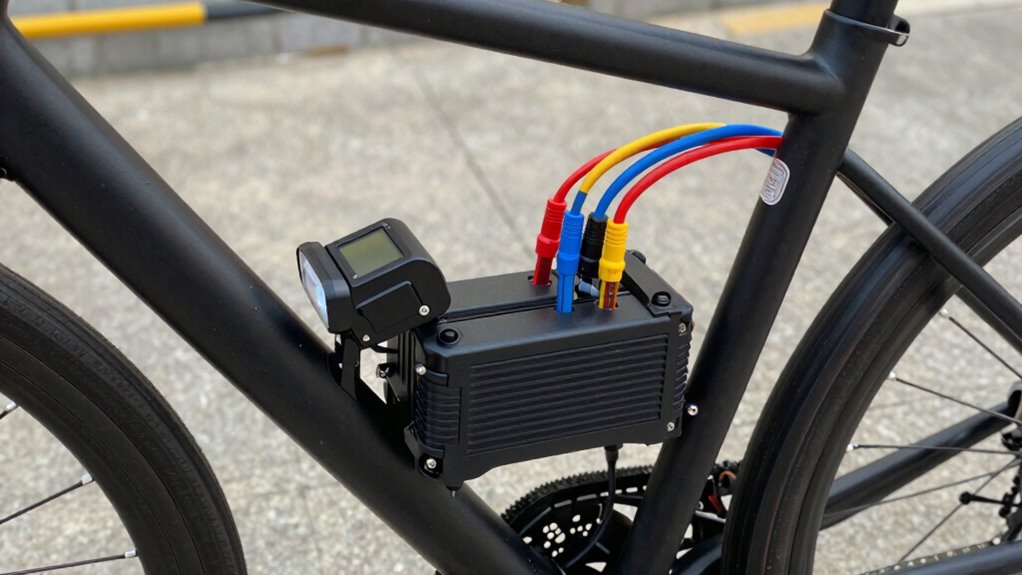

Once you add more than three accessories to your bike, a power distribution module makes your wiring safer, neater, and more reliable. It helps you manage multiple circuits, prevent overloads, and protect your battery health effortlessly. With built-in protections and clearly marked connections, it simplifies maintenance and upgrades. If you want to keep your system organized and guarantee each accessory gets proper power, a PDM is a smart choice—there’s more to discover if you keep exploring.

Get business pricing on garage and car supplies
- Business-only prices and quantity discounts
- Tax-exempt purchasing
- Multiple users, one account, clear invoices
Key Takeaways
- PDMs centralize wiring, reducing clutter as more accessories are added.
- They provide circuit protection, preventing overloads with multiple add-ons.
- PDMs ensure stable power delivery to all accessories, maintaining system reliability.
- They simplify troubleshooting and maintenance with clearly marked circuits.
- Upgrading to a PDM helps manage electrical load, protecting your bike’s battery health.
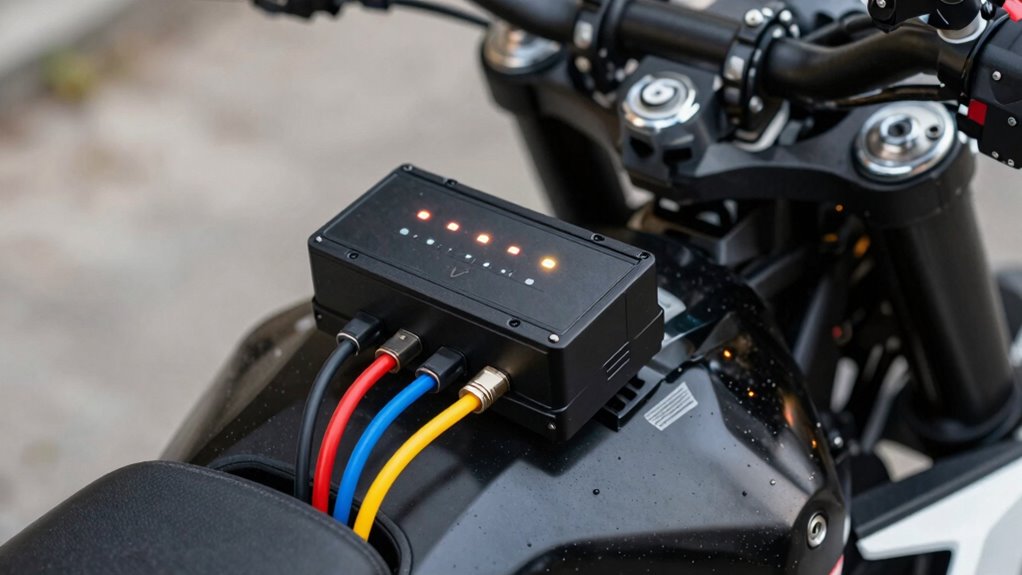
Have you ever wondered how electrical power is efficiently distributed across complex systems? If your bike has more than three add-ons—like extra lights, a GPS, or a sound system—you’ll quickly realize that a simple wiring setup no longer cuts it. That’s where power distribution modules (PDMs) come into play, making your setup safer, neater, and more reliable. These modules are designed to handle multiple circuits, ensuring each component gets the right amount of power without risking overloads or short circuits.
Power distribution modules (PDMs) keep your bike’s complex electrical system safe, organized, and reliable.
When you add more devices to your bike, managing the electrical load becomes crucial. A power distribution module simplifies this by centralizing the wiring and providing dedicated circuits for each accessory. Instead of running separate wires from your battery to every device, you connect everything to the PDM. This wiring integration not only reduces clutter but also makes troubleshooting much easier if something goes wrong. Plus, the PDM is built with safety features like circuit protection and fuses, which prevent damage to your electronics and ensure your ride remains secure.
Battery management is another key aspect that power distribution modules handle effectively. As your bike’s electrical demands grow, so does the importance of managing your battery’s health. A good PDM monitors voltage levels and helps prevent over-discharging, which can shorten your battery’s lifespan. It ensures that your battery supplies power efficiently, even when multiple accessories are running at once. With proper battery management, you can extend your battery’s lifespan and improve overall performance. Incorporating advanced monitoring features can further improve your system’s longevity and safety. Additionally, understanding the fundamentals of electrical systems can help you make more informed decisions about your setup.
The beauty of a power distribution module lies in its ability to streamline wiring integration. Instead of tangled spaghetti of wires, you get a clean, organized setup that’s easier to maintain. Many modules come with pre-wired terminals and clearly marked circuits, so you know exactly where each connection goes. This organization is particularly important for system safety as it reduces the risk of accidental disconnections or shorts, which can be costly or dangerous. Proper wiring and organization are essential for maintaining the integrity of your electrical system.
In short, once your bike has more than three add-ons, a power distribution module makes perfect sense. It simplifies wiring, enhances safety through circuit protection, and optimizes battery management. This upgrade ensures that each device receives consistent power, your wiring stays neat, and your battery remains healthy—all critical for a reliable and enjoyable ride. Embracing a PDM transforms a messy, risky setup into a streamlined, dependable system that keeps your electronics running smoothly no matter how many accessories you add. Proper power management is essential for maintaining your bike’s electrical system’s longevity and safety.
motorcycle power distribution module
As an affiliate, we earn on qualifying purchases.
As an affiliate, we earn on qualifying purchases.
Frequently Asked Questions
Can a Power Distribution Module Be Installed on Any Bike?
Yes, you can install a power distribution module on most bikes, but bike compatibility varies based on your bike’s electrical system. You need to take into account different power module types to match your setup, such as those designed for simpler or more complex wiring. Before installing, check your bike’s electrical capacity and wiring compatibility to guarantee the power module integrates smoothly and safely with your existing system.
How Do I Choose the Right Power Distribution Module for My Bike?
You should choose a power distribution module based on your bike’s electrical compatibility and installation flexibility. Did you know that over 70% of riders upgrade their electrical systems for more accessories? To pick the right one, check your bike’s voltage and connector types, then select a module that’s easy to install and adaptable to your setup. This guarantees reliable power distribution without complicated modifications.
Is Professional Installation Necessary for a Power Distribution Module?
No, professional installation isn’t always necessary for a power distribution module, especially if you’re comfortable with installation considerations. However, for complex setups or if you’re unsure about wiring, it’s best to seek professional services. They guarantee everything’s connected correctly, reducing risks like short circuits or damage. If you’re confident in your skills, follow detailed instructions carefully, but remember, professional installation can save you time and prevent potential issues.
What Are the Common Signs of a Failing Power Distribution Module?
Think of your power distribution module as the heartbeat of your bike’s electrical system. When it starts to fail, you’ll notice power module malfunctions like flickering lights, erratic accessory behavior, or sudden system shutdowns. Wiring issues can cause these symptoms, making it clear your module isn’t functioning smoothly. If you spot these signs, it’s time to troubleshoot or replace the module to keep your bike’s electrical flow steady and reliable.
Can I Upgrade or Replace My Existing Module Easily?
Yes, you can upgrade or replace your existing power distribution module easily. First, check compatibility considerations to guarantee the new module works with your bike’s wiring and add-ons. Follow the upgrade procedures by disconnecting the battery, removing the old module, and installing the new one securely. If you’re unsure, consulting your bike’s manual or a professional mechanic can make the process smoother and safer.
Conclusion
Once your bike’s got more than three add-ons, you realize a Power Distribution Module isn’t just a convenience—it’s the silent guardian keeping everything running smoothly. Imagine a sleek, hidden hub seamlessly juggling your lights, GPS, and heated grips, all without a hiccup. As you hit the road, the true power of this module becomes clear—it’s the invisible force that keeps your ride flawless, leaving you free to focus on the adventure ahead.
Fall Picks
fall essentials
As an affiliate, we earn on qualifying purchases.