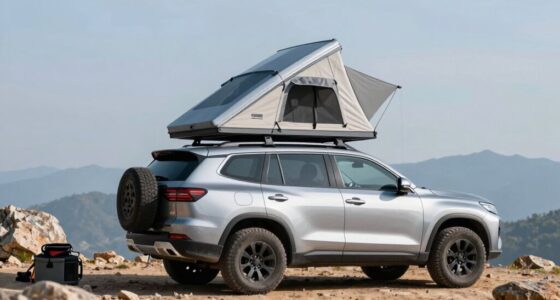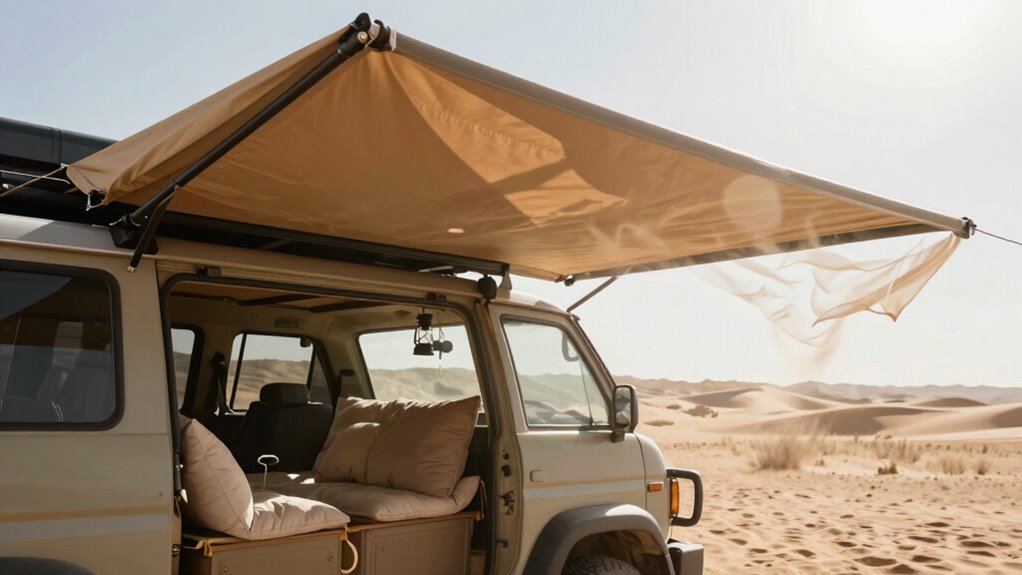

Overlanding awning rooms boost your comfort and create extra living space, making outdoor trips more enjoyable. However, wind can quickly turn this convenience into a safety challenge by causing instability, tears, or damage. To stay safe, anchor your awnings well, use sturdy stakes and guy lines, and consider weather conditions carefully. If you want practical tips on how to handle wind and protect your setup, keep exploring how to make your awning more resilient.

Get business pricing on garage and car supplies
- Business-only prices and quantity discounts
- Tax-exempt purchasing
- Multiple users, one account, clear invoices
Key Takeaways
- Overlanding awning rooms extend comfort and privacy but require secure anchoring to withstand changing wind conditions.
- Wind can cause awning flapping or tearing, making proper setup and reinforcement essential for safety.
- Using high-quality, ripstop fabrics and reinforced seams improves durability against wind stress.
- Adjusting guy lines and positioning the awning downwind help maintain stability in gusty conditions.
- Monitoring weather forecasts and choosing sheltered locations reduce wind-related risks to awning setups.
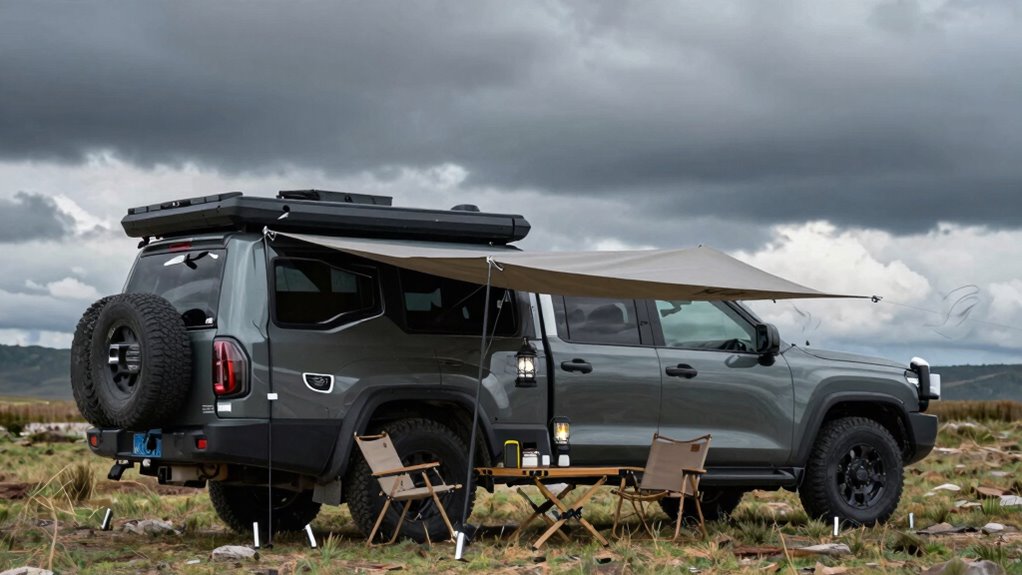
When you’re overlanding, dealing with wind is an inevitable part of the experience, and your awning plays a vital role in providing shelter and comfort. A well-set-up awning helps create a cozy outdoor space, allowing you to enjoy your surroundings without getting soaked or battered by gusts. But while awnings add significant camping privacy and make your campsite more livable, wind can quickly turn a peaceful setup into a challenge. Windy conditions test your awning’s durability and can compromise its stability if you’re not prepared. That’s why knowing how to adapt your setup and choosing the right equipment matters.
Overlanding awning rooms are designed to extend your living space, offering protection from sun, rain, and curious onlookers. They give you a sense of privacy that’s hard to beat in busy campgrounds or remote locations. However, when the wind picks up, these walls and fabrics can become a liability if they aren’t built to withstand gusts. Cheap or poorly anchored awnings tend to flap dangerously or even tear, risking damage to your gear and compromising your safety. To prevent this, you need to ensure your awning’s durability is up to the task. Invest in high-quality materials made from ripstop fabrics and reinforced seams that resist tearing. Secure your awning with sturdy stakes and guy lines, especially in windy conditions, to hold it firmly in place. Additionally, understanding and implementing proper anchoring techniques can significantly improve your setup’s resilience against strong winds.
Invest in ripstop fabrics and sturdy stakes to keep your awning secure and durable in windy conditions.
Another key to maintaining comfort in windy weather is adjusting your setup quickly. When wind intensifies, consider deploying additional guy lines or tightening existing ones to stabilize the structure. If the wind becomes too strong, it’s wise to take down the awning temporarily rather than risking damage. Be proactive—check the weather forecast regularly and set up your awning with wind in mind, positioning it downwind if possible, and anchoring it well to prevent it from turning into a kite. Proper anchoring is essential for ensuring your awning remains secure in gusty conditions. Understanding the importance of biodiversity and sustainable practices can influence how you choose and maintain your camping gear, ensuring that your setup minimizes environmental impact and promotes conservation. Moreover, selecting an appropriate location that offers natural windbreaks, like trees or hills, can also help reduce wind stress on your setup.
While awning rooms greatly enhance your camping privacy and comfort, wind always demands extra caution. Your goal is to strike a balance between creating a cozy, private space and ensuring the awning remains durable and secure. With the right gear, proper setup, and quick thinking, you can enjoy your overlanding adventures without letting wind ruin the experience. Remember, adaptability and quality are your best allies when facing nature’s unpredictable elements.
overlanding awning with wind resistance
As an affiliate, we earn on qualifying purchases.
As an affiliate, we earn on qualifying purchases.
Frequently Asked Questions
How Do I Secure an Awning in Strong Winds?
To secure your awning in strong winds, you should reinforce your awning setup by using sturdy guy lines and heavy-duty stakes. Attach the guy lines securely to stable points and tighten them to minimize movement. Consider adding weight to the stakes or using windbreaks to reduce wind impact. Regularly check and adjust your setup as wind conditions change, ensuring your awning remains stable and safe during gusts.
Can Wind Damage My Overlanding Awning Permanently?
Wind can be like a relentless storm chipping away at your awning’s strength. It’s unlikely to cause permanent damage if you regularly perform awnings maintenance and follow weatherproofing tips. Always secure your awning properly and avoid leaving it up during storms. If you notice tears or bent parts, repair them promptly. Proper care and vigilance help guarantee your awning stays durable, weather-resistant, and ready for your next adventure.
What Are the Best Wind-Resistant Awning Materials?
You should choose awning materials with high fabric durability and appropriate material weight for wind resistance. Look for heavy-duty fabrics like polyester or acrylic, which resist tearing and withstand strong gusts. A thicker, denser material offers better wind resistance without adding excessive weight. Avoid lightweight fabrics that can flap or tear easily. Combining durable, well-weighted fabrics guarantees your awning stays intact and provides reliable shelter even in gusty conditions.
How Do I Tell if My Awning Is Wind-Safe?
Can you feel the wind tugging at your awning? To check if it’s wind-safe, look for sturdy, wind-resistant awning accessories like reinforced stakes and secure tie-downs. Confirm your awning has proper anchoring and use weather monitoring tools to stay ahead of sudden gusts. If your setup remains stable during gusts and you’ve added the right accessories, your awning is likely wind-safe. Always stay alert to changing conditions for safety.
Are There Specific Wind Conditions to Avoid Using Awnings?
You should avoid using your awning when wind speed exceeds 20-25 mph or gust intensity becomes unpredictable. High winds can cause damage or collapse, especially during gusts that suddenly increase in strength. Always check local weather forecasts before deploying your awning, and stay alert to changing wind conditions. If gusts start to intensify or wind speeds rise rapidly, retract the awning immediately to prevent accidents or damage.
Conclusion
As the wind picks up, your sturdy overlanding awning transforms from a cozy refuge into a flapping, trembling barrier. You watch the fabric strain against the gusts, tension mounting with each unpredictable gust. Will it hold? Or will it tear free, leaving you exposed to the storm? The night’s quiet comfort hangs in the balance, and only your quick thinking can turn the tide—because in the wild, a simple gust can change everything in an instant.
Fall Picks
fall essentials
As an affiliate, we earn on qualifying purchases.