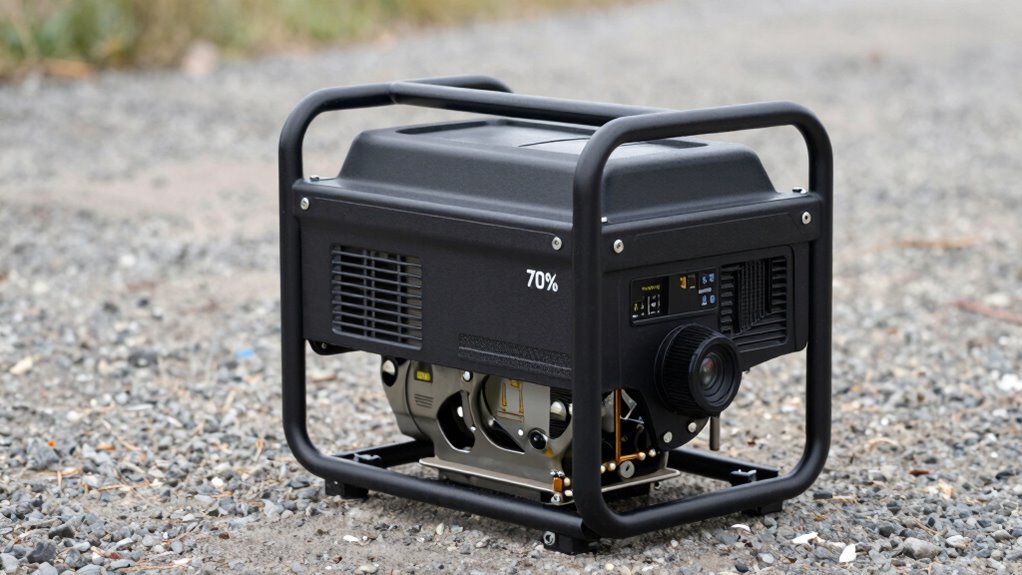

Inverter generators are designed to operate quietly at low to moderate loads, thanks to built-in noise reduction features and stable engine speeds. However, as you approach around 70% load, the engine has to work harder, and noise levels start to rise noticeably. This increase happens because higher loads cause the engine to speed up and reduce the effectiveness of sound dampening. If you want to understand how to manage these changes better, keep exploring this topic.

Get business pricing on garage and car supplies
- Business-only prices and quantity discounts
- Tax-exempt purchasing
- Multiple users, one account, clear invoices
Key Takeaways
- Inverter generators operate quietly at low to moderate loads due to stable engine speed and sound-dampening features.
- Noise levels increase noticeably around 70% load because the engine works harder and revs higher.
- Sound-dampening effectiveness diminishes as engine speed and load increase, allowing more mechanical noise to escape.
- Proper load management and sizing can help maintain quieter operation even near maximum capacity.
- Expect some noise rise at higher loads; designing for load capacity optimizes overall noise performance.

Inverter generators often seem remarkably quiet when running at low to moderate loads, making them popular for camping, outdoor events, and backup power. Their design minimizes noise, which is a significant advantage if you want to avoid disturbing your surroundings. However, as you increase the load on these generators, you might notice that they start to get louder, especially once they reach about 70% of their maximum capacity. This shift is mainly due to how they handle fuel efficiency and noise mitigation as load demands rise.
At lower loads, inverter generators operate with excellent fuel efficiency because their engines run at a consistent, optimal speed. They adjust their engine speed based on the power demand, which means you’re not wasting fuel by running an engine faster than necessary. This variable speed operation also contributes to their quiet operation—less noise and vibration equal less disturbance. Noise mitigation is built into their design, with sound-dampening casings and technology that reduces exhaust and mechanical noise. You often notice how peaceful these generators are when operating at 50% or less, making them ideal for situations where silence is valued.
Inverter generators run quietly at low loads, thanks to optimal engine speed and built-in noise reduction features.
But as the load approaches 70%, the generator’s engine needs to work harder to produce the required power. This increased workload can lead to a rise in noise levels because the engine is now running at higher speeds to meet the demand. Fuel efficiency may also decrease slightly at this stage, as the engine consumes more fuel to sustain the higher output. While inverter generators are still relatively quiet compared to traditional models at this load, the difference becomes noticeable. The noise mitigation features are still effective, but their impact diminishes as the engine revs higher, and more mechanical noise escapes. Understanding load capacity can help users better anticipate the noise levels during operation. Additionally, engine load management plays a critical role in controlling noise levels and ensuring optimal performance.
You might find that at this higher load, the generator’s sound becomes more prominent, especially if you’re in a quiet outdoor setting. It’s a natural consequence of the increased engine activity; the generator simply has to work harder to provide the capacity you need. Recognizing the relationship between load and noise can help you make informed decisions to optimize your generator’s performance and minimize disturbance. Proper load distribution techniques can further help in maintaining quieter operation at higher capacities. Understanding this behavior can help you plan better, such as selecting the right size inverter generator for your needs to maintain quieter operation at higher loads. Overall, inverter generators excel at low to moderate loads due to their fuel efficiency and noise mitigation capabilities, but expect some increase in noise as you push them closer to their maximum capacity.
quiet inverter generator for camping
As an affiliate, we earn on qualifying purchases.
As an affiliate, we earn on qualifying purchases.
Frequently Asked Questions
How Do Inverter Generators Compare in Noise Levels to Traditional Generators?
You’ll notice inverter generators are generally quieter than traditional ones, especially at low to moderate loads. Their advanced sound insulation and noise mitigation features help keep noise levels down, making them more suitable for camping or residential use. However, as load increases past 70%, noise levels can rise considerably. So, for quieter operation, stick to lower loads and choose models emphasizing sound insulation and noise mitigation.
What Maintenance Routines Optimize Inverter Generator Performance Under Load?
You should regularly check and change the oil to guarantee high oil quality, which keeps your inverter generator running smoothly under load. Keep the fuel tank clean and use fresh, high-quality fuel to improve fuel efficiency and prevent carburetor clogs. Also, inspect air filters and spark plugs, and follow the manufacturer’s maintenance schedule. These routines help optimize performance, reduce noise, and extend your generator’s lifespan.
Are Inverter Generators Suitable for Extended Use During Power Outages?
You can absolutely rely on inverter generators during extended power outages. They’re like steadfast guardians, quietly standing watch with impressive fuel efficiency and portability features that make long-term use manageable. Their compact design and energy-saving capabilities keep your essentials running smoothly without draining resources. As long as you monitor fuel levels and perform regular maintenance, these generators will serve you reliably through the darkest nights, ensuring comfort and safety.
How Does Ambient Temperature Affect Inverter Generator Noise Levels?
Ambient temperature influences inverter generator noise levels through damping effects and temperature fluctuations. When it’s cooler, components often operate more efficiently, reducing noise, while warmer temperatures can cause parts to expand and create more sound. Temperature fluctuations cause the generator to work harder to maintain stable output, increasing noise. So, in hot or fluctuating environments, expect higher noise levels due to reduced damping effects and increased operational stress.
Can Inverter Generators Handle Sudden Load Spikes Efficiently?
Think of your inverter generator as a skilled dancer, poised to adapt quickly. It handles sudden load spikes efficiently if you practice proper load management, ensuring power stability. Modern inverters adjust their output swiftly, preventing overloads and maintaining smooth operation. While some minor noise might spike briefly, overall, these generators are designed to respond promptly, keeping your power steady even during unexpected surges.
Conclusion
So, don’t be fooled by their quiet demeanor at low loads—you’ll barely notice the roar until they hit 70%. Like a calm lake hiding a powerful current beneath, inverter generators can surprise you with their true strength when pushed. Keep this in mind when planning your power needs, and remember that their quiet surface masks a robust core ready to surge when required. Stay prepared, and you’ll always have reliable power without the noise.
Fall Picks
fall essentials
As an affiliate, we earn on qualifying purchases.