
You might notice light bars look bright, but if they have poor beam patterns, you’re wasting power by scattering light in all directions rather than focusing it where you need it. This inefficiency causes increased energy drain and less effective illumination, which can strain your vehicle’s electrical system. High brightness doesn’t always mean better visibility—poor beam design reduces overall efficiency. Keep going to discover how advanced optics and proper beam shaping can help you get maximum light with less power.

Get business pricing on garage and car supplies
- Business-only prices and quantity discounts
- Tax-exempt purchasing
- Multiple users, one account, clear invoices
Key Takeaways
- Bright appearance can be misleading; poor beam patterns cause inefficient light distribution and increased power consumption.
- Unfocused beams scatter light, wasting energy and reducing effective illumination.
- Advanced optical design directs light precisely, improving visibility and conserving power.
- LED technology enhances efficiency but requires proper beam shaping to prevent power waste.
- Proper beam pattern optimization reduces glare, increases safety, and maximizes lighting effectiveness.

Many light bars on the market waste power because they emit the wrong beam pattern for effective illumination. You might see these lights and think they’re doing a great job because they look bright at first glance. However, their brightness often masks a deeper problem: the beam pattern isn’t optimized for real-world use. Instead of providing focused, useful light, they scatter it in all directions, leading to inefficient lighting and unnecessary power consumption. This is where LED technology plays a vital role. Modern LED light bars are designed to maximize power efficiency, giving you more light output for less energy. When you choose LED-based light bars, you’re making a smarter investment because they convert more electrical power directly into visible light, reducing waste and extending the lifespan of your equipment.
Many light bars waste power due to poor beam patterns, scattering light and reducing efficiency despite appearing bright.
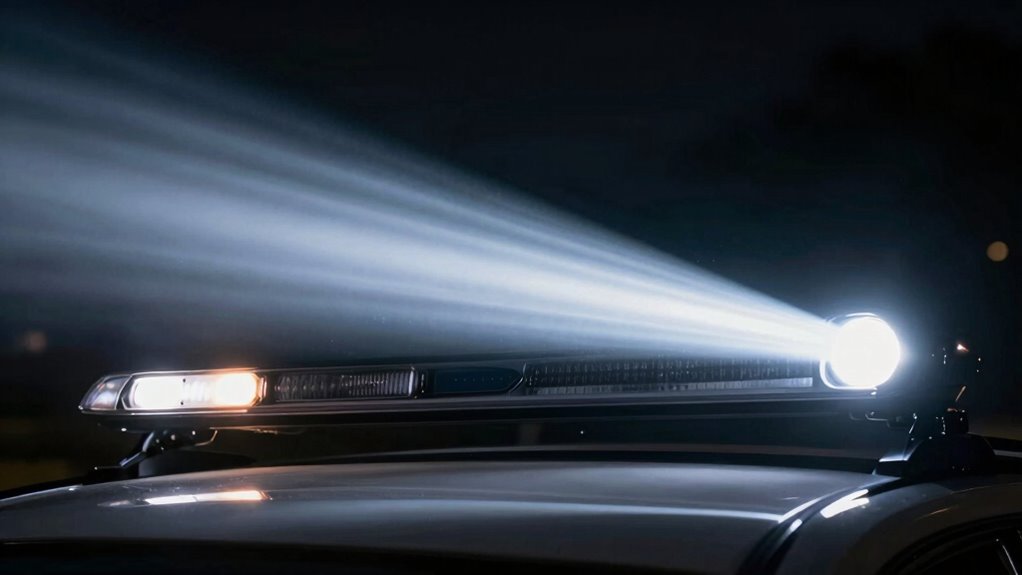
But if the beam pattern is poorly designed, even the best LED technology won’t help you get the most out of your light bar. Many manufacturers focus on creating a bright appearance, but they neglect to shape the beam properly. A wide, unfocused beam might seem impressive, but it’s not effective for most driving or outdoor activities that require targeted illumination. Instead, you end up using more power just to see a little more, which isn’t an efficient use of energy. Proper beam pattern design involves shaping the light to focus on the areas where you need visibility most, such as the road ahead or trail edges. Choosing a light bar with an optimized beam pattern ensures better efficiency and illumination. Additionally, beam shaping techniques can help minimize light scatter and improve overall performance. Implementing optical design principles can further enhance how well the light is directed, making your setup even more effective. Utilizing advanced optical engineering can lead to a more precise and effective illumination system.
When you opt for a light bar that uses advanced optics and a well-thought-out beam pattern, you’ll notice a significant difference. Not only do you get better visibility, but you also conserve power because the light is directed exactly where it’s needed. This means your vehicle’s battery and electrical system aren’t drained unnecessarily. LED lighting’s inherent power efficiency is amplified when combined with the right beam pattern, making your setup more reliable and cost-effective over time. Additionally, selecting lights with proper beam shaping can help reduce glare for other drivers and pedestrians, enhancing safety during nighttime activities.
Ultimately, it’s about making smart choices. Brightness can be deceiving — you want a light bar that’s bright where it counts, not just in appearance. Focus on LED technology that prioritizes power efficiency and a beam pattern designed for your specific needs. Doing so ensures you get maximum illumination with minimal power waste, making your lighting system both effective and economical.
LED light bar with optimized beam pattern
As an affiliate, we earn on qualifying purchases.
As an affiliate, we earn on qualifying purchases.
Frequently Asked Questions
How Do I Identify a Light Bar With the Correct Beam Pattern?
To identify a light bar with the correct beam pattern, look for a pattern that matches your needs—spot for long-distance visibility or flood for wide coverage. Check if it’s designed for power efficiency, meaning it uses LEDs with optimized optics. Read product specs or reviews to confirm the beam pattern’s clarity and focus. A well-made light bar directs light where you need it without wasting power on unnecessary spread.
What Are the Best Practices for Installing Light Bars on Vehicles?
When installing light bars, you should choose the right mounting height to prevent glare and guarantee ideal visibility. Opt for a mounting position that keeps the light bar level and avoid obstructing your view. Consider the light color—white or yellow for better visibility in various conditions. Secure the mounting hardware tightly, and aim the light bars correctly for the best beam pattern, minimizing power waste and maximizing effectiveness.
Can Changing the Angle Improve a Light Bar’s Efficiency?
Adjusting your light bar’s angle can considerably sharpen its shine and boost efficiency. By fine-tuning the beam focus through precise angle adjustment, you direct the light where it matters most—further enhancing visibility while conserving power. Properly aligned, the beam pattern becomes better focused, preventing glare and waste. So, don’t hesitate to experiment with your light bar’s angle; it’s a simple step that sharply improves your lighting’s effectiveness.
Are There Any Legal Restrictions on Light Bar Usage?
Yes, there are legal restrictions on light bar usage to guarantee legal compliance and reduce light pollution. You must follow local laws, which often limit brightness, beam pattern, and placement. These regulations aim to prevent glare, protect other drivers, and minimize light pollution. Before installing or using a light bar, check your area’s specific rules. Staying within legal limits helps you avoid fines and contributes to safer, more environmentally conscious driving.
How Does Weather Affect the Performance of Light Bars?
Weather impact your light bar performance, especially in foggy conditions. Fog scatters light, reducing your light bar’s effectiveness and making visibility worse. Rain or snow can also diminish brightness and cause glare, impairing your vision. To optimize fog performance, select light bars with a wide, low beam pattern designed for adverse weather. Keep your lenses clean and consider adding fog-specific lights to guarantee you see clearly in challenging weather.
Conclusion
While light bars may seem impressive with their bright output, they often waste power in ineffective beam patterns, reducing overall efficiency. You might think they’re a cost-effective solution, but investing in properly designed lighting can improve visibility without unnecessary power drain. By choosing lights tailored to your needs, you guarantee better performance and longevity, ultimately saving you money and energy in the long run. Don’t settle for brightness alone—opt for smarter, more efficient illumination.
Halloween Picks
halloween
As an affiliate, we earn on qualifying purchases.