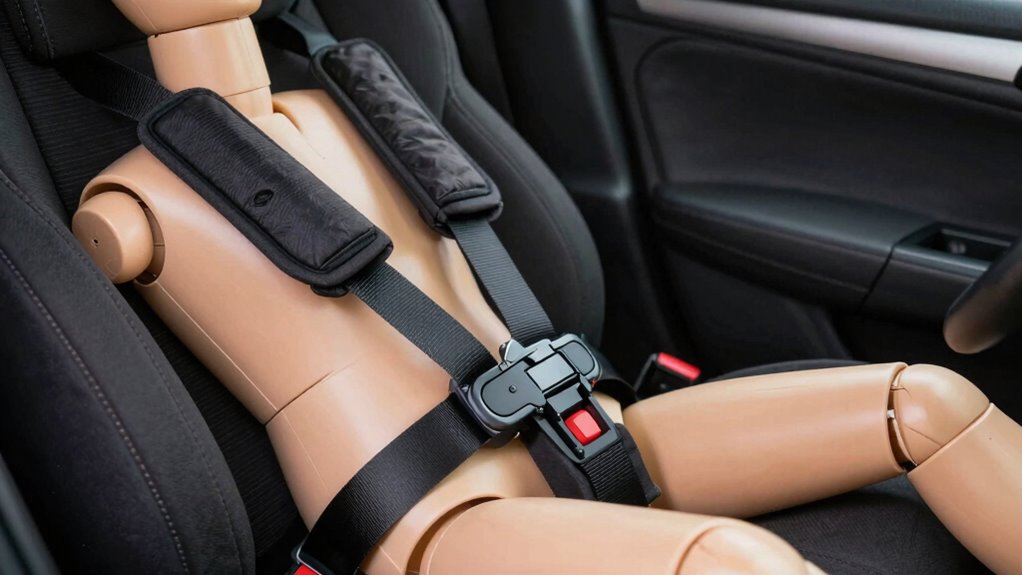

To prevent submarining, make certain your harness or seat belt fits snugly, with no slack in the straps. The lap belt should sit low on your hips, not your stomach, and the shoulder belt should lie flat across your chest. Proper adjustment keeps you firmly in place during a crash, reducing movement and injury risk. Keep straps flat, tight, and in good condition—continue on to learn more about getting the perfect fit for your safety.

Get business pricing on garage and car supplies
- Business-only prices and quantity discounts
- Tax-exempt purchasing
- Multiple users, one account, clear invoices
Key Takeaways
- Proper fit ensures the lap belt stays low on hips, preventing submarining during a crash.
- Tightening harness straps snugly around the body reduces excessive movement and maintains optimal positioning.
- The lap belt should lie flat across the pelvis, not the stomach, to minimize sliding and injury risk.
- Regularly inspecting and adjusting straps helps maintain a secure fit and prevents slack that can cause submarining.
- Ensuring the harness or seat belt is properly positioned and snug is essential for effective crash protection.
As an affiliate, we earn on qualifying purchases.
How Harnesses and Seat Belts Differ
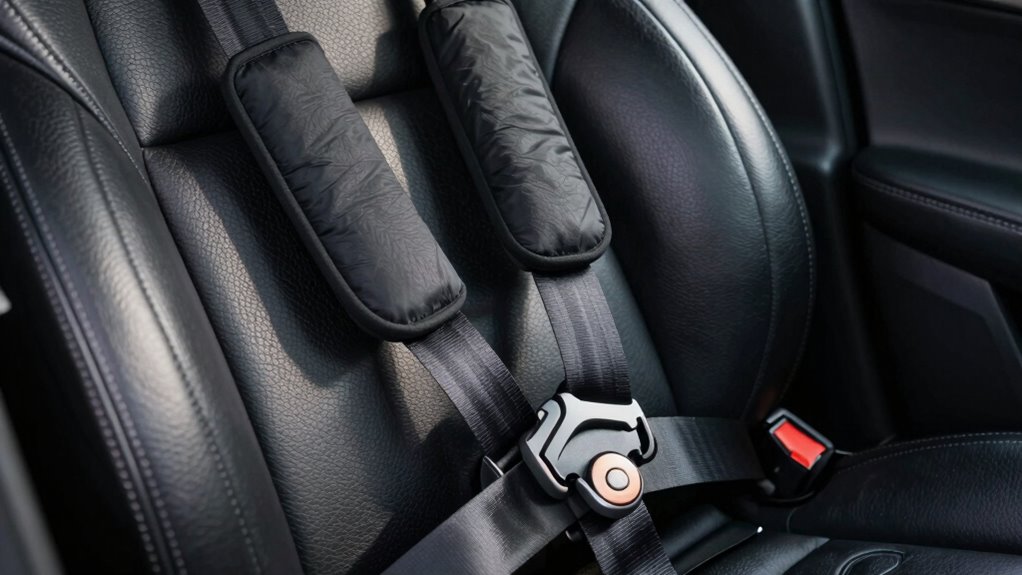
While both harnesses and seat belts are designed to keep you safe in a vehicle or during activities, they differ markedly in how they do so. Harness material typically includes durable fabrics like nylon or polyester, providing strength and flexibility. These materials are engineered to withstand substantial forces during a crash or fall. Seat belt design, on the other hand, incorporates metal components such as buckles and retractors, combined with webbing straps. Seat belts are crafted for quick adjustability and secure restraint, focusing on distributing forces across stronger parts of your body. Harnesses often use multiple straps that wrap around the torso and legs for added security, while seat belts primarily rely on a single lap and shoulder strap. Both are effective, but their construction and purpose vary significantly. Understanding the science behind safety devices can help you choose the right restraint system for optimal protection. Additionally, material engineering advances continue to improve the safety performance of these devices, leading to better impact absorption and durability.
Why Proper Fit Matters to Prevent Submarining
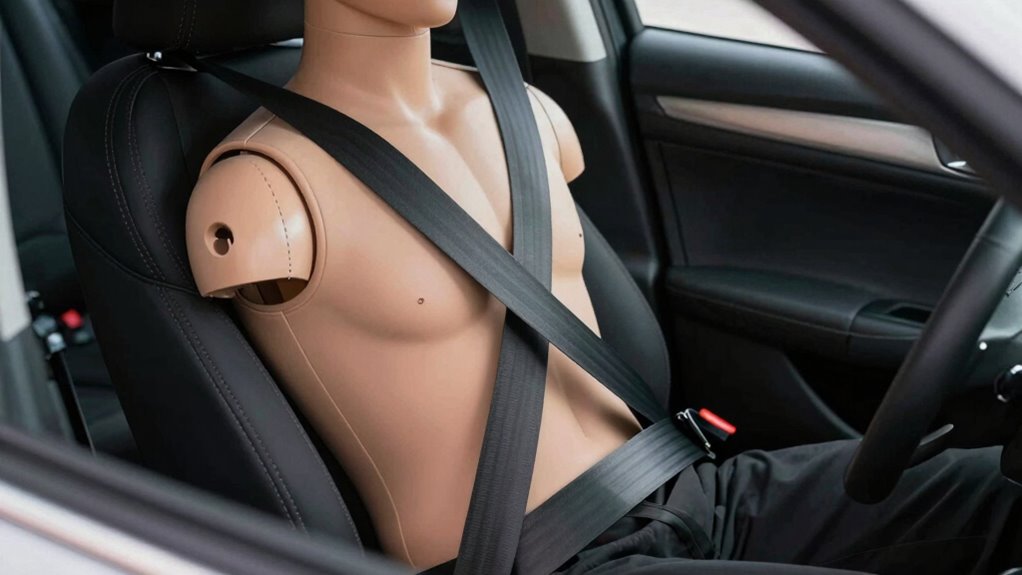
Ever wonder why a proper fit is essential for your safety in a vehicle? Ensuring your harness or seat belt fits correctly can prevent submarining during a crash. Here’s why proper fit matters:
- Proper harness tension keeps you securely in place, reducing movement that could lead to sliding underneath.
- Correct seat belt positioning ensures the lap belt stays low across your hips, not your stomach, preventing submarining.
- Proper fit minimizes slack, so in a sudden stop or crash, your body remains properly supported without excessive movement. Additionally, adjusting your restraints ensures maximum effectiveness in a crash.
- Connected safety technology can further enhance restraint effectiveness by monitoring fit and alerting you to adjust for optimal protection.
- Knowing how to adjust your harness or seat belt properly can significantly improve your safety fit and comfort.
When your harness is snug and the seat belt sits correctly, it maintains ideal restraint, reducing injury risk. Remember, a good fit is your best defense against submarining and other injuries.
How to Fit Your Harness or Seat Belt Correctly
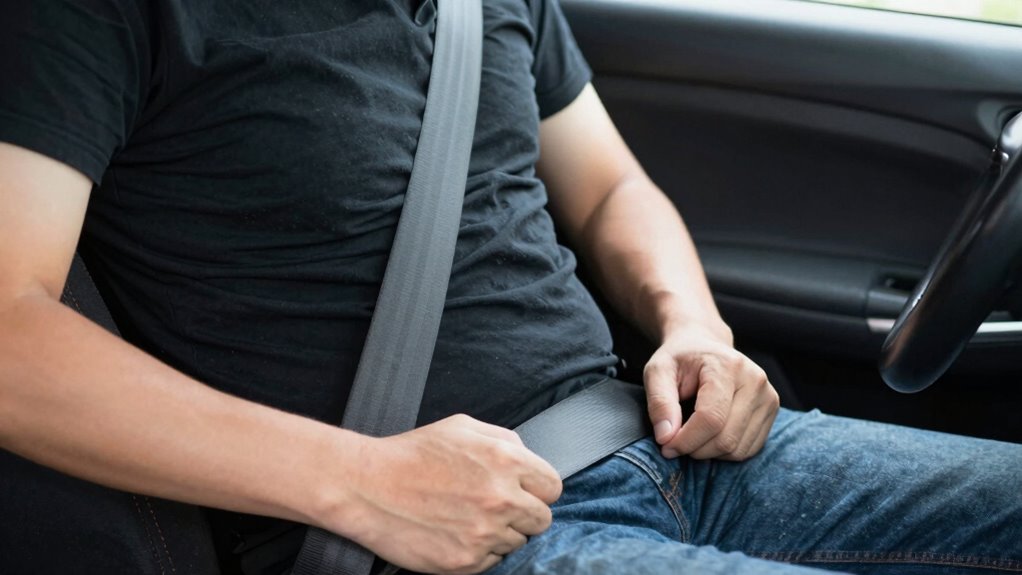
To guarantee your harness or seat belt provides maximum protection, it’s important to know how to fit it correctly. Start by adjusting the harness tension so it’s snug but not too tight, ensuring it holds you securely without restricting movement or breathing. For seat belts, focus on proper seat belt positioning: the lap belt should sit low across your hips, not your stomach, and the shoulder belt should lie flat across your chest and collarbone, away from your neck. Make sure the harness straps or seat belt are evenly tightened and lie flat against your body, avoiding twists or slack. Proper fitting minimizes the risk of submarining and enhances safety, so take the time to adjust each component until it fits perfectly. Additionally, understanding proper fit techniques can help you better evaluate your fit and improve overall protection. Recognizing the importance of correct harness and seat belt adjustments ensures optimal safety performance in various situations. Regularly inspecting your harness or seat belt for wear and tear can further prevent potential failures during an accident.
Common Fitting Mistakes That Cause Submarining and How to Avoid Them
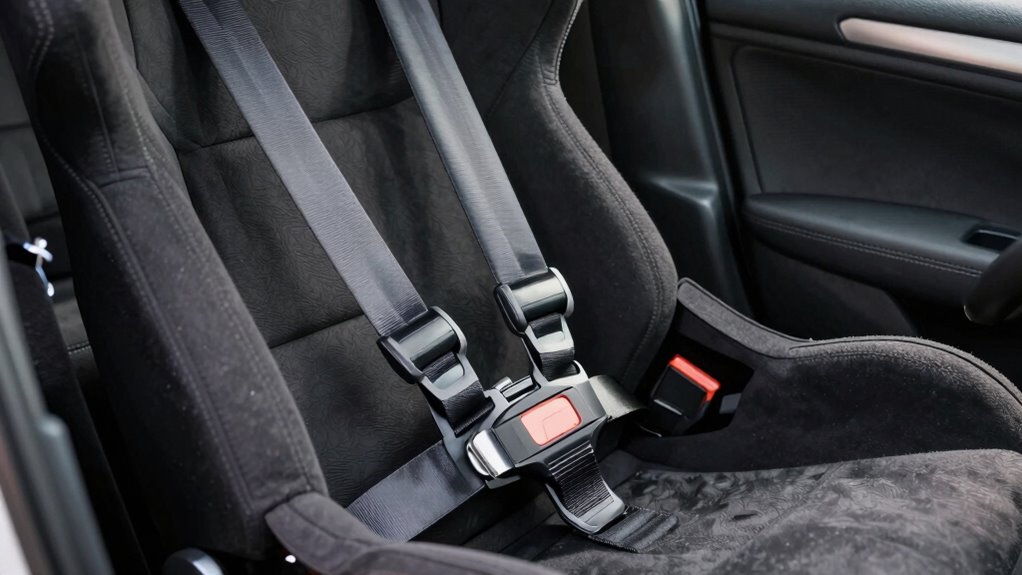
One common mistake that leads to submarining is wearing a seat belt or harness that’s too loose, especially across the lap. This can cause lap belt slippage and reduce the effectiveness of the restraint. Here are three mistakes to watch out for:
- Ignoring harness looseness: A loose harness allows movement, increasing submarining risk.
- Incorrect lap belt positioning: Sitting too high or low can cause the lap belt to slide up or down during a crash.
- Not tightening the belt properly: Failing to secure the belt snugly can lead to excessive slack, risking submarining.
To prevent this, ensure your lap belt stays firmly in place across your hips and that the harness fits snugly without slack. Proper fit is key to avoiding submarining.
Tips for Ensuring a Safe and Secure Fit Every Time
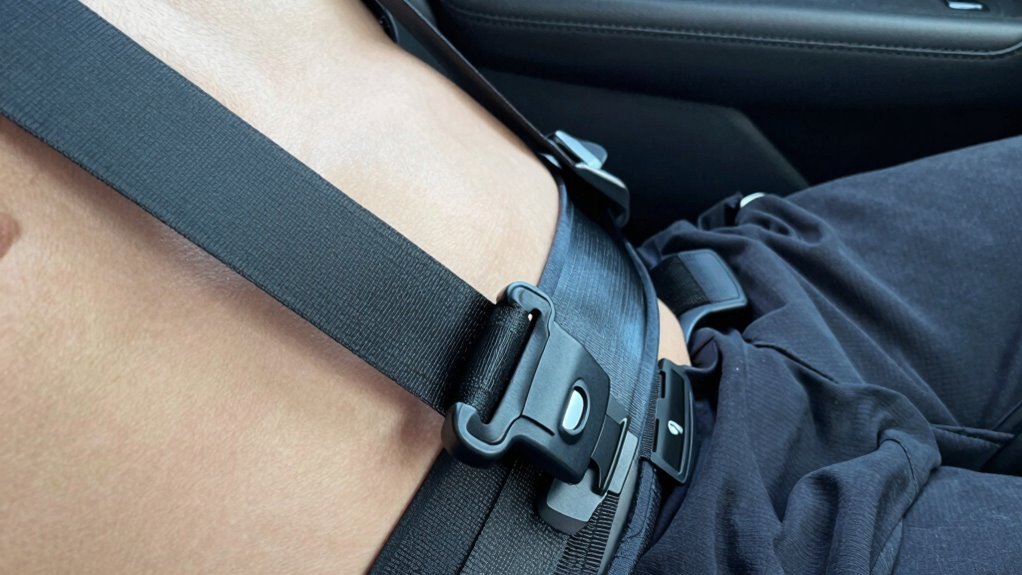
Ensuring your seat belt or harness fits securely every time is essential for effective protection. To achieve this, always adjust straps snugly without causing discomfort. Check vehicle compatibility beforehand, as some models require specific harness types or alternative safety features for ideal fit. Proper positioning prevents submarining and ensures your safety system works as intended. Use the following tips for a secure fit:
| Tip | Action |
|---|---|
| Adjust straps | Tighten until snug, with no slack |
| Check positioning | Harness or belt lies flat on your body |
| Verify compatibility | Ensure your vehicle supports your safety gear |
| Regularly inspect | Replace worn or damaged components |
Additionally, understanding fit rules can help you make informed adjustments for maximum safety. Proper installation techniques are crucial for ensuring your safety gear functions correctly. Familiarity with safety standards can further enhance your confidence in your safety setup. Being aware of proper fit guidelines is vital to prevent submarining effectively. This approach maximizes protection and reduces submarining risks, keeping you safe every ride.
Frequently Asked Questions
Are Harnesses Safer Than Seat Belts for All Vehicle Types?
Harnesses are generally safer than seat belts for all vehicle types because they offer better occupant comfort and a secure fit, reducing movement during a collision. However, their safety also depends on vehicle compatibility and proper installation. You should always choose a harness specifically designed for your vehicle and ensure it fits correctly. Proper fit and vehicle compatibility are essential to prevent submarining and maximize safety, regardless of the restraint system used.
Can Improper Fit Cause Long-Term Injury Risks?
Yes, improper fit can cause long-term injury risks. If your harness or seat belt isn’t snug enough, it may not properly restrain you during a crash, increasing the chance of long-term injuries like spinal or internal damage. Always guarantee your harness or seat belt fits correctly to prevent unnecessary strain or injury over time. Proper fit is essential for safety and minimizing long-term risks in any vehicle accident.
How Often Should I Check My Harness or Seat Belt Fit?
You should check your harness or seat belt fit every time you get in the vehicle, especially if you’re frequently adjusting it. Studies show that improper fit occurs in over 50% of accidents due to poor restraint positioning. Regular checks help maintain fit consistency, ensuring your harness or seat belt stays snug and effective. Make it a habit to verify fit each ride, preventing injury risks caused by looseness or misalignment.
Do Children Need Different Fitting Rules Than Adults?
Yes, children need different fitting rules than adults for child safety. You should guarantee their harnesses or seat belts fit snugly and correctly, following manufacturer instructions. Kids require specialized child restraints or booster seats until they’re big enough to use adult restraints safely. Proper fit is vital to prevent submarining and protect your child in a crash, so always check that the restraint fits their size and age properly.
What Are the Signs of a Correctly Fitted Harness or Seat Belt?
Think of a correctly fitted harness or seat belt like a snug glove. You’ll notice proper snugness, with no excessive slack, ensuring it molds securely to your body. The harness shouldn’t shift or pinch, and the seat belt should lie flat across your hips and chest. If you feel any slack or discomfort, it’s a sign you need to tighten it slightly. This guarantees maximum protection and prevents submarining during a crash.
Conclusion
By paying close attention to how your harness or seat belt fits, you’re gently guiding yourself toward safer adventures. A snug, proper fit minimizes the risk of slipping into trouble and keeps you secure when it matters most. So, take a moment to double-check your restraint; it’s a small step that makes a big difference. After all, a little care now guarantees smoother journeys ahead—because safety is the best kind of ride.
Fall Picks
fall essentials
As an affiliate, we earn on qualifying purchases.