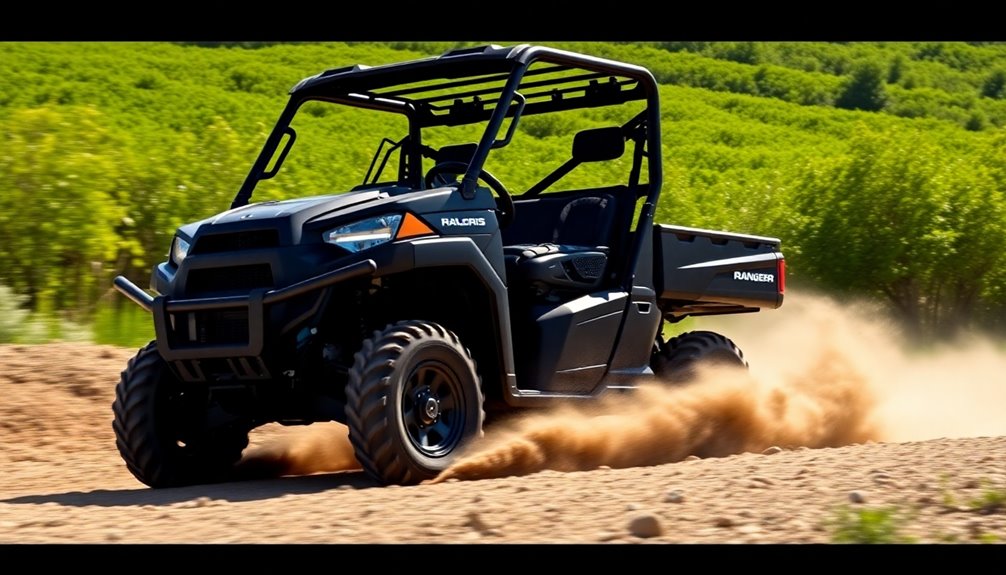
Your UTV winch most often fails because water infiltrates the motor’s electrical contacts, causing corrosion over time. Moisture builds up at these points, creating a barrier that prevents proper electrical flow and increases resistance. This leads to stalling, intermittent operation, or complete failure. Regularly inspecting and maintaining these components can help prevent water damage. Keep going to discover vital tips to protect your winch and guarantee reliable performance in tough conditions.

Get business pricing on garage and car supplies
- Business-only prices and quantity discounts
- Tax-exempt purchasing
- Multiple users, one account, clear invoices
Key Takeaways
- Water primarily infiltrates and damages the winch’s electrical contacts and connections.
- Corrosion from water buildup hampers electrical conductivity, causing winch failure.
- The motor’s electrical components are vulnerable to water intrusion, leading to malfunction.
- Moisture accumulation causes corrosion, increasing resistance and increasing risk of stalling.
- Poor sealing around electrical terminals allows water to reach and damage critical components.

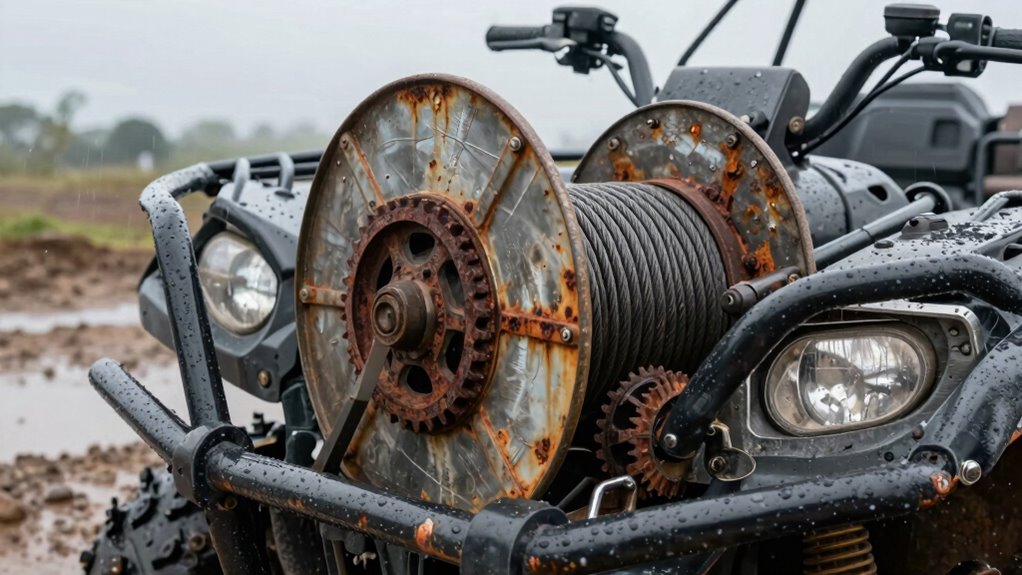
When it comes to UTV winches, water is often the culprit behind most failures, and it typically targets one vulnerable component: the motor’s electrical contacts. These contacts are essential for transmitting power from your battery to the winch motor, and even the tiniest amount of moisture can cause serious issues. Over time, water infiltrates the electrical connections, leading to corrosion that hampers conductivity. Once corrosion sets in, your winch might struggle to operate or fail completely when you need it most. Protecting electrical components with proper waterproofing techniques can significantly reduce the risk of moisture intrusion.
Battery corrosion is another common problem that stems from water exposure. If your electrical connections aren’t well protected, moisture can cause the terminals to corrode, creating a barrier that prevents proper electrical flow. You might notice the battery terminals looking white, green, or powdery—signs that corrosion has begun. This buildup not only diminishes power transfer but can also lead to increased resistance, which stresses your battery and the winch’s motor. Ultimately, the compromised connections can cause your winch to stall, work intermittently, or not work at all. Additionally, implementing proper maintenance practices can help detect early signs of corrosion before they cause more severe issues.
To prevent these issues, you need to pay close attention to your electrical connections. Regularly inspecting your wiring and terminals for signs of corrosion or moisture buildup is key. When you see corrosion, clean it off with a wire brush or a specialized electrical contact cleaner. Applying dielectric grease after cleaning creates a moisture-resistant barrier, helping protect your connections from water intrusion. Ensuring that all connectors are tightly secured also prevents water from seeping into the electrical system through loose fittings. Proper sealing techniques are vital for safeguarding sensitive components against water damage.
Another step you can take is to protect your winch’s electrical components with waterproof covers or seals. These additions keep water out during heavy rain, mud, or water crossings. When storing your UTV, consider removing or disconnecting the battery and connections if you won’t be using the vehicle for a while, especially in humid conditions. This reduces the risk of corrosion and water damage over time. Keeping your electrical system dry and well-maintained is essential for reliable winch operation in challenging environments.
In short, water finds its way into your winch’s electrical system through vulnerable points, leading to corrosion and connection failures. Staying vigilant about inspecting, cleaning, and sealing your electrical connections can significantly extend the life of your winch. Protecting these critical components ensures reliable operation when you need your winch most—whether you’re stuck in mud, pulling a load, or facing tough terrain. Regular maintenance is your best defense against water-related failures, keeping your UTV winch ready for action whenever you are.
As an affiliate, we earn on qualifying purchases.
Frequently Asked Questions
How Can I Prevent Water Damage to My UTV Winch?
To prevent water damage to your UTV winch, regularly apply winch lubrication to protect moving parts and create a barrier against moisture. Keep the winch clean and dry after use, especially in wet conditions. Use corrosion prevention sprays on metal surfaces to inhibit rust. Cover your winch with a waterproof cover when not in use, and store your UTV in a dry place. These steps help prolong your winch’s lifespan and ensure reliable performance.
What Are the Signs of Water Intrusion in a Winch?
Imagine your winch as a brave knight; water intrusion is like a sneaky enemy threatening its armor. You’ll notice corrosion indicators, such as rust or discoloration, signaling attack. Seal integrity issues also reveal themselves through moisture buildup, foggy or flooded components, and sluggish operation. If you see these signs, act quickly—check seals, clean corrosion, and guarantee everything’s sealed tight—to protect your winch from water’s silent assault.
Are Waterproof Winches Completely Immune to Water Damage?
Waterproof winches greatly reduce water damage risks, but they aren’t completely immune. You still need to practice corrosion prevention by regularly inspecting and cleaning your winch. Sealing techniques, like applying waterproof grease and ensuring tight seals, help keep water out. Even with a waterproof model, routine maintenance is essential to prevent corrosion and ensure longevity. So, while they’re more resistant, don’t neglect proper sealing and upkeep.
How Often Should I Inspect My Winch for Water-Related Issues?
You should inspect your winch weekly if you ride often, especially after water exposure. Regular checks help you spot water-related issues early. Focus on winch lubrication and corrosion prevention; look for rust or moisture. Proper maintenance can extend your winch’s life, as studies show corrosion causes over 60% of failures. Staying vigilant keeps your winch reliable and ready for action whenever you need it.
What Maintenance Steps Are Best After Exposure to Water?
After water exposure, you should immediately clean your winch with fresh water to remove dirt and salt. Use proper lubrication techniques to guarantee moving parts stay smooth and protected. Apply a corrosion preventive spray or grease to critical components to prevent rust. Regularly inspect seals and wiring for damage, and consider covering your winch when not in use to minimize water contact. This routine helps extend your winch’s lifespan and reliability.
Conclusion
To keep your UTV winch running smoothly, don’t overlook the importance of protecting that one vulnerable component from water. Ignoring this detail is like leaving the door wide open for trouble—water can cause all sorts of issues that lead to failure. Stay proactive by sealing and maintaining this part regularly. When you do, you’ll avoid the pitfalls and keep your winch in top shape, proving that a little precaution goes a long way.
Halloween Picks
halloween
As an affiliate, we earn on qualifying purchases.