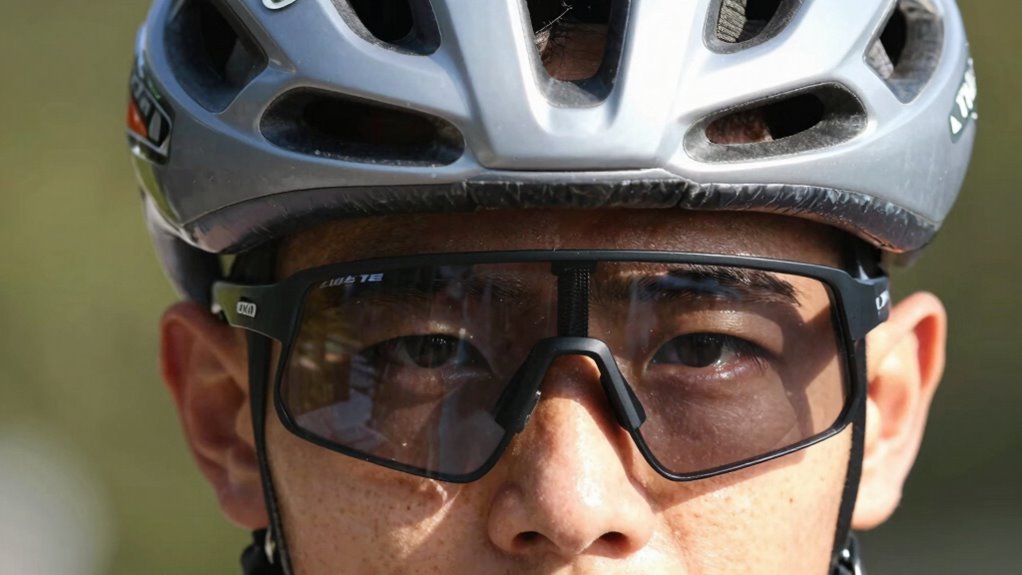

To prevent pain on long rides, make sure your helmet fits snugly but isn’t tight, especially around your temples and forehead, and that it sits level without pressing on your glasses arms or nose. Adjust the straps and padding so your glasses stay securely in place without slipping or causing pressure points. Proper ventilation also helps reduce sweat and discomfort. Exploring these tips further can help you find the perfect fit for comfort and safety throughout your ride.
Key Takeaways
- Ensure the helmet sits level with adequate space to prevent pressure points on glasses arms.
- Adjust the helmet’s interior padding for even contact and reduced localized pressure on temples and nose.
- Use helmets with adjustable straps and anti-slip pads to maintain a secure fit without squeezing glasses.
- Position the visor above glasses to minimize pressure and glare, improving comfort during long rides.
- Confirm the helmet does not shift during movement, preventing irritation and ensuring glasses stay stable.
Why Helmet Fit Is Crucial for Glasses Wearers
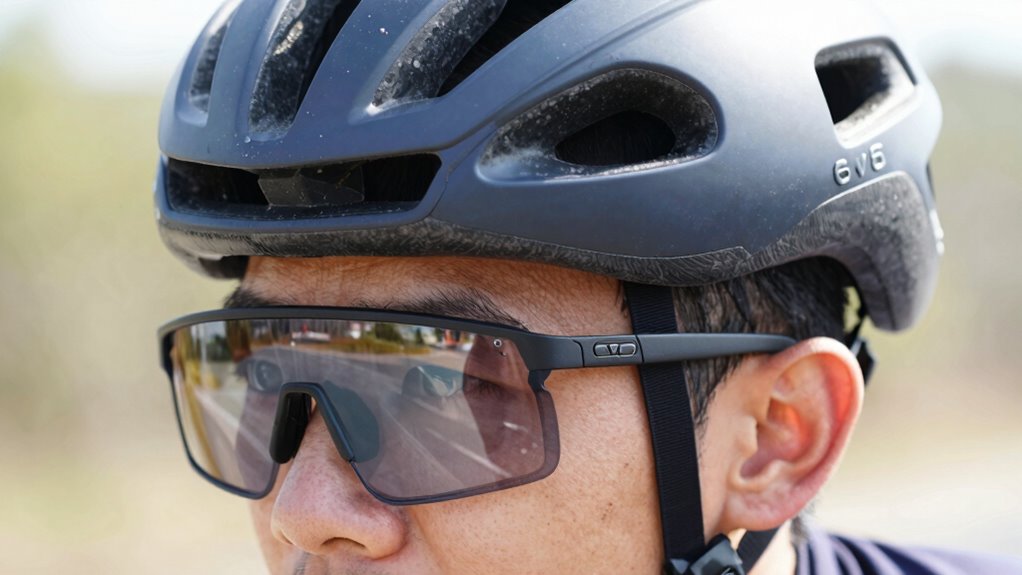
Wearing a helmet that fits properly is essential for glasses wearers because an ill-fitting helmet can cause discomfort, pressure points, and even damage to your glasses. When your helmet doesn’t align well, it can push your glasses out of position, leading to frame misalignment and discomfort during long rides. Proper fit helps minimize lens fogging by ensuring there’s enough airflow around your face, keeping your glasses clear and unobstructed. If your helmet is too tight, it can press against your glasses, causing smudges or scratches. Conversely, if it’s too loose, your glasses may shift or fall. Ensuring a snug but comfortable fit helps maintain frame alignment and reduces the chances of fogging, allowing you to ride safely and comfortably without constant adjustments. Additionally, a well-fitted helmet can distribute pressure evenly, reducing pressure points and enhancing overall comfort on extended rides. Recognizing helmet fit as a crucial factor can significantly improve your riding experience and prevent unnecessary discomfort. Proper ventilation is also key, as it helps reduce lens fogging and keeps your vision clear during long rides. Good helmet ventilation features can also help prevent overheating and sweating, further improving your comfort and visibility. Ensuring your helmet has adequate airflow can make a noticeable difference in overall comfort and visibility.
Common Problems With Helmet Fit and Glasses Comfort
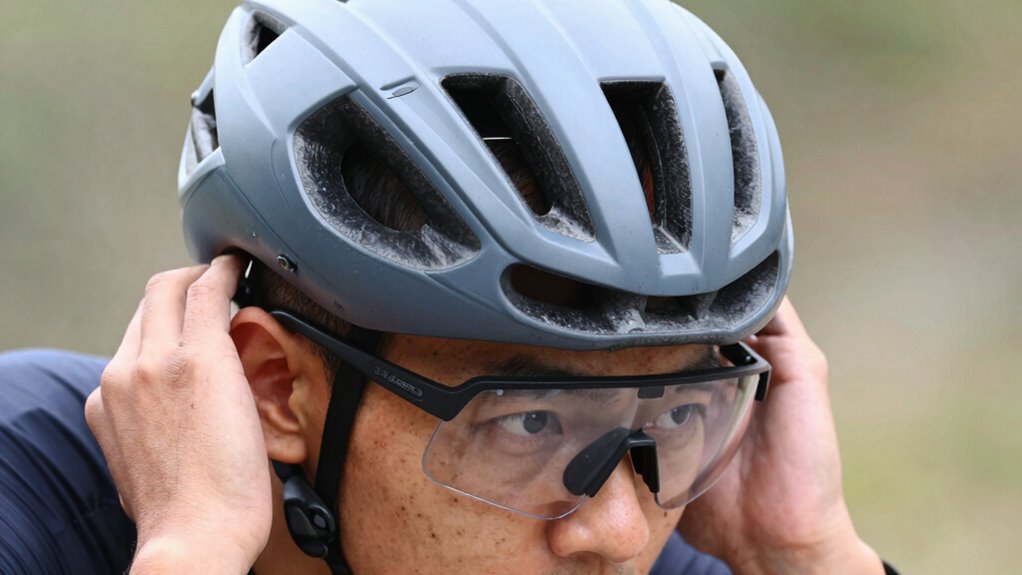
Many helmet-glasses issues come from pressure points that cause discomfort or pain during wear. Adjusting your helmet properly can help reduce these problem areas and improve overall comfort. Paying attention to fit and making the right tweaks can make a big difference in your riding experience. Ensuring your jewelry materials are compatible with your helmet fit can also help prevent irritation and enhance comfort during long rides. Additionally, understanding how helmet fit adjustments influence pressure distribution can lead to a more customized and comfortable ride. Recognizing natural variations in head shape can further assist in selecting a helmet that fits well and reduces discomfort, especially when considering helmet sizing options for optimal fit. Being aware of pressure distribution can help you identify the areas that need relief and guide your adjustments for improved comfort.
Helmet-Glasses Pressure Points
When your helmet presses against your glasses, pressure points often develop, leading to discomfort and pain. This usually happens when helmet padding isn’t properly positioned or if strap tension is too tight, pushing your glasses into your face. Over-tightening the strap can increase pressure on specific spots, causing soreness and even headaches after long rides. Properly adjusting helmet padding ensures even contact, reducing localized pressure. Looser strap tension can also help, allowing your glasses to sit more comfortably without being squeezed. Keep in mind that the shape of your helmet and glasses also influence pressure points. If your glasses press into your temples or nose, it’s a sign you need to fine-tune the fit to prevent ongoing discomfort on your rides.
Proper Helmet Adjustments
Proper helmet adjustments are essential for ensuring both safety and comfort when wearing glasses. Start by adjusting the visor so it sits just above your glasses without pressing down, which prevents pressure points and glare issues. Next, tighten the chin strap so it’s snug but not too tight; it should hold the helmet securely without causing discomfort or putting pressure on your glasses. Check that the helmet sits level on your head, with enough space to prevent pinching or squeezing your glasses’ arms. Ensure the helmet doesn’t shift during movement, which can cause irritation or misalignment. Proper adjustments help distribute pressure evenly, reducing pain and preventing your glasses from shifting or pressing uncomfortably against your face during long rides. Monitoring credit card security measures can also protect your personal data while shopping online for gear or accessories. Additionally, choosing a helmet with a comfortable interior padding designed for glasses wearers can significantly enhance overall comfort. It’s also beneficial to select a helmet that offers sufficient ventilation to keep your head cool during extended rides. Being aware of proper fit helps avoid common problems like helmet pressure points that can cause discomfort over time. Paying attention to helmet weight distribution ensures comfort during prolonged use and prevents fatigue.
How to Adjust Your Helmet for a Snug, Slip-Free Fit
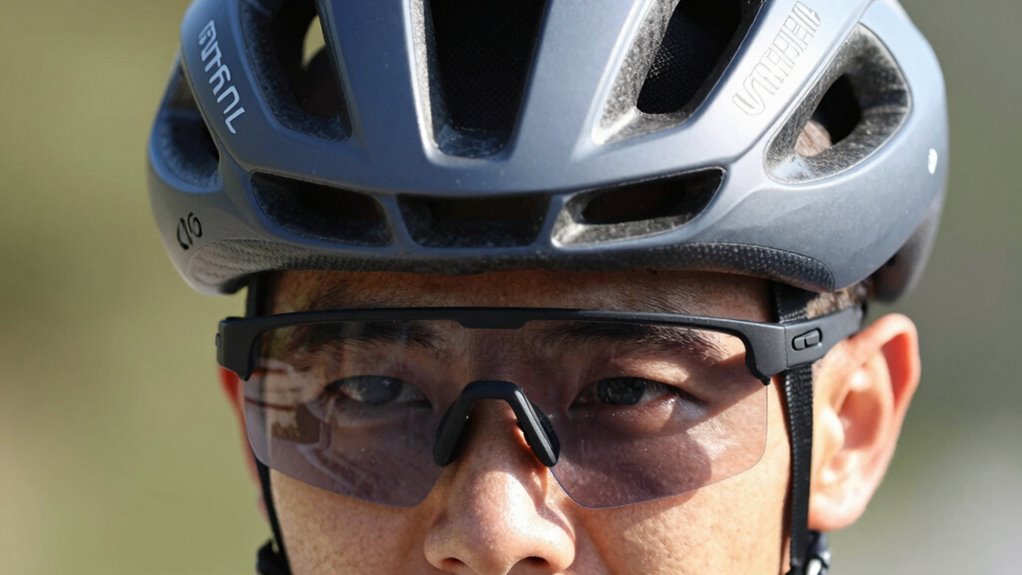
To guarantee your helmet stays securely in place and provides ideal protection, you need to adjust it for a snug, slip-free fit. Start by checking visor alignment; it should sit evenly without obstructing your view. Next, tighten the strap so it’s snug beneath your chin—firm but comfortable. Use the table below to fine-tune your fit:
| Adjustment Area | What to Check | How to Fix |
|---|---|---|
| Visor Alignment | Even, no tilting or wobbling | Adjust visor screws or positioning |
| Strap Tightness | Secure but comfortable fit | Tighten or loosen strap as needed |
| Helmet Fit | Snug around head, no movement | Use the dial or padding adjustments |
Proper adjustments ensure your helmet stays steady, even on long rides, and minimizes pressure points. Ensuring proper fit not only enhances safety but also reduces discomfort during extended use.
Helmet Features That Help Keep Glasses Secure and Comfortable
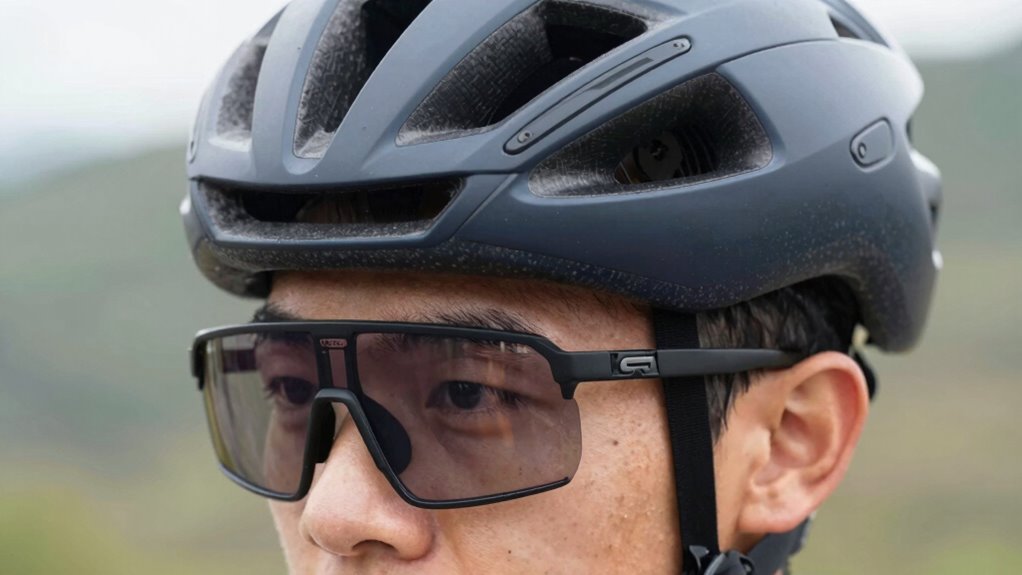
To keep your glasses secure and comfortable, look for helmets with adjustable straps and anti-slip pads that hold everything in place. Proper ventilation also helps prevent discomfort and fogging, making your ride more enjoyable. These features work together to guarantee your glasses stay put without causing pain or pressure. Additionally, selecting helmets with ventilation systems can improve overall comfort by reducing heat buildup and moisture inside the helmet. Incorporating airflow management can further enhance the experience by directing air efficiently around your head and glasses, ensuring a cooler and clearer ride. Paying attention to helmet fit is essential, as a well-fitting helmet distributes pressure evenly and minimizes movement that could disturb your glasses. Considering performance ratings can also help ensure you choose a model with reliable durability and comfort. Properly designed helmet liners contribute significantly to overall comfort and secure fit, especially during long rides.
Adjustable Helmet Straps
Adjustable helmet straps are essential for keeping glasses secure and comfortable during rides. Properly fitting straps ensure helmet safety by maintaining stability, preventing unnecessary movement that could cause discomfort or distraction. With adjustable straps, you can customize the fit around your head, reducing pressure points that might push against your glasses or cause pinching. A well-designed visor also benefits from adjustable straps, as they help keep the helmet aligned properly, preventing shifting that could interfere with your vision or the position of your glasses. When straps are easy to adjust and stay in place, you experience a more comfortable ride without constantly readjusting. Additionally, helmet fit plays a crucial role in ensuring optimal comfort and safety during extended rides. Ensuring your helmet has adjustable straps allows for a personalized fit, which is especially important for those who wear glasses and want to prevent discomfort during long rides. Proper adjustment techniques can further enhance comfort and stability, making your ride safer and more enjoyable.
Anti-Slip Helmet Pads
Anti-slip helmet pads play a crucial role in keeping your glasses secure and comfortable during rides. These pads add extra grip to the interior of your helmet, preventing unwanted movement that can cause discomfort or glasses slipping. Proper helmet padding ensures a snug fit, reducing the need for overly tight strap tension, which can cause pain. When your helmet stays stable, your glasses stay in place, even on rough terrain or long rides. Look for helmets with anti-slip pads that contour well to your head shape. Adjust the strap tension just enough to hold the helmet securely without pressing too hard. This balance minimizes pressure points and keeps your glasses stable, so you can focus on your ride without distraction or discomfort.
Proper Helmet Ventilation
Effective helmet ventilation is essential for keeping your glasses secure and comfortable, especially during long rides or intense activity. The right helmet style features a well-thought-out ventilation design that promotes airflow, preventing overheating and excessive sweat. Good ventilation helps keep your forehead dry, reducing slipping of glasses caused by moisture. Look for helmets with strategically placed vents that allow air to circulate without compromising safety or fit. A helmet with an efficient ventilation design also helps maintain a consistent temperature, so your glasses stay steady and comfortable throughout the ride. Choosing a helmet with proper airflow ensures you stay cool, focused, and pain-free, making your ride more enjoyable and preventing discomfort caused by overheating or moisture build-up.
Tips for Choosing a Helmet That Works Well With Glasses
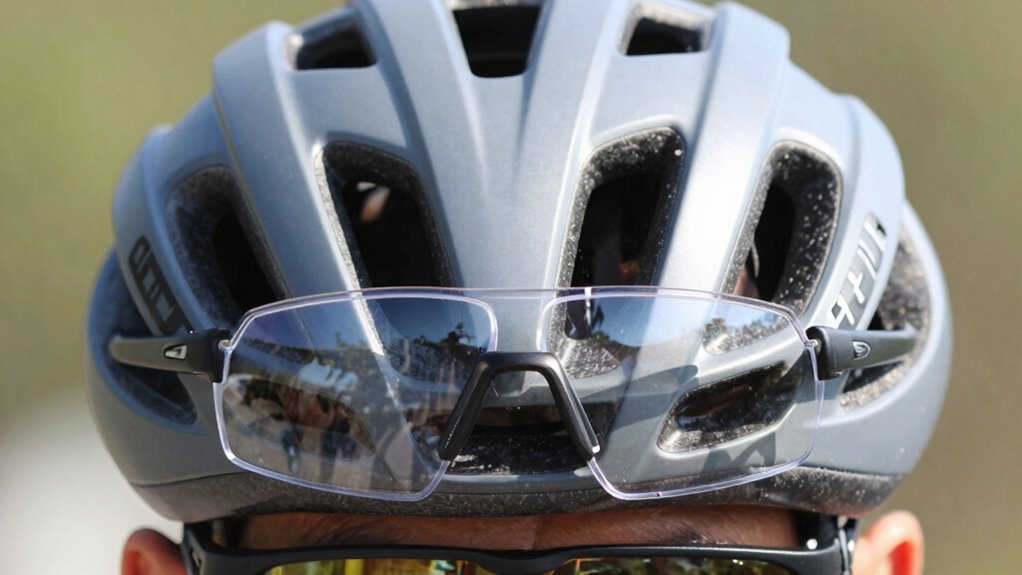
Choosing a helmet that fits comfortably over your glasses can make all the difference in preventing discomfort and pain during rides. Focus on frame compatibility; look for helmets with adjustable padding or a slightly wider interior to accommodate your glasses without pressure. Make certain the helmet doesn’t press against your temples, which can cause lens clarity issues or discomfort. Opt for a helmet with ample space at the sides to avoid squishing your glasses frames, reducing the risk of slipping or scratching. Try on different styles to see how well your glasses sit inside the helmet. Remember, a well-fitting helmet with good frame compatibility ensures your glasses stay secure and your vision remains clear, making long rides more comfortable and enjoyable.
When to Get a Professional Helmet Fitting for Lasting Comfort
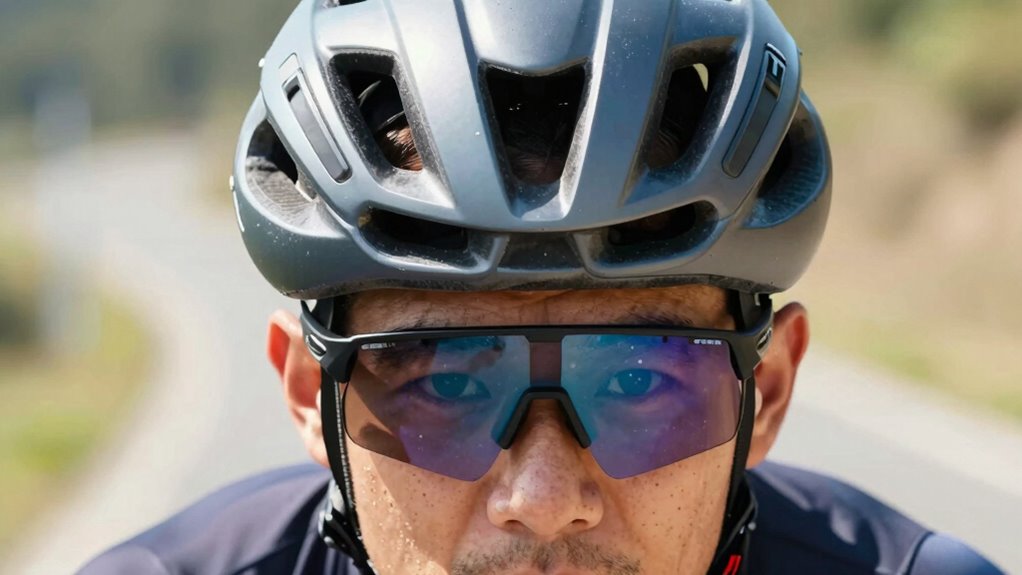
While fitting your helmet at home can be convenient, there are times when consulting a professional guarantees lasting comfort and safety. If you’re unsure about your helmet styling choices or how your helmet color options impact visibility and safety, a professional fitting can make a difference. A specialist ensures your helmet fits snugly without pressure points, which is especially important when wearing glasses. They can also recommend the right helmet style that accommodates your head shape and eyewear comfortably. If you’ve experienced persistent discomfort, headaches, or pain during long rides, it’s time to seek expert advice. A professional fitting helps optimize helmet positioning, so you stay comfortable and protected, no matter your helmet color options or personal style preferences.
Frequently Asked Questions
Can Wearing Glasses Affect Helmet Safety Ratings?
Wearing glasses can impact helmet safety ratings if the helmet isn’t compatible. Guarantee your helmet offers good visor compatibility and sufficient ventilation to prevent fogging, which can distract or impair you. A well-fitting helmet that accommodates your glasses without pressure points maintains safety and comfort. Always check helmet certifications and try it on with your glasses to confirm it stays secure and doesn’t compromise protection during long rides.
Are There Specific Helmet Materials Better for Glasses Wearers?
Ever wonder if some helmet material offers better glasses compatibility? You’ll want a helmet made from lightweight, flexible materials like polycarbonate or carbon fiber, which mold comfortably around glasses and reduce pressure points. These materials also absorb shocks well, enhancing safety. Choosing a helmet with adjustable straps and sufficient interior space guarantees your glasses stay secure and comfortable, letting you focus on the ride without worry about discomfort or safety issues.
How Often Should I Replace My Helmet When Using Glasses?
You should replace your helmet every 3 to 5 years, especially if you wear glasses, because regular use can degrade helmet padding and compromise safety. Check that your strap adjustment remains secure and comfortable, as worn-out padding can affect fit and protection. If you notice cracks, dents, or the padding feels less supportive, it’s time for a new helmet to guarantee maximum safety and comfort on your rides.
Do Prescription Glasses Require Special Helmet Adjustments?
Absolutely, prescription glasses demand different helmet adjustments. You should guarantee the helmet padding provides a snug, comfortable fit without pressure points, and the strap adjustment keeps your glasses secure. Proper fit prevents pain and slipping during rides. So, take the time to fine-tune your helmet’s padding and strap to accommodate your glasses, ensuring safe, snug, and comfortable cycling sessions every time.
Are There Accessories to Help Keep Glasses in Place During Rides?
Yes, you can find accessories like foam padding or silicone inserts to help maintain your glasses in place during rides. Adjusting your helmet strap ensures a snug fit, preventing slipping. Additionally, helmet padding around the temples offers extra grip, reducing pressure on your glasses. Combining these solutions helps you stay comfortable and focused while riding, so your glasses stay secure without causing discomfort or distraction.
Conclusion
Think of your helmet as a trusted saddle that keeps you steady on a bumpy trail. When it fits just right, your glasses stay secure, and your ride feels smooth and pain-free. But a poor fit can be like a loose saddle—causing discomfort and distraction. Take the time to adjust and choose your helmet wisely, so every ride becomes a seamless adventure where your glasses sit comfortably, and you can focus on the road ahead.