
If you keep choosing the wrong helmet shape, it’s likely because you overlook how important fit and interior features are for glasses wearers. Helmets that don’t match your head’s shape can move around, cause discomfort, or even compromise safety. Properly fitted helmets with the right shape and adjustable interior designs ensure your glasses sit comfortably and stay secure during rides. Make sure exploring to discover how selecting the right helmet can improve your ride and safety.
Key Takeaways
- Identify your head shape (round, oval, intermediate) to select a helmet that fits properly and accommodates glasses comfortably.
- Look for helmets with adjustable padding and removable liners designed for better fit and space for glasses arms.
- Choose helmets with interior features like cutouts or extra room to prevent glasses from sitting awkwardly or causing discomfort.
- Avoid one-size-fits-all helmets; prioritize customization options for a secure, comfortable fit that keeps glasses in place.
- Focus on helmet brands and models known for good fit and interior design tailored for glasses wearers.
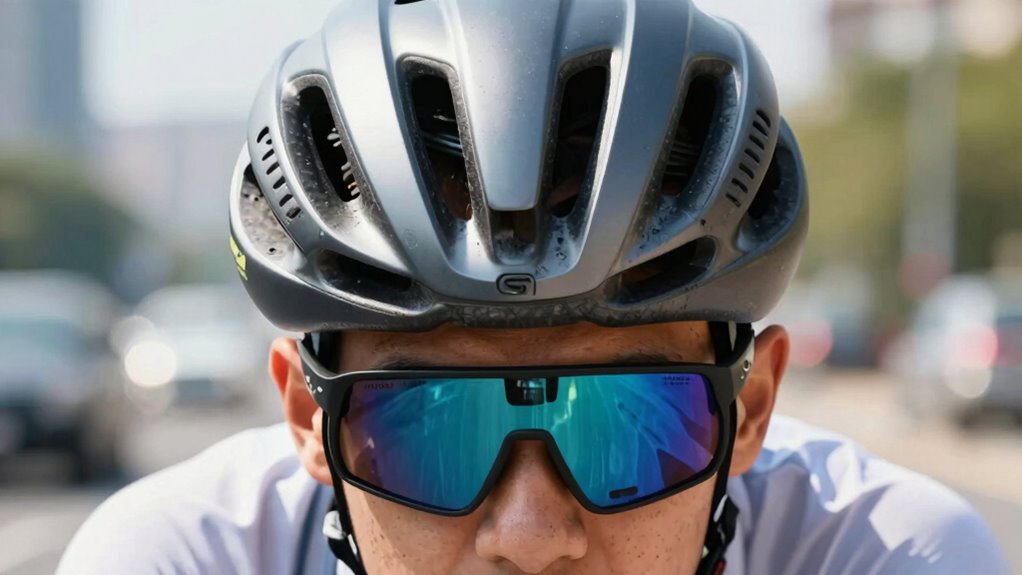
If you’re a glasses rider, you might have noticed that many helmets just don’t seem to fit right, even after multiple attempts to find the perfect one. It’s a common struggle that can make riding uncomfortable and sometimes even unsafe. The key issue is often the shape of the helmet. Many helmets are designed with a one-size-fits-all approach, which doesn’t account for the unique needs of glasses wearers. When your helmet doesn’t fit properly, it can compromise helmet safety, increasing the risk of injury in case of an accident. But it also affects rider comfort, making long rides less enjoyable and even painful.
Choosing the right helmet shape is crucial for both safety and comfort. You need a helmet that provides a secure fit without putting pressure on your glasses or forcing them to sit awkwardly. If the helmet is too tight, it can cause headaches and discomfort, while a loose helmet can shift during your ride, reducing protection when you need it most. This is why understanding different helmet shapes—such as round, oval, and intermediate—is essential. Many helmets are shaped for specific head types, and knowing your head shape can help you pick a helmet that fits snugly yet comfortably, accommodating your glasses without interference.
Another important aspect is the helmet’s interior design. Features like adjustable padding, removable liners, and proper ventilation can make a significant difference. For glasses riders, look for helmets with enough space across the forehead and sides to comfortably accommodate your glasses arms. Some helmets come with cutouts or special lining that allows for better glasses fit, which enhances rider comfort and ensures your glasses stay in place during rides. When you select a helmet that fits your head shape well, it not only boosts rider comfort but also ensures helmet safety. A well-fitting helmet stays in the correct position, providing optimal impact absorption and protection. Additionally, interior customization options are increasingly available, allowing riders to fine-tune the fit for maximum comfort and safety. Choosing a helmet with appropriate interior features can further improve comfort and fit for glasses wearers, especially during longer rides. Properly fitting helmets also reduce fatigue, making long rides more enjoyable and less physically taxing.
helmet for glasses wearers
As an affiliate, we earn on qualifying purchases.
As an affiliate, we earn on qualifying purchases.
Frequently Asked Questions
How Do I Measure My Head for the Perfect Helmet Fit?
To measure your head for the perfect helmet fit, use a flexible measuring tape around the widest part of your head, just above your eyebrows and ears. Make sure it’s snug but not tight. Consider helmet materials; lightweight options provide comfort. Also, check ventilation systems for airflow, especially if you ride long distances. Try on different shapes to see which fits best, prioritizing a snug fit that doesn’t cause pressure points.
What Helmet Shapes Are Best for Different Face Types?
Choosing the right helmet shape is like finding your perfect suit—fit and comfort matter. For round faces, opt for an elongated or oval shape to add definition. Square faces benefit from helmets with more curve, while heart-shaped faces suit helmets that are wider at the bottom. Always prioritize helmet ventilation and consider weight to avoid discomfort during long rides. The right shape makes your ride safer and more enjoyable.
How Often Should I Replace My Motorcycle Helmet?
You should replace your motorcycle helmet every 5 to 7 years, or sooner if you notice any damage, cracks, or deterioration. Even if it looks fine, the foam can degrade over time, reducing protection. When swapping it out, consider new helmet colors for visibility and updated helmet accessories like better ventilation or communication systems. Regular replacement guarantees the best safety, comfort, and style on every ride.
Are There Specific Helmets Designed for Glasses Wearers?
Are there helmets designed specifically for glasses wearers? Yes, some helmets offer better eyewear compatibility and allow for helmet customization to accommodate glasses comfortably. These helmets feature wider eye openings, adjustable padding, or removable liners to prevent pressure on your glasses. When choosing, look for models that prioritize eyewear comfort, ensuring you don’t have to compromise safety for convenience. Wouldn’t you prefer a helmet that fits both your head and glasses perfectly?
Can Helmet Shape Influence Safety and Protection Levels?
Yes, helmet shape can markedly influence safety and protection levels. Proper helmet design guarantees a secure fit, evenly distributes impact forces, and meets safety standards. When choosing a helmet, look for models that align with safety standards like DOT or ECE. An ill-fitting or poorly designed helmet may compromise protection, especially if it doesn’t accommodate your glasses comfortably. Always prioritize helmet design and safety standards to stay protected on the road.
adjustable helmet with removable liner
As an affiliate, we earn on qualifying purchases.
As an affiliate, we earn on qualifying purchases.
Conclusion
So, next time you’re shopping for a helmet, remember that your glasses might just be the unexpected guide. It’s funny how a simple detail like your frame shape can lead you to the right fit—and the right safety. Coincidentally, many riders overlook this tip, only to realize later that their glasses were quietly steering them all along. Trust your gear, and let your glasses help you find the perfect helmet shape for a safer, more comfortable ride.
helmet with interior cutouts for glasses
As an affiliate, we earn on qualifying purchases.
As an affiliate, we earn on qualifying purchases.
helmet shape for oval head
As an affiliate, we earn on qualifying purchases.
As an affiliate, we earn on qualifying purchases.