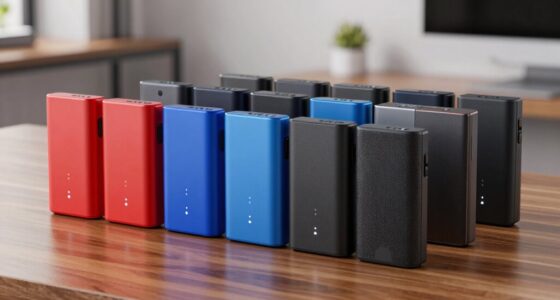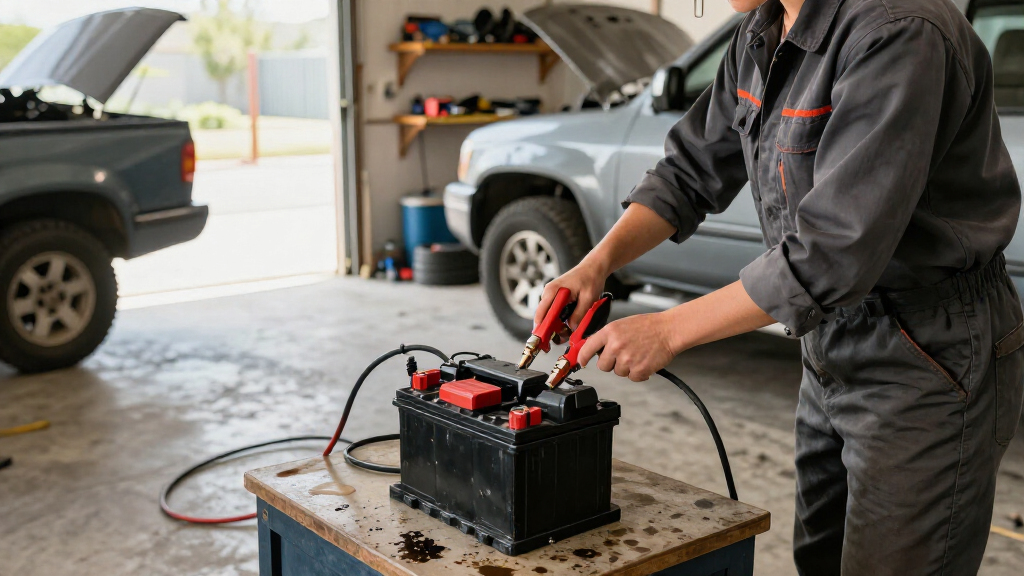

Heavy duty car battery chargers vary most in how quickly they charge, whether they can start an engine, and how easily they handle different battery voltages. My best overall pick is the TowerTop 12V Smart Car Battery Charger, whose selectable 2/10/25A rates offer a useful balance of everyday charging and faster recovery. The Schumacher Electric DSR124 stands out for buyers who need a wheeled charger and engine starter, while the Yourheey 20A charger adds 12V/24V support and repair and winter modes. The main tradeoff is between portable, lower-current maintainers and heavier units built for higher output or engine starting. Read on for the full breakdown and guidance on matching a charger to your battery and workload.

Get business pricing on garage and car supplies
- Business-only prices and quantity discounts
- Tax-exempt purchasing
- Multiple users, one account, clear invoices
Complete the kit


Key Takeaways
- The lineup splits into two jobs: maintainers such as the Schumacher SC1364 are suited to routine upkeep, while engine-start models such as the DSR124 are built for more demanding starting support.
- Selectable charge rates add flexibility: the TowerTop’s 2/10/25A settings can suit both lower-rate charging and faster charging better than a single-rate unit.
- Voltage support is not universal: several models support 6V and 12V batteries, while options such as the Yourheey and DSR140 add 24V compatibility.
- Wheels make high-capacity units easier to place, not portable: wheeled Schumacher models fit a garage or workshop better than a compact charger kept in a vehicle.
- Mode count should match the task: repair, desulfation, and winter settings can broaden use, but they do not replace choosing the right voltage, battery chemistry, or charge rate.
| Schumacher Electric SC1400 6A Battery Charger and 300A Engine Starter |  | Best Overall for 6V/12V Starting Power | Model: SC1400 | Battery voltage: 6V and 12V | Battery types: Standard, AGM, gel, and deep-cycle | VIEW LATEST PRICE | See Our Full Breakdown |
| Yourheey 12V/24V 20A Battery Charger and Maintainer with Repair and Winter Modes |  | Best for 24V Lead-Acid Systems | Supported systems: 12V and 24V | Input voltage: 110V | Maximum current: 20A | VIEW LATEST PRICE | See Our Full Breakdown |
| 12V/24V Automatic Car Battery Charger and Maintainer, 20A |  | Best for Cold-Weather Charging Visibility | Supported systems: 12V and 24V detection | Input voltage: 110V | Maximum current: 20A | VIEW LATEST PRICE | See Our Full Breakdown |
| TowerTop 12V Smart Car Battery Charger, 2/10/25A |  | Best for Adjustable 12V Charging | Output voltage: 12V | Input voltage: 120V AC | Charging current settings: 2A, 10A, 25A, and automatic | VIEW LATEST PRICE | See Our Full Breakdown |
| Schumacher Electric DSR139 Wheeled 10A Car Battery Charger & Maintainer |  | Best for Manual Control and Large Vehicles | Model: DSR139 | Output voltage: 6V and 12V DC | Input voltage: 120V | VIEW LATEST PRICE | See Our Full Breakdown |
| Schumacher Electric DSR124 Wheeled Battery Charger and Engine Starter |  | Best for 6V/12V/24V Shop Use | Output voltage: 6V, 12V, and 24V | Input voltage: 24V | Engine start: 330A | VIEW LATEST PRICE | See Our Full Breakdown |
| Schumacher Electric SC1280 15A Car Battery Charger and Maintainer, 6V/12V |  | Best for Battery Care and Diagnostics | Maximum charging current: 15A | Voltage: 6V and 12V | Battery types: Standard, AGM, gel, and deep-cycle | VIEW LATEST PRICE | See Our Full Breakdown |
| CRAFTSMAN 6V/12V 10A Battery Charger and 250A Engine Starter, CMXCESM233 |  | Best Manual-Control Starter | Voltage: 6V and 12V | Charge mode: 10A at 12V | Engine start: 250A at 12V | VIEW LATEST PRICE | See Our Full Breakdown |
| Schumacher Electric SC1445 Wheeled 6V/12V Battery Charger and 250A Engine Starter |  | Best Wheeled 6V/12V Starter | Voltage: 6V and 12V | Engine start: 250A | Boost charge: 25A at 6V and 12V; 50A at 12V | VIEW LATEST PRICE | See Our Full Breakdown |
| Schumacher Electric DSR140 10A Battery Charger and 200A Engine Starter, 12V/24V |  | Best for 12V Charging with 24V Boost Support | Charging voltage: 12V | Engine start: 200A at 12V | Boost charge: 50A at 12V; 25A at 12V/24V | VIEW LATEST PRICE | See Our Full Breakdown |
| Schumacher Electric SC1364 Wheeled 6A Battery Charger and Maintainer |  | Best Wheeled Pick for 12V Vehicles | Model: SC1364 | Battery voltage: 12V | Charging current: 2A–6A | VIEW LATEST PRICE | See Our Full Breakdown |
| PLXX 12V/24V 15A Heavy Duty Smart Battery Charger and Desulfator |  | Best for Repair and Battery-Type Range | Model: BC-602 | Input voltage: 120V | Output voltage: 12V/24V | VIEW LATEST PRICE | See Our Full Breakdown |
| PLXX 12V/24V 15A Smart Battery Charger and Maintainer |  | Best for Display-Based Charging Control | Model: BC-603 | Supported battery voltage: 12V and 24V | Input voltage: 120V | VIEW LATEST PRICE | See Our Full Breakdown |
| Schumacher Electric SC1281 6A 6V/12V Battery Charger and Maintainer with 100A Engine Start |  | Best for 6V Batteries and Testing | Model: SC1281 | Battery voltage: 6V/12V | Charging current: 2A–6A | VIEW LATEST PRICE | See Our Full Breakdown |
| heavy duty car battery charger | Input voltage | Battery compatibility |
|---|---|---|
| Schumacher Electric SC1400 6A | — | — |
| Yourheey 12V/24V 20A Battery C | 110V | — |
| 12V/24V Automatic Car Battery | 110V | Lead-acid; not compatible with lithium or LiFePO4 |
| TowerTop 12V Smart Car Battery | 120V AC | STD, AGM, GEL, wet, MF, EFB, calcium, and deep-cycle lead-acid |
| Schumacher Electric DSR139 Whe | 120V | Standard, AGM, and gel |
| Schumacher Electric DSR124 Whe | 24V | — |
| Schumacher Electric SC1280 15A | — | — |
| CRAFTSMAN 6V/12V 10A Battery C | — | Standard, AGM, gel, and deep-cycle |
| Schumacher Electric SC1445 Whe | — | Standard, AGM, gel, and deep-cycle |
| Schumacher Electric DSR140 10A | — | Standard, AGM, gel, and deep-cycle |
| Schumacher Electric SC1364 Whe | — | Standard and AGM |
| PLXX 12V/24V 15A Heavy Duty Sm | 120V | — |
| PLXX 12V/24V 15A Smart Battery | 120V | — |
| Schumacher Electric SC1281 6A | — | — |
More Details on Our Top Picks
Schumacher Electric SC1400 6A Battery Charger and 300A Engine Starter
The SC1400 is the strongest all-around fit here for buyers who need a charger that can also help start larger vehicles. Its 300A 12V starting output exceeds the DSR139’s 225A, while the SC1400 also handles 6V batteries and offers automatic charging, maintenance, and reconditioning. That mix suits a home garage with cars, trucks, or equipment that may sit between uses. Its wheeled steel chassis and retractable handle make moving it easier than carrying a heavy unit, though it still needs an outlet and takes more storage space than a compact charger. Charging is modest at up to 6A on 12V, so it is less suited to buyers prioritizing faster routine charging. Compared with the TowerTop, it trades adjustable 25A charging for stronger starting output and 6V support.
Pros:- 300A 12V and 200A 6V starting outputs suit a broad range of vehicles and equipment.
- Supports standard, AGM, gel, and deep-cycle batteries at both 6V and 12V.
- Combines charging, automatic maintenance, and desulfation reconditioning.
- Wheels and a retractable handle help move the steel-cased unit around a garage.
Cons:- Maximum 12V charging rate of 6A is slower than the TowerTop’s 25A setting.
- Requires an electrical outlet, so it cannot provide portable starting power away from mains.
- Wheeled construction needs more storage room than a handheld charger.
Best for: Garage owners who need one wheeled unit for 6V and 12V batteries, maintenance, and strong engine-start assistance.
Not ideal for: Buyers who need fast high-current charging, a compact device, or charging away from a standard electrical outlet.
- Model:SC1400
- Battery voltage:6V and 12V
- Battery types:Standard, AGM, gel, and deep-cycle
- Starting power:300A at 12V; 200A at 6V
- Boost mode:Up to 60A
- Charging rates:12V: 6A to 2A; 6V: 2A
- Construction:Steel case with wheels and retractable handle
- Cord and cable length:6 ft power cord; 6 ft booster cables
Our verdict“Choose the SC1400 if you want a wheeled 6V/12V garage charger with stronger starting power than the DSR139 and can accept slower charging.”
Yourheey 12V/24V 20A Battery Charger and Maintainer with Repair and Winter Modes
The Yourheey earns its place by serving 24V lead-acid systems, a capability the SC1400 and TowerTop do not offer. Its 20A maximum current and selectable modes make it a better match for maintaining or charging compatible batteries in trucks and equipment than a low-amperage maintainer. Automatic voltage detection and shutoff reduce the need to track the charging cycle, while pulse repair and winter modes add flexibility for aging batteries and cold-weather use. The tradeoff is a strict chemistry limit: it does not support lithium or LiFePO4, and its 12.5-pound listed weight is substantial for a charger of this size. It also lacks the high engine-start output of the SC1400 or DSR139, so this is a charging and maintenance pick, not a substitute for a dedicated engine starter.
Pros:- Supports both 12V and 24V lead-acid systems, unlike the SC1400 and TowerTop.
- Up to 20A charging current suits larger batteries better than low-rate maintainers.
- Automatic voltage detection and shutoff help limit overcharging.
- Pulse repair and winter modes add options for aging batteries and cold conditions.
Cons:- Not compatible with lithium or LiFePO4 batteries.
- No listed engine-start output, unlike the SC1400 and DSR139.
- At 12.5 pounds, it is relatively heavy for a unit without a wheeled chassis.
Best for: Owners of 12V or 24V lead-acid batteries in trucks, equipment, or vehicles who want automatic charging and cold-weather modes.
Not ideal for: Lithium-battery owners or drivers who need a charger with a high-current engine-start function.
- Supported systems:12V and 24V
- Input voltage:110V
- Maximum current:20A
- Compatible battery types:AGM, GEL, flooded, EFB, calcium, MF, and deep-cycle lead-acid
- Charging modes:Selectable charging, pulse repair, winter, and energy-saving modes
- Automatic functions:Voltage detection and automatic shutoff
- Dimensions:3.15 × 7.09 × 2.36 inches
- Weight:12.5 lb
- Warranty:36 months
Our verdict“Pick the Yourheey for automatic 12V/24V lead-acid charging and maintenance, but skip it if you need lithium support or engine-start power.”
12V/24V Automatic Car Battery Charger and Maintainer, 20A
This 20A charger is aimed at owners who want clear charging information while tending 12V or 24V lead-acid batteries. Its LCD shows voltage, current, and temperature, giving more visibility than the Yourheey, whose supplied details focus on automatic detection and modes rather than a display. Winter operation is rated down to -4°F (-20°C), making it a useful option for cold garages, and the selectable charge rates cover both faster charging and trickle maintenance. It remains a charger rather than a jump-start unit: unlike the SC1400, it has no stated engine-start output. Its one-year warranty is also shorter than the Yourheey’s 36-month term. Pulse repair has limits too; it cannot restore physically damaged or short-circuited cells, and lithium batteries are unsupported.
Pros:- Detects 12V or 24V systems and supports selectable charging rates.
- LCD reports voltage, current, and temperature during charging.
- Winter mode is rated for operation down to -4°F (-20°C).
- Thermal cutoff and other listed protections add safeguards during charging.
Cons:- Does not support lithium or LiFePO4 batteries.
- Cannot repair physically damaged or short-circuited battery cells.
- One-year warranty is shorter than the Yourheey’s stated 36-month warranty.
Best for: Drivers and equipment owners with 12V/24V lead-acid batteries who charge in cold conditions and want live electrical readings.
Not ideal for: Lithium-battery owners, people seeking engine-start assistance, or buyers who want a longer stated warranty.
- Supported systems:12V and 24V detection
- Input voltage:110V
- Maximum current:20A
- Battery compatibility:Lead-acid; not compatible with lithium or LiFePO4
- Display:LCD showing voltage, current, and temperature
- Operating temperature:Down to -4°F (-20°C)
- Connections:Alligator clamps
- Weight:11.8 lb
- Warranty:1 year
Our verdict“Choose this model for cold-weather lead-acid charging with an informative LCD, not for jump-starting or lithium battery service.”
TowerTop 12V Smart Car Battery Charger, 2/10/25A
The TowerTop is the lineup’s strongest choice for adjustable 12V charging: its 2A, 10A, and 25A settings let owners choose a gentle maintenance rate or a quicker charge for a compatible lead-acid battery. That 25A ceiling is well above the SC1400’s 6A charging rate, though the SC1400 supports 6V batteries and delivers far more starting power. TowerTop also adds an eight-stage process with desulfation, repair, winter, float, and pulse maintenance modes, plus an LCD for charge status. Its 100A engine-start function offers some starting assistance, but it is below the SC1400’s 300A and DSR139’s 225A outputs. The key limitation is voltage coverage: it supports 12V lead-acid batteries only. Repair mode also cannot recover completely drained batteries.
Pros:- Selectable 2A, 10A, and 25A charging rates accommodate maintenance and faster charging.
- Eight-stage charging includes desulfation, repair, winter, float, and pulse maintenance modes.
- LCD displays charging status and parameters.
- 100A engine-start function adds assistance beyond a standard charger.
Cons:- Supports 12V lead-acid batteries only, unlike the SC1400’s 6V/12V coverage.
- Its 100A engine-start output is lower than the SC1400 and DSR139.
- Repair mode cannot restore completely drained batteries.
Best for: 12V vehicle owners who want selectable charge rates, smart maintenance modes, and limited engine-start assistance in one unit.
Not ideal for: Owners of 6V or 24V systems, lithium batteries, or vehicles that call for stronger engine-start output.
- Output voltage:12V
- Input voltage:120V AC
- Charging current settings:2A, 10A, 25A, and automatic
- Maximum charging current:25A
- Engine-start current:100A
- Battery compatibility:STD, AGM, GEL, wet, MF, EFB, calcium, and deep-cycle lead-acid
- Charging stages:8
- Dimensions and weight:7.68 × 10.04 × 4.92 in; 5 lb
- Certifications:ETL, FCC
Our verdict“Choose the TowerTop for flexible 12V charging and maintenance, but opt for the SC1400 or DSR139 if stronger starting output matters more.”
Schumacher Electric DSR139 Wheeled 10A Car Battery Charger & Maintainer
The DSR139 is the pick for buyers who value manual control and strong starting assistance over automatic convenience. Its 225A starting current is suited to trucks, SUVs, and other large vehicles, while the amp meter and 135-minute timer let an attentive owner manage charging directly. Compared with the SC1400, it has lower starting output and does not list a reconditioning mode, but its 10A charging current is higher than the SC1400’s maximum 6A on 12V. The wheeled frame, retractable handle, and 12-foot total reach help position it around a vehicle without carrying the 30-pound unit. That weight still makes it a garage tool rather than a compact roadside device. Manual operation also demands monitoring, and its 6V/12V coverage leaves 24V systems out.
Pros:- 225A starting current is suited to larger engines and exceeds the TowerTop’s 100A start function.
- Amp meter and 135-minute timer provide direct control over the charging session.
- 10A charging current is higher than the SC1400’s maximum 12V charging rate.
- Wheels, retractable handle, and 12-foot total reach support garage mobility and positioning.
Cons:- Manual operation requires monitoring rather than providing fully automatic charging.
- At 30 lb, it is less convenient to carry than a compact charger.
- Supports only 6V and 12V systems, not 24V applications.
Best for: Truck and SUV owners who want a wheeled garage charger with 225A starting power and hands-on control over charging.
Not ideal for: Buyers who want automatic shutoff and maintenance, need 24V support, or need a lightweight roadside charger.
- Model:DSR139
- Output voltage:6V and 12V DC
- Input voltage:120V
- Charging current:10A
- Starting current:225A
- Battery compatibility:Standard, AGM, and gel
- Cable gauge and total reach:6-gauge cables; 12 ft total reach
- Dimensions and weight:15.63 × 10.25 × 34.75 in; 30 lb
- Timer and warranty:135-minute timer; 1-year warranty
Our verdict“Choose the DSR139 if you want manual charging control and 225A starting help for a large vehicle; skip it if you prefer automatic operation.”
Schumacher Electric DSR124 Wheeled Battery Charger and Engine Starter
The DSR124 is the most capable heavy-duty shop pick here for buyers who need to work across 6V, 12V, and 24V systems. Its 330A engine-start capacity and 70A flash reprogram mode give it a broader service role than the 250A-start Schumacher SC1445, which is limited to 6V and 12V systems. Automatic microprocessor control and reverse hookup protection help reduce charging and connection mistakes, while its 17-foot cable offers more reach around a vehicle than the six-foot leads listed for several other models. The tradeoff is substantial: at 70 pounds and over 32 inches long, this is better suited to a garage or service bay than casual home storage. Choose it for range and starting power, not portability.
Pros:- Supports 6V, 12V, and 24V systems, broader voltage coverage than the SC1445.
- 330A engine-start capacity and a 70A flash reprogram mode suit demanding shop tasks.
- Automatic microprocessor control and reverse hookup protection help guard against common charging errors.
- 17-foot cable, wheels, and retractable handle help with reach and movement around a service area.
Cons:- At 70 pounds, moving it up stairs or lifting it into a vehicle is impractical.
- Its 32 x 18.3 x 15.4-inch dimensions require significant storage space.
- The listed 24V input voltage may limit compatibility with some workshop power setups.
Best for: Independent garages, fleet-maintenance bays, and RV or boat owners who need one wheeled unit for 6V, 12V, and 24V batteries.
Not ideal for: Drivers with limited garage storage or anyone who needs to carry a charger frequently; its 70-pound weight and large footprint make it cumbersome.
- Output voltage:6V, 12V, and 24V
- Input voltage:24V
- Engine start:330A
- Flash reprogram mode:70A
- Compatible batteries:Standard, AGM, gel, and deep-cycle
- Cable reach:17 feet
- Dimensions:32 x 18.3 x 15.4 inches
- Weight and housing:70 pounds; steel
- Safety and mobility:Reverse hookup protection, automatic microprocessor control, wheels, and retractable handle
Our verdict“Choose the DSR124 for a fixed service area that needs high starting power and broad 6V/12V/24V coverage, but skip it if compact storage matters.”
Schumacher Electric SC1280 15A Car Battery Charger and Maintainer, 6V/12V
The SC1280 is the maintenance-focused choice in this group: it charges, maintains, tests, and restores batteries rather than trying to serve as a heavy engine starter. Its 15A maximum charging current is stronger than the 10A charging mode on the wheeled Schumacher SC1445, while its tester and desulfation function add useful checks for owners managing several batteries. Microprocessor-controlled charging adjusts current automatically, and reverse-clamp protection helps reduce the risk of a bad connection. That makes it a more approachable home-garage option than the SC1445’s manual timer and analog meter. The limit is its role: it has no listed engine-start mode, and the 3A 12V maintain mode is not a fast recovery solution. It also needs AC power and has six-foot leads.
Pros:- Combines charging, maintaining, testing, and restoration in one unit.
- 15A maximum charging current exceeds the 10A charge mode listed for the SC1445.
- Supports standard, AGM, gel, and deep-cycle batteries in both 6V and 12V.
- Microprocessor control, desulfation, and reverse-clamp protection add useful battery-care functions.
Cons:- No engine-start or boost capacity is listed, unlike the SC1445 and CRAFTSMAN CMXCESM233.
- The 12V maintain mode is limited to 3A, so maintenance charging is not rapid recovery.
- Requires AC power and the listed power and booster leads are each six feet long.
Best for: Home mechanics and seasonal-vehicle owners who want one AC-powered unit to charge, maintain, test, and restore compatible 6V or 12V batteries.
Not ideal for: Drivers who need emergency engine-start assistance, long cable reach, or a charger that can operate away from an AC outlet.
- Maximum charging current:15A
- Voltage:6V and 12V
- Battery types:Standard, AGM, gel, and deep-cycle
- Functions:Charging, maintaining, testing, and restoring
- 12V maintain mode:3A
- 6V charge mode:2A
- Power source:AC
- Power and booster cable lengths:6 feet each
Our verdict“Pick the SC1280 for automated charging and battery diagnostics at home, not for starting a vehicle with a depleted battery.”
CRAFTSMAN 6V/12V 10A Battery Charger and 250A Engine Starter, CMXCESM233
The CRAFTSMAN CMXCESM233 suits buyers who want a wheeled charger and starter but prefer to monitor charging themselves. It pairs a 250A 12V engine start with 50A and 25A boost modes, giving it more starting capability than the SC1280, which focuses on charging and battery care without a listed starter. Its analog ammeter makes charging activity visible, and the 135-minute timer shuts the unit off at the selected interval. That timer is a useful backstop, not a substitute for attention: this is a manual charger, unlike the automatically controlled SC1280, so the user must select and manage the charge period. The 10A charge mode is specified for 12V only, another reason to view its 6V support as part of a broader manual-use setup rather than assume identical charging options at both voltages.
Pros:- Combines a 250A 12V engine start with 50A and 25A boost modes.
- Supports standard, AGM, gel, and deep-cycle batteries.
- 135-minute timer with automatic shutoff offers a defined charging interval.
- Steel case, heavy-duty clamps, wheels, and retractable handle suit workshop use.
Cons:- Manual charging requires the user to choose settings and monitor the process.
- The 10A charging mode is specified for 12V batteries only.
- No 24V engine-start capability is listed, unlike the DSR124.
Best for: Garage owners who want a wheeled 6V/12V unit with engine-start and boost modes, and are comfortable monitoring an analog meter and timer.
Not ideal for: Drivers seeking hands-off charging, a 24V engine-start option, or a 10A charge mode for 6V batteries.
- Voltage:6V and 12V
- Charge mode:10A at 12V
- Engine start:250A at 12V
- Boost modes:50A at 12V; 25A at 6V/12V
- Timer:135-minute manual timer with automatic shutoff
- Battery compatibility:Standard, AGM, gel, and deep-cycle
- Display:Analog ammeter
- Construction and mobility:Steel case, heavy-duty clamps, retractable handle, and wheels
Our verdict“Choose the CMXCESM233 if you want a wheeled starter with visible manual controls and can supervise charging.”
Schumacher Electric SC1445 Wheeled 6V/12V Battery Charger and 250A Engine Starter
The SC1445 is a straightforward shop-style combination charger and starter for buyers who need wheeled mobility and support for common 6V and 12V batteries. Its 250A engine-start mode matches the CRAFTSMAN CMXCESM233, and both use a 10A charge mode, boost settings, an analog ammeter, and a 135-minute timer. The SC1445’s clear fit is the buyer who wants this familiar manual-control layout in a Schumacher unit; it does not offer the DSR124’s 24V coverage, 330A starting capacity, or automatic microprocessor control. Instead, the ammeter and timer put more control—and responsibility—in the user’s hands. The 50A boost is specified for 12V only, while the 25A boost supports both 6V and 12V. Its wheels and retractable handle help with movement, though they do not make it a compact charger.
Pros:- 250A engine-start mode adds emergency starting capability to routine charging.
- Supports 6V and 12V standard, AGM, gel, and deep-cycle batteries.
- 25A and 50A boost settings provide options beyond its 10A charge mode.
- Wheels, retractable handle, analog ammeter, and timer support shop use and manual oversight.
Cons:- Manual timer means the user must manage the charging period.
- The 50A boost mode is specified for 12V only.
- It lacks the DSR124’s 24V support and higher 330A engine-start capacity.
Best for: Home garages and small workshops that need a wheeled 6V/12V charger with a 250A starter and prefer manual charge monitoring.
Not ideal for: Users who want automatic charging, 24V engine starting, or a compact unit that is easy to store on a shelf.
- Voltage:6V and 12V
- Engine start:250A
- Boost charge:25A at 6V and 12V; 50A at 12V
- Charge mode:10A
- Timer:Up to 135 minutes
- Battery compatibility:Standard, AGM, gel, and deep-cycle
- Display:Analog ammeter
- Housing and mobility:Heavy-duty steel case, wheels, and retractable handle
- Power cord length:6 feet
Our verdict“The SC1445 makes sense for a workshop needing a wheeled 6V/12V starter, provided manual monitoring is acceptable.”
Schumacher Electric DSR140 10A Battery Charger and 200A Engine Starter, 12V/24V
The DSR140 bridges routine 12V charging and occasional higher-voltage starting tasks, but its 24V capability is narrower than the DSR124’s. It charges and maintains at 10A on 12V, with a 200A 12V engine start and boost modes listed at 50A for 12V and 25A for 12V/24V. That makes it a more focused alternative to the DSR124, which supports 24V output and a higher 330A start, while the DSR140 keeps its everyday charging role centered on 12V batteries. The analog ammeter and 135-minute manual timer suit users who want direct control, but they also require monitoring; unlike the SC1280, this is not an automatic battery-care unit. Its six-foot booster cables and wheeled steel construction fit a shop better than a portable roadside kit.
Pros:- 200A 12V engine start and multiple boost modes expand its use beyond routine charging.
- 25A boost supports both 12V and 24V systems.
- 10A charge-and-maintain mode covers standard, AGM, gel, and deep-cycle 12V batteries.
- Steel case, wheels, retractable handle, and analog meter suit workshop use.
Cons:- The 10A charge-and-maintain mode is specified for 12V only.
- The 135-minute manual timer requires the user to manage charging.
- Its 200A 12V start and limited 24V support are less capable than the DSR124.
Best for: Mechanics or equipment owners who mainly charge 12V batteries but need a wheeled unit with 12V starting and a 24V boost option.
Not ideal for: Buyers who need 24V routine charging or a stronger 24V starting mode, or who prefer automatic charging without timer supervision.
- Charging voltage:12V
- Engine start:200A at 12V
- Boost charge:50A at 12V; 25A at 12V/24V
- Charge and maintain:10A at 12V
- Battery compatibility:Standard, AGM, gel, and deep-cycle
- Timer and meter:135-minute manual timer; analog ammeter
- Booster cables:6-gauge, 6 feet
- Construction:Steel case
Our verdict“Pick the DSR140 for mostly 12V charging with occasional 24V boost needs, not for full 24V charging and starting duties.”
Schumacher Electric SC1364 Wheeled 6A Battery Charger and Maintainer
The SC1364 is the most mobile choice here for a garage that needs one unit to charge, maintain, recondition, and help start several kinds of 12V vehicles. Its wheels and retractable handle make it easier to move than the stationary PLXX BC-602, while the 150A engine-start function adds a stronger starting assist than the SC1281’s 100A rating. A 20A boost setting gives another option when a battery needs more than its regular 2A–6A charge, but this is still a charger for patient charging and maintenance—not a high-current replacement for larger shop equipment. The steel case and reverse-hookup protection suit shared garage use. Its key limitation is 12V-only compatibility; buyers with 6V batteries should look at the SC1281 instead. The included-item listing also names SC1361L, so I’d verify the exact model supplied.
Pros:- Combines charging, maintenance, reconditioning, and a 150A engine-start function
- Works with standard and AGM 12V batteries across several vehicle types
- Wheels and a retractable handle make moving and storing the steel-cased unit easier
- Reverse-hookup protection helps guard against incorrect clamp connections
Cons:- Supports 12V batteries only, unlike the 6V/12V Schumacher SC1281
- The 2A–6A charging range is modest for large batteries that need quicker routine charging
- The included-item listing identifies model SC1361L rather than SC1364, so the supplied model may need checking
Best for: Drivers and small garages that need a movable charger for multiple 12V cars, trucks, motorcycles, ATVs, SUVs, or boats, plus occasional starting assistance.
Not ideal for: Owners who need to charge 6V batteries, or buyers seeking faster routine charging than a 6A charger can provide.
- Model:SC1364
- Battery voltage:12V
- Charging current:2A–6A
- Boost charge:20A
- Engine start:150A
- Battery compatibility:Standard and AGM
- Functions:Starting, charging, maintaining, and reconditioning
- Case and mobility:Steel case, wheels, and retractable handle
- Cables:6 ft power cord; 6 ft 8-gauge booster cables
Our verdict“Choose the SC1364 if you want a wheeled, multipurpose charger for 12V vehicles and can accept a modest regular charging rate.”
PLXX 12V/24V 15A Heavy Duty Smart Battery Charger and Desulfator
The PLXX BC-602 is a strong fit when battery variety matters more than portability: it supports 12V and 24V lead-acid systems and a broad mix of AGM, Gel, flooded, EFB, Calcium, MF, and deep-cycle batteries. Its 15A maximum output is better suited to substantial batteries than the Schumacher SC1364’s 6A regular charging rate, while seven-stage charging and fast or trickle modes let owners tailor the session. The repair and desulfation function gives it a role beyond ordinary charging, though it only operates when a battery is above 3V; it should not be treated as a guaranteed way to restore a failed battery. An LCD and multiple electrical protections help make operation clearer, but at 12.4 lb and with an 11.4-inch depth, it is less convenient to carry or stash than a compact maintainer.
Pros:- Supports 12V and 24V systems and a wide selection of lead-acid battery types
- 15A maximum current and fast mode suit larger batteries better than the SC1364’s 6A charging range
- Seven-stage charging provides fast and trickle options
- LCD monitoring and reverse-polarity, short-circuit, and overcharge protections aid day-to-day use
Cons:- At 12.4 lb, it is less portable than smaller maintenance chargers
- Repair mode requires the battery to be above 3V
- No engine-start rating is listed, so it is not a substitute for a starter-equipped charger
Best for: Owners of mixed 12V and 24V lead-acid equipment who want a higher-output charger with repair modes for batteries above 3V.
Not ideal for: Drivers who need a lightweight travel charger, a dedicated engine-start function, or a charger for lithium batteries.
- Model:BC-602
- Input voltage:120V
- Output voltage:12V/24V
- Maximum current:15A
- Compatible battery capacity:4–300Ah
- Battery types:AGM, Gel, Wet/Flooded, EFB, Calcium, MF, and Deep Cycle
- Charging and repair:Seven-stage charging; fast and trickle modes; repair function
- Dimensions and weight:11.4 × 5.8 × 8.5 in; 12.4 lb
- Warranty:3 years
Our verdict“Pick the BC-602 for broad 12V/24V lead-acid compatibility and repair features, not for portability or engine starting.”
PLXX 12V/24V 15A Smart Battery Charger and Maintainer
The PLXX BC-603 shares the BC-602’s 15A output, 12V/24V support, and broad lead-acid compatibility, but its strongest distinction is the LCD readout for voltage, current, and charge percentage. That added visibility makes it the more appealing of the two PLXX models for owners who want to follow charging progress rather than rely on basic indicators. It also adds winter charging and a 12V DC power-supply function, alongside automatic shutoff and protection against overheating, reverse polarity, short circuits, and overcharging. Against the Schumacher SC1281, the BC-603 serves 24V batteries and offers a higher listed charging current, while the Schumacher adds 6V support and a specified 100A engine-start function. The BC-603 is a heavy, mains-powered charger, and repair mode needs a battery above 3V; it is not a compact jump-start solution.
Pros:- LCD displays voltage, current, and charge percentage while charging
- Supports 12V and 24V lead-acid batteries from 4–300Ah
- Includes winter charging, repair, and desulfation modes
- Automatic shutoff and several electrical protections support unattended charging
Cons:- At 12.8 lb, it is cumbersome compared with compact maintainers
- Repair mode requires the battery to be above 3V
- Does not list an engine-start function, unlike the Schumacher SC1281
Best for: Owners of 12V and 24V lead-acid vehicles or equipment who want a higher-output charger with a detailed charging display and cold-weather mode.
Not ideal for: Buyers who need 6V or lithium battery support, a portable maintainer, or a charger with a listed engine-start rating.
- Model:BC-603
- Supported battery voltage:12V and 24V
- Input voltage:120V
- Compatible battery capacity:4–300Ah
- Battery types:AGM, Gel, Wet/Flooded, EFB, Calcium, MF, and Deep Cycle
- Charging system:Seven-stage charging with fast and trickle modes
- Display and additional modes:LCD for voltage, current, and charge percentage; repair, desulfation, and winter modes
- Dimensions and weight:11.4 × 5.8 × 8.5 in; 12.8 lb
- Warranty:3 years
Our verdict“Choose the BC-603 if you want visible charging data and 24V capability, and do not need 6V support or engine starting.”
Schumacher Electric SC1281 6A 6V/12V Battery Charger and Maintainer with 100A Engine Start
The Schumacher SC1281 earns its place by covering jobs the 12V-only SC1364 cannot: it charges 6V and 12V batteries and includes battery and alternator testing. That makes it a more useful choice for owners maintaining older vehicles or diagnosing a charging problem, while its desulfation and smart trickle functions also suit routine upkeep. The listed 100A engine start and 12A–30A boost add emergency and recovery options, though regular charging remains limited to 2A–6A. Compared with the PLXX BC-603, the SC1281 is the better fit for 6V systems and offers a specified starting assist; the PLXX instead supports 24V batteries and supplies a higher 15A charging rate. LiFePO4 compatibility is limited to 12V batteries, so buyers with other lithium voltages should choose another charger.
Pros:- Supports both 6V and 12V batteries, unlike the 12V-only SC1364
- Combines charging, maintenance, desulfation, battery testing, and alternator testing
- 100A engine-start and 12A–30A boost functions add assistance beyond routine charging
- Automatic shutoff and reverse-polarity protection help reduce connection and charging risks
Cons:- Regular charging is limited to 2A–6A, below the PLXX chargers’ 15A maximum
- LiFePO4 support is specified for 12V batteries only
- Does not support 24V systems, unlike the PLXX BC-603
Best for: Owners of older 6V vehicles or mixed 6V/12V garages who want battery and alternator testing, maintenance, and occasional starting assistance.
Not ideal for: Owners of 24V systems or buyers who need faster everyday charging than the 2A–6A range provides.
- Model:SC1281
- Battery voltage:6V/12V
- Charging current:2A–6A
- Boost charging current:12A–30A
- Engine-start current:100A
- Battery types:Standard, AGM, deep-cycle, and 12V LiFePO4
- Functions:Charging, maintaining, battery and alternator testing, and desulfation
- Safety features:Reverse-polarity protection and automatic shutoff
Our verdict“Choose the SC1281 if 6V compatibility and diagnostic testing matter more to you than higher charging current or 24V support.”
How We Picked
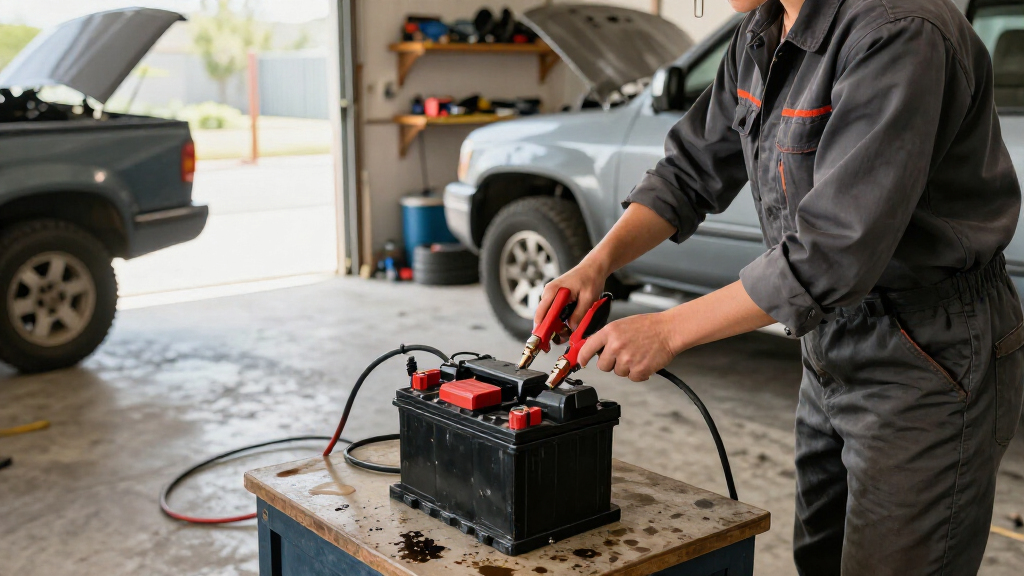
I compared the 14 chargers by the jobs buyers are most likely to need: charging a depleted battery, maintaining one during storage, and providing engine-start support. I gave weight to stated amperage, voltage compatibility, selectable charge rates, and the practical difference between a portable unit and a wheeled workshop charger. I also looked at whether a model combines charging with added modes such as repair or desulfation, while treating those features as useful extras rather than proof that a damaged battery can be restored.
The ranking favors versatility and a clear fit for common garage needs, then separates specialized choices by their strongest use case. Models with engine-start capability rank well for buyers who need more than maintenance, but their size and task-specific nature make them less suitable as all-purpose portable chargers. Lower-current maintainers remain relevant for storage and routine care, though they are not substitutes for higher-output charging. I treat product names and listed specifications as the basis for comparison; buyers should check the unit’s manual for battery compatibility and operating limits.
| heavy duty car battery charger | Battery compatibility |
|---|---|
| Schumacher Electric SC1400 6A | — |
| Yourheey 12V/24V 20A Battery C | — |
| 12V/24V Automatic Car Battery | Lead-acid; not compatible with lithium or LiFePO4 |
| TowerTop 12V Smart Car Battery | STD, AGM, GEL, wet, MF, EFB, calcium, and deep-cycle lead-acid |
| Schumacher Electric DSR139 Whe | Standard, AGM, and gel |
| Schumacher Electric DSR124 Whe | — |
| Schumacher Electric SC1280 15A | — |
| CRAFTSMAN 6V/12V 10A Battery C | Standard, AGM, gel, and deep-cycle |
| Schumacher Electric SC1445 Whe | Standard, AGM, gel, and deep-cycle |
| Schumacher Electric DSR140 10A | Standard, AGM, gel, and deep-cycle |
| Schumacher Electric SC1364 Whe | Standard and AGM |
| PLXX 12V/24V 15A Heavy Duty Sm | — |
| PLXX 12V/24V 15A Smart Battery | — |
| Schumacher Electric SC1281 6A | — |
Factors to Consider When Choosing Heavy Duty Car Battery Chargers
Before choosing among these heavy duty car battery chargers, start with the battery and the job rather than the feature list. A charger that can start an engine may be unnecessary for a vehicle stored over winter, while a compact maintainer may not meet the needs of a busy workshop. These factors help narrow the field without paying for functions you will rarely use.
Match Charger Voltage to Every Battery You Plan to Service
Check the voltage printed on each battery before choosing a charger, especially if you work on more than one vehicle or equipment type. Many options in this roundup cover 12V batteries, some also support 6V, and a smaller group offers 24V compatibility. A 12V/24V label does not mean every setting works automatically for every battery; confirm how the charger detects or selects voltage. A common mistake is buying for a single car and later discovering the charger cannot serve a second vehicle’s system. If you only own 12V vehicles, broader voltage support may add little practical value. If your garage includes 6V classics or 24V equipment, compatibility should come before extra modes or peak starting claims.
Choose Charge Rate Around Battery Size and How Quickly You Need It
Amperage affects how quickly a charger can replenish a battery, but the highest number is not automatically the best setting for every task. Lower rates are often a better fit for routine maintenance, while higher selectable rates can help when a larger battery needs charging sooner. Follow the battery and charger manuals for recommended charging rates rather than guessing from vehicle size alone. Selectable-rate models offer more flexibility, but they may require you to choose the setting correctly. A single-rate maintainer can be simpler if the charger will mostly sit connected during storage. Think about how often you arrive at a nearly discharged battery; occasional emergencies may justify a faster unit, while regular upkeep may not.
Treat Engine-Start Output as a Separate Workshop Feature
An engine-start function is designed to assist starting, not to replace proper battery charging or diagnose a failing battery. Buyers who often deal with vehicles that will not crank may value the added capability, especially in a workshop setting. For a parked vehicle that only needs seasonal maintenance, start output can add bulk without solving the main need. Check the manual for the required connection procedure and any limits on how long starting support can be used. Do not assume the largest advertised start figure alone determines real-world suitability; voltage support and the maker’s operating instructions matter too. If you need a charger that moves between vehicles, compare its weight and storage needs alongside its start function.
Decide Whether Wheels, Size, and Storage Fit Your Workspace
Wheeled chargers are easier to position beside a vehicle, but they take up more floor space and are less convenient to carry between locations. Compact models suit a shelf, trunk, or smaller home garage, though their lower current or lack of starting support may limit heavier tasks. Consider where the charger will live, how far it must move, and whether the cable reach suits your parking layout. Buyers sometimes focus on output and overlook that a bulky unit is less likely to be used for routine maintenance. For a fixed workshop, wheels can be a worthwhile tradeoff; for roadside or mobile use, portability matters more. Also check storage requirements and keep the charger in the conditions specified by its manufacturer.
Read Battery-Chemistry and Maintenance Instructions Before Connecting
Chargers are not automatically compatible with every battery chemistry just because the voltage matches. Check the charger’s documentation for the battery types it supports, including any restrictions on lithium, AGM, or other batteries. Automatic maintenance modes can help manage charging after the battery is full, but they do not make an incompatible charger safe to use. Repair or desulfation modes should be treated as limited tools, not guarantees that an old or damaged battery will recover. Disconnect or configure vehicle electronics as directed by the vehicle and charger manuals. When the battery is swollen, leaking, unusually hot, or physically damaged, stop and seek professional guidance rather than attempting a repair cycle.
Pay for Features You Will Use, Not the Longest Feature List
Higher-output charging, 24V support, engine-start assistance, wheels, and repair modes each solve different problems, so extra features only add value when they match your work. A household buyer who maintains one 12V car may get more use from a straightforward charger than a workshop-style unit. A mechanic or owner of several vehicles may benefit from the flexibility of multiple charge rates and voltage options. Compare the complete operating instructions, cable arrangement, display or controls, and safety protections rather than judging by a headline amperage. Be wary of treating a desulfation setting as a substitute for battery testing or replacement. The best fit is the unit that handles your regular task safely and has enough capacity for the less common jobs you genuinely expect.
Frequently Asked Questions
Should I buy a charger with engine-start support or a separate jump starter?
A charger with engine-start support makes sense if you work near a power outlet and want charging and starting assistance in one workshop unit. It is less convenient when the vehicle is stranded away from mains power, where a portable jump starter may be more practical. Starting assistance is not the same as charging, so a deeply discharged battery may still need a full charge afterward. Check the charger manual for the correct starting procedure and duty limits. If you mainly maintain batteries, that feature may add size without much benefit.
Can I use a 12V/24V charger on a 12V car battery?
Usually, a charger that supports both voltages can also charge a 12V battery, but you must select or confirm the correct setting as the manual directs. Do not assume automatic detection is present just because both voltages appear in the product name. Connecting a 24V setting to a 12V battery can damage the battery or vehicle electronics. Check the battery label and the charger’s compatibility instructions before connecting clamps. If you only service 12V vehicles, a 12V-only model may be simpler to operate.
Is a higher-amp charger always better for a large car battery?
No. Higher amperage can shorten charging time, but the appropriate rate depends on the battery’s capacity, condition, and manufacturer guidance. A charger with selectable rates gives more choice, while a high-output-only approach may be less suited to routine maintenance. Follow both manuals and avoid choosing a rate solely by the vehicle’s engine size. If speed is not a priority, a lower rate can be a practical fit for overnight charging or storage upkeep.
Will a repair or desulfation mode bring an old battery back to life?
It may help with some battery conditions, but no repair mode can reliably restore every aged, damaged, or deeply degraded battery. These modes should not be treated as a replacement for a battery test or professional diagnosis. Check whether the charger supports your battery chemistry and follow its instructions, since repair cycles may have specific connection or vehicle-disconnection requirements. Stop using a battery that is leaking, swollen, or unusually hot. If the battery continues to lose charge or cannot start the vehicle after proper charging, replacement may be needed.
Is a wheeled charger worth choosing for home use?
A wheeled model can be convenient when it stays in a garage or workshop and needs to move between vehicles. It is usually a poor fit for a small storage space, carrying in a trunk, or charging away from a power outlet. Compare the floor space, cable reach, and actual frequency of moving it before choosing a larger unit. For a single car that mainly needs seasonal maintenance, a smaller charger may be easier to store and use. A wheeled unit makes more sense when its greater workshop-oriented capabilities match regular tasks.
Conclusion
For a flexible home-garage choice, I recommend the TowerTop 12V Smart Car Battery Charger as the best overall pick, thanks to its selectable 2/10/25A rates. The Schumacher Electric SC1400 is a strong value-minded option for buyers who want charging plus engine-start support, while the Schumacher Electric DSR124 is my best premium-style workshop pick for buyers who need a wheeled charger and starting capability. Beginners who mainly want straightforward battery upkeep should look at a simpler maintainer such as the Schumacher Electric SC1364, after confirming it fits their battery. For specific needs, choose the Yourheey 20A or DSR140 when 24V support matters, and a 6V/12V model such as the SC1280 or SC1445 for compatible 6V batteries. Match voltage and battery type first, then decide whether faster charging, maintenance, or engine-start support matters most.