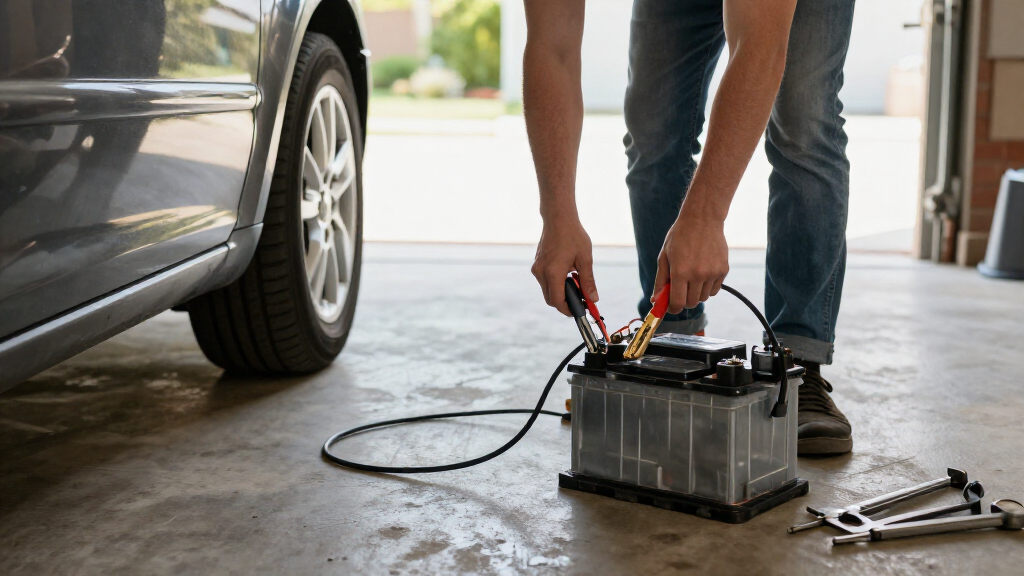

Car battery trickle chargers help maintain a battery during long periods of storage, but charging speed, battery compatibility, and ease of connection differ widely. I rank the CTEK MXS 5.0 as the best overall for a balanced mix of automatic charging and maintenance, while the Battery Tender Junior suits simple, low-current upkeep and the NOCO GENIUS10 is a stronger fit when faster charging matters. The main tradeoff is between a low-output maintainer for parked vehicles and a higher-output charger that can recover a depleted battery more quickly. I also compare compact, multi-bank, and onboard options for distinct setups. Read on for the full breakdown and guidance on matching a charger to your battery and storage routine.

Get business pricing on garage and car supplies
- Business-only prices and quantity discounts
- Tax-exempt purchasing
- Multiple users, one account, clear invoices
Complete the kit


Key Takeaways
- CTEK MXS 5.0 leads as the balanced pick: its 5A output offers more charging capacity than the 1A and sub-amp maintainers without moving into the larger-output class.
- Output changes the job: the Battery Tender Junior and FOVAL are geared toward maintenance, while the Schumacher SC1280 and NOCO GENIUS10 better suit buyers who need more charging current.
- One charger does not fit every battery setup: 6V/12V models such as the NOCO GENIUS5 and Battery Tender 3-Amp offer broader voltage flexibility than 12V-only choices.
- Specialized designs solve specific problems: the NOCO GENIUS2X2 handles two batteries, while the GENIUS2D is designed for a fixed onboard installation.
- More features can mean more complexity: display, repair, and multi-stage functions may help with particular needs, but a straightforward maintainer can be the simpler choice for routine storage.
| Battery Tender Junior 12V 750mA Battery Charger and Maintainer |  | Best for Long-Term Battery Maintenance | Output voltage: 12 V | Current: 0.75 A | Compatible battery types: Lead-acid, flooded, AGM, and gel | VIEW LATEST PRICE | See Our Full Breakdown |
| Schumacher Electric SC1280 15A Car Battery Charger and Maintainer, 6V/12V |  | Best for Faster Charging and Battery Service | Supported voltage: 6V and 12V | 12V charge rate: 15 A | 6V charge rate: 2 A | VIEW LATEST PRICE | See Our Full Breakdown |
| Schumacher Electric SC1355 1.5A Battery Charger and Maintainer |  | Best for 6V and 12V Trickle Maintenance | Supported voltage: 6V and 12V | Charging current: 1.5 A | Compatible battery types: Standard, AGM, and deep-cycle | VIEW LATEST PRICE | See Our Full Breakdown |
| KASPARMP 12V 6A Battery Charger and Maintainer with Pulse Repair and Digital Display |  | Best for At-a-Glance Charging Information | Output voltage: 12 V | Input range: 100–240 V | Maximum output current: 6 A | VIEW LATEST PRICE | See Our Full Breakdown |
| CTEK MXS 5.0 Fully Automatic 12V Battery Charger and Maintainer |  | Best Premium 12V Lead-Acid Maintainer | Output voltage: 12 V | Input voltage: 120 V | Current: 4.3 A | VIEW LATEST PRICE | See Our Full Breakdown |
| NOCO GENIUS10 10A Smart Battery Charger and Maintainer |  | Best for Faster Charging and Broad Battery Compatibility | Output voltage: 12V | Input voltage: 120V | Charging current: 10A | VIEW LATEST PRICE | See Our Full Breakdown |
| Battery Tender 3-Amp Smart Battery Charger and Maintainer, Switchable 6V/12V |  | Best for Straightforward 6V/12V Maintenance | Output voltage: 6V or 12V | Input voltage: 120V AC | Charging current: 3A | VIEW LATEST PRICE | See Our Full Breakdown |
| FOVAL 12V 1A Automatic Battery Charger and Maintainer |  | Best Compact Set-and-Maintain Pick | Output voltage: 12V | Input voltage: 12V | Charging current: 1A | VIEW LATEST PRICE | See Our Full Breakdown |
| MOTOPOWER MP00205A 12V 800mA Automatic Battery Charger and Maintainer |  | Best for 12V Lead-Acid Storage Maintenance | Model: MP00205A | Output voltage: 12V DC | Input voltage: 110V AC | VIEW LATEST PRICE | See Our Full Breakdown |
| NOCO GENIUS5 5A 6V/12V Smart Battery Charger and Maintainer |  | Best Midrange Pick for Mixed Battery Types | Output voltage: 12V | Input voltage: 120V | Charging current: 5A | VIEW LATEST PRICE | See Our Full Breakdown |
| NOCO GENIUS2 2A 6V/12V Smart Battery Charger and Maintainer | 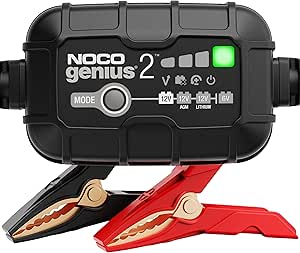 | Best for Flexible Battery Compatibility | Output voltage: 12 volts | Current: 2 A | Compatible batteries: 6V and 12V lead-acid and LiFePO4 | VIEW LATEST PRICE | See Our Full Breakdown |
| NOCO GENIUS1 1A 6V/12V Smart Battery Charger and Maintainer |  | Best Compact Long-Term Maintainer | Output voltage: 12 volts | Input voltage: 120 volts | Compatible batteries: 6V and 12V lead-acid and LiFePO4 | VIEW LATEST PRICE | See Our Full Breakdown |
| Battery Tender Plus 12V 1.25A Battery Charger and Maintainer |  | Best for Straightforward 12V Storage Care | Output voltage: 12 volts | Input voltage: 120 volts AC | Compatible devices: ATV, PWC, car, lawn mower, motorcycle | VIEW LATEST PRICE | See Our Full Breakdown |
| NOCO GENIUS2X2 6V/12V Two-Bank Battery Charger and Maintainer |  | Best for Maintaining Two Batteries | Charging banks: 2 | Amperage: 4 A | Battery compatibility: 6V and 12V lead-acid and LiFePO4 | VIEW LATEST PRICE | See Our Full Breakdown |
| NOCO GENIUS2D 2A 12V Onboard Battery Charger and Maintainer |  | Best for Permanent Onboard Installation | Output voltage: 12 volts | Current: 2 A | Battery capacity: Up to 40 Ah | VIEW LATEST PRICE | See Our Full Breakdown |
| car battery trickle charger | Output voltage | Warranty | Input voltage |
|---|---|---|---|
| Battery Tender Junior 12V 750m | 12 V | 5 years | — |
| Schumacher Electric SC1280 15A | — | — | — |
| Schumacher Electric SC1355 1.5 | — | — | — |
| KASPARMP 12V 6A Battery Charge | 12 V | — | — |
| CTEK MXS 5.0 Fully Automatic 1 | 12 V | — | 120 V |
| NOCO GENIUS10 10A Smart Batter | 12V | 3 years | 120V |
| Battery Tender 3-Amp Smart Bat | 6V or 12V | 5 years | 120V AC |
| FOVAL 12V 1A Automatic Battery | 12V | 18 months | 12V |
| MOTOPOWER MP00205A 12V 800mA A | 12V DC | 2 years | 110V AC |
| NOCO GENIUS5 5A 6V/12V Smart B | 12V | 3 years | 120V |
| NOCO GENIUS2 2A 6V/12V Smart B | 12 volts | 3 years | — |
| NOCO GENIUS1 1A 6V/12V Smart B | 12 volts | 3 years | 120 volts |
| Battery Tender Plus 12V 1.25A | 12 volts | 10-year manufacturer’s warranty | 120 volts AC |
| NOCO GENIUS2X2 6V/12V Two-Bank | — | 3 years | 120 V |
| NOCO GENIUS2D 2A 12V Onboard B | 12 volts | 3 years | — |
More Details on Our Top Picks
Battery Tender Junior 12V 750mA Battery Charger and Maintainer
The Battery Tender Junior is the maintenance-first choice here: its 750mA output is suited to keeping a compatible 12V battery charged over time, rather than quickly recovering a depleted one. Its four-step program moves from bulk and absorption charging to float mode, which makes it a practical match for a car or powersports vehicle that sits between uses. Compared with Schumacher’s SC1355, it charges more slowly and does not support 6V batteries, but it includes a longer 12-foot output cord and both ring-terminal and clip connections. Spark-proof circuitry and reverse-connection detection add useful safeguards. I’d skip it if faster charging or battery reconditioning is a priority; the low current is its defining limitation.
Pros:- Automatically switches to float mode after charging
- Supports flooded, AGM, gel, and other lead-acid batteries
- Includes both ring-terminal and alligator-clip connections
- Spark-proof circuitry and reverse-connection detection
Cons:- The 750mA output makes it a slow choice for charging depleted batteries
- Supports 12V batteries only
Best for: Owners of a 12V car, motorcycle, or seasonal vehicle who want to leave a compatible lead-acid battery connected for maintenance.
Not ideal for: Drivers who need to recharge a deeply depleted or large battery quickly, or who need a charger for 6V batteries.
- Output voltage:12 V
- Current:0.75 A
- Compatible battery types:Lead-acid, flooded, AGM, and gel
- Charging program:4 steps: initialization, bulk, absorption, and float
- Connectors:Alligator clips and ring terminals
- Output cord length:12 ft
- Weight:1 lb (charger only)
- Warranty:5 years
Our verdict“Choose the Battery Tender Junior for gentle, long-term 12V maintenance, not fast charging or 6V battery support.”
Schumacher Electric SC1280 15A Car Battery Charger and Maintainer, 6V/12V
The Schumacher SC1280 is the most service-oriented option in this group: it combines charging and maintenance with battery testing and a desulfation mode. Its 15A 12V output is a major step up from the Battery Tender Junior’s 750mA, making it more useful when a battery needs charging rather than just upkeep. It also supports 6V batteries, though charging that voltage is limited to 2A, and its 3A maintenance rate is higher than a small trickle charger’s. The tradeoff is that this is a bulkier-use, AC-powered charger rather than a low-output maintainer focused on simple long-term float care. Its six-foot cords also give less reach than the Tender Junior’s 12-foot output lead. Choose it for added capability; skip it if slow, unattended maintenance is all you need.
Pros:- Offers 15A charging for 12V batteries
- Supports both 6V and 12V batteries
- Combines charging, maintenance, testing, and restoration functions
- Includes desulfation mode and reverse-clamp protection
Cons:- The 6V charging rate is limited to 2A
- Requires AC power to operate
- Six-foot power and booster cables provide less reach than the Battery Tender Junior’s output cord
Best for: Car and equipment owners who need one AC-powered unit for charging, maintaining, and checking compatible 6V or 12V batteries.
Not ideal for: Owners seeking a simple low-current maintainer for long-term connection, or anyone who needs a charger that works without AC power.
- Supported voltage:6V and 12V
- 12V charge rate:15 A
- 6V charge rate:2 A
- Maintenance rate:3 A
- Compatible battery types:Standard, AGM, gel, and deep-cycle
- Functions:Charging, maintenance, testing, and restoration
- Power cord length:6 ft
- Booster cable length:6 ft
Our verdict“Pick the SC1280 if you want faster 12V charging and battery-service features alongside maintenance, and pass if you only need a basic trickle maintainer.”
Schumacher Electric SC1355 1.5A Battery Charger and Maintainer
The Schumacher SC1355 fills a useful middle ground: its 1.5A output is modest enough for maintenance but gives it more charging capacity than the Battery Tender Junior’s 750mA. It also handles both 6V and 12V batteries, so it suits owners with mixed older vehicles or equipment. Multi-stage charging, desulfation, and reconditioning give it more functions than a basic maintainer, while reverse-polarity protection helps guard against a connection mistake. Compared with the SC1280, it is a slower charger, but its 1.5A rate better matches a trickle-maintenance role than that model’s 15A 12V charging. The compromises are a five-foot booster cable and limited speed for larger or heavily discharged batteries. Its battery compatibility also excludes gel and lithium types.
Pros:- Works with both 6V and 12V batteries
- Combines charging, maintenance, and reconditioning
- Includes desulfation and reverse-polarity protection
- Comes with quick-connect clamps and ring connectors
Cons:- The 1.5A output can be slow for larger or deeply discharged batteries
- The five-foot booster cable limits placement flexibility
- Does not list gel or lithium batteries among compatible types
Best for: Owners maintaining compatible 6V and 12V standard, AGM, or deep-cycle batteries on cars, boats, or other equipment.
Not ideal for: People who need to recharge large or deeply depleted batteries quickly, or who need support for gel or lithium batteries.
- Supported voltage:6V and 12V
- Charging current:1.5 A
- Compatible battery types:Standard, AGM, and deep-cycle
- Functions:Charging, maintenance, and reconditioning
- Power cord length:6 ft
- Booster cable length:5 ft
- Included connections:Quick-connect battery clamps and ring connectors
Our verdict“Choose the SC1355 for slower upkeep across compatible 6V and 12V batteries, rather than the SC1280’s faster charging or the Junior’s longer cord.”
KASPARMP 12V 6A Battery Charger and Maintainer with Pulse Repair and Digital Display
The KASPARMP 12V 6A stands apart from the Battery Tender Junior and Schumacher SC1355 with a digital display that reports charging status, percentage, voltage, and current. That visibility can help owners monitor a charging session instead of relying on basic status lights. Its stated 6A output also gives it more charging capacity than either small maintainer, though motorcycle charging is capped at 2A. It supports lead-acid, AGM, and LiFePO4 batteries, but the fine print matters for trickle-charger buyers: it does not provide float charging for AGM batteries, and pulse repair is not for lithium. The unit requires AC power and cannot jump-start a vehicle. I’d favor it for display-led charging and broad equipment use, not unattended AGM maintenance.
Pros:- Display shows charging status, percentage, voltage, and current
- Supports lead-acid, AGM, and LiFePO4 batteries
- Pulse repair is available for mildly sulfated lead-acid batteries
- Includes reverse-connection, short-circuit, overheating, overcurrent, and overcharge protections
Cons:- Does not provide floating charge for AGM batteries
- Pulse repair is not suitable for lithium batteries
- Requires AC power and cannot jump-start a vehicle
Best for: Owners of compatible 12V vehicles or equipment who want a readable display and a charger that also supports LiFePO4 batteries.
Not ideal for: Drivers seeking long-term float maintenance for an AGM battery, a cordless charger, or a jump starter.
- Output voltage:12 V
- Input range:100–240 V
- Maximum output current:6 A
- Motorcycle charging current:Maximum 2 A
- Compatible batteries:Lead-acid, AGM, LiFePO4, and maintenance-free
- Power source:AC wall power
- Dimensions:2.16 × 5.3 × 8.07 in
- Operating temperature:-10°C to +45°C
Our verdict“Choose the KASPARMP for visible charging data and broad 12V compatibility, but not for AGM float maintenance or jump-starting.”
CTEK MXS 5.0 Fully Automatic 12V Battery Charger and Maintainer
The CTEK MXS 5.0 is the more capable long-term 12V maintainer for buyers who want staged charging, reconditioning, and weather-resistant construction in one unit. Its eight-step program and float/pulse maintenance make it more tailored to ongoing care than the KASPARMP, which lacks float charging for AGM batteries. At 4.3A, it also has more charging output than the Battery Tender Junior, though it remains far below the SC1280’s 15A 12V rate. The IP65 rating adds resistance to dust and water splashes, a useful distinction for garage or workshop storage. Its limits are clear: it supports only 12V lead-acid and AGM batteries, and the listed charge time is 50 hours. I’d choose it for careful 12V maintenance, not 6V versatility or rapid recovery.
Pros:- Eight-step automatic charging and maintenance program
- Float/pulse charging supports ongoing battery maintenance
- Reconditioning function may help with some underperforming batteries
- IP65-rated construction resists dust and water splashes
Cons:- Supports 12V lead-acid and AGM batteries only
- The listed battery charge time is 50 hours
- Provides less 12V charging current than the Schumacher SC1280
Best for: Owners of 12V lead-acid or AGM batteries who want multi-stage charging, float/pulse maintenance, and a dust- and splash-resistant unit.
Not ideal for: People maintaining 6V or lithium batteries, or drivers who need the fastest charging option in this group.
- Output voltage:12 V
- Input voltage:120 V
- Current:4.3 A
- Compatible batteries:12V lead-acid and AGM
- Charging stages:8
- Battery charge time:50 hours
- Ingress protection:IP65
- Weight:1.3 lb
Our verdict“Pick the CTEK MXS 5.0 for feature-rich, weather-resistant 12V lead-acid or AGM maintenance, but choose the SC1280 for faster charging or broader voltage coverage.”
NOCO GENIUS10 10A Smart Battery Charger and Maintainer
The GENIUS10 is the strongest fit here when a trickle charger also needs to bring larger or deeply discharged batteries back into service. Its 10A output and support for batteries up to 230 Ah make it a more capable recovery and charging choice than the 5A GENIUS5, while both accept lead-acid and LiFePO4 batteries and adjust charging for temperature. It can charge batteries down to 1V, with Force Mode for 0V batteries, then remain connected for long-term maintenance. That range comes with a learning curve: the manual matters, particularly when selecting how to handle a severely discharged battery. Buyers seeking a simple, low-current maintainer may find the smaller Battery Tender 3-Amp easier to operate, but it lacks the GENIUS10’s lithium support and recovery features.
Pros:- 10A output supports faster charging than lower-current maintainers in this group.
- Works with 6V and 12V lead-acid batteries and LiFePO4 batteries.
- Temperature-adjusted charging and long-term maintenance support.
- Can charge down to 1V and offers Force Mode for 0V batteries.
Cons:- The user manual needs careful reading to use its modes correctly.
- Its higher output and recovery options may be unnecessary for small batteries that only need maintenance.
Best for: Owners of larger 6V or 12V batteries, including LiFePO4, who want one unit for charging, recovery, and long-term maintenance.
Not ideal for: Drivers who only need a basic, low-current maintainer and prefer simple setup over advanced recovery modes.
- Output voltage:12V
- Input voltage:120V
- Charging current:10A
- Battery types:6V and 12V lead-acid (AGM, gel, flooded, deep-cycle) and LiFePO4
- Maximum battery capacity:Up to 230 Ah
- Cable lengths:72-inch AC cable; 80-inch DC cable
- Included accessories:Battery clamps, eyelet terminals, mounting bracket, screws, and user manual
- Warranty:3 years
Our verdict“Choose the GENIUS10 if you need a versatile maintainer that can also charge larger batteries and attempt recovery from very low voltage.”
Battery Tender 3-Amp Smart Battery Charger and Maintainer, Switchable 6V/12V
The Battery Tender 3-Amp suits owners who want automatic maintenance without the extra recovery and lithium features of the NOCO GENIUS5 or GENIUS10. It charges compatible 6V or 12V lead-acid batteries, then switches to float mode to maintain voltage rather than continuing to charge at full current. The included ring-terminal and alligator-clip options make it practical for a battery that stays installed or one that needs occasional clamp-on charging, and the combined cord reach is 11 feet. Its 3A output is gentler than the NOCO GENIUS10’s 10A, so charging can take longer, and lithium batteries are not listed as compatible. Spark-proof connections and reverse-polarity detection add useful safeguards, but this is a simpler lead-acid choice rather than an all-chemistry recovery tool.
Pros:- Switchable 6V and 12V output serves more than one battery voltage.
- Automatically switches to float mode for ongoing maintenance.
- Includes ring-terminal and alligator-clip connectors with 11 feet of combined cord reach.
- Spark-proof connections and reverse-polarity detection.
Cons:- 3A charging current is slower than the 5A GENIUS5 and 10A GENIUS10.
- Lithium battery compatibility is not listed.
- Does not offer the GENIUS models’ described recovery for deeply discharged batteries.
Best for: Owners of 6V or 12V lead-acid vehicles who want an automatic float maintainer with flexible battery connections.
Not ideal for: Buyers with LiFePO4 batteries or larger batteries that need the higher charging output and low-voltage recovery options of a NOCO GENIUS10.
- Output voltage:6V or 12V
- Input voltage:120V AC
- Charging current:3A
- Compatible battery types:Lead-acid, flooded, AGM, and gel
- Connectors:Ring terminal and alligator clip combo cable
- Combined cord reach:11 ft
- Weight:1.4 lb
- Warranty:5 years
Our verdict“Pick this for uncomplicated 6V or 12V lead-acid maintenance with flexible connectors, but skip it if you need lithium support or faster charging.”
FOVAL 12V 1A Automatic Battery Charger and Maintainer
The FOVAL 1A is a compact choice for a 12V lead-acid battery that needs slow, steady maintenance rather than quick charging. Its four-step program moves from initialization through bulk and absorption to float mode, so it can remain connected after charging finishes. At just 10.5 ounces, it is easier to store than the larger-output NOCO GENIUS10, and the 102-inch cable gives useful reach to a battery without placing the charger right beside it. The tradeoff is its narrow scope: it supports only 12V lead-acid batteries, while the Battery Tender 3-Amp also handles 6V batteries and charges at a higher current. Built-in protections and both ring and alligator connectors add everyday flexibility, but 1A is a poor match for buyers who need rapid recovery.
Pros:- Small, lightweight design is easy to store near a vehicle.
- Four-step charging program switches to float maintenance.
- Includes both ring and alligator connector cables.
- Provides reverse-polarity, overcurrent, overload, and overvoltage protection.
Cons:- Works only with 12V batteries, unlike the 6V/12V Battery Tender 3-Amp.
- 1A output makes it a slow choice for recharging depleted batteries.
- Compatible battery types are lead-acid; lithium support is not listed.
Best for: Owners of a 12V lead-acid car, motorcycle, or seasonal vehicle battery who want a small maintainer for long periods of storage.
Not ideal for: People maintaining 6V or lithium batteries, or anyone who needs to recharge a substantially depleted battery quickly.
- Output voltage:12V
- Input voltage:12V
- Charging current:1A
- Compatible battery types:SLA, VRLA, gel, AGM, and wet lead-acid
- Charging modes:Initialization, bulk charge, absorption, and float
- Connectors:Alligator and ring
- Dimensions and weight:3.9 × 2.4 × 1.25 in; 10.5 oz (300 g)
- Cable length:102 inches
- Warranty:18 months
Our verdict“Choose the FOVAL for compact, low-current upkeep of a 12V lead-acid battery, not for fast charging or multi-voltage use.”
MOTOPOWER MP00205A 12V 800mA Automatic Battery Charger and Maintainer
The MOTOPOWER MP00205A combines a low-current maintainer with pulse-current desulfation, making it a purpose-built option for stored 12V lead-acid batteries. It automatically detects sulfation and applies pulses, while its automatic charging and maintenance modes help support a battery between uses. Its 800mA output is lower than the FOVAL’s 1A and well below the Battery Tender 3-Amp, so I would favor it for gradual upkeep rather than restoring a battery quickly. It serves cars, motorcycles, ATVs, RVs, powersports vehicles, and boats, but only with 12V lead-acid batteries such as flooded, AGM, and gel-cell types. Overcharge, short-circuit, and reverse-polarity protections add safeguards; the listed 110V AC input is also worth checking against the power supply where it will be used.
Pros:- Automatic charging and maintenance modes support storage use.
- Pulse-current desulfation is designed to address sulfation.
- Supports flooded, AGM, and gel-cell 12V lead-acid batteries across several vehicle types.
- Includes overcharge, short-circuit, and reverse-polarity protection.
Cons:- 800mA output is slower than the FOVAL 1A and Battery Tender 3-Amp.
- Limited to 12V lead-acid batteries.
- Listed 110V AC input may not suit every user’s power setup.
Best for: Owners storing 12V lead-acid cars, motorcycles, ATVs, RVs, or boats who want automatic maintenance with pulse desulfation.
Not ideal for: People with 6V or lithium batteries, or buyers who need higher charging current for quicker replenishment.
- Model:MP00205A
- Output voltage:12V DC
- Input voltage:110V AC
- Charging current:800mA
- Compatible batteries:12V lead-acid, flooded, AGM, and gel-cell
- Charge and maintenance voltage:14.4V charge voltage; 13.6V maintenance voltage
- Safety protections:Overcharge, short circuit, and reverse polarity
- Dimensions and weight:2 × 4.1 × 1.5 in; 300 g
- Warranty:2 years
Our verdict“Choose the MOTOPOWER for slow 12V lead-acid storage maintenance with pulse desulfation, but look elsewhere for broader battery compatibility or quicker charging.”
NOCO GENIUS5 5A 6V/12V Smart Battery Charger and Maintainer
The NOCO GENIUS5 balances useful charging speed with broad compatibility: it handles 6V and 12V lead-acid batteries plus LiFePO4, and adjusts charging for ambient temperature. Compared with the GENIUS10, its 5A output and 120 Ah capacity limit make it a better fit for smaller batteries or owners willing to wait longer; in return, it is less charger than many larger batteries need. It can charge batteries from 1V, use Force Mode for 0V batteries, and apply pulse charging to help reverse sulfation, then support long-term maintenance. Those features make it more versatile than the Battery Tender 3-Amp, whose listed battery chemistry excludes lithium, though the NOCO’s range of modes may take more attention to learn.
Pros:- Supports 6V and 12V lead-acid batteries and LiFePO4.
- Temperature-adjusted charging helps adapt to ambient conditions.
- Can charge from 1V, with Force Mode for 0V batteries.
- Supports long-term maintenance and pulse charging to help reverse sulfation.
Cons:- 5A output is slower than the GENIUS10’s 10A charging current.
- Maximum listed battery capacity is 120 Ah, below the GENIUS10’s 230 Ah.
- Multiple modes may require reading the manual to select the right use.
Best for: Owners of 6V or 12V vehicles with lead-acid or LiFePO4 batteries who want temperature-adjusted charging and maintenance in a mid-output unit.
Not ideal for: Drivers with batteries above 120 Ah or those who prioritize faster charging and have a use for the GENIUS10’s higher output.
- Output voltage:12V
- Input voltage:120V
- Charging current:5A
- Compatible batteries:6V and 12V lead-acid and LiFePO4
- Maximum battery capacity:120 Ah
- Listed battery charge time:8 hours
- Cable lengths:72-inch AC cable; 80-inch DC cable
- Included accessories:Battery clamps, eyelet terminals, and mounting hardware
- Warranty:3 years
Our verdict“Choose the GENIUS5 for mixed 6V/12V lead-acid and LiFePO4 batteries when the GENIUS10’s extra charging capacity is unnecessary.”
NOCO GENIUS2 2A 6V/12V Smart Battery Charger and Maintainer
The GENIUS2 is a useful middle ground for owners who want one trickle charger for both 6V and 12V batteries, including lead-acid and LiFePO4 types. Its 2A output gives it a quicker pace than the 1A GENIUS1, while its temperature adjustment and long-term maintenance mode suit vehicles stored between uses. Force Mode can address deeply discharged batteries, though it is not a substitute for a higher-current charger when a large car battery needs a fast recovery. Compared with the 12V-only GENIUS2D, this model is less suited to permanent onboard mounting but covers more battery voltages and chemistries. The 72-inch AC and 80-inch DC cables offer useful reach, while the listed maximum LiFePO4 capacity is 40Ah.
Pros:- Supports 6V and 12V lead-acid and LiFePO4 batteries
- Temperature sensor adjusts charging for ambient conditions
- Force Mode can charge deeply discharged batteries
- Supports long-term connected maintenance
Cons:- 2A output can take a long time with larger batteries
- LiFePO4 compatibility is specified up to 40Ah
- Not designed as a direct-mount onboard charger like the GENIUS2D
Best for: Owners maintaining a mix of 6V and 12V lead-acid or smaller LiFePO4 batteries who want one compact charger for seasonal storage.
Not ideal for: Drivers who need to recharge a large, depleted car battery quickly; the 2A output is oriented toward maintenance and slower charging.
- Output voltage:12 volts
- Current:2 A
- Compatible batteries:6V and 12V lead-acid and LiFePO4
- Maximum LiFePO4 capacity:40 amp-hours
- Battery charge time:10 hours
- AC cable length:72 inches
- DC cable length:80 inches
- Warranty:3 years
Our verdict“Choose the GENIUS2 if you want broader voltage and battery-chemistry support than the GENIUS2D without moving up to a higher-current charger.”
NOCO GENIUS1 1A 6V/12V Smart Battery Charger and Maintainer
The GENIUS1 suits buyers who value a small, adaptable maintainer more than fast charging. It supports 6V and 12V lead-acid and LiFePO4 batteries, adjusts its charging for temperature, and can stay connected for long-term upkeep. Force Mode and pulse charging add recovery and maintenance functions that many basic trickle chargers lack. Against the GENIUS2, the main sacrifice is charging speed: its 1A output is better matched to smaller batteries and storage duty than restoring a drained car battery on a short schedule. Its listed LiFePO4 capacity also tops out at 30Ah, below the GENIUS2’s 40Ah. The 110-inch DC cable provides generous reach for positioning the charger, but buyers should accept a slower charge in exchange for this compact, low-output approach.
Pros:- Works with 6V and 12V lead-acid and LiFePO4 batteries
- Temperature-adjusted charging supports changing storage conditions
- Force Mode and pulse charging add recovery functions
- 110-inch DC cable offers flexible placement
Cons:- 1A output makes charging larger batteries slow
- Maximum listed LiFePO4 capacity is 30Ah
- Less suited to faster charging than the 2A GENIUS2
Best for: Owners of motorcycles, lawn equipment, or a stored vehicle who need a compact maintainer compatible with multiple battery voltages and chemistries.
Not ideal for: Anyone who regularly needs to recharge a depleted full-size car battery quickly or maintain a LiFePO4 battery above the listed 30Ah limit.
- Output voltage:12 volts
- Input voltage:120 volts
- Compatible batteries:6V and 12V lead-acid and LiFePO4
- Maximum LiFePO4 capacity:30 amp-hours
- Battery charge time:10 hours
- DC cable length:110 inches
- Warranty:3 years
Our verdict“Pick the GENIUS1 for compact, slow-and-steady maintenance of smaller batteries, not for quick recovery of a car battery.”
Battery Tender Plus 12V 1.25A Battery Charger and Maintainer
The Battery Tender Plus keeps the feature set focused on routine 12V battery care: a four-step charging program, status LEDs, and a quick-disconnect harness make it a practical choice for vehicles parked for extended periods. Unlike the GENIUS2 and GENIUS1, it is designed for 12V batteries rather than both 6V and 12V, and the supplied connections are aimed at familiar vehicle-battery setups. Alligator clips allow temporary connections, while fused ring terminals suit a battery that stays on a regular maintenance schedule. Its 1.25A output remains modest, so this is not the pick for rapid recovery; the GENIUS2 offers more current and broader battery chemistry support. The tradeoff is a less flexible charger, balanced by a long stated warranty and lifetime customer support.
Pros:- Four-step charging program adapts to battery needs
- Includes alligator clips and fused ring-terminal cables
- Quick-disconnect harness and status LEDs simplify routine use
- Includes a 10-year manufacturer’s warranty and lifetime customer support
Cons:- Designed for 12V batteries only
- Single charging port cannot maintain two batteries at once
- 1.25A output is slow for recovering a substantially depleted battery
Best for: Owners of a 12V car, motorcycle, ATV, personal watercraft, or mower who want included clip and ring-terminal connections for storage maintenance.
Not ideal for: People maintaining 6V or LiFePO4 batteries, or anyone who needs multiple charging banks or higher charging current.
- Output voltage:12 volts
- Input voltage:120 volts AC
- Compatible devices:ATV, PWC, car, lawn mower, motorcycle
- Connectors:Alligator clips and ring terminals
- Number of ports:1
- Dimensions:2.9 × 2.15 × 4.4 inches
- Weight:1.5 pounds
- Warranty:10-year manufacturer’s warranty
Our verdict“Choose the Battery Tender Plus for familiar, single-battery 12V maintenance with flexible connections, but skip it if you need 6V support or faster charging.”
NOCO GENIUS2X2 6V/12V Two-Bank Battery Charger and Maintainer
The GENIUS2X2 earns its place by maintaining two batteries at once, a distinct advantage over single-bank options such as the GENIUS2 and Battery Tender Plus. Each bank supports 6V or 12V lead-acid and LiFePO4 batteries, with temperature-adjusted charging, Force Mode, and pulse charging for added maintenance and recovery capability. That makes it a better fit for a household with two stored vehicles or equipment batteries than a one-battery trickle charger. The 4A rating is listed for the unit, but the supplied data does not explain how current is divided between banks, so buyers should not assume each battery receives 4A simultaneously. Its two-bank setup and included extensions add flexibility, while the listed 10-hour charge time and limited capacity details make it less suited to buyers focused on fast, clearly specified charging.
Pros:- Charges and maintains two batteries simultaneously
- Supports 6V and 12V lead-acid and LiFePO4 batteries
- Temperature adjustment, Force Mode, and pulse charging provide flexible care
- Includes clamps, eyelet terminals, and long DC extension cables
Cons:- Listed 4A output is not clarified per bank
- The stated 10-hour charge time may not suit buyers seeking fast recovery
- Two-bank setup is more involved than a single-battery maintainer
Best for: Owners maintaining two stored vehicles or equipment batteries who want both banks handled by one charger and need 6V/12V chemistry flexibility.
Not ideal for: Buyers who need a simple single-battery setup or require a clearly specified per-bank charging current for rapid charging.
- Charging banks:2
- Amperage:4 A
- Battery compatibility:6V and 12V lead-acid and LiFePO4
- Battery capacity:Up to 40 Ah
- Battery charge time:10 hours
- Input voltage:120 V
- Connector types:Battery clamps and eyelet terminals
- Warranty:3 years
Our verdict“Choose the GENIUS2X2 when two batteries need ongoing care from one unit; for a single battery, the GENIUS2 is the simpler choice.”
NOCO GENIUS2D 2A 12V Onboard Battery Charger and Maintainer
The GENIUS2D is the specialized pick here: its direct-mount design and eyelet terminals suit a battery that stays installed in a boat, RV, or other equipment. The included mounting bracket and screws make a fixed setup more practical than using the portable GENIUS2, while temperature adjustment and Force Mode add useful control for ongoing maintenance and deeply discharged batteries. It supports 12V lead-acid types up to 40Ah, including AGM, gel, flooded, and deep-cycle batteries, but does not offer the GENIUS2’s 6V or LiFePO4 compatibility. Its 2A output is meant for maintenance rather than quick charging, and the listed 40-hour charge time reinforces that limitation. The short 24-inch cables also favor a planned installation over flexible placement around a vehicle.
Pros:- Direct-mount design includes a bracket and screws
- Supports several 12V lead-acid battery types up to 40Ah
- Temperature-adjusted charging supports changing conditions
- Force Mode and pulse charging support recovery and maintenance
Cons:- Limited to 2A, with a listed charge time of 40 hours
- Does not support 6V or LiFePO4 batteries
- 24-inch cables limit placement flexibility compared with the GENIUS2
Best for: Owners of boats, RVs, or equipment with a 12V lead-acid battery who want a charger mounted near the battery for ongoing maintenance.
Not ideal for: People who need a portable charger, 6V or LiFePO4 support, or faster charging for batteries larger than the stated 40Ah capacity.
- Output voltage:12 volts
- Current:2 A
- Battery capacity:Up to 40 Ah
- Compatible batteries:AGM, gel, SLA, VRLA, flooded, maintenance-free, and deep-cycle lead-acid
- Battery charge time:40 hours
- Cable length:24-inch AC and DC cables
- Dimensions:3.47 × 3.43 × 6.5 inches
- Weight:11.68 ounces
- Warranty:3 years
Our verdict“Pick the GENIUS2D for a fixed 12V lead-acid installation; choose the portable GENIUS2 if you need broader battery compatibility or more flexible placement.”
How We Picked
I compared these 15 car battery trickle chargers by the needs that shape a real purchase: output, supported voltage, maintenance suitability, battery connection options, and how well each design fits a recurring storage routine. I gave weight to models that balance useful charging capacity with automatic maintenance, while also recognizing that a low-current unit may be a better match for a vehicle that sits connected for weeks. I treated multi-bank and onboard designs as specialist solutions rather than direct substitutes for a standard single-battery charger.
The ranking reflects versatility and fit for common use, not a claim that one model suits every battery. Higher-output options rank well for buyers who need charging flexibility, but they do not automatically outrank simpler maintainers for long-term storage. I also considered setup complexity and the cost of choosing more capability than the buyer needs; product-specific advantages and limitations are reflected in each separate review.
Factors to Consider When Choosing Car Battery Trickle Chargers
Choosing among trickle chargers starts with the battery and the way the vehicle is stored, not with the longest feature list. These distinctions can prevent a slow charge, an incompatible connection, or paying for functions that will rarely be used.
Match Output to the Job
Think of charging current as a fit between battery capacity, battery condition, and available time. A low-output maintainer is often appropriate when a healthy battery is already charged and the vehicle will sit for an extended period. If the battery is substantially discharged, a maintainer may take a long time to bring it back, so a higher-output charger can be more practical. Avoid choosing solely by the biggest amperage figure: more output is not automatically better for unattended maintenance. Check the vehicle or battery guidance and the charger’s operating instructions before connecting it.
Check Voltage and Battery Chemistry
Confirm the battery’s nominal voltage before buying, particularly if you maintain more than one vehicle or equipment type. A 6V/12V charger adds flexibility, but voltage selection does not by itself confirm compatibility with every battery chemistry. Lead-acid batteries may include flooded, AGM, or gel designs, and some vehicles use other battery types that require a suitable charging profile. Read the charger’s supported-battery list rather than assuming that “automatic” means universal. When the battery label or vehicle manual is unclear, verify compatibility before leaving a charger connected.
Separate Maintenance From Battery Recovery
A trickle-style maintainer is mainly meant to offset gradual self-discharge while a vehicle is parked; it is not a substitute for diagnosing a weak battery or a charging-system fault. A deeply discharged battery may need a dedicated charging mode, and a battery that repeatedly loses charge may be near the end of its service life or affected by a vehicle electrical issue. Some products advertise repair or recovery functions, but those features cannot restore every damaged or aged battery. Decide whether your regular need is storage maintenance, occasional recharging, or both. That distinction often matters more than a small difference in accessory count.
Plan the Connection and Storage Setup
Consider where the vehicle is parked and how often you want to access the battery terminals. Clamp leads work for temporary connections, while ring-terminal leads can make repeat use more convenient if installed correctly. An onboard charger can reduce setup steps for a vehicle that is maintained in one place, but it needs a suitable mounting location and a safe power connection. For vehicles without a nearby outlet, a plug-in charger may not solve the storage problem at all. Check cable reach, mounting needs, ventilation, and the manufacturer’s placement instructions before choosing.
Choose Single-Bank or Multi-Bank Deliberately
A single-output charger is usually the simpler choice for maintaining one battery at a time. A two-bank model can save repeated setup for two batteries, but confirm how its output is allocated and whether both banks suit your batteries and use pattern. Do not assume that a two-bank charger will provide the same current to each battery as a single-bank unit. Separate batteries may also have different voltages, chemistries, or states of charge, which can affect whether one device is appropriate for both. Pay for multiple banks when they solve a regular workflow, not just as a precaution.
Decide Which Safeguards and Features You Will Use
Automatic charge control, status indicators, and protections against common connection errors can make routine use easier, especially if you plan to leave a maintainer connected during storage. A digital display may provide more information than simple indicator lights, but it can add complexity without changing the result for a buyer who only needs basic upkeep. Pulse or repair modes are worth evaluating against the battery types they support and the limits stated in the manual. Also check whether the package includes the lead style you need, since extra accessories can affect convenience. Prioritize clear compatibility and reliable connection methods over a feature name alone.
Frequently Asked Questions
Can I leave a trickle charger connected to my car battery for weeks?
Many automatic maintainers are designed for extended connection, but the exact answer depends on the charger, battery, and installation instructions. Confirm that the model has a maintenance mode suitable for your battery type and follow its guidance on ventilation, placement, and connection. A basic charger without appropriate automatic control should not be treated as an unattended maintainer. Check the battery and leads periodically for damage or unusual heat, and disconnect the unit if anything appears abnormal. If the vehicle manual sets additional requirements, follow those instructions.
Should I choose a low-amp maintainer or a higher-output charger?
Choose a low-output model when your main task is keeping a charged battery topped up while a vehicle is parked. A higher-output charger is more useful when you need to recharge a depleted battery in less time or want one unit for both charging and maintenance. Neither output level fixes a worn-out battery or an electrical fault that keeps draining it. Consider how often you will use the charger for recovery versus storage, then compare that need with the battery maker’s charging guidance. If most use is long-term storage, extra output may not be worth the added capability.
Is a 6V/12V charger worth choosing if my car uses a 12V battery?
For a single 12V car, a 12V-only charger may be all you need. A 6V/12V model earns its place if you also maintain older vehicles, equipment, or batteries that use 6V, or if you expect your needs to change. The added voltage range does not guarantee support for every battery chemistry, so check that separately. Make sure the selected voltage matches the battery before charging. If you have no likely use for 6V, prioritize the charger’s maintenance behavior and connection options instead.
Can a trickle charger revive a battery that will not start my car?
It may recharge a battery that has simply been discharged, but a low-current maintainer can take a long time, and it cannot restore a battery that has failed internally. If the battery is deeply discharged, use a charger whose instructions cover that condition and whose output suits the battery. Repeated no-start problems can also point to a failing battery, alternator issue, or parasitic drain. Avoid treating a repair or pulse mode as a guaranteed fix. Testing the battery and vehicle charging system can help identify the actual cause.
When does a two-bank or onboard charger make more sense than a portable maintainer?
A two-bank model can make sense when you regularly maintain two separate batteries and want a single installed setup, such as on a vehicle or equipment with multiple batteries. An onboard unit suits a battery that stays in one location and benefits from a permanent connection. Both formats can reduce repeated setup, but they involve more planning than a portable charger and may require careful mounting or wiring. Check each bank’s output, battery compatibility, and installation instructions before choosing. For occasional maintenance of one car, a portable single-bank unit is usually the simpler arrangement.
Conclusion
For a balanced mix of charging capacity and automatic upkeep, I recommend the CTEK MXS 5.0 as best overall. The Battery Tender Junior is my best value-style pick for straightforward maintenance of a stored vehicle, while the NOCO GENIUS10 is the best premium-style choice for buyers who want more output and broader charging flexibility. New users who prefer a simple, low-current routine should look at the FOVAL 1A or Battery Tender Junior; check voltage and battery compatibility before deciding. For specific setups, choose the NOCO GENIUS2X2 for two batteries or the GENIUS2D for an onboard installation. If your only need is keeping one healthy 12V car battery maintained, a small automatic model is likely enough; choose a higher-output or specialty design only when your charging routine calls for it.
Evergreen bestsellers Picks

Hisense 43-Inch E6 Cinema Series Hi-QLED 4K UHD Smart Fire TV (43E6QF)

Shark AV2501AE AI Robot Vacuum with XL HEPA Self-Empty Base

KitchenAid 5.5-Qt Bowl-Lift Stand Mixer, Porcelain White (KSM55SXXX)
As an affiliate, we earn on qualifying purchases.