
The best electric car accessories solve a real ownership annoyance, whether that means adding charging flexibility, keeping cables tidy, or handling roadside needs. My best overall pick is the EVDANCE Portable Level 1 and Level 2 J1772 EV Charger for its two-voltage flexibility and long cable, while the OlarHike Portable Tire Inflator stands out for emergency readiness and the BESTEK 300W Car Power Inverter for powering compatible devices on the road. The main tradeoffs are compatibility, useful output, and whether an accessory earns space in your car. Small organizers and chargers are easy additions, while EV charging gear calls for careful checks of vehicle and outlet compatibility. Read on for the full breakdown and guidance on choosing accessories that fit your driving routine.

Get business pricing on garage and car supplies
- Business-only prices and quantity discounts
- Tax-exempt purchasing
- Multiple users, one account, clear invoices
Complete the kit



Key Takeaways
- The EVDANCE portable charger is the broadest-use charging pick here because it supports both 120V and 240V input and uses a 25-foot cable, but buyers still need to verify their vehicle connector and available circuit.
- The OlarHike tire inflator fills a different need from the charging products: it is a practical roadside tool, so it may matter more to drivers who travel far from service than another cabin convenience.
- Three car power inverters serve different power needs. The BESTEK offers the highest stated AC output at 300W, while the PiSFAU and YSOLX are 200W options with different port layouts.
- Several accessories overlap rather than complement one another. The four retractable charger options and the two magnetic port covers differ in details, so buyers should choose by cable compatibility, display needs, and vehicle body material rather than accumulating duplicates.
- Mounting and fit can matter more than extra features. The J1772 holders and cable organizers need a suitable installation surface, while the steel-specific magnetic port covers are not a universal fit.
| YGDMD 2-Piece Car Seat Gap Filler Organizer with Storage, Black |  | Best for Keeping Small Items Within Reach | Quantity: 2 | Material: Ethylene vinyl acetate (EVA) | Dimensions: 15.75 × 2.7 × 1.53 inches | VIEW LATEST PRICE | See Our Full Breakdown |
| EVDANCE Portable Level 1 and Level 2 J1772 EV Charger, 25 ft Cable, 12A/120V and 16A/240V |  | Best Portable J1772 Charging Flexibility | Connector: J1772 | Charging levels: Level 1 and Level 2 | Current and voltage: 12A at 120V; 16A at 240V | VIEW LATEST PRICE | See Our Full Breakdown |
| PiSFAU 200W Car Power Inverter, 12V DC to 110V AC |  | Best for Running AC-Powered Gear on the Go | Input: 12V DC | Output: 110V AC | Output power: 200W | VIEW LATEST PRICE | See Our Full Breakdown |
| 84W 4-in-1 Retractable Car Charger with USB-C and Lightning Cables |  | Best for Multi-Device Charging with Built-In Cables | Maximum power: 84W | Ports: 2 retractable cables, 1 USB-C port, and 1 USB-A port | USB-C cable output: Up to 45W PD/PPS | VIEW LATEST PRICE | See Our Full Breakdown |
| LISEN 84W 4-in-1 Retractable Car Charger |  | Best for 24V Vehicles and Fast USB-C Charging | Vehicle socket compatibility: 12V and 24V cigarette lighter sockets | Total advertised output: 84W | USB-C PD output: Up to 45W with 24V; up to 36W with 12V | VIEW LATEST PRICE | See Our Full Breakdown |
| Maizengauto EV Charger Port Cover for Steel-Bodied Electric Vehicles |  | Best for Weather Protection During Charging | Brand: Maizengauto | Model: ev charger port cover | Attachment: Two magnetic strips | VIEW LATEST PRICE | See Our Full Breakdown |
| YSOLX 200W 12V Car Power Inverter with 2 AC Outlets and 4 USB Ports |  | Best for Charging Several Small Devices | Model: MT-PC200 | Input: 12V DC | Output: 110V AC | VIEW LATEST PRICE | See Our Full Breakdown |
| SUPERONE 4-in-1 Retractable Car Charger with Voltage Display |  | Best for a Tidy, Shared Cabin | Charging outputs: 4 | Retractable cable length: 80 cm (2.6 ft) | Maximum total output: 60W | VIEW LATEST PRICE | See Our Full Breakdown |
| OlarHike Portable Tire Inflator with Dual Power |  | Best for Roadside Tire Top-Ups | Power source: Rechargeable battery or 12V DC car outlet | Battery capacity: Three 2000 mAh batteries | Maximum tire pressure: 51 PSI | VIEW LATEST PRICE | See Our Full Breakdown |
| Anina SAE J1772 EV Charger Holder and Cable Organizer |  | Best Wall-Mount Organizer for J1772 Connectors | Brand: Anina | Model: EV Charger Holder (PJ-2401) | Connector compatibility: SAE J1772 | VIEW LATEST PRICE | See Our Full Breakdown |
| Nexoroot EV Charger Cable Holder Wall Mount |  | Best for Cable Storage | Material: Carbon steel | Finish: Rubber coated, rust resistant | Mounting type: Wall mount | VIEW LATEST PRICE | See Our Full Breakdown |
| LZSTEC Magnetic EV Charger Port Cover for Steel-Bodied Vehicles | 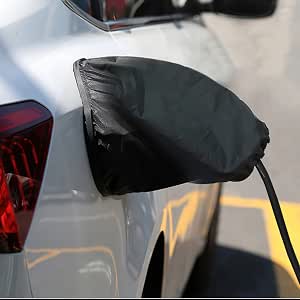 | Best for Charging-Port Weather Protection | Material: Waterproof canvas | Attachment: Two magnetic strips | Closure: Velcro | VIEW LATEST PRICE | See Our Full Breakdown |
| BESTEK 300W Car Power Inverter with Dual USB Charging |  | Best for Road-Trip AC Power | Input voltage: 11–17V DC | Output voltage: 120V AC | Continuous output: 300W | VIEW LATEST PRICE | See Our Full Breakdown |
| 66W 4-Port Car Charger with Voltage Display and LED Lights |  | Best for Multi-Device USB Charging | Connector type: Cigarette lighter | Input voltage: 12–24V | Total USB ports: Four | VIEW LATEST PRICE | See Our Full Breakdown |
| TEKSHINNY 4-Pack Wireless LED Interior Car Lights, 7 Colors, USB Rechargeable |  | Best for Decorative Cabin Lighting | Set size: Four lights | Colors: Seven | LED beads per light: Six | VIEW LATEST PRICE | See Our Full Breakdown |
More Details on Our Top Picks
YGDMD 2-Piece Car Seat Gap Filler Organizer with Storage, Black
For EV drivers who want a tidier cabin rather than another charging accessory, the YGDMD gap fillers pair a barrier against dropped items with a small storage compartment. The two-piece set is designed for gaps measuring 1.43–1.53 inches, so it can keep keys or a phone from slipping beside the seat while leaving everyday essentials accessible. Compared with the EVDANCE portable charger, this is a simple interior convenience, not equipment for adding charging flexibility or range between stops.
The EVA material is easy to wipe or rinse, and the organizers are designed not to interfere with seat adjustment or seat belt use. The main tradeoff is fit: measure both seat gaps before buying, since the narrow width range limits vehicle compatibility. Each compartment also has an 11-ounce maximum weight recommendation, making these better for small belongings than heavier items.
Pros:- Fills the seat-console gap while adding a compartment for small essentials.
- Helps keep phones and keys from falling out of reach.
- EVA material can be wiped or rinsed clean.
- Designed to avoid interfering with seat adjustment and seat belt use.
Cons:- The narrow compatible gap range makes measuring before purchase important.
- The 11-ounce weight recommendation limits what each compartment should hold.
Best for: EV owners with seat-to-console gaps within the specified width who regularly reach for a phone, keys, or other small items while parked.
Not ideal for: Drivers whose seat gaps are outside the 1.43–1.53-inch range, or anyone seeking an accessory that charges devices or stores larger items.
- Quantity:2
- Material:Ethylene vinyl acetate (EVA)
- Dimensions:15.75 × 2.7 × 1.53 inches
- Compatible gap width:1.43–1.53 inches
- Compartments:1 per organizer
- Maximum weight recommendation:11 ounces
- Item weight:6.5 ounces
- Warranty:3 months
Our verdict“Choose this set if your seat gaps match its measurements and you want small essentials close at hand rather than a functional charging upgrade.”
EVDANCE Portable Level 1 and Level 2 J1772 EV Charger, 25 ft Cable, 12A/120V and 16A/240V
The EVDANCE stands apart from the smaller cabin accessories here: it is a portable J1772 charger that supports both 120V and 240V outlets. That gives compatible EV and plug-in hybrid owners options at home or on the road, while its 25-foot cable can make reaching a vehicle easier when an outlet is awkwardly placed. Unlike the PiSFAU inverter, which powers devices from a car’s 12V socket, this unit charges a vehicle itself.
Its 12A-at-120V and 16A-at-240V modes deliver up to 3.84 kW, with an LED display for status and errors, monitoring protections, and a carry bag. Those strengths come with setup limits: confirm both vehicle and outlet compatibility before relying on it. Tesla vehicles need a separately sold adapter, and some outlet adapters are sold separately. Compared with a fixed home charger, this portable unit is easier to carry but has lower maximum output.
Pros:- Supports Level 1 and Level 2 charging from compatible outlets.
- The 25-foot cable offers more placement flexibility than a short lead.
- LED status and error display makes charging information visible.
- Includes a carry bag and built-in monitoring protections.
Cons:- Tesla vehicles require a separately sold adapter.
- Compatibility depends on the vehicle and outlet, and some adapters are sold separately.
- Maximum power of 3.84 kW is modest compared with higher-output charging equipment.
Best for: J1772 EV and plug-in hybrid owners who want a portable charger for compatible 120V and 240V outlets and value a longer cable.
Not ideal for: Tesla owners who do not want to buy an adapter, or drivers whose vehicle and available outlet are not confirmed as compatible.
- Connector:J1772
- Charging levels:Level 1 and Level 2
- Current and voltage:12A at 120V; 16A at 240V
- Maximum power:3.84 kW
- Cable length:25 feet
- Compatible outlets:NEMA 5-15/5-20 and NEMA 6-20
- Weight:7 pounds
- Certifications:ETL listed; FCC and CE certified
- Warranty:1 year
Our verdict“Pick the EVDANCE if your J1772 vehicle and outlets are compatible and you want portable 120V/240V charging with a long cable.”
PiSFAU 200W Car Power Inverter, 12V DC to 110V AC
The PiSFAU is for drivers who need more than phone charging: it converts a vehicle’s 12V power into 110V AC for compatible small electronics. Two AC outlets sit alongside four USB ports, so passengers can power several devices without relying on the retractable cables of the LISEN 84W charger. Its 200W output makes it a useful add-on for road trips or mobile work, but it is not a substitute for a household outlet or a high-capacity power station.
At 8.8 ounces and about five inches long, it is easy to store, and built-in protections address overheating, voltage fluctuations, overloads, and short circuits. The tradeoff is its modified sine wave output, which may not suit every AC-powered device; check the device’s power requirements first. It also needs a 12V vehicle socket, unlike the EVDANCE, which draws power from a compatible wall outlet to charge an EV.
Pros:- Two AC outlets and four USB ports allow several devices to connect at once.
- Compact, lightweight form is convenient to store in a vehicle.
- Built-in protections cover overheating, voltage fluctuations, overloads, and short circuits.
- Provides 110V AC output for compatible electronics that cannot use USB alone.
Cons:- Modified sine wave output may not work well with every AC-powered device.
- Requires a 12V vehicle power socket.
- The 200W output limits use with higher-power equipment.
Best for: Road-trip passengers and mobile workers who need to power low-wattage AC electronics and charge several USB devices from a 12V socket.
Not ideal for: Drivers with devices that require a pure sine wave, equipment exceeding 200W, or vehicles without a 12V power socket.
- Input:12V DC
- Output:110V AC
- Output power:200W
- Outlets and ports:2 AC outlets and 4 USB ports
- USB output:4.8A, 24W
- Waveform:Modified sine wave
- Dimensions:5 × 2.7 × 1.4 inches
- Weight:8.8 ounces
- Warranty:1 year
Our verdict“Choose the PiSFAU for modest AC and USB power needs on the road, provided your devices are compatible with modified sine wave output.”
84W 4-in-1 Retractable Car Charger with USB-C and Lightning Cables
This 4-in-1 charger is aimed at drivers who want charging cables ready to hand without leaving loose cords across the cabin. It combines two retractable cables with USB-C and USB-A ports, supporting up to four connected devices. The USB-C cable reaches up to 45W with PD/PPS, giving compatible phones and other devices a faster charging option than the PiSFAU’s USB output, though the PiSFAU is the better fit when AC outlets are needed.
A 180-degree adjustable plug helps position the unit around a crowded console, while the voltage display and listed electrical protections add useful visibility. The cables extend up to 31.5 inches, which helps reduce clutter but may not reach every passenger’s seat. It requires a 12V–24V cigarette lighter socket, so it will not work in a vehicle with USB-only power, and its charging-only design does not provide CarPlay or data transfer.
Pros:- Supports charging up to four devices at once.
- Retractable cables help keep charging cords from cluttering the cabin.
- USB-C cable supports up to 45W PD/PPS output.
- 180-degree adjustable plug, voltage display, and multiple listed protections.
Cons:- Requires a 12V–24V cigarette lighter socket and does not work with USB-only sockets.
- Does not support CarPlay, Apple Play, AirPlay, or data transfer.
- Retractable cables extend only up to 31.5 inches, which may not suit every seating layout.
Best for: Drivers and passengers who regularly charge several compatible devices and want integrated retractable cables instead of loose leads.
Not ideal for: Owners of vehicles with USB-only sockets, or anyone expecting the charger to support CarPlay, Apple Play, AirPlay, or data transfer.
- Maximum power:84W
- Ports:2 retractable cables, 1 USB-C port, and 1 USB-A port
- USB-C cable output:Up to 45W PD/PPS
- Additional retractable cable output:12W
- Retractable cable length:Up to 31.5 inches
- Vehicle input:12V–24V cigarette lighter socket
- Plug rotation:180 degrees
- Dimensions:5.5 × 2 × 1.29 inches
- Weight:0.29 pounds
Our verdict“Choose this charger if you want built-in retractable cables and multi-device charging, not vehicle connectivity or AC power.”
LISEN 84W 4-in-1 Retractable Car Charger
The LISEN shares the 4-in-1, retractable-cable approach of the other 84W charger in this group, but its vehicle-voltage-dependent USB-C output is the detail that should guide the choice. It reaches up to 45W with 24V input and up to 36W with 12V, so buyers should match expectations to their vehicle rather than assume the highest output everywhere. Like the 84W 4-in-1 Retractable Car Charger with USB-C and Lightning Cables, it charges up to four devices and adjusts through 180 degrees.
Its two retractable cables and separate USB-C and USB-A ports keep common charging options close by, with cables extending up to 31.5 inches. That makes it a better cabin-charging choice than the PiSFAU for users focused on USB devices, while the PiSFAU is the one to choose for AC outlets. The LISEN is charging-only: it does not support CarPlay, Bluetooth, or data transfer, and it does not support Micro-USB devices.
Pros:- Charges up to four devices at once through retractable cables and USB ports.
- USB-C PD output reaches up to 45W with 24V input.
- 180-degree adjustment helps accommodate different socket orientations.
- Includes a 24-month replacement promise.
Cons:- USB-C output drops to up to 36W with 12V input.
- Does not support CarPlay, Bluetooth, or data transfer.
- Does not support Micro-USB devices.
Best for: Drivers with 12V or 24V sockets who want retractable cables and USB-C PD charging, especially those who can use its higher output with 24V input.
Not ideal for: Drivers who need CarPlay, Bluetooth, data transfer, Micro-USB support, or 45W USB-C output from a 12V socket.
- Vehicle socket compatibility:12V and 24V cigarette lighter sockets
- Total advertised output:84W
- USB-C PD output:Up to 45W with 24V; up to 36W with 12V
- USB-A output:12W
- Retractable cables:USB-C and iPhone charging cable, extending up to 31.5 inches
- Maximum devices charged simultaneously:4
- Adjustable angle:180 degrees
- Data transfer:Not supported
- Warranty/support:24-month replacement promise
Our verdict“Pick the LISEN if your vehicle socket and devices suit its USB-C output limits and you want a tidy, multi-device charging setup.”
Maizengauto EV Charger Port Cover for Steel-Bodied Electric Vehicles
The Maizengauto cover is the weather-focused pick in this group: it helps shield an exposed charging port from rain, snow, and ice while the vehicle is plugged in. Its two magnetic strips attach to steel body panels, and a Velcro closure around the cable helps cover the opening without blocking the charging connection. Compared with the LZSTEC Magnetic EV Charger Port Cover, it serves the same basic purpose, so panel compatibility and attachment are the key checks rather than extra charging features. The flexible cover is suited to outdoor charging, but this design depends on having a suitable steel area near the port. It may not adhere to aluminum, carbon fiber, or plastic, making it a poor match for some body panels.
Pros:- Helps shield the charging port from rain, snow, and ice during outdoor charging
- Two flexible magnetic strips attach to compatible steel body panels
- Velcro closure wraps around the charging cable
- Flexible cover is designed for outdoor use
Cons:- May not attach to aluminum, carbon fiber, or plastic panels
- Requires a suitable steel area around the charging port
Best for: EV owners who charge outdoors in wet or wintry weather and have compatible steel body panels around the charging port
Not ideal for: Owners of vehicles with aluminum, carbon-fiber, or plastic panels around the charge port, where the magnetic strips may not attach
- Brand:Maizengauto
- Model:ev charger port cover
- Attachment:Two magnetic strips
- Closure:Velcro
- Compatibility:Steel-bodied electric vehicles
- Weight:9.9 ounces
- Package dimensions:9.45 × 8.54 × 1.57 inches
Our verdict“Choose this cover if you charge outside and can confirm that its magnets will hold on the steel panel around your port.”
YSOLX 200W 12V Car Power Inverter with 2 AC Outlets and 4 USB Ports
The YSOLX inverter is a compact way to run small electronics from a vehicle’s 12V outlet, with two AC outlets and four USB ports sharing a 200W maximum output. That combination is more flexible for mixed plugs than the PiSFAU 200W Car Power Inverter, while its compact 5 × 2.7 × 1.4-inch body is easy to stow between trips. Built-in protection for overload, over-temperature, voltage problems, and short circuits adds safeguards when several devices are connected. The tradeoff is its modified sine wave output, which may not suit equipment that requires a pure sine wave, and the 200W ceiling rules out higher-demand appliances. I’d treat it as a travel charger for phones, tablets, and other modest loads—not a way to power substantial gear from an EV.
Pros:- Two AC outlets and four USB ports accommodate a mix of small devices
- Compact dimensions make it easier to store in a vehicle
- Includes over-voltage, overload, over-temperature, under-voltage, and short-circuit protection
Cons:- 200W output limits it to smaller electronics
- Modified sine wave output may not be appropriate for some equipment
- Requires access to a 12V vehicle outlet
Best for: Drivers who want to charge several phones, tablets, or other small electronics from a 12V outlet, including passengers on road trips
Not ideal for: Buyers who need to run high-wattage appliances or sensitive equipment that calls for pure sine wave power
- Model:MT-PC200
- Input:12V DC
- Output:110V AC
- Maximum output power:200W
- AC outlets:2
- USB ports:4, including 18W USB-QC and 20W USB-C outputs
- Waveform:Modified sine wave
- Dimensions:5 × 2.7 × 1.4 inches
- Protection:Over-voltage, overload, over-temperature, under-voltage, and short-circuit
Our verdict“Pick the YSOLX if you need multiple ports for modest electronics, but choose a higher-output option for demanding devices.”
SUPERONE 4-in-1 Retractable Car Charger with Voltage Display
With two retractable cables plus USB-C and USB-A ports, the SUPERONE charger makes sense when several people need power and loose cords tend to clutter the cabin. Its cables extend to 80 cm, and the unit supports both 12V and 24V outlets, so it can suit a range of vehicles. The voltage display and built-in circuit protections add useful information and safeguards without taking up much cabin space. Compared with the 84W 4-in-1 Retractable Car Charger with USB-C and Lightning Cables, this model lists up to 60W total output, so buyers should focus on its specific port arrangement and output rather than assume faster charging across every connection. Only the retractable USB-C cable is specified for PD fast charging, and it does not support CarPlay.
Pros:- Can charge up to four devices at once
- Two 80 cm retractable cables help reduce loose-cable clutter
- Works with 12V and 24V vehicle outlets
- Voltage display and built-in circuit protections are included
Cons:- Does not support CarPlay
- Only the USB-C retractable cable is specified for PD fast charging
- Total output is limited to 60W
Best for: Households or rideshare drivers who want charging options for up to four devices and prefer built-in cables to loose cords
Not ideal for: Drivers seeking a CarPlay adapter or fast charging on every output, since it is charging-only and only one cable is specified for PD
- Charging outputs:4
- Retractable cable length:80 cm (2.6 ft)
- Maximum total output:60W
- USB-C retractable cable:PD, up to 30W
- Vehicle input:12V or 24V DC
- Other ports:USB-C port: 5V/3A; USB-A port: 5V/2.4A
- Protection:15A fuse, overcharge, over-temperature, and short-circuit protection
- CarPlay support:No
- Warranty:18 months
Our verdict“Choose this charger for a shared cabin where retractable leads matter more than CarPlay or fast charging from every port.”
OlarHike Portable Tire Inflator with Dual Power
The OlarHike stands out as the most practical preparedness tool in this batch: it can run from three built-in 2000 mAh batteries or a 12V car outlet, so a low battery does not leave you without a power option if the outlet is available. Its digital display, preset modes, and automatic shut-off help reduce guesswork when topping up a tire, while the included adapters also cover bicycles and sports balls. Unlike the charging-focused YSOLX 200W Car Power Inverter, this device solves a specific roadside problem rather than adding outlets for general electronics. The compact 1.2-pound format is easy to store, but its 51 PSI limit and stated use range rule out heavy-duty pickup tires and RVs. Battery recharging also calls for a suitable 5V adapter.
Pros:- Runs on its built-in rechargeable battery or a 12V car outlet
- Automatic shut-off stops inflation at the selected pressure
- Compact 1.2-pound design includes a flashlight and USB output
- Included adapters support car tires, bicycles, motorcycles, and sports balls
Cons:- Maximum pressure is 51 PSI and it is not designed for heavy-duty pickups or RVs
- Requires a 5V 2A or 5V 3A adapter for charging
- Inflation time varies with tire size
Best for: Drivers who want a portable inflator for passenger-car tire top-ups, with extra use for bicycles, motorcycles, and sports equipment
Not ideal for: RV owners and drivers of heavy-duty pickups who need an inflator suited to larger tires or demanding workloads
- Power source:Rechargeable battery or 12V DC car outlet
- Battery capacity:Three 2000 mAh batteries
- Maximum tire pressure:51 PSI
- Weight:1.2 lbs
- Dimensions:6.5 × 2.76 × 2.17 inches
- Preset modes:Car, bike, motorcycle, and sports equipment
- Pressure units:PSI, BAR, KPA, KG/CM²
- Inflation speed:195/65 R15 tire from 30 to 35 PSI in 55 seconds; 235/65 R17 tire from 30 to 35 PSI in 2.2 minutes
- Included accessories:Air hose, Type-C cable, long nozzle, ball needle, French valve adapter, storage bag, and 12V DC power cord
Our verdict“Choose the OlarHike for passenger-car emergencies and routine top-ups, not for large truck or RV tires.”
Anina SAE J1772 EV Charger Holder and Cable Organizer
The Anina holder is a practical home-charging accessory for anyone tired of a J1772 connector and cable resting on the floor. Its wall mount keeps the plug easier to retrieve and helps keep the cable cleaner between charging sessions; a cap with a waterproof edge adds protection from rain and dust for indoor or outdoor placement. Compared with the Nexoroot EV Charger Cable Holder Wall Mount, this pick’s defining detail is its specific SAE J1772 connector fit, so the connector standard—not just available wall space—should guide the choice. The PA construction is described as tough and more temperature resistant than ABS. That convenience depends on having a suitable flat mounting surface, and the holder is not a universal fit for other connector types.
Pros:- Designed for SAE J1772 charging connectors
- Keeps the connector and cable off the ground and organized
- Waterproof-edged cap helps shield the plug from rain and dust
- PA material is described as tough and more temperature resistant than ABS
Cons:- Compatibility is limited to J1772 connectors
- Requires a suitable flat surface for installation
- Wall mounting may not suit every charging location
Best for: EV owners with an SAE J1772 charging connector who want a dedicated wall-mounted place to park the plug and cable
Not ideal for: Owners with a different connector standard or those without a suitable flat surface for wall mounting
- Brand:Anina
- Model:EV Charger Holder (PJ-2401)
- Connector compatibility:SAE J1772
- Material:PA
- Mounting type:Wall mount
- Use:Designed for indoor and outdoor use
- Item weight:7 ounces
- Package dimensions:11.81 × 3.31 × 3.23 inches
Our verdict“Choose this holder if you have a J1772 connector and a suitable wall surface where keeping the plug off the ground will help.”
Nexoroot EV Charger Cable Holder Wall Mount
The Nexoroot is a straightforward way to keep an EV cable off the garage floor and the connector from dangling. Its rubber-coated steel hook helps hold the cable without scraping its surface, while the included elastic strap keeps the plug secured. Compared with the Anina SAE J1772 EV Charger Holder and Cable Organizer, this is a simpler single-hook setup rather than a broader organizing solution; that makes sense if you mainly need one dependable parking spot for the cable. The rust-resistant finish suits indoor or outdoor mounting, and the included screws support installation on wood, brick, or concrete. The tradeoff is that mounting requires drilling, and one hook may not organize a long or bulky cable as neatly as a more elaborate holder.
Pros:- Rubber coating helps protect the cable and improve grip.
- Rust-resistant finish supports indoor or outdoor use.
- Elastic strap helps keep the charging plug in place.
- Includes stainless steel screws for mounting.
Cons:- Installation requires drilling into a suitable surface.
- One hook may be limiting for long cables or multiple charging leads.
Best for: EV owners who want a fixed, weather-resistant place to hang one charging cable and secure its plug.
Not ideal for: Renters who cannot drill into walls, or owners who need multiple hooks or storage for several cables.
- Material:Carbon steel
- Finish:Rubber coated, rust resistant
- Mounting type:Wall mount
- Maximum weight capacity:40 pounds
- Compatible chargers:Tesla and J1772
- Included:Elastic cord strap and two stainless steel screws
- Recommended surfaces:Wood, brick, concrete
- Dimensions:4.09 x 1.57 x 5.7 inches
Our verdict“Choose the Nexoroot if you want a simple wall-mounted home for one EV cable and plug, not a multi-cable organizer.”
LZSTEC Magnetic EV Charger Port Cover for Steel-Bodied Vehicles
For an EV parked outdoors, the LZSTEC adds a barrier against rain, snow, ice, and sun while the car is charging. Its waterproof canvas cover uses magnetic strips to attach to steel body panels, and the Velcro closure fits around the cable. The larger cut is intended to cover charging-port areas with dual ports, giving it a different purpose from the Maizengauto EV Charger Port Cover in this roundup: check both against your vehicle and charging setup, but the LZSTEC’s listed fit is explicitly limited to steel-bodied cars. That restriction is its main buying hurdle. It will not attach as intended to aluminum, carbon fiber, or plastic panels, so vehicle body material matters more here than color or styling. For compatible vehicles, the one-year warranty adds reassurance, but this remains a fit-specific accessory rather than a universal cover.
Pros:- Waterproof fabric helps shield the port area from rain, snow, and ice.
- Provides protection from summer UV exposure.
- Velcro closure accommodates the charging cable.
- Large cover design accommodates charging-port areas with dual ports.
Cons:- Magnetic attachment is limited to steel body panels.
- Not suitable for vehicles with aluminum, carbon-fiber, or plastic panels.
Best for: Owners of steel-bodied EVs that are regularly charged outdoors, especially those with a dual-port charging area.
Not ideal for: Drivers whose vehicles have aluminum, carbon-fiber, or plastic body panels, since the magnetic attachment will not work as intended.
- Material:Waterproof canvas
- Attachment:Two magnetic strips
- Closure:Velcro
- Compatibility:Steel-bodied electric vehicles
- Maximum supported weight:9 pounds
- Item weight:0.28 kg
- Warranty:One year
Our verdict“Pick the LZSTEC for outdoor charging protection only after confirming your EV has steel body panels where the magnets attach.”
BESTEK 300W Car Power Inverter with Dual USB Charging
The BESTEK is the most useful pick here when your EV’s cabin needs more than USB charging. It converts a compatible 12V vehicle supply into 120V AC power, with two AC outlets plus two USB ports, so it can serve small electronics and mobile devices from one compact unit. Compared with the PiSFAU 200W Car Power Inverter, the BESTEK offers higher continuous output, which gives compatible devices more headroom; its modified sine wave still limits which equipment should be plugged in. The aluminum housing, cooling fan, and built-in protections support practical in-car use, but this is not a substitute for an EV’s high-voltage traction battery or a dedicated household outlet. Buyers should check device requirements and the vehicle’s 11–17V input source before relying on it for a particular appliance.
Pros:- Two AC outlets and two USB ports support several device types.
- 300W continuous output exceeds the listed 200W output of the PiSFAU inverter.
- Compact, lightweight aluminum housing includes a cooling fan.
- Built-in fuse and safety protections help guard against common faults.
Cons:- Modified sine wave output may not suit sensitive or incompatible equipment.
- Requires a compatible 11–17V DC vehicle power source.
- 300W continuous output rules out many higher-power appliances.
Best for: EV drivers who want AC outlets for compatible low-power electronics on trips and also need USB charging.
Not ideal for: Buyers needing pure sine wave power, higher-wattage appliance support, or an inverter that connects directly to an EV’s high-voltage battery.
- Input voltage:11–17V DC
- Output voltage:120V AC
- Continuous output:300W
- Peak output:700W
- Outlets:Two AC outlets
- USB ports:Two ports, 4.8A
- Waveform:Modified sine wave
- Dimensions:4.8 x 3.1 x 1.9 inches
- Warranty:60 months
Our verdict“Choose the BESTEK over a lower-output inverter when you need two AC outlets for compatible small devices and can work within its 300W limit.”
66W 4-Port Car Charger with Voltage Display and LED Lights
This 4-port adapter focuses on keeping passengers’ USB devices powered, rather than adding AC outlets like the BESTEK 300W Car Power Inverter. With USB PD and QC 3.0 support and up to 66W total output, it can charge a mix of compatible phones, tablets, and cameras from a 12–24V cigarette-lighter socket. Its voltage display adds a quick view of the vehicle’s electrical system, while LED lighting can make the adapter easier to locate in a dark cabin. Output is shared across the ports, though, and charging speed varies by device and port; four connections do not mean four devices each receive maximum fast-charge power. It also depends on a compatible accessory socket, so buyers should confirm their vehicle has one before choosing it over a direct-to-USB charging setup.
Pros:- Four USB ports can serve multiple devices at once.
- USB PD and QC 3.0 support fast charging for compatible devices.
- Voltage display provides a readout of vehicle voltage.
- Includes LED lighting and protections against common electrical faults.
Cons:- Charging speed depends on the connected device and the port used.
- Requires a compatible 12–24V cigarette-lighter outlet.
- USB ports do not provide the AC power available from the BESTEK inverter.
Best for: EV owners who regularly carry several passengers or devices and want a shared USB charging hub with a voltage readout.
Not ideal for: Drivers who need AC power, lack a compatible 12–24V cigarette-lighter outlet, or require maximum fast charging on every connected device.
- Connector type:Cigarette lighter
- Input voltage:12–24V
- Total USB ports:Four
- USB port types:Three USB 2.0 ports and one USB 3.0 port
- Fast charging:USB PD and QC 3.0
- Maximum wattage:66W
- Output current:7000 milliamps
- Protection:Over-voltage, over-current, over-temperature, and short-circuit protection
Our verdict“Choose this charger if several USB devices need power in the cabin; choose the BESTEK instead when AC outlets matter more.”
TEKSHINNY 4-Pack Wireless LED Interior Car Lights, 7 Colors, USB Rechargeable
The TEKSHINNY set is a cabin accent accessory, not a practical replacement for a dedicated vehicle light. Four rechargeable units offer seven touch-selectable colors and attach magnetically to adhesive metal plates, making them easy to reposition or remove. Unlike the 66W 4-Port Car Charger, they do not occupy the cigarette-lighter socket while in use, but each light needs USB charging and provides only about two hours of illumination per charge. That runtime makes them better for occasional ambient lighting than for long drives or frequent use as task lights. They can also be used around the home, adding flexibility beyond the car. The ABS lights are not water resistant, so they belong inside a dry cabin and are a poor match for exposed or damp locations.
Pros:- Four separate lights offer flexible placement around the cabin.
- Seven touch-selectable colors let drivers change the interior look.
- Magnetic mounting makes the lights quick to attach and remove.
- USB rechargeable units can also be used in other dark spaces at home.
Cons:- About two hours of illumination per charge may require frequent recharging.
- Not water resistant, limiting placement to dry areas.
- Adhesive metal plates are needed for magnetic mounting.
Best for: Drivers who want removable, color-changing accent lights for a dry cabin and are comfortable recharging them often.
Not ideal for: Buyers seeking long-lasting task lighting, a wired set-and-forget solution, or lights for wet or exposed areas.
- Set size:Four lights
- Colors:Seven
- LED beads per light:Six
- Control:Touch
- Charging:USB rechargeable
- Charging time:About 40 minutes
- Lighting time:About two hours
- Water resistance:Not water resistant
- Warranty:One year
Our verdict“Pick the TEKSHINNY set for removable color accents in a dry cabin, not for dependable long-duration or weather-exposed lighting.”

How We Picked
I ranked these accessories by how directly they address common electric-car ownership needs: charging access, roadside readiness, in-car power, cable management, and cabin organization. For each item, the useful comparison points include stated electrical output, connector or vehicle compatibility, cable reach, port selection, mounting requirements, and how much setup or space the product demands. I gave more weight to items with a clear use case and practical flexibility than to accessories whose appeal depends mainly on extra convenience features.
The order reflects distinct jobs, not a claim that every driver needs every item. The portable EV charger leads because it combines Level 1 and Level 2 capability in one product, while the tire inflator and higher-output inverter follow for drivers with different priorities. Similar retractable chargers, inverters, cable holders, and port covers are separated by their stated specifications and intended fit; buyers should check details before purchase, especially for charging equipment and vehicle-specific accessories.
Factors to Consider When Choosing Best Electric Car Accessories
My shortlist spans equipment that affects charging, emergency preparation, device power, and cabin comfort. Decide which problem you want to solve before comparing extra features: the right accessory for a home-charging setup may add little value to someone who mainly needs a roadside kit. These factors can help narrow the field without paying for overlapping gear.
Match EV charging gear to the car and the power source
Portable charging equipment is not a universal plug-and-play purchase. Check the connector your vehicle accepts, the voltage and current supported by the charger, and the outlet or circuit available where you plan to charge. A charger that lists both 120V and 240V operation can offer more setup flexibility, but it does not make an unsuitable outlet safe or increase the capacity of the circuit. Review the vehicle manual and charger instructions, and ask a qualified electrician about home wiring if you are unsure. Avoid choosing by cable length alone: reach helps with parking layouts, but the charging location and outlet still determine whether the setup works. For drivers with reliable home charging, a portable unit may be backup gear rather than a daily necessity.
Treat cable storage and weather protection as fit questions
EV cable holders and port covers solve different problems: holders manage a charging cable between sessions, while covers shield the charge-port area. Before buying a wall mount, check its attachment method, the wall material, and the cable’s weight and dimensions. A compact hook may be enough for a light cable, whereas heavier or longer cables benefit from a sturdy mounting point and a tidy storage path. Magnetic port covers require particular attention to body material; a product made for steel-bodied vehicles may not attach to aluminum or plastic panels. Also check whether the cover can stay secure without obstructing the port or leaving contact surfaces exposed. A neat-looking accessory is of limited use if its mounting assumptions do not match the car or garage.
Choose an inverter by load, not by outlet count
An inverter’s stated wattage is only part of the decision. Add the power demands of the devices you intend to run, and check whether their startup draw can exceed their normal operating draw. The vehicle’s 12V outlet also has a limit, which may be lower than the inverter’s advertised AC capacity; exceeding it can trip protection or strain the circuit. Compare AC outlets and USB ports against your actual kit rather than treating a higher port count as a benefit by itself. Inverters are better suited to compatible small electronics than to high-draw appliances, and they should be used as directed with the vehicle parked or running only as the manufacturer allows. If you only need to charge phones, a compact USB car charger may be a simpler fit.
Decide whether a tire inflator belongs in your roadside kit
A portable inflator can help restore tire pressure when you have a slow leak or find a tire below its recommended level, but it cannot repair a puncture or make an unsafe tire roadworthy. Check how it is powered, whether its cord or battery setup suits your car, and whether its display and controls are usable in poor light. Compare the inflator’s stated pressure range with the needs listed on your vehicle’s tire placard. Keep a separate pressure gauge or verify the reading against a trusted gauge if accurate tire pressure is a priority. Drivers who mostly travel near service stations may prefer a smaller roadside kit, while frequent highway or remote-area drivers may value carrying an inflator. Follow the vehicle manual for safe jacking and tire procedures; an inflator is not a substitute for those steps.
Avoid buying several chargers that solve the same problem
The roundup includes multiple retractable cable chargers and a separate four-port charger, so it is easy to overbuy. First list the connectors used by everyone who rides in the car, then check whether built-in cables match current devices and whether the charger also has an open port for a different cable. A voltage display can provide a quick readout, but it does not replace diagnosis of a battery or charging fault. Retractable designs reduce loose-cable clutter, though their integrated cables may be less adaptable if your devices change. A multi-port model with no built-in cables can be a better long-term choice for a household with mixed devices. Pick one charger that covers your regular use rather than keeping several near-duplicates in the console.
Prioritize safety and placement for cabin accessories
Small add-ons can affect visibility, access, and the way the cabin functions. A seat-gap organizer should fit the seat and console without interfering with seat movement, seat-belt buckles, or airbags; check the product shape against your interior before relying on it. LED accent lights need secure placement that does not distract the driver or create glare on windows. For any 12V accessory, use the vehicle’s power limits and follow its installation instructions rather than adding adapters to solve a poor fit. Consider whether the item can be removed or cleaned easily, especially if the car is shared or used for passengers. Convenience is most useful when the accessory stays out of controls, safety equipment, and the driver’s line of sight.
Frequently Asked Questions
Can I use the EVDANCE portable charger with any electric car?
Do not assume that every EV uses the same charging connector or accepts the same charging setup. Check the connector listed for the EVDANCE unit against your vehicle’s charging port and consult the vehicle manual for supported charging levels. You also need a suitable outlet and circuit for the selected voltage and current; an adapter does not raise the circuit’s capacity. If you are unsure about a 240V installation, get advice from a qualified electrician. These checks matter more than cable reach when deciding whether the charger fits your situation.
Is a 300W inverter automatically better than a 200W model?
Not for every driver. The BESTEK’s stated 300W output gives it more headroom on paper than the 200W PiSFAU and YSOLX models, but the car’s 12V outlet and the connected device still set practical limits. Compare the combined draw of your devices with the inverter and outlet specifications, including any brief startup surge. If your usual load is phone or tablet charging, a lower-output inverter or USB charger may suit you better. Choose the larger model only when your compatible devices and vehicle power supply can support its use.
Do I need an EV cable holder if my charger already has a storage bag?
A bag can keep a portable cable together for transport, while a wall holder makes regular garage use easier and keeps the cable off the floor. Which is more useful depends on whether the charger stays at home, travels in the car, or serves both roles. Before adding a mount, check the cable’s weight, the wall surface, and the holder’s attachment method. A holder is less helpful if the car parks far from the mounting point or the cable cannot reach from that position. Some drivers may prefer the bag alone to avoid drilling or dedicating wall space.
Will a magnetic EV charge-port cover fit my vehicle?
Only if the vehicle has a compatible surface where the magnets can attach. The Maizengauto and LZSTEC covers are described for steel-bodied vehicles, so a steel panel should not be treated as proof of fit for every model or charge-port shape. Check the product’s dimensions and confirm that its placement will not block access to the port. A magnetic cover is not a replacement for the vehicle’s built-in charge-port door or for following the automaker’s care instructions. If your body panel material is uncertain, check the vehicle specifications before ordering.
Which accessories should I buy first if I am new to EV ownership?
Start with items that address a known gap in your routine rather than buying a full set of conveniences at once. Confirm how you will charge at home and on regular routes, then decide whether a portable charger adds useful backup flexibility. A tire inflator can be a sensible roadside addition, while a cable holder is mainly useful when you need a fixed storage point. In-car USB chargers, inverters, lights, and organizers can wait until you know which devices or cabin annoyances matter to you. This staged approach helps avoid duplicate chargers and accessories that do not fit your vehicle.
Conclusion
For the widest range of charging situations, my best overall pick is the EVDANCE Portable Level 1 and Level 2 J1772 EV Charger, provided its connector and power requirements match your car and outlet. The best value for practical preparedness is the OlarHike Portable Tire Inflator for drivers who want a roadside tool; the best premium choice by stated output is the BESTEK 300W inverter for compatible devices and a suitable 12V supply. For beginners, I would start with a single retractable car charger that matches the household’s cables, then add gear only when a specific need appears. Choose the YGDMD seat-gap organizer for cabin clutter, an Anina or Nexoroot holder for a garage cable-storage problem, or a Maizengauto or LZSTEC cover only after confirming steel-body compatibility. The right choice is the accessory that fits your vehicle and routine, not the longest list of add-ons.