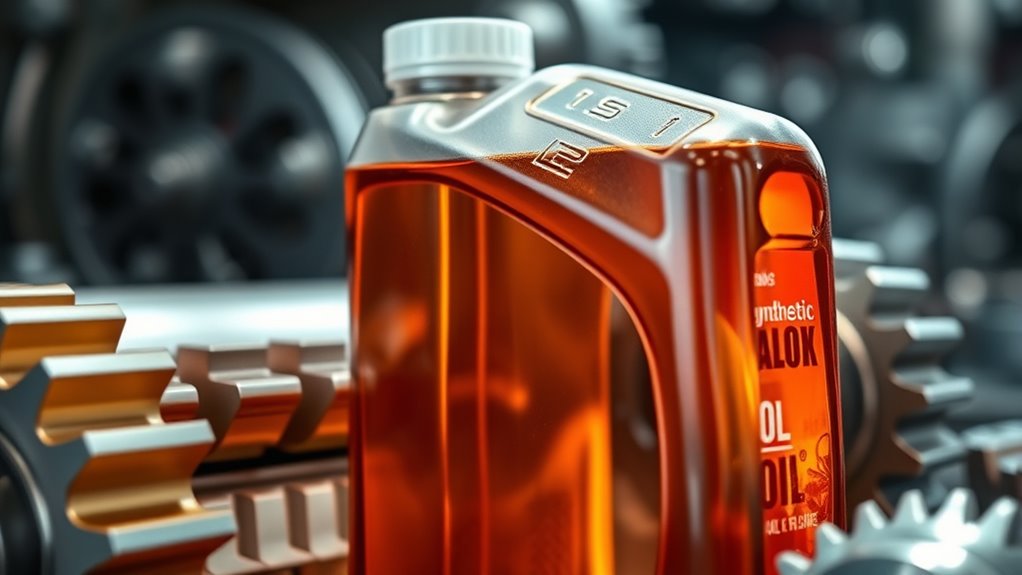
For a versatile starting point, I rank Mobil 1 Synthetic Gear Lube LS 75W-90 as the best overall pick in this synthetic gear oil roundup, with limited-slip positioning and a widely useful viscosity grade. Valvoline Advanced Full Synthetic 75W-140 stands out for buyers whose vehicle calls for the thicker grade, while Red Line 75W85 GL-5 is the more specialized choice for compatible limited-slip differentials. The main tradeoffs are not simply brand or package size: the required viscosity, differential type, and manufacturer specification should determine fit before convenience or quantity. A gallon can suit repeat service, but a quart or pouch may be easier for a single fill or awkward access. Read on for the full comparison, selection criteria, and guidance on matching oil to your vehicle.

Get business pricing on garage and car supplies
- Business-only prices and quantity discounts
- Tax-exempt purchasing
- Multiple users, one account, clear invoices
Complete the kit


Key Takeaways
- Viscosity is the first sorting rule: this lineup spans 75W-85, 75W-90, and 75W-140, and those grades are not interchangeable just because each product is synthetic.
- Limited-slip use is not a blanket promise: several options explicitly identify limited-slip or LS applications, but buyers should still check the vehicle manual and product specification for their differential.
- Mobil 1 75W-90 has the widest package spread here: the list includes single-quart, two-quart, and six-quart formats, making it easier to match quantity to service needs.
- TRIAX and Lucas offer gallon formats in different grades: the 75W-90 and 75W-140 gallon options suit buyers planning larger fills or recurring maintenance, while a gallon may be excessive for one small service.
- Packaging changes convenience, not fluid compatibility: Valvoline’s FlexFill pouch may help with tight access, but it does not replace checking the specified grade, performance standard, or required fill volume.
| Valvoline Advanced Full Synthetic 75W-140 Gear Oil 1 QT |  | Best Overall for 75W-140 Limited-Slip Differentials | Viscosity: 75W-140 | Material: Synthetic | API specification: GL-5 | VIEW ON AMAZON | See Our Full Breakdown |
| Mobil 1 Synthetic Gear Lube LS 75W-90, 1 Quart |  | Best for Modern 75W-90 Applications | Brand: Mobil 1 | Viscosity: 75W-90 | Form: Liquid | VIEW ON AMAZON | See Our Full Breakdown |
| TRIAX Synergy Gear MAX 75W-140 GL-5 PAO Synthetic Gear Oil, 1 Gallon | 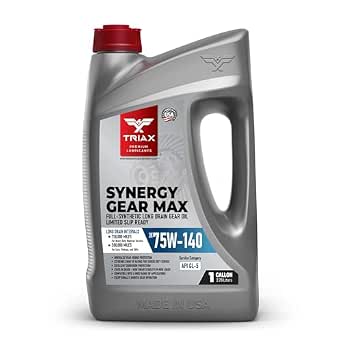 | Best Bulk Pick for Severe-Duty 75W-140 Use | Brand: TRIAX | Viscosity: 75W-140 | API specification: GL-5 | VIEW ON AMAZON | See Our Full Breakdown |
| Lucas Oil SAE 75W-140 Synthetic Gear Oil, 1 Quart |  | Best for Buyers Prioritizing Noise Reduction | Viscosity: 75W-140 | Product type: Synthetic gear oil | Volume: 1 quart | VIEW ON AMAZON | See Our Full Breakdown |
| Red Line 75W85 GL-5 Full Synthetic Gear Oil for Limited-Slip Differentials, 2 Quarts |  | Best for 75W-85 Clutch-Type Limited-Slip Differentials | Brand: Red Line | Model: 50104 | Viscosity: 75W-85 | VIEW ON AMAZON | See Our Full Breakdown |
| Valvoline FlexFill Advanced Full Synthetic 75W-140 Gear Oil, 1 Quart Pouch |  | Best for Cold-Weather Heavy Loads | Type: Full synthetic gear oil | Viscosity: 75W-140 | Package size: 1 quart | VIEW ON AMAZON | See Our Full Breakdown |
| Lucas Oil Synthetic SAE 75W-90 Gear Oil, 1 Gallon |  | Best for Bulk Heavy-Duty Use | Brand: Lucas Oil | Viscosity: SAE 75W-90 | Container type: Bottle | VIEW ON AMAZON | See Our Full Breakdown |
| Mobil 1 Full Synthetic Gear Lubricant 75W-90 Quart 6-Pack |  | Best for Limited-Slip Service in Multiples | Type: Full synthetic gear lubricant | Viscosity: 75W-90 | Pack quantity: 6 | VIEW ON AMAZON | See Our Full Breakdown |
| Lucas SAE 75W-90 Synthetic Gear Oil |  | Best for High-Temperature Performance Use | Viscosity: SAE 75W-90 | Item form: Oil | Unit count: 1 | VIEW ON AMAZON | See Our Full Breakdown |
| Mobil 1 75W-90 Synthetic Gear Lube, 1 Quart, Pack of 2 |  | Best for a Single Two-Quart Service | Brand: Mobil 1 | Product type: Synthetic gear lube | Viscosity: 75W-90 | VIEW ON AMAZON | See Our Full Breakdown |
| TRIAX Synergy Gear Max 75W-90 GL-5 Limited-Slip Gear and Differential Lubricant, 1 Gallon |  | Best for Broad Compatibility | Viscosity: 75W-90 | API specification: GL-5 | Formulation: Synthetic PAO and esters | VIEW ON AMAZON | See Our Full Breakdown |
| gear oils synthetic | Viscosity | Volume | Container type |
|---|---|---|---|
| Valvoline Advanced Full Synthe | 75W-140 | 1 quart | Jug |
| Mobil 1 Synthetic Gear Lube LS | 75W-90 | 1 quart (32 fluid ounces) | — |
| TRIAX Synergy Gear MAX 75W-140 | 75W-140 | 1 gallon (128 fluid ounces) | Bottle |
| Lucas Oil SAE 75W-140 Syntheti | 75W-140 | 1 quart | — |
| Red Line 75W85 GL-5 Full Synth | 75W-85 | 2 quarts (64 fluid ounces) | Bottle |
| Valvoline FlexFill Advanced Fu | 75W-140 | — | — |
| Lucas Oil Synthetic SAE 75W-90 | SAE 75W-90 | — | Bottle |
| Mobil 1 Full Synthetic Gear Lu | 75W-90 | — | — |
| Lucas SAE 75W-90 Synthetic Gea | SAE 75W-90 | — | — |
| Mobil 1 75W-90 Synthetic Gear | 75W-90 | — | Bottle |
| TRIAX Synergy Gear Max 75W-90 | 75W-90 | 1 gallon (128 fluid ounces) | Bottle |
More Details on Our Top Picks
Valvoline Advanced Full Synthetic 75W-140 Gear Oil 1 QT
Valvoline Advanced Full Synthetic 75W-140 is my most balanced pick here for vehicles that specifically call for 75W-140 GL-5 oil. Its synthetic formulation is listed for operation from -50°F to 300°F, while limited-slip additives support clutch-pack operation and can help reduce chatter. That makes it a more clearly documented fit for a limited-slip differential than Lucas Oil SAE 75W-140 Synthetic Gear Oil, whose supplied product information is less specific about compatibility. Valvoline also lists several OEM specifications, giving buyers concrete references to check against their vehicle requirements. The tradeoff is fit: this is not a substitute for 75W-90, and a one-quart jug may not cover a full service. Choose it for the stated grade and application, not simply because it is synthetic.
Pros:- Limited-slip additives are specified for clutch-pack applications and noise reduction.
- Wide stated operating-temperature range supports cold starts and high-heat use.
- Lists API GL-5 and several OEM specifications for application cross-checking.
- Synthetic formulation is described as providing wear and extreme-pressure protection.
Cons:- Only appropriate where 75W-140 GL-5 is specified; it is not a replacement for thinner grades.
- One-quart container may be insufficient for a full differential service.
- Performance claims do not replace checking the vehicle maker’s required specification.
Best for: Owners of vehicles whose differential or non-synchronized manual transmission calls for 75W-140 GL-5 oil, especially those with clutch-type limited-slip units.
Not ideal for: Drivers whose manuals specify 75W-90 or another gear-oil grade, or buyers who need a larger quantity for a complete service.
- Viscosity:75W-140
- Material:Synthetic
- API specification:GL-5
- Volume:1 quart
- Container type:Jug
- Flash point:288.5°F
- Stated operating range:-50°F to 300°F
- Listed OEM specifications:Ford M2C-192A, GM 12346140, Chrysler MS-8985
Our verdict“Choose Valvoline when your vehicle calls for 75W-140 GL-5 and you want a clearly specified limited-slip option in a single-quart container.”
Mobil 1 Synthetic Gear Lube LS 75W-90, 1 Quart
Mobil 1 Synthetic Gear Lube LS 75W-90 suits buyers who need a GL-5 lubricant for a modern passenger vehicle, SUV, van, or light-duty truck and want limited-slip use included in the stated application. Its 75W-90 grade separates it from Valvoline Advanced Full Synthetic 75W-140: the two are not interchangeable, and the vehicle’s specified viscosity should decide between them. Mobil 1 is the more relevant choice when the manual calls for 75W-90; Valvoline is aimed at 75W-140 service. The product information supports a broad vehicle-use description but provides fewer specific operating-temperature and OEM details than Valvoline’s listing. That leaves more work for the buyer to verify compatibility. The quart bottle is a practical quantity for topping up or smaller jobs, but may not cover every service.
Pros:- 75W-90 grade fits applications that should not use the thicker 75W-140 products in this roundup.
- Designed for GL-5 performance requirements.
- Listed for limited-slip use as well as modern passenger vehicles and light-duty trucks.
- One-quart bottle offers a manageable amount for topping up or smaller jobs.
Cons:- The supplied product data gives limited detail on OEM approvals and temperature range.
- Use is restricted to vehicles that call for compatible 75W-90 gear lubricant.
- A single quart may not provide enough oil for a full service.
Best for: Owners of modern cars, SUVs, vans, or light-duty trucks whose specifications call for 75W-90 GL-5 and allow limited-slip gear oil.
Not ideal for: Owners whose vehicle requires 75W-140, a non-GL-5 lubricant, or a specific friction-modifier formulation not confirmed by the vehicle maker.
- Brand:Mobil 1
- Viscosity:75W-90
- Form:Liquid
- Container:Plastic bottle
- Volume:1 quart (32 fluid ounces)
- Weight:816.4 g
- Recommended use:Modern automobiles, SUVs, vans, and light-duty trucks requiring GL-5
- Model number:104361-UNIT
Our verdict“Pick Mobil 1 when your vehicle specifically calls for 75W-90 GL-5 and the listed limited-slip application matches its requirements.”
TRIAX Synergy Gear MAX 75W-140 GL-5 PAO Synthetic Gear Oil, 1 Gallon
TRIAX Synergy Gear MAX 75W-140 is the large-volume choice for buyers servicing several compatible units or needing more than a quart for a single job. Its one-gallon container stands apart from the quart-sized Valvoline and Lucas options, while the stated PAO synthetic base, GL-5 rating, limited-slip compatibility, and -60°F pour point target demanding gear applications. The product is described for differentials, hypoid gears, final drives, and equipment, giving it a broader stated use range than Mobil 1 Synthetic Gear Lube LS 75W-90, which is positioned around modern passenger vehicles requiring 75W-90. The tradeoff is that this remains a 75W-140-only choice, and long-drain claims depend on actual vehicle and operating conditions. Buy the gallon only when its grade and specification match every intended application.
Pros:- One-gallon volume suits multiple services or larger fluid requirements.
- PAO synthetic formulation is listed for GL-5 and limited-slip applications.
- Stated -60°F pour point is a useful cold-weather specification.
- Product data covers differentials, hypoid gears, final drives, and gear assemblies.
Cons:- Restricted to applications specifying 75W-140.
- A gallon can be excessive for a single small top-up or occasional service.
- Long-drain protection claims may not match every vehicle or operating condition.
Best for: Owners or maintenance shops servicing multiple 75W-140 GL-5 differentials, final drives, or compatible limited-slip systems who can use a gallon.
Not ideal for: Drivers whose vehicles call for 75W-90 or another grade, or buyers with only a small top-up need.
- Brand:TRIAX
- Viscosity:75W-140
- API specification:GL-5
- Base material:PAO synthetic
- Volume:1 gallon (128 fluid ounces)
- Container type:Bottle
- Pour point:-60°F
- Limited-slip compatible:Yes
- Recommended uses:Differentials, gear assemblies, and final drives
Our verdict“Choose TRIAX when you need a substantial supply of 75W-140 GL-5 for compatible severe-duty or multiple-unit service.”
Lucas Oil SAE 75W-140 Synthetic Gear Oil, 1 Quart
Lucas Oil SAE 75W-140 Synthetic Gear Oil is the straightforward quart-size option for buyers focused on lubrication at high temperatures and reducing gear noise. The supplied description also points to long-lasting lubrication and bearing-life support, but it gives fewer compatibility details than Valvoline Advanced Full Synthetic 75W-140, which names limited-slip use and several OEM specifications. That gap matters: Lucas may suit an application that calls for 75W-140 synthetic gear oil, but the available data does not establish the same breadth of fit for clutch-type limited-slip units. Its simpler specification set makes it less compelling when a buyer needs documented approvals or cold-weather figures. I would treat it as a candidate only after checking the vehicle manual and confirming its required performance standard.
Pros:- 75W-140 viscosity is clearly stated for applications requiring that grade.
- Product description identifies gear-noise reduction as a benefit.
- Designed for high-temperature performance.
- Quart volume can suit a smaller service or top-up.
Cons:- Supplied data provides limited compatibility and approval information.
- Limited-slip suitability is not clearly established in the provided product details.
- One quart may be insufficient for a full differential service.
Best for: Owners whose vehicle calls for 75W-140 synthetic gear oil and who want a quart-sized option with stated noise-reduction and high-temperature benefits.
Not ideal for: Buyers who need clearly listed OEM approvals, verified limited-slip compatibility, or detailed cold-temperature specifications before choosing.
- Viscosity:75W-140
- Product type:Synthetic gear oil
- Volume:1 quart
- Stated use:Transmissions and differentials
- Stated performance focus:High-temperature operation
- Stated noise benefit:Reduces gear noise
Our verdict“Consider Lucas when your manual specifies 75W-140 synthetic oil and you can verify compatibility despite the limited product details.”
Red Line 75W85 GL-5 Full Synthetic Gear Oil for Limited-Slip Differentials, 2 Quarts
Red Line 75W85 GL-5 Full Synthetic Gear Oil fills a distinct grade niche: it is a 75W-85 option for specified differentials and final drives, rather than another 75W-90 or 75W-140 choice. Its friction modifiers are intended for clutch-type limited-slip differentials, and the two-quart pack offers more fluid than the single-quart Valvoline and Lucas products. That specific formulation is also a reason for caution: the product data warns that its slipperiness may cause shifting problems in many synchronized manual transmissions and transaxles. Compared with Mobil 1 Synthetic Gear Lube LS 75W-90, Red Line is the better-defined match when the vehicle calls for 75W-85 and clutch-type limited-slip service, but it is not a general-purpose manual-transmission oil. Verify both the viscosity and application before buying.
Pros:- 75W-85 grade gives buyers a distinct option when that viscosity is specified.
- Full synthetic GL-5 formulation is listed for gear-drive applications.
- Friction modifiers are included for clutch-type limited-slip differentials.
- Two-quart volume provides more coverage than the single-quart options.
Cons:- May cause shifting problems in many synchronized manual transmissions and transaxles.
- Not suitable where the vehicle requires a different viscosity grade.
- Many limited-slip units may not need added friction modifiers, so application checks matter.
Best for: Drivers whose vehicle specifies 75W-85 GL-5 for a differential, final drive, transfer case, or clutch-type limited-slip unit.
Not ideal for: Owners of most synchronized manual transmissions or transaxles, or anyone whose vehicle requires 75W-90 or 75W-140.
- Brand:Red Line
- Model:50104
- Viscosity:75W-85
- Specification:GL-5
- Oil type:Full synthetic
- Volume:2 quarts (64 fluid ounces)
- Container type:Bottle
- Applications:Differentials, final drives, gearboxes, and transfer cases
- Compatibility limitation:Not designed for most synchronized manual transmissions or transaxles
Our verdict“Choose Red Line for a vehicle that specifically calls for 75W-85 GL-5 in a clutch-type limited-slip differential, not for a general synchronized transmission service.”
Valvoline FlexFill Advanced Full Synthetic 75W-140 Gear Oil, 1 Quart Pouch
The 75W-140 viscosity and stated -50°F to 300°F operating range make this pouch a fit for applications that call for a heavier gear oil across changing temperatures. Its listed API GL-5 and manufacturer specifications give buyers concrete compatibility references, unlike the Lucas options in this lineup, whose supplied data does not list equivalent standards. The squeezable quart pouch also offers a practical advantage when access around a fill port is tight. Compared with the Mobil 1 75W-90 two-bottle pack, this Valvoline is aimed at heavier-duty requirements rather than buyers whose vehicle specifies 75W-90. The tradeoff is that its 75W-140 grade is not a substitute for a different specified viscosity, and one quart may not cover a full service.
Pros:- Lists API GL-5 plus Ford, GM, and Chrysler specifications for compatibility checking.
- Stated -50°F to 300°F temperature range suits a wide range of operating conditions.
- Squeezable pouch can make filling awkwardly positioned components easier.
- 75W-140 grade is suited to applications requiring heavier gear oil.
Cons:- The 75W-140 grade is unsuitable where the vehicle specifies a different viscosity.
- One-quart packaging may be insufficient for a full differential service.
- Synthetic formulation may cost more than conventional gear oil.
Best for: Drivers whose vehicle specifically calls for 75W-140 GL-5 gear oil and who want a manageable pouch for a tight fill area.
Not ideal for: Owners whose manual specifies 75W-90 or another grade, and buyers needing several quarts for a complete service.
- Type:Full synthetic gear oil
- Viscosity:75W-140
- Package size:1 quart
- Stated temperature range:-50°F to 300°F
- API specification:GL-5
- Ford specification:M2C-192A
- GM specification:12346140
- Chrysler specification:MS-8985
Our verdict“Choose this Valvoline when your application calls for 75W-140 GL-5 and the easy-to-squeeze quart pouch is useful.”
Lucas Oil Synthetic SAE 75W-90 Gear Oil, 1 Gallon
This Lucas stands out for buyers who need 75W-90 in a gallon container and expect heavy-duty or high-performance service. Its described additive package is intended to cushion gears and resist being forced out under extreme pressure, while the product is also described as maintaining lubricity at high temperatures. That focus makes it a different proposition from the Mobil 1 75W-90 two-bottle pack: Lucas supplies more oil in one container, while Mobil 1 explicitly identifies a full synthetic formulation and limited-slip suitability. The data provided here labels the material as a blend, so buyers seeking a clearly specified full synthetic should compare the product label and vehicle requirements before choosing. The gallon bottle is practical for larger service quantities but less convenient if you only need a small top-up.
Pros:- Gallon container provides 3.8 liters for larger service needs.
- Designed for heavy-duty and high-performance vehicle applications.
- Additive package is described as cushioning gears under extreme pressure.
- Non-foaming product description and high-temperature lubricity focus.
Cons:- Supplied material specification says blend, not full synthetic.
- Product details do not list specific API or vehicle-manufacturer approvals.
- Gallon packaging may be excessive for a small repair or top-up.
Best for: Owners servicing a heavy-duty or high-performance vehicle that specifies 75W-90 and needs more than a single quart.
Not ideal for: Drivers seeking a clearly identified full synthetic formulation, a small quantity, or confirmed limited-slip compatibility from the supplied product details.
- Brand:Lucas Oil
- Viscosity:SAE 75W-90
- Container type:Bottle
- Liquid volume:3.8 liters (1 gallon)
- Material:Blend
- Recommended use:Vehicle
- Foaming:Non-foaming
- Included components:One 1-gallon bottle
Our verdict“Pick this Lucas for bulk 75W-90 service in a demanding application, but verify formulation and compatibility before buying.”
Mobil 1 Full Synthetic Gear Lubricant 75W-90 Quart 6-Pack
For buyers maintaining several vehicles or stocking up for repeat service, this six-quart pack of full synthetic 75W-90 combines a broad-use gear lubricant with stated suitability for limited-slip applications. Its listed protection against wear, corrosion, and viscosity loss speaks to drivers facing severe conditions, while the multi-quart format avoids assembling a larger order from individual bottles. Compared with the Mobil 1 75W-90 two-bottle pack, the lubricant category is similar but this bundle is better suited to multiple services; the two-pack is the more manageable choice for a single job. The main compromise is quantity: a six-pack can leave excess oil if your vehicle needs only a small fill, and the provided specifications do not name API or vehicle-manufacturer approvals. Check the product label against your manual before use.
Pros:- Full synthetic 75W-90 formulation.
- Described as suitable for limited-slip applications.
- Six quarts support repeated service or multiple vehicles.
- Designed to protect against wear, corrosion, and viscosity loss in severe conditions.
Cons:- Six-quart quantity can exceed the needs of a one-time service.
- Supplied details do not specify API or vehicle-manufacturer approvals.
- Bulk pack is less convenient to store than a single-quart option.
Best for: Owners of multiple vehicles or fleet users whose applications specify 75W-90 and include limited-slip service.
Not ideal for: A single-vehicle owner needing only one or two quarts, or anyone unable to confirm the required lubricant specification.
- Type:Full synthetic gear lubricant
- Viscosity:75W-90
- Pack quantity:6
- Unit size:1 quart
- Application:Passenger vehicles, including limited-slip applications
- Protection claims:Wear, corrosion, and viscosity-loss protection
- Operating conditions:Severe driving conditions
Our verdict“Choose this six-pack if you have several compatible 75W-90 services to cover and can use the full quantity.”
Lucas SAE 75W-90 Synthetic Gear Oil
The supplied description positions this Lucas 75W-90 for heavy-duty, high-performance, and auto-racing use, emphasizing long-lasting lubrication and resistance to extreme pressure. That makes it a more focused choice than the Mobil 1 Full Synthetic 75W-90 six-pack, which provides clearer limited-slip application information and named protection claims for a wider passenger-vehicle audience. Lucas may suit buyers prioritizing its pressure-cushioning and high-temperature emphasis, but the product data here offers little detail on specific vehicle approvals or limited-slip compatibility. Its listed package weight of 37.3 pounds also calls for a closer check of the actual quantity and packaging before ordering, since the unit count alone does not clarify the container size. Buyers should verify both fitment and amount against their service needs.
Pros:- Described for heavy-duty and high-performance applications, including auto racing.
- Designed to cushion gears and resist extreme pressure.
- High-temperature lubricity and long-lasting lubrication are stated product aims.
Cons:- Supplied specifications do not identify API or vehicle-manufacturer approvals.
- Limited-slip compatibility is not stated in the provided data.
- Listed 37.3-pound package weight may make handling difficult, and the supplied quantity information is unclear.
Best for: Performance or racing-oriented owners whose application calls for 75W-90 and who can confirm compatibility from the product label.
Not ideal for: Routine passenger-car maintenance where named approvals, limited-slip confirmation, clear quantity, or easy handling are priorities.
- Viscosity:SAE 75W-90
- Item form:Oil
- Unit count:1
- Recommended use:Auto racing
- Package dimensions:30.48 H × 37.465 L × 30.48 W cm
- Package weight:37.3 pounds
- Country of origin:China
- Model number:10072
Our verdict“Consider this Lucas for a compatible performance application, but verify approvals and package quantity before purchase.”
Mobil 1 75W-90 Synthetic Gear Lube, 1 Quart, Pack of 2
This Mobil 1 bundle offers a straightforward middle ground: two one-quart bottles of synthetic 75W-90, enough for many service jobs without committing to the six-quart pack in the lineup. Compared with the Mobil 1 Full Synthetic 75W-90 six-pack, this pack is easier to match to a single vehicle’s fluid requirement and leaves less excess on the shelf. Its supplied data confirms the viscosity and synthetic material, but does not provide the six-pack’s explicit limited-slip or severe-condition claims, nor does it list API or vehicle-manufacturer specifications. That makes checking the owner’s manual especially important. The two-bottle format is convenient when the required fill is around two quarts, but it may still be too much for a top-up and too little for vehicles with larger capacities.
Pros:- Synthetic 75W-90 formulation in a familiar gear-lube viscosity.
- Two separate one-quart bottles suit many routine service quantities.
- Smaller commitment than the Mobil 1 six-quart pack.
Cons:- Supplied data does not list API or vehicle-manufacturer approvals.
- Limited-slip suitability is not stated for this specific product listing.
- Two quarts may not match the capacity of every differential.
Best for: DIY owners whose vehicle specifies synthetic 75W-90 and needs roughly two quarts for a scheduled service.
Not ideal for: Drivers needing a single small top-up, more than two quarts, or documented limited-slip and manufacturer approvals.
- Brand:Mobil 1
- Product type:Synthetic gear lube
- Viscosity:75W-90
- Container type:Bottle
- Volume per bottle:1 quart
- Total volume:64 fluid ounces
- Quantity:2 bottles
- Flash point:150°C
- Material:Synthetic
Our verdict“Choose this two-pack for a compatible 75W-90 service that needs about two quarts, after checking your vehicle’s specifications.”
TRIAX Synergy Gear Max 75W-90 GL-5 Limited-Slip Gear and Differential Lubricant, 1 Gallon
I’d shortlist this 75W-90 synthetic blend of PAO and esters for buyers who need one lubricant specified for hypoid gears, differentials, limited-slip systems, and manual transmissions. Its stated API GL-5 and limited-slip requirements give it broader listed applications than a product aimed at a narrower differential use, such as Red Line 75W85 GL-5 Full Synthetic Gear Oil for Limited-Slip Differentials. The one-gallon container also suits jobs that need more fluid than a single quart provides.
The tradeoff is that its extended drain intervals—up to 500,000 miles for passenger cars and heavy-duty trucks and 750,000 miles for Class 8 highway trucks, according to the manufacturer—are claims, not a substitute for the vehicle maker’s service schedule. I’d verify the required viscosity and specification before buying; this gallon is less convenient for a one-off top-up than a quart, and its wide compatibility does not mean every transmission permits GL-5 oil.
Pros:- Synthetic PAO-and-ester formulation
- Listed for hypoid gears, differentials, limited-slip systems, and manual transmissions
- Meets API GL-5 and limited-slip requirements
- One-gallon bottle provides more fluid for larger service jobs than quart-size options
Cons:- Manufacturer-stated extended drain intervals may not apply to every vehicle or operating condition
- A gallon container is less convenient than a quart for small top-ups
- Its 75W-90 viscosity is unsuitable when the vehicle specifies another grade
Best for: Owners and fleet operators whose applicable service manuals call for 75W-90 GL-5 and who want a gallon of oil listed for limited-slip and standard gear systems.
Not ideal for: Drivers needing only a small top-up, or anyone whose vehicle requires a different viscosity or prohibits GL-5 lubricant in its manual transmission.
- Viscosity:75W-90
- API specification:GL-5
- Formulation:Synthetic PAO and esters
- Container type:Bottle
- Volume:1 gallon (128 fluid ounces)
- Compatible uses:Gear systems, differentials, limited-slip systems, and manual transmissions
- Manufacturer:Triax Lubricants LLC
Our verdict“Choose this gallon when your service requirements call for 75W-90 GL-5 and you want one listed lubricant for several gear-system applications, but follow the vehicle maker’s service interval.”

How We Picked
I organized the ranking around the decisions that matter most for synthetic gear oil: viscosity fit, stated GL-5 or limited-slip positioning, package practicality, and range of likely use. The listed product names and formats allow useful comparisons, but they do not establish that any oil meets every vehicle maker’s specification. I give priority to options with a clear, broadly relevant role and distinguish specialized grades or use cases rather than treating all synthetic oils as substitutes.
That logic puts Mobil 1 Synthetic Gear Lube LS 75W-90 first as a strong general comparison point within the supplied lineup, then places other products according to their grade, stated application, and format. A 75W-140 oil can rank highly for a vehicle that calls for that grade, but it is not a general upgrade over 75W-90. Pack size and fill-friendly packaging affect convenience, not performance by themselves, so they shape each product’s role without overriding compatibility. I do not infer vehicle approval or performance claims beyond the information provided; buyers should verify the exact specification in the owner’s manual and product documentation.
Factors to Consider When Choosing Gear Oils Synthetic
Before choosing among synthetic gear oils, I would narrow the field using your vehicle’s service requirements rather than brand preference. These checks help prevent the most common mismatch: buying a well-known oil that has the wrong grade, specification, or limited-slip suitability for the application.
Match the Viscosity Grade to the Manual
Start with the exact viscosity grade listed for your axle or gearbox, not the grade that sounds more protective. This roundup includes 75W-85, 75W-90, and 75W-140, each serving a different specification and operating context. A thicker grade is not automatically better in heat or under load; using an unapproved viscosity can affect lubrication and operation. Check whether the manual lists alternatives for temperature or duty cycle, and follow those conditions rather than improvising. If your vehicle specifies 75W-90, do not substitute a 75W-140 simply because it appears more heavy-duty. When documentation is unclear, confirm the exact application with the vehicle maker or a qualified service source before buying.
Read the Performance Specification, Not Just “Synthetic”
The word synthetic describes the base-oil category, but it does not prove that a product meets your vehicle’s required performance standard. Look for the specified API service category or other manufacturer requirement in the product documentation, then compare it with the manual. GL-5 appears in several product names here, yet a familiar label still does not make an oil suitable for every transmission or axle. Do not assume that two oils with the same viscosity and GL-5 marking have identical approvals or application guidance. If your vehicle maker names a specific standard, treat that as a requirement rather than a preference. This check is especially useful when shopping across brands or considering a substitute.
Confirm Limited-Slip Compatibility
A limited-slip differential can call for a particular lubricant or friction-modifier behavior, so identify the axle type before selecting an oil. Products in this lineup explicitly mention LS or limited-slip applications, but wording on the package should be checked against the differential maker’s instructions. Some systems require a separate friction modifier; others specify a fluid that already accounts for the application. Adding a modifier without checking can change the fluid formulation, while skipping a required additive can affect differential behavior. If you are unsure whether the vehicle has a limited-slip unit, check its build information or service records rather than guessing from the model name. The manual’s exact direction takes priority over a broad product label.
Buy the Quantity That Fits the Service
Choose package size by the required fill volume and whether you expect to service another vehicle or axle soon. The list ranges from single quarts and multi-quart packs to gallon containers, so quantity can influence storage and leftover oil as much as convenience. Check capacity separately for each differential; front and rear units may take different amounts or call for different grades. Buying a larger container can reduce repeated purchases, but only if the product is correct and the remainder can be stored according to its label. For a one-time fill, a smaller pack may limit unused oil. Avoid combining leftover fluids unless their specifications and compatibility are confirmed.
Choose Packaging for Access and Handling
Packaging matters most when the fill port is difficult to reach or you are working without a pump. A pouch such as Valvoline FlexFill may be easier to position in a tight space, while a conventional bottle or gallon can be more practical for repeated jobs. Neither format changes the required oil specification, and a convenient container is no help if it makes accurate filling difficult. Check whether the service procedure calls for a pump, a particular fill level, or a measured quantity. Keep the container clean while dispensing and follow its storage directions after opening. When access is awkward, plan the tools and workspace before choosing a format.
Pay More for Fit, Not a General Promise
It can make sense to pay for a specific grade, documented application fit, or packaging that simplifies your service; paying more for a broad claim alone is harder to justify. Compatibility should outrank brand or base-oil wording, because the wrong oil can be a poor choice even if it is fully synthetic. A premium specialty option is most useful when its stated application matches your vehicle and its documentation supports the required specification. For routine maintenance, a product that meets the manual’s requirements may be a better decision than one with features your vehicle does not need. Compare the product label and technical information before using package size or brand familiarity as a shortcut. If requirements remain uncertain, resolve that question before purchase.
Frequently Asked Questions
Can I replace the 75W-90 specified in my manual with 75W-140?
Only if the vehicle maker lists 75W-140 as an approved alternative for your specific axle and operating conditions. The higher grade is not automatically a safer choice for towing, heat, or an older vehicle. Viscosity affects how the oil flows and protects components across temperature ranges, so a mismatch can create problems even when both products are synthetic. Check the manual and any service bulletin for the exact differential. If the approved options are unclear, ask a qualified service professional before substituting.
Does a product labeled limited-slip mean I do not need a separate friction modifier?
Not in every application. The product documentation and differential maker’s instructions determine whether the oil contains the needed friction-modifying characteristics or whether a separate additive is required. Some limited-slip systems have specific fluid requirements, and using extra additive without checking can alter how the differential behaves. Confirm the exact axle type and the stated fill procedure before adding anything. Do not treat the words “LS” or “limited-slip” as a substitute for application guidance.
Is a gallon container a better choice than buying quarts?
A gallon makes sense when the total fill volume calls for it or you expect to use the same oil again, but it is not inherently better fluid. The roundup includes gallon options in both 75W-90 and 75W-140, while several other picks come in smaller or multi-quart packages. First calculate the required quantity for each unit and verify that the same grade is specified throughout. If you will have a substantial remainder, check storage guidance and whether you can keep the container sealed properly. For a single small fill, quarts may be easier to handle and store.
Can I mix synthetic gear oils from different brands?
Do not assume that matching viscosity grades make two oils suitable to mix. Formulations and performance specifications can differ, and the vehicle maker may require a particular standard or product type. If you need to top up, use the same product when possible; otherwise confirm that the replacement meets the required specification and is compatible with the existing fluid. If the fluid history is unknown or the products are uncertain, a complete service using the correct oil may be a clearer solution than mixing. Follow the service procedure for the vehicle rather than relying on the word “synthetic” alone.
Which should I prioritize: a trusted brand or an exact specification match?
Prioritize the exact specification and viscosity required by your vehicle. Brand familiarity cannot make an oil with the wrong grade or application suitable, while a correctly documented product from another brand may meet the stated need. Compare the label and technical documentation with the owner’s manual, including any limited-slip requirement. Within this roundup, products differ in grade, application wording, and package format, so choose among the options that first pass the compatibility check. If none clearly matches, confirm the requirement before buying rather than selecting by name alone.
Conclusion
For most buyers whose vehicle calls for 75W-90, I recommend Mobil 1 Synthetic Gear Lube LS 75W-90 as the best overall starting point in this lineup. Best value by format depends on the job: the Mobil 1 two-quart pack suits a modest service, while the six-pack or a compatible gallon option may fit repeated use; package size alone does not establish a better deal. For a premium, specialized choice, consider Red Line 75W85 GL-5 only when its grade and limited-slip application match the vehicle’s requirements. Beginners should start with the manual’s exact viscosity and specification, then choose a single-quart option such as the relevant Mobil 1 or Valvoline product to avoid excess oil. For a vehicle that specifically calls for 75W-140, compare Valvoline Advanced Full Synthetic with the Lucas and TRIAX 75W-140 options; for tight fill access, the Valvoline FlexFill pouch has a distinct handling role. My final rule is simple: select by specification first, then choose brand, package quantity, and dispensing convenience.