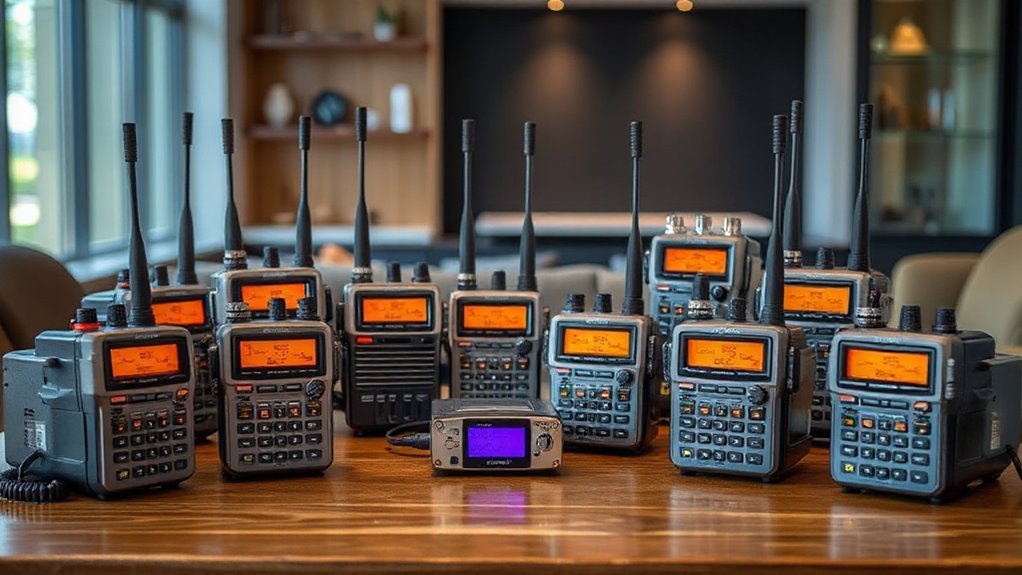

When selecting a GMRS base station radio, it’s vital to balance power, features, and ease of use to meet your communication needs. The Midland MXT500 stands out as the overall best for its robust 50-watt power and reliable performance. For long-range capabilities, the BTECH GMRS-50PRO offers advanced features like Bluetooth and GPS, making it ideal for more tech-savvy users. Meanwhile, the Midland MXT275 presents a solid entry point with its compact design and affordability, perfect for newcomers. Buyers face tradeoffs between power, versatility, and complexity — continue reading for a full breakdown of the top options and what suits your situation best.

Get business pricing on garage and car supplies
- Business-only prices and quantity discounts
- Tax-exempt purchasing
- Multiple users, one account, clear invoices
Complete the kit


Key Takeaways
- Power output, such as 50W versus 20W, significantly influences communication range and should match your needs.
- Features like GPS, Bluetooth, and NOAA weather alerts differentiate premium models from basic ones.
- Build quality and weatherproofing are critical for outdoor or mobile use, especially in harsh conditions.
- Ease of programming and customization varies; more advanced radios often require technical knowledge but offer greater flexibility.
- Price often reflects feature set and build quality, but the most expensive isn’t always the best fit for every user.


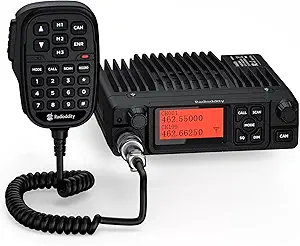


| gmrs base station radio | Channels | Power | Frequency Range |
|---|---|---|---|
| Midland MXT500 50-Watt GMRS Mo | 8 Repeater Channels | 50 Watts | — |
| ABBREE GMRS Mobile Radio | 200 | 25W | — |
| BTECH GMRS-50PRO IP54 Weatherp | — | — | GMRS |
| Radioddity DB20-G GMRS Mobile | — | — | GMRS, UHF, VHF |
| Radioddity DB40-G GMRS Mobile | 169 | — | — |
| BTECH GMRS-50V2 50W 256 Fully | 256 customizable channels, 30 GMRS | 50W | VHF/UHF |
| Midland MXT275 15W MicroMobile | — | 15W | — |
| QYT KT-8900 25W GMRS Mobile Ra | 15 GMRS channels | — | 136-174MHz (VHF), 400-480MHz (UHF) |
More Details on Our Top Picks
Midland MXT500 50-Watt GMRS Mobile Radio
The Midland MXT500 stands out for delivering a robust 50-watt output, making it ideal for long-range communication across farms, ranches, and off-road trails. Its compact design and included external magnetic mount with a high-gain antenna provide flexibility for rugged environments. Compared with the BTECH GMRS-50PRO, it offers similar power but lacks advanced features like GPS or Bluetooth, which might appeal to users needing more integrated tech. The main tradeoff is that setup can be complex for beginners, especially when configuring repeater channels or external antennas. Overall, this radio is best suited for serious outdoor adventurers who prioritize power and range over bells and whistles.
Pros:- Powerful 50-watt transmission for extended range
- Compact design fits well in various outdoor setups
- Includes external magnetic mount and high-gain antenna
Cons:- Limited detailed specs in the description may leave some questions unanswered
- Setup could be complex for those unfamiliar with external antennas or radio configuration
Best for: Farmers, ranchers, or off-road enthusiasts needing reliable long-range communication in rugged terrains
Not ideal for: Casual users or urban dwellers who prefer simple, plug-and-play radios without complex installation
- Power:50 Watts
- Channels:8 Repeater Channels
- Design:Compact
- Mount:External Magnetic Mount
- Antenna Gain:2.1dB
Our verdict“This radio is perfect for those who need high power and long-range capabilities in rugged outdoor environments, accepting a steeper setup process.”
ABBREE GMRS Mobile Radio, 25W Long Range AR-8118 GMRS Repeater Capable Base Station, NOAA Emergency Weather Two Way Radio with Programming Cable and Car Adapter
The ABBREE AR-8118 offers a solid 25-watt power level, making it a good choice for users needing reliable communication without the bulk of larger units like the BTECH GMRS-50PRO. Its 200 channels and NOAA weather alerts provide a broad range of communication options and emergency updates, making it suitable for camping, off-roading, or rescue operations. Unlike the Radioddity DB40-G, which emphasizes high power and customizability, the ABBREE balances power with ease of use. However, it suffers from a ticking sound when Dual-Watch is enabled, requiring users to turn it off, and it needs programming software for full customization. Overall, it’s best for users who want a feature-rich, easy-to-install GMRS station with good long-range potential.
Pros:- Long-range communication up to 30 km depending on terrain
- Includes NOAA weather alerts and VOX hands-free operation
- Easy to install and suitable for various outdoor activities
Cons:- Ticking sound when Dual-Watch is active, which requires turning off
- Requires programming software for advanced configuration
Best for: Outdoor enthusiasts who value emergency features and multiple channels in a compact, easy-to-use radio
Not ideal for: Beginners seeking a simple, out-of-the-box radio without the need for software programming
- Power:25W
- Channels:200
- Model:AR-8118
- FCC ID:2A4R6-TM8118
Our verdict“This radio offers a versatile mix of features for outdoor use and emergency readiness, making it a good value for experienced users willing to handle some setup.”
BTECH GMRS-50PRO IP54 Weatherproof 50-Watt GMRS Base Station Radio with Bluetooth, GPS, NOAA, and Advanced Features
The BTECH GMRS-50PRO combines high power with advanced features like Bluetooth connectivity, GPS, and NOAA weather alerts, making it ideal for emergency and vehicle use. Its 50-watt output ensures long-range capabilities, similar to the Midland MXT500, but with added modern convenience options. The app-based programming and Bluetooth hands-free operation streamline setup, especially for tech-savvy users. Compared to the Radioddity DB40-G, it offers more integrated tech but is larger and not submersible, which may limit portability. The main drawback is that a license is required to operate on GMRS channels, and its size makes it less suitable for casual or portable use. Overall, this radio is perfect for users who need reliable, feature-rich communication in a weather-resistant package.
Pros:- Powerful 50W transmission for extensive coverage
- Includes GPS and NOAA weather alerts for emergency preparedness
- Bluetooth and app-based programming for convenience
- Weather-resistant IP54 design suitable for outdoor conditions
Cons:- Requires licensing to operate legally on GMRS channels
- Larger size and weight may limit portability
Best for: Emergency responders, off-road drivers, or fleet operators needing long-range, feature-rich communication with GPS and weather alerts
Not ideal for: Casual hobbyists or those seeking a lightweight, portable radio for simple use
- Number of Channels:180
- Frequency Range:GMRS
- Talking Range:Maximum 100 miles
- Voltage:13.8 volts
- Water Resistance Level:Water Resistant
- Additional Features:Bluetooth, GPS, NOAA Weather
Our verdict“This radio suits users needing a durable, feature-packed GMRS station with long-range and emergency capabilities, accepting its larger form factor.”
Radioddity DB20-G GMRS Mobile Radio 20W, Long Range, 500 Channels
The Radioddity DB20-G offers a practical balance of power and usability with 20 watts, enabling communication up to 20 miles in open terrain. Its simple, user-friendly display and large channel capacity make it accessible for those new to GMRS radios, especially compared to the more advanced but complex DB40-G. While it lacks the high power of the 50-watt models, its affordability and extensive channel options make it a versatile option for camping or off-road trips. However, it requires a vehicle power source for mobile use and isn’t fully waterproof, which limits its durability in harsh weather. This makes it ideal for budget-conscious users who want reliable long-distance communication without advanced tech features.
Pros:- Long-range communication up to 20 miles
- Large, easy-to-read display and many channels
- Includes microphone, programming cable, and charger
- Repeater capable and CHIRP compatible
Cons:- Requires vehicle power source, limiting portability
- Water resistance only, not waterproof
Best for: Outdoor enthusiasts seeking a cost-effective, long-range mobile radio for camping or off-road activities
Not ideal for: Users who need a waterproof or ultra-portable radio for harsh weather or quick, casual use
- Number of Channels:500
- Frequency Range:GMRS, UHF, VHF
- Talking Range:Up to 20 miles
- Voltage:13.8V DC
- Water Resistance Level:Water Resistant
Our verdict“This radio offers reliable long-distance communication at an affordable price, especially suited for those with vehicle access and budget constraints.”
Radioddity DB40-G GMRS Mobile Radio 40W, Dual Display, 169 Channels
The Radioddity DB40-G offers a substantial 40-watt output, making it one of the most powerful in this lineup, with a dual display that simplifies monitoring multiple channels. Its 169 channels and repeater support provide excellent versatility for long-distance use, comparable to the BTECH GMRS-50PRO but with a more straightforward interface. The dual watch feature, combined with VOX for hands-free operation, makes it suitable for off-road or long-distance travelers who need to stay connected across multiple channels simultaneously. The main limitation is its bulk, typical of mobile radios, and the need for a license to operate legally. This model is best for users who prioritize power, dual monitoring, and long-range capabilities over portability or compact size.
Pros:- High 40W power output for extended coverage
- Dual display and dual watch functions for monitoring multiple channels
- Supports GMRS repeater channels and UHF RX
- VOX hands-free microphone for convenience
Cons:- Bulkier size makes it less portable
- Requires license for legal operation on GMRS channels
Best for: Long-distance travelers, off-road drivers, or fleet operators requiring high power and dual-channel monitoring
Not ideal for: Hobbyists or casual users seeking a lightweight, easy-to-install portable radio
- Power Output:40W
- Channels:169
- Display:Dual
- FCC ID:2AN62-DB40G
- Supports GMRS Repeater Channels:Yes
Our verdict“This radio excels in delivering high power and dual channel monitoring for advanced users who need reliable long-distance communication in a fixed or vehicle setup.”
BTECH GMRS-50V2 50W 256 Fully Customizable Channels Mobile GMRS Two-Way Radio
The BTECH GMRS-50V2 stands out for its impressive 50W output, making it ideal for extended coverage compared to the Midland MXT275, which maxes out at 15W. Its extensive 256 customizable channels and repeater compatibility provide a level of flexibility that surpasses many simpler models, including the QYT KT-8900, which offers fewer channels and more limited tuning options. The built-in NOAA weather monitoring and wideband scanning enhance situational awareness, but this power and versatility come with tradeoffs—installation demands a proper 13.8V power source and a tuned antenna, which could be a barrier for less technical users. If you prioritize robust range, extensive features, and future-proofing, this model makes the most sense; however, it’s less suited for casual users seeking plug-and-play convenience.
Pros:- Powerful 50W output for maximum coverage
- Highly customizable with 256 channels and repeater support
- Includes NOAA weather monitoring and scanning features
- Complete mobile kit for straightforward setup
Cons:- Requires a proper 13.8V DC power source and tuned antenna
- Antenna not included, adding extra cost and setup effort
- Installation may be complex for beginners
Best for: Licensed GMRS users needing a versatile, high-power mobile setup for reliable long-range communication and customization.
Not ideal for: Hobbyists or casual users without technical experience, as installation and tuning require some knowledge and equipment.
- Power:50W
- Channels:256 customizable channels, 30 GMRS
- Frequency Range:VHF/UHF
- Weather Broadcast Receiver:Yes
- Repeater Compatibility:Yes
- Scanning:VHF/UHF wideband
Our verdict“This radio is perfect for licensed users seeking maximum power, customization, and advanced features, provided they can handle installation complexity.”
Midland MXT275 15W MicroMobile GMRS Two-Way Radio
The Midland MXT275 offers a solid 15W power output, making it a reliable choice for outdoor activities where long-range communication matters but full customization isn’t essential. Compared with the QYT KT-8900, which provides similar power but requires external antennas and software setup, the MXT275 is more straightforward and portable, especially for users who prefer a ready-to-go solution. Its compact design allows easy mounting in vehicles or temporary setups, but it does have limitations—its power is lower than the BTECH GMRS-50V2, so it may not cover as much distance in very challenging terrain. This makes it ideal for outdoor enthusiasts needing dependable communication without the complexity of high-powered base stations, though licensed operation is still required in some regions.
Pros:- Reliable 15W power output for effective range
- Compact and portable design for easy mobility
- Reliable communication during outdoor activities
Cons:- Limited to GMRS frequencies, requiring license in some areas
- No advanced features like NOAA weather or scanning
- Less powerful than higher-end models like the BTECH GMRS-50V2
Best for: Outdoor enthusiasts and emergency preppers seeking a dependable, portable GMRS radio with decent range for outdoor activities.
Not ideal for: Users requiring extensive customization, repeater support, or maximum power for large-area coverage.
- Power:15W
- Frequency:GMRS
- Type:Two-Way Radio
Our verdict“This radio is well-suited for outdoor users needing dependable, portable communication, with moderate range and straightforward operation.”
QYT KT-8900 25W GMRS Mobile Radio & Base Station, Long Range Two-Way Radio
The QYT KT-8900 offers a balanced 25W output, positioning it between the Midland MXT275 and the BTECH GMRS-50V2 in power. Its capability to operate on both VHF and UHF bands broadens its usability, especially for users who need flexible frequency options, unlike the Midland, which is strictly GMRS. The inclusion of privacy codes and multiple output power settings enhances security and adaptability, but it requires an external antenna for optimal operation, and its software compatibility is limited to Windows systems below Win11, adding complexity for some users. Compared to the BTECH, it offers more power than the Midland but less customization and advanced features. It’s best suited for users comfortable with external antennas and software configuration who need a versatile, long-range radio for outdoor or off-grid use.
Pros:- High output power with long-range potential
- VHF/UHF dual-band operation for flexibility
- Multiple channels and privacy codes for secure communication
- Compact design suitable for mobile use
Cons:- Requires external antenna for effective transmission
- Software compatibility limited to older Windows versions
- Additional purchase needed for antenna
Best for: Outdoor enthusiasts, farmers, and off-roaders who need a versatile, high-power radio with flexible frequency options and are comfortable with setup complexity.
Not ideal for: Casual users or those seeking a simple, plug-and-play radio without external antennas or software configuration.
- Output Power:VHF ≤25W / UHF ≤20W
- Channels:15 GMRS channels
- Frequency Range:136-174MHz (VHF), 400-480MHz (UHF)
- Privacy Codes:CTCSS/DCS
- Compatibility:Windows below Win11
- Additional Notes:Requires external antenna
Our verdict“This model offers a versatile, high-power solution for experienced users needing flexible frequency use and long-range capability, with setup requirements to consider.”
How We Picked
These products were evaluated based on their power output, feature set, build quality, ease of use, and value. Priority was given to radios that combine reliable performance with user-friendly interfaces, especially for those who may not have technical expertise. We also considered durability, weather resistance, and expandability, ensuring each pick caters to different user needs — from casual users to enthusiasts. The ranking emphasizes balanced performance and practical features, helping buyers find radios that deliver consistent, long-term value without unnecessary complexity.Factors to Consider When Choosing Gmrs Base Station Radio
Choosing the right GMRS base station radio involves understanding several key factors that impact performance, usability, and durability. It’s important to match the radio’s power and features to your specific needs, whether for outdoor adventures, emergency preparedness, or professional use. Careful consideration of these factors can prevent costly mistakes and ensure you select a device that offers reliable communication when it matters most.Power Output and Range
The wattage of a GMRS radio directly correlates with its maximum communication range. Higher wattage, like 50W, typically provides broader coverage, ideal for large properties or outdoor activities. However, it also requires more power and can be bulkier. Lower wattage models, such as 15W or 20W, are more suitable for short-range use or if portability is a priority. Matching power to your typical use case helps optimize battery life, legal compliance, and overall performance.
Features and Expandability
Advanced features like GPS, Bluetooth connectivity, NOAA weather alerts, and programmable channels add significant value but also increase complexity and cost. Consider how much you need these features versus how much you’re willing to learn or pay. For instance, GPS can be invaluable for outdoor navigation, while NOAA alerts are essential for emergency preparedness. Remember, more features often mean a steeper learning curve, so weigh their benefits against your technical comfort level.
Build Quality and Weather Resistance
Durability is key for mobile and outdoor use. Look for radios with weatherproof ratings such as IP54 or higher, which protect against dust and water splashes. A solid build ensures reliable operation in challenging environments and extends the lifespan of your radio. Cheaper models may save money upfront but often lack rugged construction, risking failure when exposed to the elements.
Ease of Use and Programming
Some radios feature intuitive interfaces and simple channel programming, which is crucial for less tech-savvy users. Others, especially those with extensive customization options, may require dedicated software and technical knowledge. Evaluate your comfort level with programming and whether you prefer a device ready to use out of the box or one that can be tailored to specific needs. User-friendly models can save time and frustration during setup.
Legal and Power Considerations
GMRS radios are subject to FCC regulations, including licensing requirements for higher power outputs. Ensure the radio you choose complies with local laws and that you obtain any necessary licenses. Also, consider the power source—whether the radio can operate on batteries, car adapters, or AC power—based on your typical usage environment. Ensuring legal compliance and reliable power sources prevents operational issues during critical moments.
Frequently Asked Questions
Do I need a license to operate a GMRS base station radio?
Yes, operating a GMRS base station typically requires an FCC license in many regions, including the United States. The license is straightforward and usually involves a small fee, granting legal permission to transmit at the higher power levels and on specific channels. Licensing helps prevent interference and ensures responsible use of the spectrum, which is especially important for base stations with significant power output.
Can I use a GMRS base station radio for emergency communications?
Many GMRS radios include NOAA weather alerts and emergency channels, making them suitable for emergency preparedness. However, for critical communications during emergencies, it’s important to verify that the radio has sufficient range, durability, and features specific to emergency use. Always ensure your radio is programmed correctly and that you hold any necessary licenses to operate at higher power levels legally.
What’s the difference between a mobile GMRS radio and a base station?
A mobile GMRS radio is designed for installation in vehicles or for portable use, offering mobility and convenience. In contrast, a base station is typically stationary, with higher power and more advanced features, making it suitable for home, emergency, or long-range communication setups. Choosing between the two depends on your intended use—mobility versus fixed communication needs—and available space for installation.
Are higher wattage GMRS radios worth the extra cost?
Higher wattage radios, like 50W models, generally offer longer range and better signal penetration, which can be crucial for large properties or outdoor activities. However, they also come with increased cost, size, and power consumption. If your needs are modest or you’re in a confined area, a lower wattage radio might suffice and save money. Weigh the benefits of extended range against the added expense and complexity.
How difficult is it to program a GMRS base station radio?
Programming complexity varies widely. Some radios feature plug-and-play operation with minimal setup, while others offer extensive customization through software and programming cables. For less technical users, choosing models with simple interfaces and preloaded channels can reduce frustration. Advanced models, although more challenging, provide greater flexibility for tuning and feature integration, which can be worthwhile for experienced users.
Conclusion
For most users, the Midland MXT500 offers the best overall performance with reliable power and ease of use, making it suitable for outdoor enthusiasts and emergency prep. The BTECH GMRS-50PRO stands out for those seeking advanced features like GPS and Bluetooth, ideal for tech-savvy users or professionals. For newcomers or budget-conscious buyers, the Midland MXT275 provides solid functionality in a compact, affordable package. Ultimately, your choice depends on your specific needs—whether you prioritize power, features, or simplicity—and how much you’re willing to invest in your communication setup.
As an affiliate, we earn on qualifying purchases.Fall Picks
fall essentials