When heading off-road, having a reliable personal locator beacon (PLB) can be the difference between rescue and prolonged trouble. The Ocean Signal rescueME PLB1 stands out as the best overall choice thanks to its compact design and proven satellite connectivity. The ACR ResQLink AIS offers additional features like AIS for better rescue visibility, making it ideal for serious adventurers. Meanwhile, the ResQLink View RLS combines GPS precision with a user-friendly display. However, these options come with tradeoffs—some prioritize size, others focus on extra features or ease of use. Keep reading for a full breakdown to find the right fit for your off-road adventures.

Get business pricing on garage and car supplies
- Business-only prices and quantity discounts
- Tax-exempt purchasing
- Multiple users, one account, clear invoices
Complete the kit


Key Takeaways
- The best overall PLB balances size, reliability, and ease of activation, making the Ocean Signal rescueME PLB1 a top pick.
- Extra features like AIS or integrated flares, found in models like the ResQLink AIS and ResQLink View, add rescue visibility but increase cost and complexity.
- Durability and buoyancy are critical for off-road riding, with the ResQLink buoyant model standing out for water-related scenarios.
- Battery life and satellite connectivity are key performance factors, with newer models offering longer standby and quicker GPS fix times.
- Price varies significantly; investing in a higher-tier PLB generally provides more reliable performance and peace of mind, especially for remote trips.
| Ocean Signal rescueME PLB1 – Compact Satellite SOS Personal Locator Beacon |  | Best Overall for Compact, Reliable Emergency Signaling | Weight: 4 oz | Waterproof Depth: 49 feet | Battery Life: 7 years | VIEW ON AMAZON | See Our Full Breakdown |
| ResQLink 400 Personal Locator Beacon No Display |  | Best for Budget-Conscious Users Needing Reliable Signaling | Product Dimensions: 4.52 x 2.03 x 1.49 inches | Item Weight: 10.4 ounces | Batteries: 3 AAA (included) | VIEW ON AMAZON | See Our Full Breakdown |
| ACR ResQLink AIS Personal Locator Beacon – SOS, GPS, Return Link Service, Mobile App & Accessory Clips (Model PLB-450) |  | Best for Global Coverage and Advanced Features | Brand: ACR Electronics, Inc. | Model Number: PLB-450 | Battery Life: 5 years | VIEW ON AMAZON | See Our Full Breakdown |
| ACR ResQLink View RLS PLB, Satellite SOS GPS Personal Locator Beacon |  | Best for Visibility and Water Safety with Digital Display | Battery Life: 5 years | Operational Life: 28+ hours | Compatibility: GPS, Galileo GNSS, MEOSAR | VIEW ON AMAZON | See Our Full Breakdown |
| ResQLink View GPS Personal Locator Beacon with ResQFlare Electronic Distress Flare & Safety Kit | 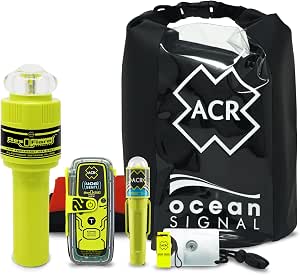 | Best for Complete Emergency Preparedness with Safety Kit | Type: Personal Locator + Safety Kit | Included Items: GPS beacon, distress flare, signal mirror, rescue light, whistle, dry bag, distress flag | Certifications: USCG approved | VIEW ON AMAZON | See Our Full Breakdown |
| ACR ResQLink 410 RLS PLB – Satellite SOS GPS Personal Locator Beacon |  | Best Overall for Global Reliability and Long-Term Use | Battery Life: 5 years | Operational Life: 24+ hours | Compatibility: GPS, Galileo GNSS, MEOSAR | VIEW ON AMAZON | See Our Full Breakdown |
| McMurdo FastFind 220 Personal Locator Beacon – US Programming |  | Best for US-Based Emergency Activation and Simplicity | Brand: McMurdo | Unit Count: 1 | VIEW ON AMAZON | See Our Full Breakdown | |
| ACR ResQLink View PLB425 – Buoyant GPS Personal Locator Beacon |  | Best for Water-Related Off-Road Adventures and Versatile Signaling | Type: Personal Locator Beacon | GPS: Yes | Buoyant: Yes | VIEW ON AMAZON | See Our Full Breakdown |
| ACR ResQLink 400 GPS Personal Locator Beacon Survival Kit |  | Best for Complete Emergency Preparedness in Remote Environments | Brand: ACR | Included Components: Dry Bag, ResQLink Beacon, Rescue Strobe, Signal Mirror, Whistle | Number of Pieces: 5 | VIEW ON AMAZON | See Our Full Breakdown |
More Details on Our Top Picks
Ocean Signal rescueME PLB1 – Compact Satellite SOS Personal Locator Beacon
The rescueME PLB1 stands out as the most versatile and portable option, thanks to its lightweight 4 oz design and durable, waterproof construction. Unlike bulkier models, it offers one-handed operation, making it ideal for quick activation in emergencies. Its long battery life of 7 years and reliable satellite coverage ensure consistent performance without ongoing fees. However, its manual activation requirement might be a drawback during high-stress situations, and it’s designed solely for personal use—not suitable for professional rescue teams. Compared to the ResQLink 400, it sacrifices a digital display but excels in size and simplicity. This pick makes the most sense for off-road riders needing a rugged, easy-to-carry beacon that’s ready to go at a moment’s notice.Pros:- Extremely compact and lightweight for easy packing
- Durable and waterproof up to 49 feet
- No subscription fees, with reliable satellite coverage
Cons:- Requires manual activation, which may be difficult in emergencies
- Limited to personal signaling, lacking advanced features
Best for: Solo off-road riders who prioritize portability and simplicity in emergency situations
Not ideal for: Groups or professional search and rescue teams needing advanced communication features or multiple signaling options
- Weight:4 oz
- Waterproof Depth:49 feet
- Battery Life:7 years
- Operational Time:24+ hours
- GPS Channels:66
- Strobe Light:1 candela
Our verdict“A top choice for solo off-road riders seeking a straightforward, dependable emergency beacon.”
ResQLink 400 Personal Locator Beacon No Display
The ResQLink 400 offers a straightforward emergency signaling device at an attractive price point, with a compact 10.4-ounce design and reliable performance. Its no-display, simple activation means fewer technical hurdles for casual users, and the included batteries last for years. Compared with the ResQLink View, it lacks a digital display and advanced features, which might be inconvenient if you want real-time tracking or status updates. However, its limited functionality and reliance on AAA batteries could be seen as drawbacks for those seeking more sophisticated tools. This device is ideal for outdoor enthusiasts who want a dependable emergency beacon without extra complexity.Pros:- Compact and lightweight for easy carry
- Includes batteries, ready to use
Cons:- No display or advanced features
- Requires AAA batteries, which may need replacement
Best for: Casual off-road riders or hunters seeking reliable signaling on a budget
Not ideal for: Users expecting integrated GPS tracking or real-time data updates in their device
- Product Dimensions:4.52 x 2.03 x 1.49 inches
- Item Weight:10.4 ounces
- Batteries:3 AAA (included)
- Best Sellers Rank:#153,845
- First Available:March 13, 2019
Our verdict“A solid, cost-effective choice for riders who want dependable emergency signaling without added bells and whistles.”
ACR ResQLink AIS Personal Locator Beacon – SOS, GPS, Return Link Service, Mobile App & Accessory Clips (Model PLB-450)
The ResQLink AIS PLB-450 is designed for users needing comprehensive rescue tools, offering global emergency signaling via GPS, COSPAS-SARSAT, and AIS. Its lightweight design means it won’t weigh down your gear, and the NFC-enabled mobile access simplifies data retrieval. The 5-year battery life reduces maintenance concerns, and its compatibility with multiple satellite systems ensures broad coverage. Compared to the ResQLink View, it lacks a digital display but compensates with more sophisticated global communication options. This device is best suited for serious off-roaders who venture abroad or into remote areas, where advanced signaling capabilities are critical.Pros:- Global coverage with multiple emergency signaling methods
- Easy mobile access via NFC
- Lightweight and compact for travel
Cons:- Moderate customer rating indicates potential usability issues
- Requires some familiarity with emergency technology
Best for: Off-road adventurers requiring international emergency coverage and mobile access
Not ideal for: Beginners or casual riders who prefer plug-and-play simplicity over technical complexity
- Brand:ACR Electronics, Inc.
- Model Number:PLB-450
- Battery Life:5 years
- Operational Time:24+ hours
- Compatibility:COSPAS-SARSAT, MEOSAR
- Weight:Lightweight
Our verdict“Ideal for experienced riders needing extensive global coverage and connectivity in remote locations.”
ACR ResQLink View RLS PLB, Satellite SOS GPS Personal Locator Beacon
The ResQLink View RLS combines global satellite coverage with a digital display and infrared strobe, making it a versatile choice for water and land adventurers. Its built-in buoyancy adds water safety, while the 5-year battery life ensures long-term reliability. Unlike models without a display, it provides real-time info, which can be vital during emergencies. The cost may be higher for casual users, but for those who value immediate status updates and water safety, it’s worth considering. The device’s complexity might require some familiarity, but its extensive features make it suitable for serious outdoor activities. Compared to the basic PLB1, it offers more visual cues and water safety features, making it ideal for multi-environment use.Pros:- Global coverage with multiple satellite systems
- Digital display provides real-time status updates
- Infrared strobe enhances visibility in dark conditions
- Built-in buoyancy for water safety
Cons:- Higher price point may deter casual users
- Requires some knowledge of device features for effective use
Best for: Off-roaders who often ride near water or need real-time display info during emergencies
Not ideal for: Riders seeking a simple, low-cost beacon for occasional use
- Battery Life:5 years
- Operational Life:28+ hours
- Compatibility:GPS, Galileo GNSS, MEOSAR
- Additional Features:Digital display, infrared strobe, buoyancy
- Built-in Buoyancy:Yes
Our verdict“Perfect for riders who want visibility, water safety, and real-time updates in a compact form.”
ResQLink View GPS Personal Locator Beacon with ResQFlare Electronic Distress Flare & Safety Kit
The ResQLink View GPS with Safety Kit offers a comprehensive solution for off-road emergencies, combining a GPS-enabled beacon with essential safety tools like the ResQFlare, signal mirror, and rescue light. This kit is designed for those who want to be prepared for a variety of situations, whether hiking, hunting, or boating. Its USCG approval affirms its reliability, and the GPS feature allows precise location sharing for rescue teams. The added tools increase the kit’s bulk and complexity, which might be cumbersome for minimalists or casual riders. Compared to basic beacons, it provides a broader safety package but at a higher cost and size. This makes it perfect for adventurers who want peace of mind with multiple emergency tools within reach.Pros:- Includes comprehensive safety tools and GPS locator
- USCG approved for high safety standards
- Helps alert rescue teams effectively in diverse scenarios
Cons:- Bulkier and heavier than standalone beacons
- Requires familiarity with multiple devices and functions
Best for: Outdoor enthusiasts who want a full emergency kit for diverse outdoor activities
Not ideal for: Riders seeking a lightweight, minimalist emergency device for quick trips
- Type:Personal Locator + Safety Kit
- Included Items:GPS beacon, distress flare, signal mirror, rescue light, whistle, dry bag, distress flag
- Certifications:USCG approved
- Battery:Not specified, integrated
Our verdict“An excellent choice for riders who prefer a multi-tool safety kit over a simple beacon for extensive outdoor adventures.”
ACR ResQLink 410 RLS PLB – Satellite SOS GPS Personal Locator Beacon
The ACR ResQLink 410 RLS PLB stands out for its comprehensive global coverage, thanks to GPS, Galileo GNSS, and MEOSAR compatibility, making it ideal for remote off-road adventures where reliable connectivity is essential. Compared with the ResQLink 400, it offers added GNSS options and a longer 5-year battery life, reducing maintenance worries. Its compact, lightweight design ensures portability, while the built-in buoyancy and visibility lights enhance safety during water crossings or emergency situations. However, it doesn’t require a subscription, which means some advanced features like messaging are limited. Tradeoffs include a potentially higher initial cost versus ongoing subscription-based devices, but this model’s reliability in diverse environments makes it a solid choice. This device is perfect for off-road riders seeking a dependable, long-lasting beacon with broad coverage and minimal upkeep.
Pros:- Global coverage with multiple GNSS systems
- Long-lasting 5-year battery
- Compact, lightweight, and buoyant design
- Enhanced visibility with strobes and infrared lights
Cons:- Higher upfront cost without subscription-based messaging features
- Limited features compared to more advanced subscription models
Best for: Off-road riders who prioritize global coverage, long battery life, and reliable emergency response in remote locations
Not ideal for: Casual riders or those in areas with reliable cell service who might prefer a simpler, less expensive device
- Battery Life:5 years
- Operational Life:24+ hours
- Compatibility:GPS, Galileo GNSS, MEOSAR
- Features:Built-in buoyancy, strobe and infrared lights, multifunction clip
Our verdict“This beacon is best suited for off-road enthusiasts who need a dependable, all-weather device with extended battery life and global coverage.”
McMurdo FastFind 220 Personal Locator Beacon – US Programming
The McMurdo FastFind 220 is tailored for US users needing quick, reliable activation in emergency situations, especially in remote terrains. It’s pre-programmed for US registration, making it ready to deploy immediately without complex setup—an advantage over devices like the ResQLink View that require optional messaging subscriptions. Its rugged design ensures operation in extreme weather, but the lack of detailed battery life data and limited durability info may concern those planning prolonged use. The device’s activation is straightforward, but outside the US, reprogramming can be complex, making it less ideal for international travelers. Tradeoffs involve simplicity and immediate US readiness at the expense of international versatility. This beacon is best for US-based adventurers who need a straightforward, one-button emergency device for remote terrains.
Pros:- Pre-programmed for US registration, ready to use
- Reliable activation in extreme conditions
- Includes free reprogramming for international use
Cons:- Requires registration, which can be complex outside the US
- Limited info on battery life and durability
Best for: US off-road riders who need a reliable emergency beacon with quick activation and easy US registration
Not ideal for: International riders or those requiring detailed tracking and messaging features
- Brand:McMurdo
- Unit Count:1
- Rank in Health Alert & Monitoring Systems:#215
Our verdict“This device is ideal for US-based riders seeking a straightforward, reliable emergency beacon with quick deployment.”
ACR ResQLink View PLB425 – Buoyant GPS Personal Locator Beacon
The ACR ResQLink View PLB425 offers a compelling mix of buoyancy, GPS accuracy, and multiple signaling options, making it well-suited for off-road riders who frequently encounter water crossings or aquatic environments. Its ability to send SOS signals with GPS location, along with SMS and email messaging, outperforms basic beacons like the ResQLink 410 RLS in communication versatility. The device’s compact, buoyant design ensures it remains accessible in water, but the need for optional subscriptions for messaging features could be a concern for budget-conscious users. Compared to the survival kit version, it’s more portable but lacks the additional survival tools. Tradeoffs include paying extra for messaging services and limited survival gear. This beacon is ideal for water-loving adventurers seeking an all-in-one emergency signaling device.
Pros:- Buoyant, water-friendly design
- Global coverage with GPS and multiple signals
- Allows SMS and email alerts (subscription optional)
- Multiple signaling options including LED and infrared strobes
Cons:- Messaging features require an optional subscription
- Limited survival tools compared to full kits
Best for: Off-road riders who often ride near water or need flexible communication options in emergencies
Not ideal for: Users seeking a simple, no-frills beacon without subscription-based messaging features
- Type:Personal Locator Beacon
- GPS:Yes
- Buoyant:Yes
- Signals:406 MHz Emergency, 121.5 MHz Homing
- Messaging:SMS and email (optional subscription)
- Coverage:Global via COSPAS-SARSAT
Our verdict“This beacon makes sense for water-focused riders who want a portable, versatile emergency device with global coverage.”
ACR ResQLink 400 GPS Personal Locator Beacon Survival Kit
The ACR ResQLink 400 GPS Survival Kit combines a GPS beacon with essential survival tools—rescue strobe, signal mirror, whistle, and waterproof dry bag—making it a comprehensive package for serious off-road expeditions. Compared to standalone beacons like the ResQLink 410, this kit offers additional gear to aid in survival and signaling, which can be invaluable in hazardous terrains. price and bulkier size might deter casual riders. It’s primarily designed for emergencies rather than everyday use, so durability and cost are key considerations. The inclusion of multiple survival tools makes it a robust choice for remote adventures, but it’s less suitable for those seeking a lightweight, minimal setup. Tradeoffs involve extra weight and expense for comprehensive safety, which pays off in extreme scenarios. This kit is best for off-road riders who want a full emergency setup for unpredictable environments.
Pros:- Includes GPS beacon and multiple survival tools
- Waterproof dry bag for gear protection
- High customer satisfaction and reliability
- Reliable GPS tracking and signaling features
Cons:- Relatively expensive for casual users
- Bulkier and heavier than standalone beacons
Best for: Serious off-road adventurers requiring a complete survival and signaling kit for remote, hazardous terrains
Not ideal for: Casual riders or those seeking a lightweight, budget-friendly emergency device for mild conditions
- Brand:ACR
- Included Components:Dry Bag, ResQLink Beacon, Rescue Strobe, Signal Mirror, Whistle
- Number of Pieces:5
- Warranty:5 Years
- UPC:791659023464
Our verdict“This survival kit is ideal for off-road riders in remote environments who need both signaling and survival tools in one package.”

How We Picked
I evaluated these personal locator beacons based on multiple criteria vital for off-road riders: reliability in satellite communication, ease of activation, build quality, durability in harsh conditions, and additional safety features. I also considered size and weight for portability, battery life for long trips, and user feedback on real-world performance. The products are ranked to reflect a balance of these factors, with the top picks excelling in overall reliability and feature set, while others serve niche needs or budget constraints. This approach ensures riders find a PLB that matches their adventure style and safety priorities.Factors to Consider When Choosing Personal Locator Beacon For Off Road Riding
Choosing the right personal locator beacon for off road riding involves evaluating several key factors. Beyond basic satellite connectivity, consider how rugged the device is, how easy it is to activate under stress, and whether it offers additional safety features like AIS or integrated flares. Battery life can make or break your safety in remote areas, so look for models with long-lasting power and quick GPS fixes. Price and size are also important to match your riding style and gear setup. Being aware of these broader considerations helps avoid common pitfalls like underestimating durability or overpaying for unnecessary features.Durability and Water Resistance
Off-road riding exposes your equipment to mud, dust, and water. A PLB should have a rugged, impact-resistant shell, and ideally be buoyant if there’s a risk of falling into water. Many models are rated IPX7 or higher, meaning they can withstand immersion and harsh conditions. Skipping this can lead to device failure when you need it most, so prioritize durability over size or features if your riding terrain is particularly tough.
Activation and Ease of Use
In an emergency, you need a device that activates quickly and intuitively. Look for models with one-touch activation or clear, simple instructions. Complex or multi-step activation procedures can cause delays at critical moments. Test the ease of use in your own gear setup—riding gloves or cold conditions shouldn’t hinder activation—and ensure the device has a loud, clear distress signal indicator.
Battery Life and Power Management
Extended battery life is essential for long trips, especially if you ride in remote areas where charging isn’t possible. Choose a PLB with a long standby time—often several days or weeks—and a replaceable or rechargeable battery option. Some models offer power-saving modes or quick GPS fixes, which can be lifesavers if you need to send a distress signal in an emergency. Avoid devices with short battery life or non-standard batteries that are hard to replace.
Additional Safety Features
Features like AIS (Automatic Identification System) or integrated flares can enhance rescue visibility, particularly in crowded or large search areas. However, these features often increase the device’s complexity and cost. Consider whether these extras align with your riding environment—if you often ride in remote wilderness, simpler models might be more reliable, while AIS-equipped beacons excel in coastal or populated areas.
Price and Size Tradeoffs
While spending more generally yields more reliable, feature-rich devices, budget options can still provide basic safety coverage. Smaller, lighter models are easier to carry but might sacrifice battery capacity or added features. Balance your budget with your riding needs—if you’re often in remote, high-risk areas, investing in a premium PLB could be well worth it, whereas casual riders might find basic models sufficient.
Frequently Asked Questions
How reliable are personal locator beacons in remote off-road areas?
Most modern PLBs rely on satellite networks like COSPAS-SARSAT, which provide global coverage, even in remote wilderness. Their reliability depends on a clear view of the sky for GPS signals and satellite communication. In heavily wooded or mountainous terrain, signal acquisition might take longer, but overall, these devices are proven to work in emergencies. Selecting a model with a fast GPS fix and strong satellite antenna can improve reliability in challenging environments.
Should I choose a PLB with additional features like AIS or flares?
Additional features can enhance your safety, especially in areas with busy search and rescue operations or near water. AIS allows rescue teams to see your exact location on marine traffic systems, which is valuable if you ride near coastlines or lakes. Flares or electronic distress signals can increase visibility at night or in poor weather. However, these features also add complexity and cost, so assess whether they align with your typical riding scenarios before choosing a device with extras.
What is the typical battery life I should look for in a PLB?
Most reliable models offer battery life ranging from 24 to 48 hours of continuous operation and several weeks in standby mode. For off-road adventures, longer standby times are preferable because they reduce the need for frequent maintenance or battery replacements. Devices with replaceable batteries are ideal, especially if you frequently ride in remote areas where charging options are limited.
Are buoyant PLBs necessary for off-road riding?
Buoyancy is an important consideration if there’s a risk of falling into water during your ride. Many off-road riders cross streams, lakes, or ride near coastal areas, making buoyant models a wise choice. A buoyant PLB can be a critical safety feature, ensuring it remains accessible and functional if submerged. If your riding environment is purely land-based, buoyancy becomes less relevant but still provides added peace of mind.
Is it worth investing in a premium PLB or sticking with budget options?
Investing in a premium PLB generally offers more robust build quality, longer battery life, faster GPS fix times, and extra safety features, which can be vital in remote or high-risk environments. Budget models often meet basic safety needs but may lack durability or quick response times. For serious off-road riders who venture into isolated areas regularly, paying more can significantly enhance safety and reliability, making a premium device a worthwhile investment.
Conclusion
For off-road riders seeking the best overall reliability, the Ocean Signal rescueME PLB1 stands out as the top choice. Budget-conscious adventurers can opt for more affordable models like the ResQLink 400 without sacrificing core safety features. Those riding in water-rich environments or wanting extra visibility benefits should consider models with buoyancy and AIS, such as the ResQLink View RLS. Beginners or casual riders might prefer straightforward, easy-to-activate units, while serious explorers should focus on longer battery life and durability—investing in higher-end models ensures peace of mind during remote adventures.Halloween Picks
halloween
As an affiliate, we earn on qualifying purchases.