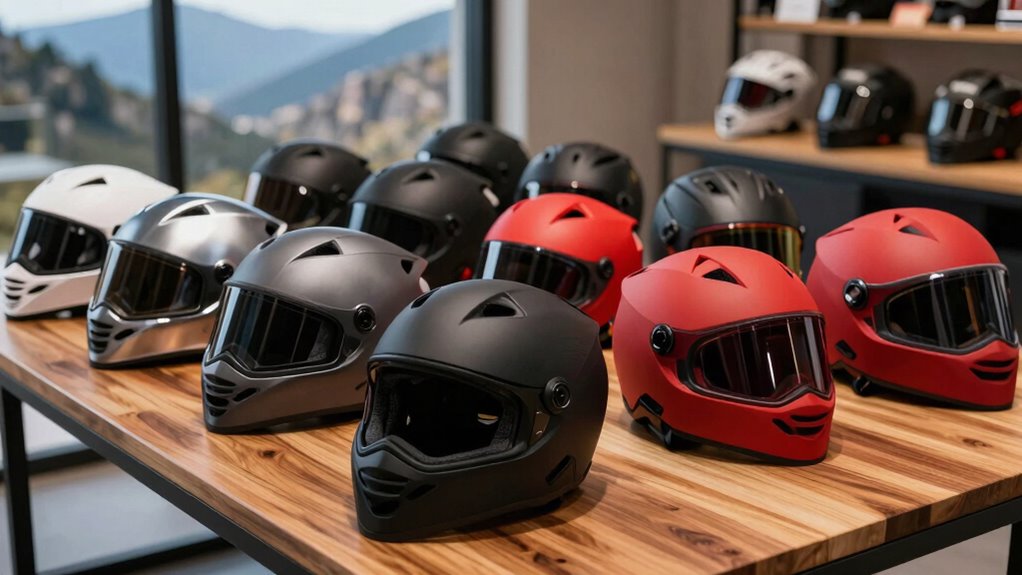

For most riders seeking a premium adventure touring helmet, I’d start with the KLIM Krios Pro for its focused adventure design, then compare the Arai XD-5 for a premium all-round approach and the LS2 Advant II if an integrated communication setup matters more. The main choice is between a light, purpose-built peak-and-shield helmet, a modular design that adds convenience, and a value-oriented option that may give up refinement. Fit, ventilation, noise, and the balance between road and off-road use can matter more than a long feature list. I rank these 12 helmets by how well their design serves real touring needs, alongside usability, versatility, and the tradeoffs buyers should expect. Read on for the full comparison and guidance on which type best suits your rides.

Get business pricing on garage and car supplies
- Business-only prices and quantity discounts
- Tax-exempt purchasing
- Multiple users, one account, clear invoices
Complete the kit


Key Takeaways
- The KLIM Krios Pro leads for focused adventure touring: it is the clearest choice for riders prioritizing a purpose-built dual-sport design over modular convenience.
- The Arai XD-5 and Airoh Commander 2 represent premium alternatives: they suit buyers comparing refined adventure options, while fit and the exact configuration should decide between them.
- The LS2 Advant II stands apart through its included Sena 60S: its modular format and preinstalled communications favor convenience, but riders should compare that package with the lighter, more off-road-oriented designs.
- Carbon-fiber listings need careful verification: the LS2 Explorer Carbon appears twice under slightly different names, so check the exact model and included components before choosing.
- The three Bell MX-9 Adventure MIPS entries appear closely related: treat color and size variants as one design family, not three distinct performance alternatives; the O’Neal Sierra R is the more budget-minded, less premium-leaning outlier.
| LS2 Advant II Modular Motorcycle Helmet with Preinstalled Sena 60S Mesh Bluetooth Headset |  | Best for Integrated Rider Communication | Shell construction: Polycarbonate | Liner: Removable Coolmax moisture-wicking liner | Shield: Scratch-resistant; Pinlock 120 Maxvision ready | VIEW ON AMAZON | See Our Full Breakdown |
| ScorpionEXO AT960 Modular Flip-up Adventure Street Motorcycle Helmet |  | Best for Versatile Road-and-Trail Touring | Shell material: Polycarbonate | Impact liner: Multi-layer EPS | Ventilation: Aero-tuned intake and exhaust vents | VIEW ON AMAZON | See Our Full Breakdown |
| LS2 Blaze II Adventure Motorcycle Helmet with Sun Shield |  | Best for Straightforward Sun-Ready Adventure Riding | Shell material: Kinetic Polymer Alloy (KPA) | Weight: 6 pounds | Safety approval: DOT; FMVSS 218 | VIEW ON AMAZON | See Our Full Breakdown |
| LS2 Explorer Carbon Adventure Motorcycle Helmet |  | Best for Carbon-Shell Touring Comfort | Shell material: Carbon fiber | Model: Explorer Carbon | Model number: 701-2151 | VIEW ON AMAZON | See Our Full Breakdown |
| KLIM Krios Pro Adventure Motorcycle Helmet |  | Best Premium Carbon-and-Impact-Liner Pick | Shell material: Full carbon fiber | Shell construction: Hand laid | Impact absorption: Koroyd Structures | VIEW ON AMAZON | See Our Full Breakdown |
| Bell MX-9 Adventure MIPS Dual Sport Helmet |  | Best for Fit Flexibility | MIPS: Yes | Shell sizes: 3 | Padding: IONIC+ quick-drying, odor-resistant | VIEW ON AMAZON | See Our Full Breakdown |
| Bell MX-9 Adventure MIPS Dual-Sport Helmet |  | Best for Goggles-and-Shield Versatility | Impact protection: MIPS | Shell sizes: 3 | Face shield: Integrated clear shield; flips up or removes; anti-fog and anti-scratch | VIEW ON AMAZON | See Our Full Breakdown |
| LS2 Helmets Explorer Carbon Adventure Helmet |  | Best for Lightweight-Focused Touring | Shell material: Carbon fiber | Liner: Removable, washable technical fabric | Cheek pads: 3D laser cut | VIEW ON AMAZON | See Our Full Breakdown |
| Bell MX-9 Adventure MIPS Helmet (Gloss Alpine Metallic Gray Camo – Large) |  | Best for Large-Size DOT-Approved Simplicity | Size: Large | Color: Gloss Alpine Metallic Gray Camo | Technology: MIPS | VIEW ON AMAZON | See Our Full Breakdown |
| O’Neal Sierra R Motorcycle Helmet, Black/Gray, XL |  | Best for Straightforward Street-to-Trail Use | Size: XL | Color: Black/Gray | Shell material: Polycarbonate/ABS | VIEW ON AMAZON | See Our Full Breakdown |
| Arai XD-5 Trail Motorcycle Helmet |  | Best for Fit Customization | Brand: Arai | Model: XD-5 | Shell material: Fiberglass; PB-cLc² shell | VIEW ON AMAZON | See Our Full Breakdown |
| Airoh Commander 2 Composite Carbon Fiber Adventure Offroad Motorcycle Helmet | 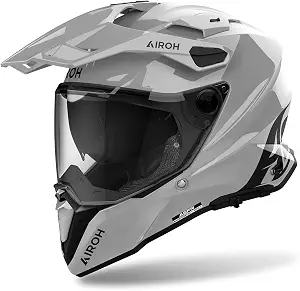 | Best Lightweight Carbon Pick | Shell material: Carbon composite | Weight: 1570 g (3.5 lb) | Shell sizes: Three | VIEW ON AMAZON | See Our Full Breakdown |
| premium adventure touring helmet | Shell material | Liner | Ventilation | Weight |
|---|---|---|---|---|
| LS2 Advant II Modular Motorcyc | — | Removable Coolmax moisture-wicking liner | — | — |
| ScorpionEXO AT960 Modular Flip | Polycarbonate | Removable, washable KwikWick C moisture-wicking liner | Aero-tuned intake and exhaust vents | 4.09 lbs |
| LS2 Blaze II Adventure Motorcy | Kinetic Polymer Alloy (KPA) | Removable, washable, moisture-resistant | Multiple intake and exhaust ports | 6 pounds |
| LS2 Explorer Carbon Adventure | Carbon fiber | Removable and washable; 3D laser-cut cheek pads | Adjustable flow-through | 6 pounds |
| KLIM Krios Pro Adventure Motor | Full carbon fiber | — | — | — |
| Bell MX-9 Adventure MIPS Dual | — | — | — | — |
| Bell MX-9 Adventure MIPS Dual- | — | Quick-drying, removable, washable, antimicrobial | Velocity Flow | — |
| LS2 Helmets Explorer Carbon Ad | Carbon fiber | Removable, washable technical fabric | Dynamic flow-through with adjustable ports | — |
| Bell MX-9 Adventure MIPS Helme | — | — | — | — |
| O’Neal Sierra R Motorcycle Hel | Polycarbonate/ABS | Removable, washable, moisture-wicking | — | 1590 g (± 50 g) |
| Arai XD-5 Trail Motorcycle Hel | Fiberglass; PB-cLc² shell | — | Adjustable airflow directed toward rider or shield | 6.2 pounds |
| Airoh Commander 2 Composite Ca | Carbon composite | — | Dual system with chin-guard and upper vents | 1570 g (3.5 lb) |
More Details on Our Top Picks
LS2 Advant II Modular Motorcycle Helmet with Preinstalled Sena 60S Mesh Bluetooth Headset
I’d put the Advant II first for riders who want communication built into an adventure-touring helmet rather than choosing a separate headset. Its preinstalled Sena 60S supports Bluetooth 5.3 and WAVE intercom, so group communication is a central part of the package, not an add-on. The modular design also makes quick stops and conversations easier than with a fixed full-face helmet such as the LS2 Explorer Carbon. A removable Coolmax liner and Pinlock 120 Maxvision-ready shield add useful touring comfort, though Pinlock compatibility does not mean an insert is included. The polycarbonate shell and DOT-only certification details make this less compelling for riders prioritizing premium shell materials or broader listed certification. I’d also compare the helmet’s fit and total weight carefully before committing to long days in the saddle.
Pros:- Preinstalled Sena 60S mesh system with Bluetooth 5.3 and WAVE intercom
- Modular design makes stops and rider conversations more convenient
- Removable, washable moisture-wicking Coolmax liner
- Scratch-resistant shield is Pinlock 120 Maxvision ready
Cons:- Polycarbonate shell is less premium in material choice than the carbon-fiber KLIM Krios Pro
- Modular construction can feel heavier than a conventional full-face helmet
- The supplied details list DOT FMVSS 218 approval only
Best for: Adventure-touring riders who regularly communicate with a group and want a modular helmet with the Sena 60S already installed.
Not ideal for: Riders seeking a carbon-fiber shell, a fixed full-face design, or safety certifications beyond the listed DOT FMVSS 218 approval.
- Shell construction:Polycarbonate
- Liner:Removable Coolmax moisture-wicking liner
- Shield:Scratch-resistant; Pinlock 120 Maxvision ready
- Communication system:Preinstalled Sena 60S Mesh
- Bluetooth:Bluetooth 5.3
- Intercom:WAVE intercom
- Certification:DOT FMVSS 218
Our verdict“Choose the Advant II if built-in group communication and modular convenience matter more to you than a carbon shell or a fixed full-face layout.”
ScorpionEXO AT960 Modular Flip-up Adventure Street Motorcycle Helmet
The AT960 is my pick for riders who want an adventure-ready modular helmet with a particularly useful road-touring feature set. Its flip-up chin bar simplifies fuel stops and roadside conversations, while the retractable Speedview sun visor and fog-free Everclear shield reduce the need to swap eyewear as light and weather change. Compared with the LS2 Advant II, the Scorpion lists DOT and ECE 22.06 certification but does not include a communication system, so buyers who want a ready-to-go intercom may prefer the LS2. The 11 cm eyeport is designed to accommodate goggles, giving this model more off-road flexibility than a standard street modular. The tradeoff is its listed 4.09-pound weight, and the peak may need removal to improve aerodynamics on longer highway runs.
Pros:- Flip-up chin bar adds convenience at stops and during conversations
- DOT and ECE 22.06 certifications are both listed
- Retractable sun visor and fog-free, UV-protective shield suit changing conditions
- Goggle-compatible 11 cm eyeport broadens its adventure use
Cons:- Listed weight of 4.09 pounds may become noticeable on extended rides
- Bluetooth communication system is sold separately
- External peak may need removal for better highway aerodynamics
Best for: Touring riders who want a modular helmet for mixed road and light off-road use, with a sun visor, goggle-compatible eyeport, and listed DOT and ECE 22.06 certification.
Not ideal for: Riders who want an included communications system or prioritize the lightest possible helmet for long days.
- Shell material:Polycarbonate
- Impact liner:Multi-layer EPS
- Ventilation:Aero-tuned intake and exhaust vents
- Liner:Removable, washable KwikWick C moisture-wicking liner
- Shield:Everclear anti-scratch, fog-free; 95% UV protection
- Sun visor:Retractable Speedview
- Eyeport:11 cm tall; accommodates goggles
- Weight:4.09 lbs
- Certification:DOT and ECE 22.06
Our verdict“Pick the AT960 if you want a certified, feature-rich modular for varied touring conditions and are comfortable adding your own intercom.”
LS2 Blaze II Adventure Motorcycle Helmet with Sun Shield
The Blaze II suits riders who want an adventure-style helmet with a built-in drop-down sun shield and straightforward controls, without paying for a modular chin bar or integrated communications. Its Kinetic Polymer Alloy shell, multiple intake and exhaust ports, and washable liner cover the basics for changing conditions. Compared with the ScorpionEXO AT960, the Blaze II has a simpler feature set: the Scorpion adds a flip-up chin bar, fog-free shield, and listed ECE 22.06 approval, while the LS2 keeps the focus on a conventional adventure helmet with an integrated sun shield. The removable liner includes an emergency release, a useful detail for servicing and removal after an incident. However, the supplied weight is listed as six pounds, and only DOT FMVSS 218 approval is specified, so I would check both points against your priorities before buying.
Pros:- Integrated drop-down sun shield helps with changing light
- Removable, washable liner includes an emergency release system
- Multiple intake and exhaust ports support airflow
- Intermediate oval head shape is specified
Cons:- Listed weight is six pounds, a substantial concern for extended touring
- Only DOT FMVSS 218 approval is specified
- Lacks the AT960’s flip-up chin bar and listed fog-free shield
Best for: Riders who prefer a conventional adventure helmet with an integrated sun shield, washable liner, and simple quick-release chin strap.
Not ideal for: Long-distance riders especially sensitive to helmet weight, or buyers who require a listed ECE certification or modular chin bar.
- Shell material:Kinetic Polymer Alloy (KPA)
- Weight:6 pounds
- Safety approval:DOT; FMVSS 218
- Sun shield:Integrated drop-down
- Liner:Removable, washable, moisture-resistant
- Ventilation:Multiple intake and exhaust ports
- Head shape:Intermediate oval
- Closure:Quick-release chin strap
Our verdict“Choose the Blaze II if you want a conventional adventure helmet with a built-in sun shield and can accept its listed weight and DOT-only approval details.”
LS2 Explorer Carbon Adventure Motorcycle Helmet
The Explorer Carbon is the clearest choice here for riders who want a carbon-fiber shell in a conventional adventure helmet. Its removable liner, 3D laser-cut cheek pads, optically correct shield, and adjustable flow-through ventilation make it more focused on long-ride comfort than the modular LS2 Advant II, which instead prioritizes an opening chin bar and preinstalled communications. An integrated drop-down sunshield also means the Explorer Carbon can handle bright stretches without relying solely on a separate pair of tinted eyewear. The product data lists its weight as six pounds, however, which complicates the lightweight-shell pitch; I would verify the weight for the exact size before choosing it for all-day touring. The listed details also provide less certification information than the ScorpionEXO AT960, making this a material-and-comfort-led pick rather than the strongest documented safety-spec option.
Pros:- Carbon-fiber shell is the lineup’s standout material advantage over the polycarbonate AT960
- 3D laser-cut cheek pads and washable liner support long-ride comfort
- Optically correct shield and integrated drop-down sunshield
- Adjustable flow-through ventilation
Cons:- Product data lists a six-pound weight despite the lightweight-shell positioning
- Certification details are not provided in the supplied specifications
- No modular chin bar or integrated communications system is listed
Best for: Adventure and touring riders who specifically want a carbon-fiber shell, adjustable airflow, and a removable liner in a non-modular helmet.
Not ideal for: Buyers who need clearly listed certification details, a modular chin bar, or a helmet with a confirmed low overall weight.
- Shell material:Carbon fiber
- Model:Explorer Carbon
- Model number:701-2151
- Weight:6 pounds
- Shape:Oval
- Liner:Removable and washable; 3D laser-cut cheek pads
- Shield:Optically correct
- Sunshield:Drop-down
- Ventilation:Adjustable flow-through
Our verdict“Choose the Explorer Carbon if carbon construction and touring comfort lead your priorities, but verify its fit, weight, and certification details first.”
KLIM Krios Pro Adventure Motorcycle Helmet
The Krios Pro earns the premium-material role through its hand-laid full carbon-fiber shell and Koroyd Structures impact-absorption system. That combination gives it a more specialized construction story than the LS2 Explorer Carbon, whose supplied details emphasize carbon, cheek-pad comfort, ventilation, and sun protection but do not name an impact-absorption structure. The Krios Pro’s sparse feature information is also its main weakness: the product data does not specify ventilation, shield options, fit shape, weight, or certification, all of which matter when choosing an adventure-touring helmet. By comparison, the ScorpionEXO AT960 provides more concrete touring features and listed DOT and ECE 22.06 certification, though it uses a polycarbonate shell. I’d shortlist the KLIM for riders prioritizing its named materials and liner technology, but request the missing fit and certification details before purchase.
Pros:- Hand-laid full carbon-fiber shell
- Koroyd Structures are specified for impact absorption
- Adventure-focused helmet design
- Premium construction differentiates it from the polycarbonate ScorpionEXO AT960
Cons:- Supplied details do not state a weight or head shape
- Ventilation and shield specifications are not provided
- Certification details are not included in the supplied product data
Best for: Experienced adventure-touring riders who prioritize a full carbon-fiber shell and Koroyd impact-absorption structures over a long list of documented convenience features.
Not ideal for: Buyers who need published weight, ventilation, shield, fit, or certification specifications to compare helmets confidently.
- Shell material:Full carbon fiber
- Shell construction:Hand laid
- Impact absorption:Koroyd Structures
Our verdict“Choose the Krios Pro if its carbon shell and Koroyd structures are your priorities and you can confirm the missing fit, equipment, and certification information.”
Bell MX-9 Adventure MIPS Dual Sport Helmet
I’d shortlist this MX-9 for riders who want a dual-sport helmet with MIPS protection and more opportunity to match shell size to head shape. Its three shell sizes may help the fit feel less bulky than a helmet offered in fewer shell sizes, though the listing does not give fit measurements to predict the result. The quick-drying, odor-resistant IONIC+ padding suits repeated rides where sweat management matters, and speaker pockets make adding a communication system easier. Compared with the other Bell MX-9 listing in this roundup, this one provides fewer details about the shield and ventilation, so I’d favor that version if those features are central to your ride. It also lists several safety standards, but riders should confirm the exact certification for their size and market.
Pros:- MIPS is designed to help reduce rotational forces from certain impacts.
- Three shell sizes offer more opportunity to match shell proportions to head size.
- Quick-drying, odor-resistant IONIC+ padding is suited to frequent rides.
- Integrated speaker pockets simplify communication-system installation.
Cons:- The listing does not specify a face shield or its optical and anti-fog features.
- Ventilation details and helmet weight are not provided.
- Fit measurements are absent, so shell count alone cannot predict individual fit.
Best for: Dual-sport riders who want MIPS, three shell sizes, and speaker pockets for adding a communication system.
Not ideal for: Riders who need detailed shield, ventilation, weight, or fit information before choosing; this listing does not specify those details.
- MIPS:Yes
- Shell sizes:3
- Padding:IONIC+ quick-drying, odor-resistant
- Communication system:Ready; integrated speaker pockets
- Safety standards:FMVSS 218, DOT, ECE 22.06
- Fabric type:Polyester
- Origin:Imported
Our verdict“Choose this Bell if shell-size options and MIPS matter more to you than having detailed shield and ventilation specifications.”
Bell MX-9 Adventure MIPS Dual-Sport Helmet
This MX-9 is the Bell pick I’d favor for riders who switch between a face shield and goggles. Its integrated clear shield flips up or comes off, giving it more stated eye-protection flexibility than the B094X2YKJZ MX-9 listing, which does not describe its shield. The shield is listed as anti-fog and anti-scratch, while Velocity Flow ventilation and MIPS add useful touring and dual-sport details. A removable, washable liner also gives riders a practical way to manage sweat between trips. The tradeoff is that the product data gives no weight or fit measurements, leaving key comfort questions unresolved. Compared with the O’Neal Sierra R, this Bell has clearer goggles compatibility and MIPS listed, while the O’Neal listing supplies an exact weight and Double-D closure.
Pros:- Flip-up or removable clear shield supports both shield and goggle setups.
- Shield is specified as anti-fog and anti-scratch.
- MIPS is designed to help reduce rotational forces from certain impacts.
- Removable, washable antimicrobial liner and speaker pockets support regular touring use.
Cons:- No helmet weight or fit measurements are provided.
- The listing does not specify the included communication unit, only speaker-pocket readiness.
- Goggle compatibility requires removing or raising the shield, adding setup steps.
Best for: Adventure riders who alternate between a face shield for road miles and goggles for dusty or off-road sections.
Not ideal for: Buyers who need a stated helmet weight or fit measurements to compare comfort and sizing before purchase.
- Impact protection:MIPS
- Shell sizes:3
- Face shield:Integrated clear shield; flips up or removes; anti-fog and anti-scratch
- Ventilation:Velocity Flow
- Liner:Quick-drying, removable, washable, antimicrobial
- Communication system:Ready; integrated speaker pockets
- Safety standards:FMVSS 218, DOT, ECE 22.06
- Fabric:Polyester
Our verdict“Pick this MX-9 over the less-detailed Bell listing if changing between goggles and a face shield is a priority.”
LS2 Helmets Explorer Carbon Adventure Helmet
The Explorer Carbon stands apart from the Bell MX-9 options through its carbon-fiber shell and touring-oriented eye-protection setup. A lower shell weight may help reduce fatigue across long days, though the listing provides no actual weight for comparison. The drop-down sunshield is convenient when light changes during a ride, while the ultra-wide eye port and adjustable ventilation support a broad field of view and adaptable airflow. Its removable, washable liner helps with upkeep after dusty or sweaty trips. Compared with the Bell MX-9 Dual-Sport listing, the LS2 supplies more detail about sun protection and airflow; the Bell, by contrast, specifies MIPS and safety standards that this Explorer description does not list. I’d choose the LS2 for its stated touring features, but verify certification and fit details before buying.
Pros:- Carbon-fiber shell is intended to reduce weight and fatigue on longer rides.
- Drop-down sunshield makes changing light easier to manage without swapping eyewear.
- Adjustable flow-through ventilation offers airflow control across riding conditions.
- Removable washable liner and 3D laser-cut cheek pads support maintenance and fit shaping.
Cons:- The listing does not provide an actual helmet weight.
- No safety standards or MIPS details are stated in the supplied product data.
- Carbon construction may make it a more specialized choice than the feature-detailed Bell MX-9 options.
Best for: Touring riders prioritizing a carbon shell, integrated sunshield, and adjustable ventilation for varied daylight and weather.
Not ideal for: Buyers who need stated safety certifications, exact helmet weight, or confirmed MIPS information in the supplied specifications.
- Shell material:Carbon fiber
- Liner:Removable, washable technical fabric
- Cheek pads:3D laser cut
- Eye port:Ultra-wide
- Shield:Polycarbonate, Class A optically correct
- Sunshield:Integrated drop-down
- Peak:Aerodynamic with airflow ports
- Ventilation:Dynamic flow-through with adjustable ports
Our verdict“Choose the Explorer Carbon for its carbon-shell, sunshield, and ventilation combination, but verify certification details before purchase.”
Bell MX-9 Adventure MIPS Helmet (Gloss Alpine Metallic Gray Camo – Large)
This listing makes the most sense for a rider who already wears a large and wants a straightforward MX-9 with MIPS and a polycarbonate/ABS shell. Its IONIC+ quick-drying padding addresses sweat and odor, while three shell sizes are stated for the model. Compared with the B0CCW57CXW Bell MX-9, however, this listing is much thinner on touring details: it does not mention a face shield, ventilation, or speaker pockets. It also specifies DOT approval rather than the broader set of standards listed for the other Bell version. The fixed large-size configuration narrows the audience, and the missing ventilation information makes it harder to judge comfort on long, warm rides. I’d treat this as a specific-size option, not the most fully documented MX-9 in the lineup.
Pros:- MIPS is designed to help reduce rotational forces from certain impacts.
- Polycarbonate/ABS shell construction is specified.
- Quick-drying IONIC+ padding is intended to manage moisture and odor.
- Three shell sizes are listed for the model.
Cons:- This listing is specifically for size large, limiting buyers who need another size.
- Only DOT approval is specified here, unlike the other Bell listing’s broader standards.
- Ventilation, face-shield, and communication-system details are not provided.
Best for: Riders who know they need a large helmet and want a DOT-listed MX-9 with MIPS and quick-drying interior padding.
Not ideal for: Buyers who need other sizes, documented ventilation, shield details, or communication-system readiness.
- Size:Large
- Color:Gloss Alpine Metallic Gray Camo
- Technology:MIPS
- Shell sizes:3
- Padding:IONIC+ quick-drying interior padding
- Material:Polycarbonate/ABS
- Approval:DOT (FMVSS 218)
Our verdict“Choose this listing if large is your confirmed size and MIPS matters more than detailed touring-feature documentation.”
O’Neal Sierra R Motorcycle Helmet, Black/Gray, XL
The Sierra R is a practical choice for riders whose adventure touring includes plenty of street miles and who want a conventional full-face setup rather than the more specialized features of the LS2 Explorer Carbon. Its integrated face shield, adjustable helmet shield, ventilation holes, and washable moisture-wicking liner cover everyday needs without a listed drop-down sunshield or carbon shell. The product data gives a stated weight of 1590 g (± 50 g), which lets buyers compare it more directly with options such as the Bell MX-9, though that figure may put weight-conscious long-distance riders off. A Double-D safety lock is specified, along with DOT and ECE 22.05 standards. The tradeoff is a less feature-rich touring profile than the LS2, and this listing is only size XL.
Pros:- Integrated face shield and adjustable helmet shield provide everyday eye protection.
- Removable, washable moisture-wicking liner supports regular use.
- Double-D safety lock is specified.
- DOT FMVSS 218 and ECE 22.05 standards are listed.
Cons:- Listed weight is 1590 g (± 50 g), a concern for riders focused on reducing fatigue.
- This listing is size XL, limiting fit options.
- No MIPS or integrated drop-down sunshield is listed, unlike features available on other roundup options.
Best for: XL riders seeking a street-oriented adventure helmet with an integrated shield, washable liner, and Double-D closure.
Not ideal for: Riders prioritizing a carbon shell, drop-down sunshield, MIPS, or a lighter helmet for extended touring.
- Size:XL
- Color:Black/Gray
- Shell material:Polycarbonate/ABS
- Weight:1590 g (± 50 g)
- Liner:Removable, washable, moisture-wicking
- Closure:Double-D safety lock
- Safety standards:DOT FMVSS 218 and ECE 22.05
- Intended use:Street, enduro, side-by-side, and adventure riding
Our verdict“Pick the Sierra R if you wear XL and want a straightforward street-to-trail helmet with a Double-D closure rather than premium weight-saving features.”
Arai XD-5 Trail Motorcycle Helmet
The Arai XD-5 is the stronger choice for riders who want to fine-tune comfort for long adventure-touring days. Its removable fit foam lets riders adjust the interior, while the intermediate oval shape gives shoppers a useful starting point for fit selection. Compared with the Airoh Commander 2, the XD-5 prioritizes fit adjustments and tool-free shield changes over a lighter carbon-composite shell and built-in sun visor.
Adjustable ventilation can direct airflow toward the rider or shield, giving it flexibility across changing conditions. The tradeoff is its listed 6.2-pound weight, which may feel substantial over long hours, and a Pinlock insert is optional rather than included. I’d shortlist it for riders who value a customizable fit, but compare weight and visor convenience before choosing it over the Airoh.
Pros:- Removable fit foam supports personalized interior fit
- Adjustable vents can direct airflow toward the rider or face shield
- Face shield swaps without tools
- Speaker-ready ear pockets support communication system installation
Cons:- Listed weight of 6.2 pounds may feel heavy on extended rides
- Pinlock insert is optional, adding a separate fog-management purchase
Best for: Adventure-tourers with an intermediate oval head shape who want adjustable interior fit, flexible airflow, and speaker-ready ear pockets.
Not ideal for: Riders focused on minimizing helmet weight or seeking an included anti-fog insert; the listed weight is 6.2 pounds and the Pinlock insert is optional.
- Brand:Arai
- Model:XD-5
- Shell material:Fiberglass; PB-cLc² shell
- Weight:6.2 pounds
- Fit shape:Intermediate Oval
- Safety certification:DOT FMVSS 218
- Ventilation:Adjustable airflow directed toward rider or shield
- Included component:Chin curtain
Our verdict“Choose the XD-5 if fit customization matters more to you than low weight or an included anti-fog insert.”
Airoh Commander 2 Composite Carbon Fiber Adventure Offroad Motorcycle Helmet
The Airoh Commander 2 is the lineup’s clearest fit for riders who want to reduce helmet weight without giving up adventure-oriented features. Its carbon-composite shell is listed at 3.5 pounds, a substantial contrast with the Arai XD-5’s listed 6.2 pounds. That difference may matter on long days in the saddle, while the Airoh’s integrated, UV-resistant sun visor adds quick shade without requiring a separate shield change.
Dual ventilation at the chin guard and upper vents supports airflow, and the helmet is ready for a communication system. The compromise is that the product data gives no specific fit shape, so riders should confirm sizing and fit before buying. It may also cost more because of its premium shell materials. Compared with the XD-5, it favors lower weight and built-in visor convenience over removable fit foam and tool-free shield swaps.
Pros:- Listed 3.5-pound weight is lower than the Arai XD-5’s listed 6.2 pounds
- Integrated UV-resistant, anti-fog sun visor provides built-in shade
- Dual chin-guard and upper ventilation supports airflow
- Communication-system-ready design
Cons:- Product details do not specify a fit shape, making fit confirmation especially important
- Carbon-composite construction may come with a higher cost
- Listed visor is removable, but the product details do not describe tool-free changes
Best for: Adventure riders prioritizing a lighter carbon-composite helmet, an integrated sun visor, and communication-system compatibility for touring.
Not ideal for: Buyers who need a documented fit shape or want to avoid a potential premium-material cost; the supplied specifications do not list fit shape or specific price information.
- Shell material:Carbon composite
- Weight:1570 g (3.5 lb)
- Shell sizes:Three
- Visor:Removable, UV-resistant, anti-fog sun visor
- Ventilation:Dual system with chin-guard and upper vents
- Safety standard:DOT approved, FMVSS 218
- Communication:Communication system ready
Our verdict“Pick the Commander 2 if lower listed weight and an integrated sun visor matter more than the Arai XD-5’s fit customization.”

How We Picked
I ranked these helmets by their fit for adventure touring, not by feature count alone. The main criteria were the usefulness of the peak-and-shield format across pavement and dirt, comfort and ventilation potential for long days, practical features such as modular operation or an included communication system, and the apparent quality and purpose of the construction. I also weighed whether a helmet’s design gives the buyer meaningful flexibility or asks them to accept a clear compromise.
The higher positions go to models with a stronger premium adventure identity and a distinct reason to choose them, led by the KLIM Krios Pro, Arai XD-5, and Airoh Commander 2. Modular convenience and the Sena bundle make the LS2 Advant II compelling for a different touring style, while ScorpionEXO and LS2 options offer alternate balances of utility and value. The Bell listings are grouped as one closely related family, and duplicate LS2 Explorer Carbon listings are not treated as separate innovations. Because fit and certification can vary by size, market, or exact model year, I recommend confirming those details with the seller before buying.
Factors to Consider When Choosing Premium Adventure Touring Helmet
A helmet that looks adventure-ready may still suit mostly road touring, occasional gravel, or serious off-road riding very differently. I’d make the decision by matching its layout and fit to the hours and terrain you actually ride, then treating add-ons and material claims as secondary until the exact model is confirmed.
Match the Helmet Layout to Your Riding Mix
A peak, face shield, and openable vents create flexibility, but each part can behave differently at speed or in dust. Riders who spend most of their time on pavement may value a stable shield and comfortable touring posture more than an aggressive peak. Frequent off-road riders may care more about airflow, goggle compatibility, and how easily the peak can be managed. A modular helmet adds convenience at fuel stops and during conversation, but its added mechanisms can bring more weight and complexity. Avoid choosing by the word “adventure” alone; decide what proportion of your riding is highway, gravel, and trail.
Treat Fit as a Safety and Comfort Decision
Premium materials cannot compensate for a helmet that shifts, creates pressure points, or does not suit your head shape. Use the maker’s sizing chart as a starting point, then check the return policy and any fit guidance before ordering. A snug fit should feel even rather than sharply tight in one spot, and the helmet should not move freely when you gently turn your head. If you wear glasses, check whether the eye-port and cheek-pad arrangement work with your frames. Do not assume two helmets in the same size will feel alike, even when they come from the same brand.
Understand What Lightweight Construction Does—and Does Not—Buy
Carbon or composite construction can appeal to riders who spend long hours with a helmet on, since reducing head-borne mass may help comfort. But a material label alone does not tell you how the complete helmet feels, fits, vents, or performs in your riding position. Peak shape, shell sizing, interior padding, and the placement of a communication unit all affect balance. Compare the complete product rather than paying extra for a material name without checking the rest of the design. Confirm the exact version in the listing, especially when model names are repeated or described differently.
Check Certification and the Exact Product Configuration
Certification requirements vary by country, and a product listing may cover multiple sizes or versions. Confirm that the exact helmet you receive carries the certification required where you ride, rather than relying on a generic listing title. This matters particularly when a seller groups colorways, model years, or similarly named products together. For bundled electronics, verify what is included, whether it is already installed, and which components remain compatible with your preferred setup. These checks can prevent a mismatch between the helmet you intended to buy and the configuration delivered.
Decide Whether Convenience Features Earn Their Tradeoff
A flip-up chin bar or preinstalled Bluetooth system can make touring stops easier, but convenience is useful only if it fits your routine. A rider who communicates frequently may value a factory bundle more than someone who rides solo and wants a simpler shell. Extra mechanisms and electronics can add complexity, and built-in systems may narrow your choice of future upgrades. Compare total setup needs, including speakers, microphone placement, and charging habits, before choosing a bundle. If those features will rarely be used, a more focused helmet may be the better match.
Set Priorities Before Paying for Premium Features
Higher-end adventure helmets can justify their place through a better match to your fit, touring comfort, or specific riding demands—not simply through a longer specification list. Pick the two or three attributes you will notice every ride, such as low weight, communication integration, or flexible road-and-dirt use. Then identify the compromise you can accept, whether that is modular complexity, fewer convenience features, or a less specialized design. Beginners may be better served by a familiar, straightforward layout and a dependable fit than by paying for features they have not yet learned to value. A premium helmet should solve a real problem in your riding, not just look more capable on the shelf.
Frequently Asked Questions
Should I choose a modular adventure helmet or a conventional dual-sport design?
I’d choose modular construction when easy stops, talking without removing the helmet, or integrated touring accessories are recurring needs. A conventional adventure design makes more sense when you want a more focused peak-and-shield layout and do not expect to use a flip-up mechanism. Neither format is automatically better for every rider; fit, certification, and the way the helmet handles your usual pace matter more. Try to compare helmets in the position you ride, since wind pressure can feel different once the peak and shield meet airflow. Check the maker’s instructions for when the chin section may be raised or locked.
Is a carbon adventure helmet worth choosing over a composite or other shell?
It can be a worthwhile choice if lower helmet weight is a high priority for long days, but shell material should not decide the purchase by itself. The finished helmet’s balance, interior fit, ventilation, and compatibility with your riding gear shape everyday comfort too. Compare the complete specification and exact model rather than assuming every carbon listing represents the same construction or package. A well-fitting non-carbon option may suit you better than a lighter helmet with pressure points. Confirm certification for the specific version sold in your region.
Can I use an adventure helmet for mostly highway touring?
Yes, but an adventure peak and shield are not automatically the best match for sustained highway riding. Wind noise, airflow, and peak movement depend on helmet design, your bike’s screen, and your riding position, so look for fit and comfort that work at your normal speed. A road-focused modular option may suit a highway-heavy routine better than a more off-road-oriented layout. Ear protection can help with wind exposure, but it cannot correct poor fit or instability. If possible, check the return terms before buying online.
How should I compare the repeated LS2 Explorer Carbon and Bell MX-9 listings?
I would treat the repeated entries as potential duplicate or variant listings until the seller confirms otherwise. Check the precise model name, size, color, included parts, and certification rather than counting each listing as a separate design. The Explorer Carbon titles differ slightly, while the Bell MX-9 entries appear to describe closely related MIPS versions with different listing details. If specifications conflict, ask the seller to identify the exact product code. This reduces the chance of comparing a color or size variant as though it were a new helmet.
What should I check before ordering an adventure helmet online?
Start with the brand’s size chart, head-shape guidance, and return policy; sizing labels are not interchangeable across manufacturers. Confirm the exact model year, certification, and included accessories, especially for bundled communication systems or listings with several variations. Check whether your glasses, goggles, or preferred headset fit the helmet’s interior and eye opening. Read the manufacturer’s care guidance so removable liners and replacement parts are easy to manage. If you are between sizes or have had fit issues before, an in-person fitting is a safer path than guessing.
Conclusion
For the broadest premium adventure-touring appeal, I’d choose the KLIM Krios Pro as best overall. The ScorpionEXO AT960 is my value-minded pick for riders drawn to modular flexibility, while the Arai XD-5 is the best premium choice for buyers focused on a refined adventure helmet. Beginners should start by comparing the straightforward Bell MX-9 Adventure MIPS family and prioritize fit over the listing’s color or size details. For specific needs, the LS2 Advant II suits riders who want a modular format with a preinstalled Sena 60S, and the LS2 Explorer Carbon or Airoh Commander 2 deserves attention from shoppers seeking a carbon-oriented design. I’d verify the exact variant, fit, and certification before placing an order; those details can matter more than small differences on a product page.
Halloween Picks
halloween
As an affiliate, we earn on qualifying purchases.