A quiet adventure motorcycle helmet is a balance, not a promise: peak, vents, fit, and bike wind protection all affect noise. My best overall pick is the Shoei Hornet X2 for riders prioritizing a road-focused adventure design, while the ScorpionEXO AT960 stands out for modular convenience and the LS2 Explorer Carbon for a lightweight premium direction. These options differ in comfort features and versatility, but no helmet can be called quiet for every rider or motorcycle without a consistent noise test. Fit and ear protection can matter as much as the shell or visor setup. Read on for the full breakdown and the tradeoffs behind each pick.

Get business pricing on garage and car supplies
- Business-only prices and quantity discounts
- Tax-exempt purchasing
- Multiple users, one account, clear invoices
Complete the kit


Key Takeaways
- The Shoei Hornet X2 leads for a road-oriented adventure setup, while fit and the rider’s windscreen still determine whether it feels quiet.
- The ScorpionEXO AT960 prioritizes modular convenience; riders should weigh that flexibility against the needs of a simpler full-face design.
- The LS2 Explorer Carbon is the premium lightweight-minded option, but carbon construction alone does not guarantee lower wind noise.
- Several picks offer sun-shield or Pinlock-related features, which address glare or fogging rather than helmet noise itself.
- The Sena Outlander bundles communication capability, making it a distinct choice for connected riding, while buyers focused only on quiet should compare fit and wind exposure first.
| ILM Dual Sport Adventure Motorcycle Helmet with Pinlock Visor WS902 |  | Best Value for Adjustable Ventilation | Standards: FMVSS-218 and DOT | Shell and impact material: ABS shell with EPS foam | Visor: Dual visor system with Pinlock 30 compatibility | VIEW ON AMAZON | See Our Full Breakdown |
| Bell Powersports MX-9 Adventure MIPS Motorcycle Helmet |  | Best for Added Impact-Protection Features | MIPS: Yes | Shell sizes: 3 | Interior padding: Ionic+ quick-drying, odor-fighting padding | VIEW ON AMAZON | See Our Full Breakdown |
| X60 Dual Sport Helmet with Integrated Sun Visor – DOT & ECE 22.06 Approved |  | Best for Riders Seeking a Lighter Fiberglass Shell | Standards: DOT and ECE 22.06 | Shell material: Fiberglass | EPS: 3 layers | VIEW ON AMAZON | See Our Full Breakdown |
| LS2 Helmets Blaze II Adventure Motorcycle Helmet with SunShield |  | Best for Intermediate-Oval Fit and Sun Management | Shell material: Kinetic Polymer Alloy (KPA) | Sun shield: Integrated drop-down | Ventilation: Multiple intake and exhaust ports | VIEW ON AMAZON | See Our Full Breakdown |
| LS2 Explorer Carbon Adventure Motorcycle Helmet |  | Best Premium Carbon-Fiber Construction | Model: LS2 Explorer Carbon, model 701-2151 | Shell material: Carbon fiber | Listed weight: 6 pounds | VIEW ON AMAZON | See Our Full Breakdown |
| ILM Dual Sport Adventure Motorcycle Helmet with Pinlock Compatible Sun Visor (Matte Black, M) | | Best Value for Sun-Ready Practicality | Brand and model: ILM WS902 | Shell and liner material: ABS shell and EPS foam | Safety standards: FMVSS-218 and DOT | VIEW ON AMAZON | See Our Full Breakdown |
| ScorpionEXO AT960 Modular Adventure Motorcycle Helmet |  | Best Modular Touring Pick | Shell: Polycarbonate | Liner: Multi-layer EPS | Weight: Approximately 1,850 g / 4 lb in size medium (±50 g) | VIEW ON AMAZON | See Our Full Breakdown |
| Shoei Hornet X2 Adventure Motorcycle Helmet |  | Best Premium Fixed-Face Choice | Weight: 3.99 lb | Standards: FMVSS 218, Snell M2020D, and DOT-218 | Shell construction: AIM+ (Advanced Integrated Matrix Plus Multi Fiber) | VIEW ON AMAZON | See Our Full Breakdown |
| Sena Outlander Dual Sport Bluetooth Motorcycle Helmet with Harman Kardon Sound, Mesh and Wave Intercom, Matte Black, Large |  | Best Integrated Communications Pick | Shell material: Fiberglass-reinforced shell | Padding: COOLMAX moisture-wicking fabric | Audio: Harman Kardon speakers and microphone | VIEW ON AMAZON | See Our Full Breakdown |
| quiet adventure motorcycle helmet | Ventilation |
|---|---|
| ILM Dual Sport Adventure Motor | Seven-position vent system |
| Bell Powersports MX-9 Adventur | — |
| X60 Dual Sport Helmet with Int | Optimized air circulation with vents |
| LS2 Helmets Blaze II Adventure | Multiple intake and exhaust ports |
| LS2 Explorer Carbon Adventure | Adjustable flow-through ventilation |
| ILM Dual Sport Adventure Motor | Seven-position vent system |
| ScorpionEXO AT960 Modular Adve | Three vents |
| Shoei Hornet X2 Adventure Moto | Upper, rear, and neck ventilation with large lower air intake/defroster |
| Sena Outlander Dual Sport Blue | — |
More Details on Our Top Picks
ILM Dual Sport Adventure Motorcycle Helmet with Pinlock Visor WS902
The WS902 makes the most sense for riders who want dual-sport visibility features and adjustable airflow without stepping up to a more elaborate setup. Its removable outer visor and internal sunshield let you adapt to changing light, while seven-position vents give you more airflow control than the simpler ventilation descriptions for the LS2 Explorer Carbon. That airflow can help on slow, warm sections, but it does not establish how quietly the helmet rides; peak shape, fit, and wind noise remain unknown. The removable chin curtain offers another way to adjust the lower opening, though the provided information does not confirm an acoustic benefit. Tradeoffs include potentially tiring weight on long days and a Pinlock 30 insert sold separately. Compared with the Bell MX-9 Adventure MIPS, this ILM emphasizes straightforward visibility and vent adjustment rather than listed MIPS protection and communication-system readiness.
Pros:- Removable outer visor and internal sunshield adapt to different light and riding setups
- Seven-position vent system allows airflow adjustment
- Removable inner lining supports cleaning and comfort
- Quick-release clasp and removable chin curtain add practical adjustability
Cons:- Pinlock 30 insert is compatible but not included
- Potentially heavy for extended wear
- No supplied noise testing or acoustic rating to support a quiet-helmet claim
Best for: Adventure riders seeking a removable peak, internal sunshield, and adjustable vents in one helmet, especially those willing to source a Pinlock 30 insert separately.
Not ideal for: Riders prioritizing verified low wind noise or minimum weight for long highway days; neither acoustic performance nor a precise weight is supplied, and the helmet may feel heavy.
- Standards:FMVSS-218 and DOT
- Shell and impact material:ABS shell with EPS foam
- Visor:Dual visor system with Pinlock 30 compatibility
- Ventilation:Seven-position vent system
- Lining:Removable inner lining
- Chin features:Quick-release clasp and removable chin curtain
Our verdict“Choose the WS902 for adjustable airflow and dual-sun protection, but look elsewhere if proven quietness or low weight is your main requirement.”
Bell Powersports MX-9 Adventure MIPS Motorcycle Helmet
The Bell MX-9 Adventure MIPS is the safety-feature pick in this group, with MIPS and listed FMVSS 218, DOT, and ECE 22.06 standards. Those credentials distinguish it from the ILM WS902, whose supplied specs list FMVSS-218 and DOT but not MIPS. The Bell also has three shell sizes and communication-system readiness, useful for riders who want to pair fit options with a comms setup rather than buy a helmet focused mainly on vent adjustment. Its anti-fog, anti-scratch faceshield and adjustable visor support changing conditions, while the washable Ionic+ liner makes upkeep easier. None of those features establishes low wind noise, so I would not rank it as a proven quiet helmet. The tradeoff is a more involved feature set that may require setup, and the supplied information gives no weight or acoustic measurements.
Pros:- MIPS is included
- Listed FMVSS 218, DOT, and ECE 22.06 standards
- Three shell sizes provide additional sizing options
- Removable, washable Ionic+ liner and communication-system readiness
Cons:- Feature adjustments and setup may be less straightforward than simpler options
- No supplied weight or acoustic data to compare touring comfort or quietness
- Versatile features may matter less to riders who want a basic helmet
Best for: Riders who prioritize listed MIPS protection, multiple stated safety standards, and communication-system readiness in an adventure-style helmet.
Not ideal for: Buyers seeking documented quiet highway performance, a simple setup, or a helmet selected primarily for low weight; the supplied data offers no noise or weight figures.
- MIPS:Yes
- Shell sizes:3
- Interior padding:Ionic+ quick-drying, odor-fighting padding
- Communication system:Ready
- Standards:FMVSS 218, DOT, and ECE 22.06
- Faceshield:Anti-fog and anti-scratch
- Liner:Removable and washable
Our verdict“Pick the Bell if MIPS, listed standards, and comms readiness outrank simplicity, but do not treat those features as evidence of quietness.”
X60 Dual Sport Helmet with Integrated Sun Visor – DOT & ECE 22.06 Approved
The X60 stands out for riders who want a fiberglass shell and a listed lightweight build, plus DOT and ECE 22.06 approval. Its three-layer EPS construction and emergency quick-release system give it a different emphasis from the ILM WS902, which supplies a more detailed seven-position vent system but uses an ABS shell. The X60 instead pairs stated optimized airflow with a removable, washable liner and cheek pads, making routine comfort and cleaning part of the appeal. Its anti-fog, anti-scratch visor addresses visibility, though the supplied description does not specify a Pinlock insert or give a measured noise level. For a quiet-adventure search, that missing acoustic evidence matters: lightweight construction alone does not promise less wind noise. Consider it for its shell and safety details, not as a proven silent touring option.
Pros:- Fiberglass shell with three layers of EPS
- Listed DOT and ECE 22.06 approval
- Anti-fog, anti-scratch visor
- Removable cheek pads and washable liner, with an emergency quick-release system
Cons:- No measured weight or noise data is supplied
- No specific vent-position controls are described, unlike the ILM WS902
- Its adventure-focused feature set may be unnecessary for casual riding
Best for: Adventure riders looking for a stated lightweight fiberglass dual-sport helmet with DOT and ECE 22.06 approval and washable interior parts.
Not ideal for: Highway tourers who need documented low noise, or casual riders who do not need the X60’s adventure-focused shell and safety features.
- Standards:DOT and ECE 22.06
- Shell material:Fiberglass
- EPS:3 layers
- Visor:Clear, anti-fog, and anti-scratch
- Ventilation:Optimized air circulation with vents
- Interior:Removable cheek pads and washable liner
- Emergency feature:Quick-release system
Our verdict“Choose the X60 for its fiberglass construction and listed safety approvals, but seek acoustic test data if quiet highway riding is the deciding factor.”
LS2 Helmets Blaze II Adventure Motorcycle Helmet with SunShield
The Blaze II is a practical choice for riders with an intermediate oval head shape who want a built-in sun shield and washable liner for longer rides. Its KPA shell is described as lightweight, and the multiple intake and exhaust ports give it a ventilation approach suited to changing temperatures. Compared with the ILM WS902’s seven-position vent system, the Blaze II lists multiple ports but no position count or airflow adjustment details; that makes the ILM the clearer pick for riders who want specified vent control. The drop-down shield keeps sun management integrated, but the supplied data does not establish acoustic performance or quantify weight. Fit is another real constraint: riders with very narrow or wide heads may be better served elsewhere. I would choose this LS2 for its stated shape and everyday touring convenience, not on an assumption that it is especially quiet.
Pros:- KPA shell is described as lightweight
- Integrated drop-down sun shield handles changing light
- Multiple intake and exhaust ports
- Moisture-resistant, quick-drying liner is removable and washable
Cons:- Intermediate oval fit may not suit very narrow or very wide heads
- Vent position count and acoustic performance are not specified
- No precise weight is provided for comparison with other touring helmets
Best for: Long-distance adventure riders with intermediate oval head shapes who want an integrated sun shield, washable liner, and stated lightweight shell.
Not ideal for: Riders with very narrow or very wide head shapes, or buyers requiring measured evidence of low wind noise and helmet weight.
- Shell material:Kinetic Polymer Alloy (KPA)
- Sun shield:Integrated drop-down
- Ventilation:Multiple intake and exhaust ports
- Interior padding:Moisture-resistant, quick-drying, removable, and washable
- Chin strap:Quick-release
- Approval:DOT and ECE
- Fit:Intermediate oval head shape
- Weight description:Described as lightweight; no numeric weight supplied
Our verdict“Choose the Blaze II if its intermediate-oval fit suits you and an integrated sun shield matters more than documented noise performance.”
LS2 Explorer Carbon Adventure Motorcycle Helmet
The Explorer Carbon is the premium-material pick here: its carbon fiber shell, 3D laser-cut cheek pads, and removable washable liner are aimed at comfort over longer rides. That construction contrasts with the LS2 Blaze II’s KPA shell and makes the Explorer the more distinctive option for riders seeking carbon fiber. It also combines an optically correct shield, drop-down sunshield, aerodynamic peak, and adjustable flow-through ventilation, covering several adventure-riding needs without relying on the ILM WS902’s specified seven-position vent system. But the supplied six-pound listed weight complicates its lightweight pitch and should be checked against the exact helmet configuration before purchase. The manual chin strap also takes more fastening effort than a quick-release clasp. Most importantly for this roundup, there is no acoustic measurement, so carbon fiber and an aerodynamic peak do not prove quieter riding.
Pros:- Carbon fiber shell
- 3D laser-cut cheek pads and washable liner support long-ride comfort
- Optically correct shield plus drop-down sunshield
- Adjustable flow-through ventilation and aerodynamic peak
Cons:- Listed weight is 6 pounds, which may be substantial for extended wear
- Manual chin strap requires fastening rather than a quick-release closure
- No supplied noise testing or acoustic rating
Best for: Adventure tourers who want a carbon fiber shell, detailed cheek-pad shaping, and adjustable ventilation with integrated sun protection.
Not ideal for: Riders who require a confirmed low-weight or quiet helmet, or those who prefer a quick-release closure; the listed weight is six pounds and the chin strap is manual.
- Model:LS2 Explorer Carbon, model 701-2151
- Shell material:Carbon fiber
- Listed weight:6 pounds
- Shield:Optically correct polycarbonate
- Sun protection:Drop-down sunshield
- Ventilation:Adjustable flow-through ventilation
- Interior:Removable washable liner and 3D laser-cut cheek pads
- Closure:Chin strap
Our verdict“Choose the Explorer Carbon for its carbon-fiber construction and touring features only if its listed weight and manual strap suit your priorities.”
ILM Dual Sport Adventure Motorcycle Helmet with Pinlock Compatible Sun Visor (Matte Black, M)
The ILM WS902 earns this spot for riders who want useful visibility features without a complex modular mechanism. Its internal drop-down sunshield makes changing light easier to manage, while the removable outer visor gives the dual-sport setup flexibility. A seven-position vent system and removable, low-seam liner add practical comfort and cleaning options. Compared with the ScorpionEXO AT960, it gives up the flip-up chin bar and the Scorpion’s listed DOT and ECE 22.06 certifications, but offers a simpler configuration. For a quiet-helmet shortlist, the available details do not establish wind-noise performance, so I would not treat its vents or visor setup as evidence of exceptional quietness. The Pinlock-compatible shield also requires a separate insert, and the feature set is more basic than the Shoei Hornet X2’s multi-fiber construction.
Pros:- Internal sunshield helps manage bright conditions without swapping the outer shield.
- Seven-position ventilation allows airflow adjustment across changing riding conditions.
- Removable inner lining and chin curtain support cleaning and configuration changes.
- Listed as meeting FMVSS-218 and DOT standards.
Cons:- Pinlock-compatible does not mean a Pinlock insert is included.
- The supplied information does not establish wind-noise performance for quiet-focused touring.
- ABS shell construction is less feature-rich than the Shoei Hornet X2’s AIM+ shell.
Best for: Adventure riders who want a straightforward dual-visor helmet, an internal sunshield, and a removable liner for routine cleaning.
Not ideal for: Riders who prioritize documented quiet performance, a supplied Pinlock insert, or a modular chin bar; those features are not provided here.
- Brand and model:ILM WS902
- Shell and liner material:ABS shell and EPS foam
- Safety standards:FMVSS-218 and DOT
- Visor system:Dual visor system; outer visor is removable and Pinlock compatible
- Sunshield:Internal drop-down sunshield
- Ventilation:Seven-position vent system
- Interior:Removable lining with fewer seams
- Chin curtain and clasp:Removable chin curtain; quick-release clasp
Our verdict“Choose the ILM WS902 for adjustable sun protection and straightforward daily practicality, not as a proven low-noise touring helmet.”
ScorpionEXO AT960 Modular Adventure Motorcycle Helmet
The ScorpionEXO AT960 is the most flexible choice here for riders who value a flip-up chin bar as much as adventure styling. Its P/J double homologation allows use in open or closed configurations, a useful distinction from the fixed-face ILM WS902 and Shoei Hornet X2. The fog-resistant shield, retractable sun visor, and washable moisture-wicking liner also suit changing weather and longer days on the bike. Its aerodynamic design is intended to reduce lift and turbulence, but the provided details do not give a noise measurement, so I would not call it the quietest option on that basis alone. At about 1,850 g in medium, it is also a substantial helmet; the Shoei is listed slightly lighter at 3.99 lb. Three vents offer airflow control, while Bluetooth speakers or a communicator are not included.
Pros:- P/J double homologation covers use with the chin bar open or closed.
- Fog-resistant shield and retractable sun visor suit changing light and weather.
- Removable, washable moisture-wicking liner accommodates most eyeglasses.
- DOT and ECE 22.06 certifications are listed.
Cons:- At approximately 1,850 g in medium, it may feel heavy on long rides.
- Bluetooth communicator is not included.
- Aerodynamic design is intended to reduce turbulence, but no specific noise performance is provided.
Best for: Touring and adventure riders who want a certified flip-up chin bar, a built-in sun visor, and room for a separately purchased Bluetooth system.
Not ideal for: Weight-sensitive riders or buyers seeking verified low wind noise and an included communicator; the listed weight is about 1,850 g and Bluetooth gear is sold separately.
- Shell:Polycarbonate
- Liner:Multi-layer EPS
- Weight:Approximately 1,850 g / 4 lb in size medium (±50 g)
- Ventilation:Three vents
- Shield:Fog-resistant, anti-scratch; 95% UV-A and UV-B protection
- Sun visor:Retractable, interchangeable Speedview drop-down visor
- Chin bar:Flip-up modular design with P/J double homologation
- Certifications:U.S. DOT and ECE 22.06
- Bluetooth compatibility:Speaker pockets; compatible with first-generation EXO-COM kit or other Bluetooth systems
Our verdict“Pick the AT960 if a certified modular design matters more than minimizing weight or keeping the setup simple.”
Shoei Hornet X2 Adventure Motorcycle Helmet
The Shoei Hornet X2 is my premium pick for riders who want a fixed-face adventure helmet with a clearly detailed shell, liner, and ventilation package. Its AIM+ multi-fiber shell and dual-layer multi-density EPS set it apart from the ABS-shell ILM WS902, while the removable 3D Max-Dry liner and broad ventilation system support comfort on long or strenuous rides. The listed 3.99-pound weight is close to the ScorpionEXO AT960’s stated four pounds, but the Shoei trades the Scorpion’s flip-up convenience for a fixed configuration. Its CNS-2 shield and V-460 visor provide the adventure format, though the visor system may take adjustment and the product information does not document a noise level. For a quiet-focused buyer, I see strong construction and comfort details here, not proof that it blocks wind noise better than the others.
Pros:- AIM+ multi-fiber shell and dual-layer multi-density EPS provide a detailed construction package.
- Removable, washable 3D Max-Dry System II interior supports upkeep on frequent rides.
- Upper, rear, neck, and lower intake ventilation offer multiple airflow paths.
- Listed FMVSS 218, Snell M2020D, and DOT-218 standards provide several certification references.
Cons:- Fixed-face design lacks the AT960’s flip-up chin bar.
- The CNS-2 shield and V-460 visor may require adjustment to suit a rider’s setup.
- No specific wind-noise data is supplied despite the quiet-helmet focus.
Best for: Experienced adventure riders seeking a premium fixed-face helmet with a multi-fiber shell, washable liner, and ventilation for varied riding conditions.
Not ideal for: Riders who need a flip-up chin bar, a documented quietness rating, or the simpler sunshield arrangement of the ILM WS902.
- Weight:3.99 lb
- Standards:FMVSS 218, Snell M2020D, and DOT-218
- Shell construction:AIM+ (Advanced Integrated Matrix Plus Multi Fiber)
- EPS liner:Dual-layer multi-density EPS
- Interior:3D Max-Dry System II; removable and washable
- Ventilation:Upper, rear, and neck ventilation with large lower air intake/defroster
- Visor system:CNS-2 Shield System and V-460 Visor
Our verdict“Choose the Hornet X2 for its premium fixed-face construction and ventilation, while treating quietness as unverified.”
Sena Outlander Dual Sport Bluetooth Motorcycle Helmet with Harman Kardon Sound, Mesh and Wave Intercom, Matte Black, Large
The Sena Outlander is the most electronics-focused option in this group, with Harman Kardon speakers, a microphone, Bluetooth intercom, and an integrated LED tail light built into the helmet package. That makes it a more direct choice for riders who want communication and visibility features together than the ScorpionEXO AT960, which provides speaker pockets but requires a separate system. Its fiberglass-reinforced shell and moisture-wicking COOLMAX padding address protection and comfort, while the modular visor and windscreen allow some configuration changes. The tradeoff is added complexity and potential weight from the integrated electronics; the supplied details do not state a weight. Unlike the Shoei Hornet X2, the Outlander foregrounds connected features over a detailed ventilation specification. Its FMVSS 218 listing and electronics still do not establish wind-noise performance, so buyers focused strictly on quiet should compare fit and sealing before choosing.
Pros:- Harman Kardon speakers and microphone are integrated into the helmet.
- Bluetooth intercom avoids the separate communicator purchase required by the ScorpionEXO AT960.
- Integrated LED tail light adds a rear visibility feature.
- COOLMAX moisture-wicking padding and joystick controls support comfort and on-bike operation.
Cons:- Integrated electronics may add weight, but no helmet weight is supplied.
- The product information does not provide a specific wind-noise rating or detailed vent count.
- Buyers who do not need built-in audio may prefer the simpler feature set of the ILM WS902.
Best for: Riders who want a dual-sport helmet with built-in Bluetooth intercom, integrated speakers, and a rear LED light rather than adding a separate communications kit.
Not ideal for: Quiet-first buyers who want documented noise performance, or riders who prefer a lighter, less electronics-heavy helmet with a specified weight.
- Shell material:Fiberglass-reinforced shell
- Padding:COOLMAX moisture-wicking fabric
- Audio:Harman Kardon speakers and microphone
- Communication:Bluetooth intercom
- Features:Modular visor, windscreen, and integrated LED tail light
- Safety standard:FMVSS 218
Our verdict“Choose the Outlander if integrated communication and a tail light matter more than a lightweight setup or proven quietness.”
How We Picked
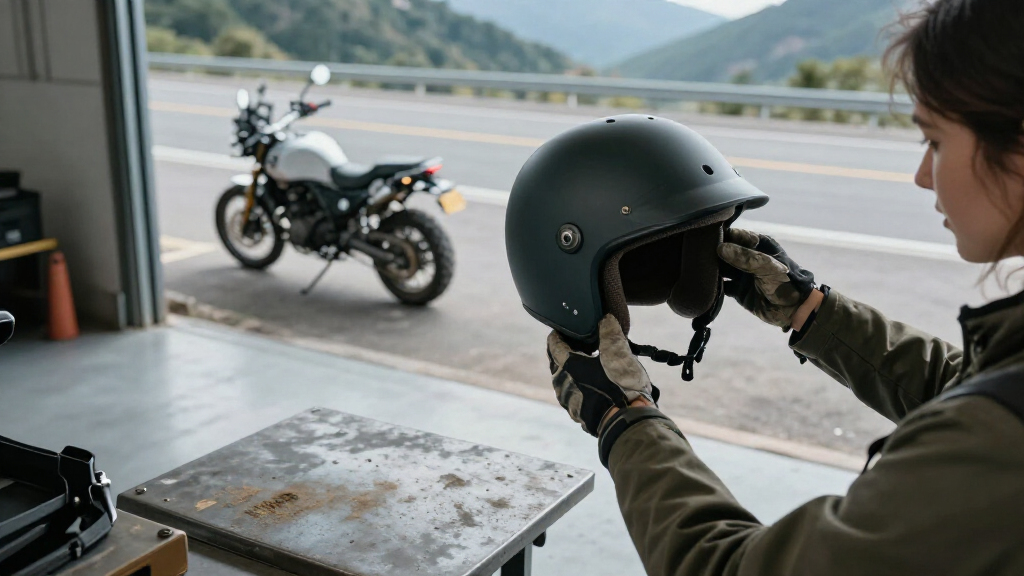
I ranked these helmets around the actual demands behind the search: reducing fatigue on longer paved rides while retaining the visibility, ventilation, and flexibility adventure riders expect. I weighed construction and stated features, including visor and sun-shield arrangements, modular design, integrated communication, and Pinlock compatibility. A quieter-feeling helmet can still be a poor choice if it fits loosely, creates pressure points, or clashes with the rider’s bike and windscreen, so comfort and fit adaptability matter alongside feature lists.
The order reflects how directly each model appears suited to road-focused adventure touring and how useful its feature set is to that goal—not an unsupported claim of measured decibel performance. The Shoei Hornet X2 takes the lead as a focused adventure option; the ScorpionEXO and LS2 carbon model serve different priorities rather than simply copying its role. Value-oriented and feature-rich alternatives rank lower when their available details do not establish a clear noise advantage. I treat every model’s quietness as rider-dependent and recommend checking fit, safety certification, and return terms before committing.
| quiet adventure motorcycle helmet | Ventilation |
|---|---|
| ILM Dual Sport Adventure Motor | Seven-position vent system |
| Bell Powersports MX-9 Adventur | — |
| X60 Dual Sport Helmet with Int | Optimized air circulation with vents |
| LS2 Helmets Blaze II Adventure | Multiple intake and exhaust ports |
| LS2 Explorer Carbon Adventure | Adjustable flow-through ventilation |
| ILM Dual Sport Adventure Motor | Seven-position vent system |
| ScorpionEXO AT960 Modular Adve | Three vents |
| Shoei Hornet X2 Adventure Moto | Upper, rear, and neck ventilation with large lower air intake/defroster |
| Sena Outlander Dual Sport Blue | — |
Factors to Consider When Choosing Quiet Adventure Motorcycle Helmet
Helmet labels rarely tell the whole story about noise. I’d use these broader checks to separate useful comfort features from details that sound relevant but do not directly reduce wind roar.
Fit Comes Before Noise Claims
A helmet that moves at highway speed can create turbulence and distracting noise, even if its design is otherwise well suited to touring. Check the fit with the cheek pads seated and the chin strap secured, then wear it long enough to notice pressure at the forehead, temples, and jaw. A snug fit should not create sharp pain or leave the shell free to shift. Head shape varies, so the same model can feel stable on one rider and noisy on another. Avoid choosing a larger size to relieve one pressure point before checking whether a different internal shape or pad setup would solve it. A good fit is a more useful starting point than claims that are not backed by comparable noise measurements.
Match the Helmet to Your Windscreen and Riding Position
Wind buffeting depends on where airflow reaches the helmet, not only on the helmet itself. A tall screen can send turbulent air toward the visor or peak, while a low screen may expose the helmet to smoother, direct airflow. The result can change when you sit upright, tuck forward, or adjust the screen. If possible, assess helmet comfort on the motorcycle and at the speeds you commonly ride rather than relying on a short, low-speed impression. Riders with pronounced buffeting may get more benefit from screen adjustment than from switching between two similar helmets. Keep earplugs in the plan, since they can reduce exposure without requiring a different shell design.
Treat Peaks and Ventilation as Tradeoffs
An adventure peak can help with sun and roost, but its shape and position may catch airflow in some riding conditions. More ventilation can improve comfort in heat while also giving wind more openings to reach the rider, depending on the helmet’s design and fit. Neither feature makes a helmet automatically loud or quiet; the interaction with posture and airflow matters. Think about how much of your riding is paved touring, slow off-road work, or hot-weather commuting before prioritizing a peak or open vent setup. Riders mostly covering long road miles may prefer a configuration that stays stable at speed, while off-road use can justify more airflow and sun shielding. Check whether the peak can be adjusted or removed if your riding mix changes.
Choose Visor Features for Their Actual Job
A Pinlock-compatible visor system is aimed at reducing fogging, not wind noise, and an integrated sun visor is meant to manage glare. Both can make a helmet easier to use across changing weather, but neither proves that the shell seals quietly around your head. Check how the visor closes, whether the seal suits your face, and how easy it is to operate with gloves. A sun visor adds convenience for changing light, while separate eyewear or a tinted shield may suit riders who want fewer moving parts. Do not trade away a secure, comfortable fit to get a feature you will rarely use. For frequent fog or glare, choose the feature that solves that problem directly rather than expecting it to improve acoustics.
Decide Whether Modularity or Electronics Earn Their Complexity
A modular chin bar can make stops, conversation, and some touring routines easier, but it adds a mechanism and may feel different from a conventional full-face helmet. Built-in communication can reduce installation hassle and support group riding, yet it does not make a helmet quieter by itself. Speakers and controls should sit comfortably and must not create pressure against the ears. Compare the convenience with your riding habits: solo riders may gain little from integrated intercom features, while frequent group riders may value a ready-to-use system. Check that the helmet and communication setup suit your preferred earplugs. Pay for added mechanisms or electronics only when you expect to use them regularly.
Verify Certification, Maintenance, and Replacement Parts
Certification is a safety threshold, not a noise rating, so confirm the exact standard and version for the model and market you are buying. A removable liner, available cheek pads, and replacement visor parts can matter over years of use because fit and visibility depend on serviceable components. Check whether the parts you are likely to replace are actually available for your size and helmet version. Wash liners as directed and keep visor seals clean, since neglected closures can compromise everyday comfort. Avoid assuming that a premium material guarantees a longer service life or a quieter ride. A helmet that fits well and can be maintained is usually a wiser long-term choice than one selected for a single headline feature.
Frequently Asked Questions
Can I tell which of these helmets is quietest from the product name or feature list?
No. The listed features help distinguish use cases, but they do not establish comparable noise levels. Fit, riding posture, motorcycle, and windscreen can change the sound each rider hears. A Pinlock-compatible visor addresses fogging, and a sun visor addresses glare; neither is a noise measurement. I’d treat the Shoei Hornet X2 as the road-focused lead in this roundup, then verify fit and airflow on your own setup if possible.
Should I choose the ScorpionEXO AT960 modular helmet or a full-face adventure helmet for touring?
Choose based on how often you will use the modular design, not on an assumption that it will be quieter. The AT960’s standout distinction is its modular format, which may suit riders who value convenience at stops. A conventional full-face option may appeal more if you prefer a simpler setup and do not need the chin bar to open. Either style can produce unwanted noise if it fits poorly or sits in turbulent air. Try the helmet with your usual earplugs and riding posture before deciding.
Does a carbon adventure helmet automatically reduce wind noise?
No. Carbon construction can be attractive to riders seeking a lighter-feeling helmet, but material alone does not establish its acoustic performance. Seal, liner fit, vent paths, peak behavior, and airflow from the motorcycle all play a part. The LS2 Explorer Carbon is the premium, lightweight-minded option in this comparison, not a guaranteed quietness upgrade. If noise is your main concern, prioritize fit and a stable ride at your normal speeds over shell material alone.
Will an integrated sun visor or Pinlock-compatible visor make my ride quieter?
Those features solve different problems. A sun visor helps manage changing light, while a Pinlock-compatible setup is designed to help resist visor fogging. Neither feature by itself shows that a helmet blocks more wind noise. Choose them if glare or fog is a regular issue, then judge quietness separately through fit, sealing, and how the helmet behaves with your motorcycle’s airflow. This distinction can prevent paying extra for a convenience feature that does not address your main discomfort.
Is the Sena Outlander the right choice if I mainly want a quieter helmet?
The Sena Outlander stands apart for integrated Bluetooth communication with Harman Kardon sound and Mesh and Wave intercom features, rather than for a demonstrated noise advantage. It makes the strongest case for riders who will use its communication functions. If you ride alone and want to minimize wind fatigue, compare fit, ventilation, and the interaction with your windscreen before choosing it over a simpler helmet. Also check that speakers sit comfortably with your preferred ear protection. Treat its communication system as a convenience, not evidence that the helmet is quieter.
Conclusion
For a best overall road-focused adventure choice, I’d start with the Shoei Hornet X2, while remembering that its fit and your bike’s airflow decide the final result. The LS2 Explorer Carbon is my best premium pick for riders drawn to a lightweight-minded construction, and the ScorpionEXO AT960 is the better match when modular convenience matters more than a simple full-face format. For best value, compare the ILM WS902 and ILM Pinlock-compatible model against your required features and fit; neither should be selected on a noise claim alone. The Bell MX-9 Adventure MIPS is a reasonable starting point for beginners who want to compare an adventure-oriented helmet without prioritizing electronics or modular complexity, subject to checking fit and certification. Choose the Sena Outlander for integrated communication, or an LS2 or ILM sun-shield option when glare management is the specific need. Whichever route you take, a correctly fitting helmet, suitable earplugs, and a windscreen that does not buffet your head will shape comfort more than the word “quiet” on a listing.