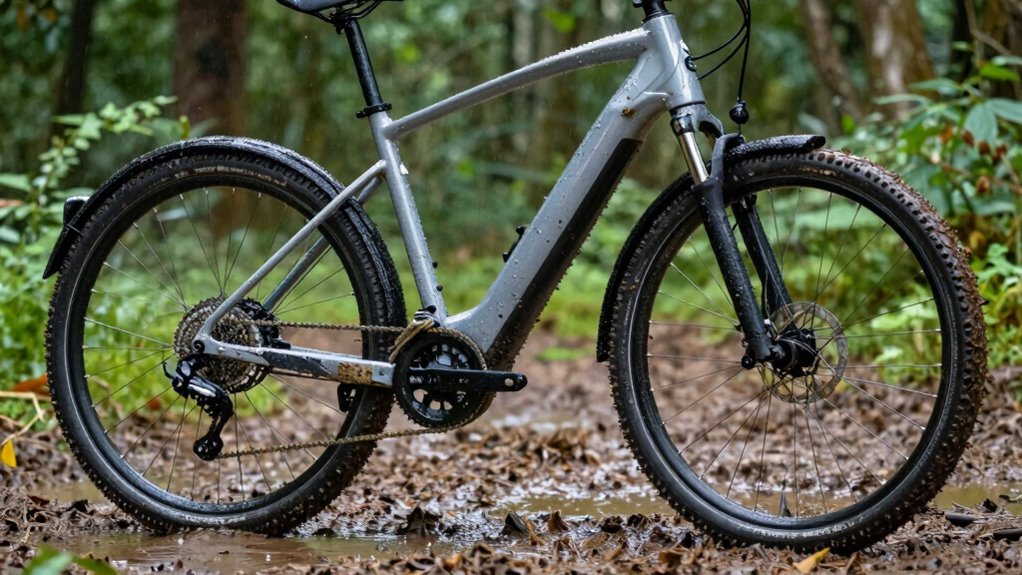

When riding through mud and water, it’s crucial to know that e-bike waterproof ratings, like IPX4 or IPX7, determine their resistance level, but not all components are equally protected. Frames are often sealed, but electrical connectors and displays remain vulnerable unless explicitly rated for water immersion. Fully waterproof models rated IPX7 or higher can handle submersion, yet many bikes are only water-resistant. Understanding these details helps you keep your e-bike’s electronics safe—exploring more will ensure you ride confidently in wet conditions.
Key Takeaways
- Waterproof e-bikes typically have an IPX7 or higher rating, suitable for water immersion; water-resistant models handle splashes only.
- Critical electrical components like connectors, displays, and wiring should be sealed with gaskets, O-rings, or protective coatings to prevent water ingress.
- Frame, fork, and motor casings designed with corrosion-resistant materials and sealed joints enhance water resistance.
- Post-ride inspection and maintenance are essential to prevent corrosion, especially on connectors, wiring, and moving parts after exposure to mud and water.
- Riding techniques, such as maintaining steady speed and avoiding deep puddles, help minimize water and mud damage to your e-bike.
What Do Waterproof Ratings Mean for E-Bikes?

What do waterproof ratings really indicate about an e-bike’s ability to withstand water exposure? These ratings, expressed as IP (Ingress Protection) codes, quantify a bike’s resistance to solids and liquids. The first digit denotes protection against solid objects like dust, while the second specifies water resistance. For example, an IPX4 rating indicates the bike can withstand splashes from any direction, but it’s not waterproof under submersion. Higher ratings, such as IPX7 or IPX8, mean the e-bike can endure temporary or prolonged submersion at specific depths. It’s vital to understand that these ratings focus on specific testing conditions. They do not guarantee protection against all water-related hazards, especially in real-world, unpredictable environments. Understanding the testing methods can help you better interpret these ratings for practical use. Additionally, waterproofing standards vary among manufacturers, so it’s important to consider the specific testing protocols used for each rating. Recognizing test conditions can provide insight into how well an e-bike might perform in everyday water exposure scenarios. Moreover, some manufacturers may use marketing claims that exaggerate the level of water resistance, so verifying actual test results is essential for reliable protection. Knowing the testing protocols helps consumers make informed decisions about what level of water exposure their e-bike can handle.
Which Parts of an E-Bike Are Usually Waterproof or Water-Resistant?

You should focus on the durability of the frame and fork, which are typically designed to withstand exposure to water and debris. The motor and controller often include seals to prevent water ingress, but their effectiveness varies by model. Additionally, the battery compartment usually features protective covers or seals to guarantee safe operation in wet conditions.
Frame and Fork Durability
Many electric bikes are designed with specific components that resist water ingress, ensuring durability in wet conditions. The frame and fork are typically constructed from corrosion-resistant materials like aluminum or carbon fiber, which provide inherent resistance to moisture. Additionally, sealed joints and welded seams prevent water penetration, maintaining structural integrity. Proper sealing techniques are crucial for preventing water intrusion in vulnerable areas. To further enhance water resistance, manufacturers often apply protective coatings and sealant treatments. The use of waterproof electrical connectors also plays a vital role in safeguarding sensitive components from water damage. Incorporating water-resistant materials into the design helps extend the longevity of the bike in diverse weather conditions.
Motor and Controller Seals
The motor and controller assemblies are designed with specific seals and protective features to withstand exposure to water. These seals typically include rubber gaskets and O-rings that prevent water ingress at critical junctions, such as around wire connections and housing interfaces. The motor casing itself often employs a waterproof or water-resistant enclosure, constructed from corrosion-resistant materials like aluminum or sealed plastics. Similarly, the controller unit features tightly sealed enclosures with gasketed seams and sealed connectors to prevent moisture penetration. These protective measures ensure that water reaching these components does not compromise electrical functionality or cause corrosion. Properly sealed motors and controllers are essential for maintaining reliability in wet conditions, although they are not entirely waterproof and can fail if subjected to sustained or high-pressure water exposure.
Battery Compartment Protection
Generally, the battery compartment of an e-bike is designed with waterproof or water-resistant features to protect the lithium-ion battery and electrical connections from moisture ingress. This typically involves sealed enclosures made from durable, corrosion-resistant materials like aluminum or reinforced plastic. Gaskets and o-rings are used at access points, such as battery covers, to prevent water entry during exposure to rain, puddles, or mud. Many e-bikes incorporate IP (Ingress Protection) ratings, commonly IP65 or higher, indicating resistance to water jets and dust. The compartment’s design ensures moisture does not reach sensitive components, maintaining electrical integrity and safety. Proper sealing and robust construction are essential for reliable operation in wet environments, reducing the risk of short circuits, corrosion, and battery failure. Additionally, waterproofing standards guide manufacturers in creating more reliable protection for these critical components.
Which Components Are Most Vulnerable to Mud and Water Damage?
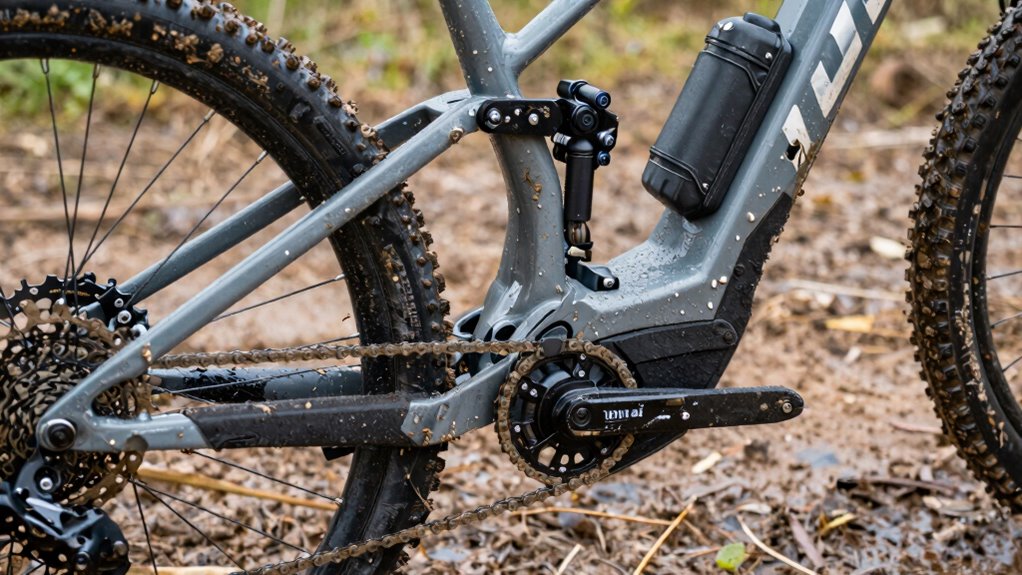
Electrical connectors and exposed wiring are most vulnerable to mud and water damage because they lack adequate sealing and insulation. These components are often exposed or only minimally protected, increasing their risk during muddy or wet conditions. To understand which parts are most at risk, consider the following:
- Motor terminals and wiring harnesses – prone to corrosion and short circuits if not properly sealed.
- Display and control panels – vulnerable to water ingress that can impair functionality.
- Brake and gear sensors – susceptible to moisture, leading to malfunction or false readings.
- Battery connections and charging ports – at risk of corrosion and electrical failure if exposed to water.
Additionally, components in outdoor environments such as bike displays and sensors are especially prone to damage if not adequately protected from mud and water. Proper waterproofing techniques can significantly reduce the risk of damage and extend the lifespan of your e-bike. Ensuring that protective coatings are applied to vulnerable parts can provide an extra layer of defense against corrosive elements.
Is My E-Bike Fully Waterproof or Just Water-Resistant? How Can I Tell?

Understanding whether your e-bike is fully waterproof or merely water-resistant is essential for proper maintenance and safety. Check the manufacturer’s specifications, typically found in the user manual or product datasheet. Fully waterproof e-bikes often have an IP (Ingress Protection) rating of IPX7 or higher, indicating they can withstand immersion in water up to a specified depth and duration. Water-resistant models usually carry lower ratings, such as IPX4 or IPX5, meaning they can handle splashes or light rain but not submersion. Inspect the electrical components and seals; sealed connectors, gaskets, and specialized coating are signs of waterproofing. If in doubt, consult the manufacturer or contact a professional for verification. Proper identification helps prevent water damage and ensures safe operation in various conditions. Additionally, understanding the Free Floating design of some e-bike components can help you identify which parts are more vulnerable to water ingress.
How Should I Safely Ride Through Mud and Water?

To navigate mud and water safely, you should maintain a consistent, moderate speed to prevent loss of control. Avoid crossing deep water that exceeds the bike’s clearance or could short-circuit electrical components. After riding, inspect your e-bike thoroughly for debris, moisture, and potential damage to guarantee peak performance and safety. Being aware of waterproofing levels can help you better understand which parts of your e-bike are protected against water exposure. Additionally, understanding your bike’s water resistance classification can guide you in choosing suitable routes and riding techniques in wet conditions. Regular inspection and maintenance of electrical connections and seals can prevent water ingress from causing damage. Recognizing the cosmic influences that might subtly affect your riding experience can also help you remain attentive and prepared in unpredictable weather or terrain. Being informed about drone safety tips can further enhance your awareness of environmental factors that impact your riding environment.
Maintain Steady Speed
Maintaining a steady speed when riding through mud and water is essential for safety and bike control. Sudden acceleration or deceleration can cause loss of traction or destabilize your bike. To maximize stability, consider these factors:
- Adjust your speed to match terrain conditions, avoiding rapid changes.
- Maintain consistent pedal cadence to ensure smooth power transfer.
- Use controlled braking—apply gentle pressure to prevent skidding.
- Stay relaxed in your grip and posture to better absorb shocks and maintain balance.
- Properly tune your bike’s suspension to better handle uneven and slippery surfaces. Additionally, understanding your bike’s traction management can help you anticipate and adapt to changing conditions more effectively. Being familiar with your bike’s traction control features can also improve your confidence when navigating challenging terrain. Regularly practicing speed control techniques in varied conditions can further enhance your riding skills and safety.
Avoid Deep Water
When approaching muddy or waterlogged sections, it’s crucial to avoid deep water to prevent damage to your bike and guarantee safety. Deep water can overwhelm electrical components, especially if seals or enclosures are compromised, leading to potential short circuits or corrosion. Assess water depth visually or by using a stick to test the terrain before crossing. Maintain a steady, moderate speed to minimize submersion risk and avoid creating turbulence that could splash water into vulnerable areas. Steer smoothly to prevent losing control on slippery surfaces and reduce the chance of components hitting submerged obstacles. If uncertain about water depth or terrain stability, opt for an alternative route. Prioritize safety and mechanical integrity over speed, ensuring your bike remains operational after crossing. Remember that waterproofing ratings are essential in understanding your bike’s limitations and capabilities in wet conditions.
Check Bike After Ride
After maneuvering muddy or waterlogged sections, thoroughly inspect your bike for any signs of damage or accumulated debris. Check critical components to guarantee maximum performance and safety.
- Examine the electrical connectors and wiring for corrosion or moisture ingress.
- Inspect the chain, gears, and drivetrain for mud buildup or debris that could impair operation.
- Assess the brake pads and rotors for contamination or excessive wear.
- Verify tire pressure and tread condition, especially if riding through uneven or slippery terrain.
Performing this detailed post-ride check prevents long-term damage and maintains the bike’s waterproof integrity. Use a dry cloth and appropriate cleaning tools to remove dirt and moisture. Prioritize safety and proper maintenance after riding through challenging conditions.
How Can I Protect My E-Bike After Riding in Wet Conditions?

Riding your e-bike in wet conditions exposes critical components to water ingress and corrosion, making prompt and proper post-ride care vital. Immediately after riding, wipe down the frame and components with a dry, lint-free cloth to remove excess moisture. Focus on areas prone to water accumulation, such as the chain, cassette, brake discs, and motor housing. Use compressed air or a gentle brush to dislodge dirt and water from tight spaces and electronic connectors. Inspect electrical connections for corrosion or moisture, and dry them thoroughly. Applying a light, dielectric lubricant to electrical contacts can prevent corrosion. Store the e-bike in a dry, sheltered environment, and avoid prolonged exposure to humidity. Regular maintenance and careful cleaning extend the lifespan of water-sensitive parts and ensure reliable operation.
Are There E-Bike Models Built for Off-Road and Wet Environments?

Many e-bike manufacturers design models specifically to handle off-road and wet conditions, incorporating features that enhance durability and reliability in challenging environments. These bikes often include specialized components to withstand mud, water, and rough terrain.
Many e-bikes are built for off-road and wet conditions, featuring durable components and protective designs.
Key features include:
- Enhanced IP Ratings: Most models meet IPX4 or higher standards, protecting against water ingress during riding.
- Sealed Drivetrains: Components like motors, chains, and gear systems are sealed to prevent dirt and water damage.
- Robust Frame Construction: Frames are made from durable materials such as aluminum or carbon fiber, with reinforced welds for impact resistance.
- Tire and Suspension Systems: Off-road models typically feature wider, knobby tires and advanced suspension for better traction and shock absorption.
These features make off-road and wet-environment e-bikes suitable for challenging conditions.
What Regular Maintenance Helps Keep My E-Bike Waterproof and in Good Shape?

Regular maintenance is essential to guarantee your e-bike remains waterproof and functions reliably in wet conditions. Regularly inspect seals around the battery compartment, motor, and controller to identify signs of wear or damage. Keep all electrical connectors clean and dry, applying dielectric grease to prevent moisture infiltration. Lubricate the chain and drive components with water-resistant lubricants to reduce corrosion and ensure smooth operation. Check the frame’s protective coatings and touch up any scratches to prevent rust. Ensure drainage holes are clear to prevent water accumulation. Tighten all fasteners and fittings to maintain the integrity of sealed enclosures. Periodically test the integrity of protective covers and replace compromised seals promptly. Consistent maintenance minimizes water ingress risk and prolongs the functional lifespan of your e-bike in wet environments.
Frequently Asked Questions
How Do I Identify if My E-Bike’s Waterproof Rating Is Sufficient?
To determine if your e-bike’s waterproof rating is sufficient, check its IP (Ingress Protection) rating on the label or manual. Look for at least IPX4 for light rain and splashes, but for riding in wet conditions or mud, an IPX5 or higher is recommended. Confirm the rating covers both water and dust ingress, and consider the manufacturer’s guidelines for riding conditions to avoid damage.
Can Waterproofing Vary Between Different Brands and Models?
Yes, waterproofing can vary considerably between brands and models. Different manufacturers use diverse sealing technologies, materials, and design standards, leading to varying IP ratings. Some e-bikes are built with higher ingress protection levels, making them more resistant to water and mud, while others may only be splash-proof or water-resistant. Always check the specific IP rating and manufacturer’s specifications to determine if a model suits your riding conditions.
What Signs Indicate My E-Bike Has Suffered Water Damage?
Water damage on your e-bike is like a silent assassin—sometimes you don’t see it coming. Signs include corrosion around electrical contacts, sluggish or unresponsive display, strange noises from the motor, or a burning smell. Additionally, water intrusion can cause battery or controller malfunctions, resulting in erratic power delivery. If you notice any of these symptoms after exposure to water, it’s essential to have your e-bike inspected immediately to prevent further damage.
Are There Specific Accessories to Improve Waterproofing on My E-Bike?
You can enhance your e-bike’s waterproofing with accessories like waterproof handlebar covers, sealed battery enclosures, and protective fenders. Use high-quality, IP-rated components to guarantee water resistance, and consider applying dielectric grease to connectors to prevent corrosion. Installing additional sealing gaskets around critical joints and switches further boosts waterproofing. Regularly inspect and maintain these accessories to keep your e-bike protected during wet conditions.
How Long Can I Safely Ride in Heavy Rain or Deep Water?
You can typically ride safely in heavy rain or deep water for about 15 to 30 minutes, depending on your bike’s waterproofing and terrain. Water ingress worsens with prolonged exposure, risking electrical failures and component damage. To maximize safety, avoid deep, fast-moving water, and monitor for signs of moisture intrusion. Properly sealed, well-maintained e-bikes withstand wetter weather longer, but consistent caution keeps your ride resilient and reliable.
Conclusion
Understanding your e-bike’s waterproof capabilities is like knowing the armor that shields your ride through muddy battlegrounds. By recognizing which parts are vulnerable and maintaining them properly, you ensure your e-bike remains a resilient vessel in wet conditions. Remember, even the sturdiest armor needs regular upkeep. With informed care and cautious riding, your e-bike can conquer rain and mud alike—transforming challenging terrain into a well-oiled symphony of reliable performance.