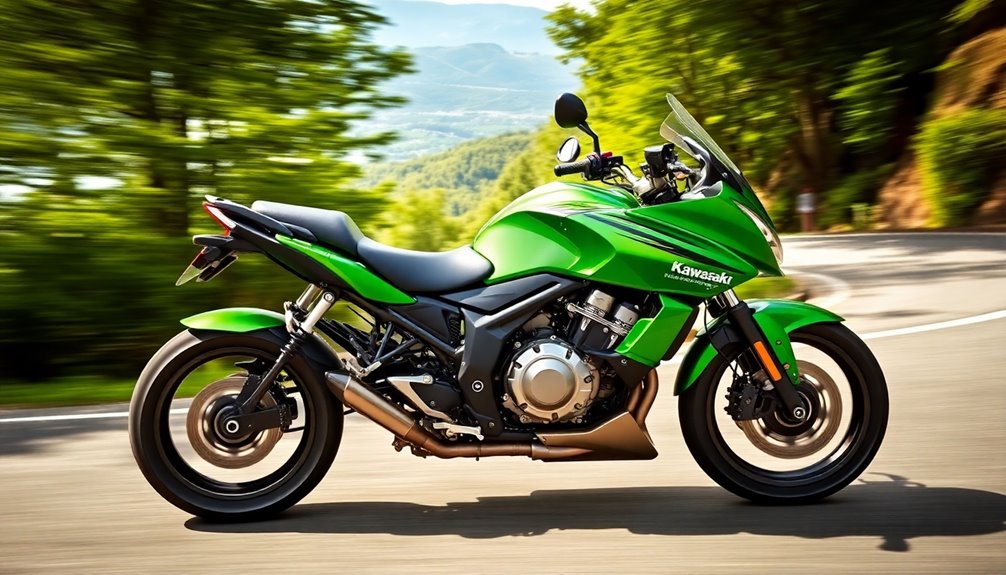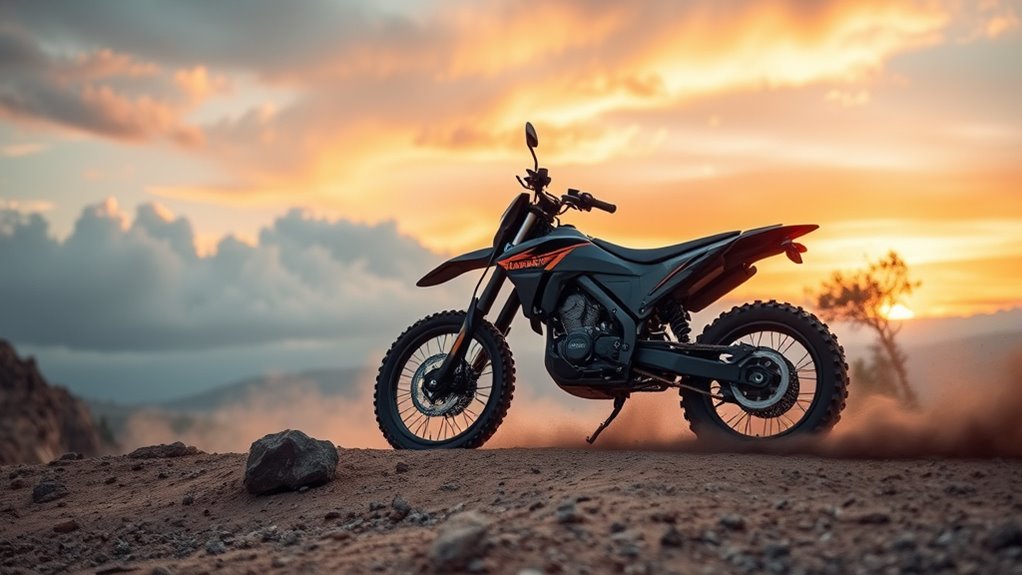

Kawasaki’s electric off-road experiments focus on developing high-performance batteries with quick charging, long-lasting durability, and rugged terrain capability. They emphasize eco-friendly materials and sustainable manufacturing to reduce environmental impact. Their models aim to match traditional gas bikes in power and agility while offering quieter operation and lower noise pollution. Advances in heat management and modular battery systems support long, challenging rides. To discover the innovative technologies shaping Kawasaki’s electrified future, continue exploring their latest developments.

Get business pricing on garage and car supplies
- Business-only prices and quantity discounts
- Tax-exempt purchasing
- Multiple users, one account, clear invoices
Key Takeaways
- Kawasaki is developing high-energy, quick-charging electric batteries tailored for off-road performance and rugged terrains.
- They focus on integrating eco-friendly materials and recyclable batteries to promote sustainability in off-road electric bikes.
- Kawasaki experiments include advanced heat management systems to enhance durability during intense off-road rides.
- Their electric off-road prototypes aim to match traditional gas-powered bikes in power, agility, and reliability.
- Kawasaki’s efforts emphasize sustainable manufacturing practices and innovative design to redefine off-road electric adventure.
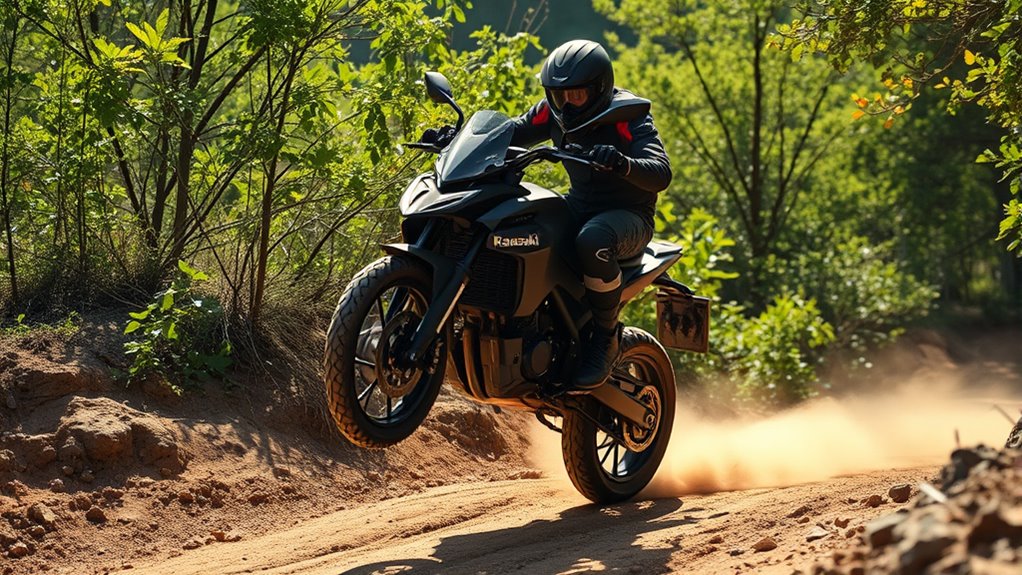
Kawasaki is pushing the boundaries of off-road riding with its latest electric experiments, exploring how zero-emission bikes can perform in rugged terrains. This push isn’t just about innovation; it’s about rethinking what’s possible when battery technology advances. You might wonder how these electric bikes stack up against traditional gas-powered models in regard to power, endurance, and reliability. Kawasaki is focusing on developing batteries that deliver high energy density, quick charging times, and long-lasting performance—all pivotal factors for tackling challenging trails. By improving battery chemistry and cell design, they aim to increase range and reduce weight, making electric bikes more practical for off-road adventures. These advancements are indispensable because, unlike gas engines that rely on fossil fuels, battery technology offers a cleaner, more sustainable alternative, reducing the environmental impact of off-road riding.
The environmental impact is a key driver behind Kawasaki’s experimentation. Off-road bikes are often associated with noise pollution and emissions, which can disturb wildlife and local communities. Electric bikes, however, operate quietly and produce no tailpipe emissions. Kawasaki’s efforts are geared toward minimizing the ecological footprint of their bikes, not just through cleaner operation but also via sustainable manufacturing practices. They’re exploring recyclable batteries, eco-friendly materials, and energy-efficient production methods. This approach aligns with growing concerns about climate change and the desire for greener outdoor activities. Additionally, advancements in sample development techniques are enhancing the overall efficiency and sustainability of battery systems. By pushing electric technology in rugged terrains, Kawasaki hopes to set a new standard—showing that high performance doesn’t come at the expense of the environment.
You’ll notice that Kawasaki’s focus extends beyond just creating a powerful electric bike; they’re also tackling the challenges of heat management, battery life cycles, and safety. Using innovative cooling systems and modular battery packs, they aim to guarantee durability and ease of maintenance. These improvements help sustain performance over long rides and tough conditions, giving you confidence when exploring remote trails. As battery technology continues to evolve, Kawasaki’s experiments are paving the way for off-road bikes that are not only eco-friendly but also capable of competing with traditional models in terms of power and agility. It’s clear that their goal isn’t simply to replace gas engines but to redefine off-road adventure itself—more sustainable, quieter, and innovative.
Frequently Asked Questions
What Inspired Kawasaki to Pursue Electric Off-Road Vehicles?
You’re inspired by Kawasaki’s desire to innovate and stay ahead in off-road technology. Historical influences, like the rise of electric vehicles, show the shift toward eco-friendly solutions. Environmental motivations drive you to reduce emissions and minimize ecological impact. By pursuing electric off-road vehicles, Kawasaki aims to combine performance with sustainability, meeting modern demands and inspiring a cleaner, greener future for riders and the planet alike.
How Does Kawasaki’s Electric Off-Road Technology Compare to Competitors?
You’ll find Kawasaki’s electric off-road tech is truly groundbreaking, surpassing competitors with cutting-edge battery innovations that deliver longer, more powerful rides. Its sleek design aesthetics blend rugged durability with modern style, making it stand out on the trail. Unlike others, Kawasaki prioritizes performance and form, giving you an electrifying experience that’s both efficient and visually impressive. You won’t just ride; you’ll dominate with technology that sets new standards in the industry.
Are There Plans for Commercial Electric Off-Road Models?
Kawasaki plans to introduce commercial electric off-road models soon, driven by battery innovations and market demand. You can expect these vehicles to feature advanced battery technology for longer rides and faster charging. As consumer interest in eco-friendly options grows, Kawasaki is actively developing models that meet this demand, making electric off-road bikes more accessible for enthusiasts like you. Keep an eye out for announcements as they aim to stay competitive in this evolving market.
What Challenges Has Kawasaki Faced in Developing Electric Off-Road Bikes?
You should know that Kawasaki faces significant challenges developing electric off-road bikes, especially with battery limitations that restrict range and power. Additionally, managing weight is essential, as heavy batteries affect agility and handling on rough terrains. Despite these hurdles, Kawasaki works tirelessly to balance performance and practicality. They’re innovating to overcome these issues, aiming to create lighter, more efficient bikes that deliver the excitement of off-road riding without compromising battery life or maneuverability.
How Does Kawasaki Plan to Address Battery Life and Charging Infrastructure?
Kawasaki plans to improve battery longevity by developing advanced battery technology that lasts longer and charges faster. They’re also working on expanding charging stations to make recharging more accessible for off-road riders. You’ll find that these efforts help reduce downtime and increase riding enjoyment. By focusing on better battery systems and a widespread charging network, Kawasaki aims to make electric off-road bikes more practical and convenient for you.
Conclusion
As you explore Kawasaki’s electric off-road experiments, it’s clear they’re pushing boundaries and challenging the idea that dirt biking is only about gasoline. Maybe, just maybe, electric bikes will redefine off-road adventures, making them cleaner and quieter without sacrificing thrill. So, next time you hit the trails, consider that Kawasaki’s experiments might not just be a trend—they could be the start of a new, exciting chapter in off-road riding.
Fall Picks
fall essentials
As an affiliate, we earn on qualifying purchases.