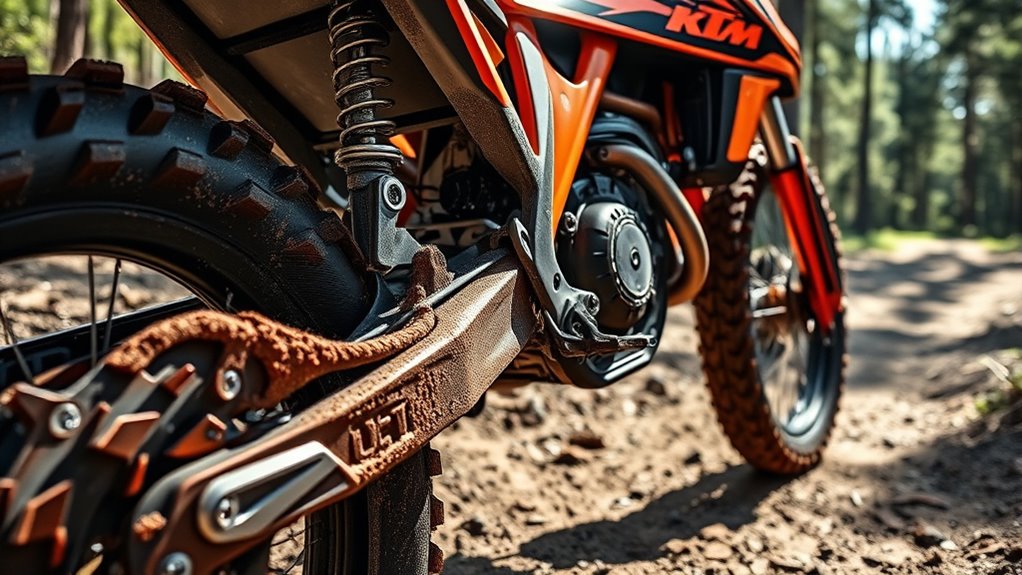

To optimize your KTM for enduro, start by adjusting the suspension preload to match your weight and terrain. Fine-tune compression and rebound damping for better control and comfort on switchbacks and rough trails. Then, check your carburetor’s idle speed and mixture; enrich or lean it as needed for different conditions. Regularly revisit these settings, especially after terrain or weather changes, to keep your bike responsive and reliable. Keep going, and you’ll discover even more tips to elevate your ride.

Get business pricing on garage and car supplies
- Business-only prices and quantity discounts
- Tax-exempt purchasing
- Multiple users, one account, clear invoices
Key Takeaways
- Adjust suspension preload, compression, and rebound damping based on rider weight and terrain for optimal handling.
- Start with manufacturer recommended carburetor settings, then fine-tune the mixture screw for smooth idle and responsiveness.
- Change jet sizes to suit environmental conditions like altitude and temperature for consistent engine performance.
- Keep a log of adjustments and test on different terrains to find the best settings for your riding style.
- Regularly revisit tuning after maintenance or environmental changes to maintain optimal bike responsiveness and control.
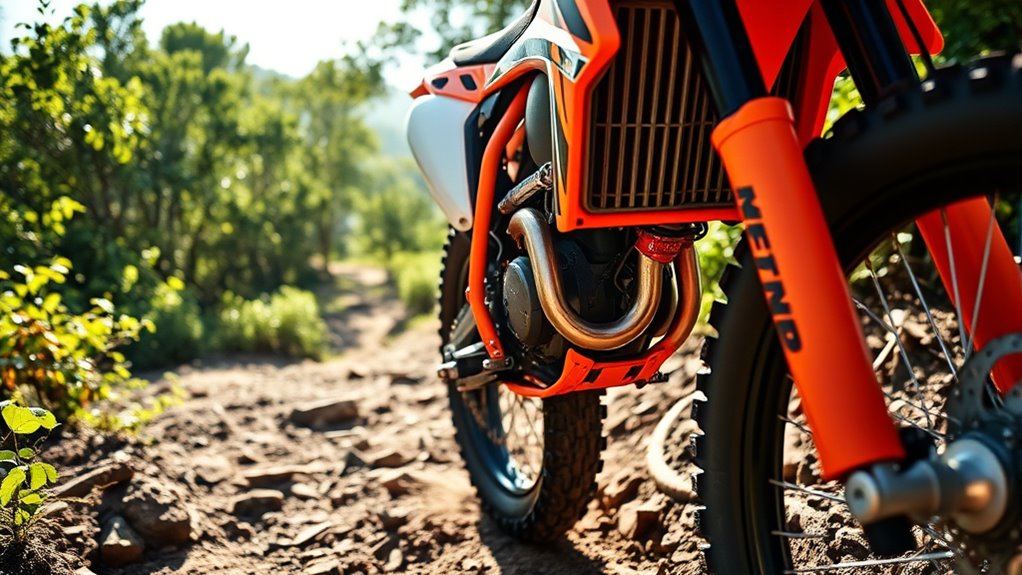
If you want to get the most out of your KTM enduro bike, tuning plays a crucial role in optimizing performance and handling. The key areas to focus on are suspension setup and carburetor adjustments—these modifications ensure your bike responds precisely to your riding style and terrain. Proper suspension setup is essential for comfort, control, and safety. Start by adjusting your preload to match your weight and riding conditions; if you’re heavier or carrying gear, tighten the preload to prevent bottoming out. Then, fine-tune the compression and rebound damping. Softer settings improve traction on rough terrain but can reduce stability at high speeds, while stiffer settings provide more precise handling but may compromise comfort. It’s a balancing act: test each adjustment on different terrains, making incremental changes to find the sweet spot that suits your riding style.
Carburetor adjustments are equally crucial. They control how your engine breathes and performs. Begin by checking the idle speed and mixture screw; a smooth idle indicates proper mixture. If your engine stalls or hesitates at low RPM, you’ll need to enrich the mixture slightly by turning the screw clockwise. Conversely, if the bike runs rough or backfires, lean the mixture by turning it counterclockwise. Make small, gradual adjustments, and always give the engine a few seconds to stabilize before making further changes. Additionally, inspect the jetting—if you’re riding in different elevations or temperatures, your jet sizes might need changing. Larger jets supply more fuel, which can be necessary in colder or higher-altitude conditions, while smaller jets work better in warmer, lower-altitude environments. Regularly checking your fuel quality can also impact carburetor performance.
Combining these tuning practices can significantly improve your bike’s responsiveness and efficiency. Always start with the manufacturer’s recommended settings as a baseline, then modify based on your riding experience. Keep a log of your adjustments and how your bike responds; this way, you can replicate successful setups or troubleshoot issues later. Remember, tuning isn’t a one-time task—it’s an ongoing process as your riding style evolves and conditions change. Regularly check and fine-tune your suspension and carburetor for optimal performance, especially after riding in different environments or after maintenance. With attentive tuning, your KTM enduro bike will handle better, accelerate more smoothly, and provide a more enjoyable riding experience.
Frequently Asked Questions
How Often Should I Perform Enduro-Specific Tune-Ups?
You should perform enduro-specific tune-ups every 15 to 20 hours of riding, following your maintenance schedule closely. Regular tune-ups ensure your bike stays in peak condition and allows you to incorporate performance upgrades when needed. Keep an eye on your suspension, chain, and air filter, and don’t delay maintenance. Consistent tuning helps prevent breakdowns, improves performance, and keeps your KTM ready for any trail adventure.
What Tools Are Essential for KTM Enduro Tuning?
Think of tuning your KTM as tending a garden; you need the right tools to keep everything thriving. Essential tools include a torque wrench, screwdrivers, socket set, and chain breaker. Your maintenance checklist should also include tuning accessories like a spark plug wrench and tire pressure gauge. With these, you can confidently perform precise adjustments, ensuring your bike runs smoothly and stays in top shape on every trail.
How Do I Adjust Suspension for Different Terrains?
To adjust suspension for different terrains, focus on suspension setup for ideal terrain adaptation. You should first adjust the compression and rebound damping based on whether you’re riding on rocky, sandy, or muddy surfaces. For rough terrain, tighten the suspension to increase stability, and loosen it for smoother trails. Always test your adjustments after each change, and fine-tune your suspension to match the specific terrain you’re tackling for the best performance.
Can I Tune My Ktm’s Carburetor Myself?
Yes, you can tune your KTM’s carburetor yourself. For example, if your bike stalls at low speeds, you might try carburetor cleaning and adjusting the jet size. Start by cleaning the carb thoroughly, then change the jet size to improve fuel delivery. Just be sure to follow a detailed guide and have the right tools on hand. With patience, you’ll get better performance without needing a mechanic.
What Safety Precautions Should I Follow During Tuning?
When tuning your KTM, always wear protective gear like gloves and goggles to prevent injuries. Make sure your bike is on a stable surface, and keep an emergency kit nearby for quick access to tools or first aid. Work in a well-ventilated area to avoid inhaling fumes, and disconnect the spark plug before making adjustments. These precautions keep you safe and help guarantee a smooth tuning process.
Conclusion
Now, picture your KTM roaring beneath you, the trail ahead alive with twists and turns. With these tuning tips, you’ve fine-tuned every detail—your suspension absorbing shocks, the throttle responding perfectly, and the bike feeling like an extension of your body. As you carve through dirt and mud, you’ll feel confident, in command, and ready for whatever the trail throws your way. Keep tuning, keep riding, and let your KTM become your ultimate adventure partner.
Fall Picks
fall essentials
As an affiliate, we earn on qualifying purchases.