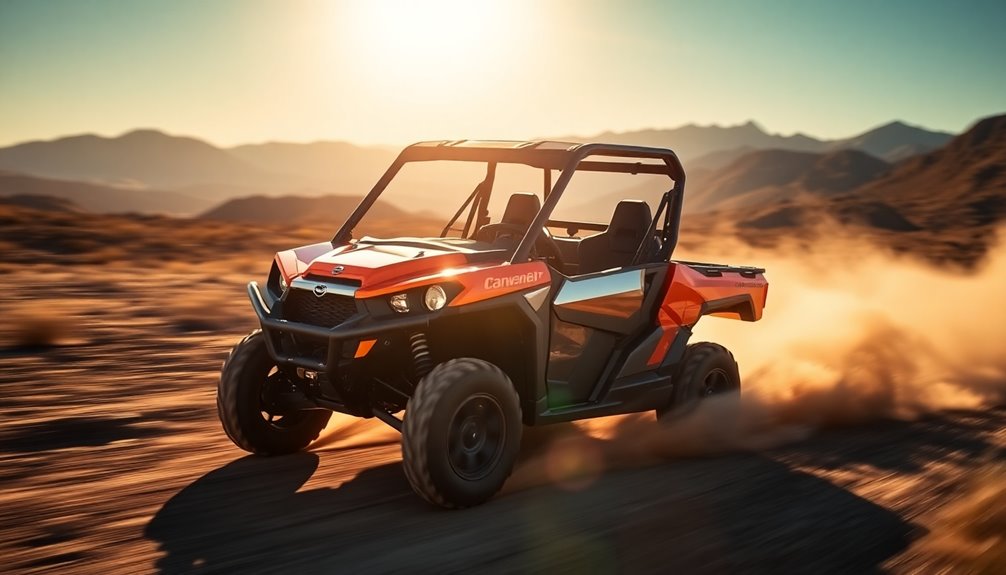
Can-Am’s descent control system uses retarding torque to help you maintain a steady and safe pace on steep or uneven terrain. This torque resists rotational motion, giving you better control and preventing sudden speed increases. Efficient brakes are essential because they convert kinetic energy into heat, ensuring smooth deceleration. Understanding how retarding torque works can help you optimize your vehicle’s performance, so stay with us to learn more about enhancing your descent experience.
Key Takeaways
- Retarding torque in Can-Am vehicles provides resistance to control descent speed safely.
- Efficient braking systems maximize retarding torque for smoother, controlled descents.
- System automation adjusts brake application based on slope and speed to optimize torque.
- Proper torque calculation helps diagnose issues and improve descent stability.
- Upgrading brake components enhances retarding torque and overall descent control performance.
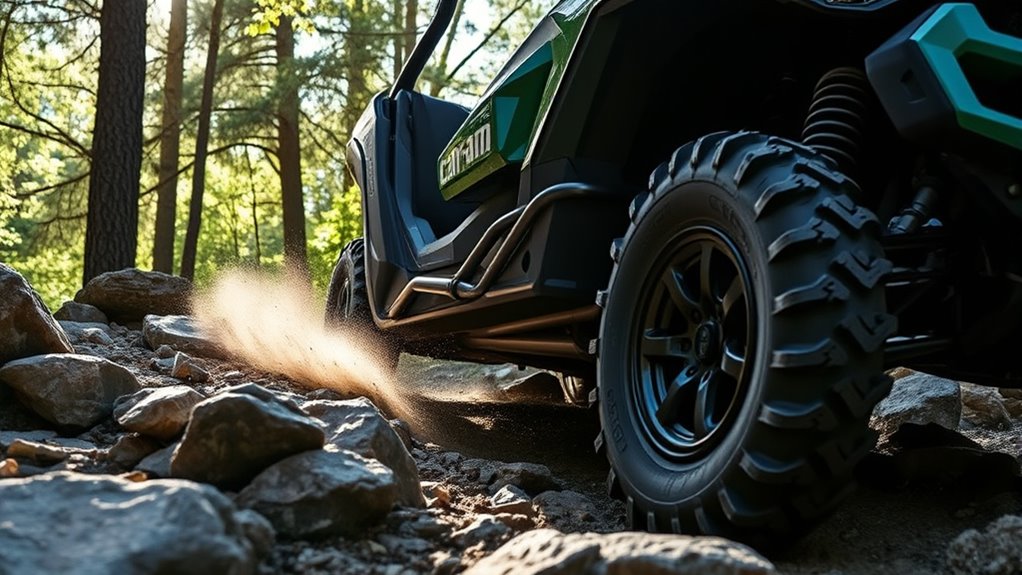
Retarding torque plays a essential role in descent control by providing the necessary resistance to slow down rotational motion. When you’re descending on a vehicle like a Can-Am, this torque acts against the rotation of moving parts, ensuring a controlled and steady descent. It’s indispensable for maintaining safety, especially on steep or uneven terrain. By generating retarding torque, your vehicle can prevent sudden accelerations that might compromise stability or cause accidents. This resistance is what makes descent safer and more predictable, giving you confidence as you navigate challenging environments. Understanding the braking efficiency of your system is key. The more efficient your braking system, the better it can convert kinetic energy into heat, therefore maximizing the retarding torque during descent. When braking efficiency is high, you’ll experience smoother deceleration and more precise control. Conversely, if your brakes are less efficient, you’ll need to apply more force to achieve the same level of retardation, which could lead to quicker wear and potential overheating. That’s why maintaining ideal brake function and ensuring that your system is finely tuned are key to effective descent management. Proper torque calculation is fundamental when evaluating how well your vehicle can resist rotational motion. It involves measuring the force applied at a distance from the axis of rotation, giving you an idea of the torque produced during braking or descent. Accurate torque calculations also help you understand the impact of various components, including brake pads and discs, on your system’s performance. Proper torque calculation helps you understand whether your braking system produces enough retarding torque to handle specific descent conditions. It also guides you in selecting the right components or adjustments needed to improve overall descent control. For example, if your torque calculations reveal insufficient resistance, you might need to upgrade your brake pads or discs or adjust your brake settings to achieve better performance. In Can-Am models with descent control features, the system often automatically manages retarding torque by modulating brake application based on speed, slope, and other factors. This automation enhances braking efficiency, ensuring consistent descent control without requiring constant manual intervention. When you understand how retarding torque works and how it’s influenced by your braking efficiency and torque calculation, you can better appreciate the technology behind your vehicle’s descent system. It also allows you to troubleshoot issues more effectively, ensuring your Can-Am remains reliable on every descent. Additionally, understanding vehicle dynamics can help optimize your descent strategies for improved safety and performance.

USANOOKS Microfiber Cleaning Cloth Grey - 12 Pcs (12.5"x12.5") - High Performance - 1200 Washes, Ultra Absorbent Microfiber Towel Weave Grime & Liquid for Streak-Free Mirror Shine - Car Washing Cloth
- High Absorbency Microfiber: Locks in 8-10x its weight in liquids
- Durable 2.5mm Thick Design: Enhances grip and longevity during use
- Lint-Free and Scratch-Resistant: Prevents streaks, swirls, and damage
As an affiliate, we earn on qualifying purchases.
Frequently Asked Questions
How Does Retarding Torque Differ From Regular Braking?
Retarding torque differs from regular braking because it provides controlled torque modulation, allowing you to descend safely without relying solely on traditional brakes. Unlike regular braking, which can reduce braking efficiency if overused, retarding torque maintains a steady, smooth deceleration. This helps prevent wheel lock-up and ensures better stability and control, especially on steep or tricky terrain, making your descent safer and more manageable.
Can Retarding Torque Be Adjusted Manually?
Did you know that the retarding torque for descent control can often be manually adjusted to suit your riding style? Yes, you can manually adjust retarding torque on many models, including Can-Am vehicles. This feature allows you to fine-tune descent control, providing better control and safety. By customizing retarding torque, you guarantee smoother descents, especially on steep terrains, giving you confidence and precision during challenging rides.
What Are Common Issues With Descent Control Systems?
Common issues with descent control systems often stem from hydraulic fluid problems or sensor calibration errors. If the hydraulic fluid is low or contaminated, it can cause inconsistent retarding torque. Similarly, uncalibrated sensors may send incorrect signals, leading to unreliable descent control. Regularly checking the hydraulic fluid levels and ensuring sensors are properly calibrated can help prevent these issues, keeping your descent control system functioning smoothly.
Is Retarding Torque Effective on All Terrains?
Did you know that retarding torque can reduce downhill speed by up to 50%? It’s effective on most terrains, but terrain compatibility varies. Steep, rocky, or loose surfaces may require precise torque adjustment for maximum control. While retarding torque helps manage descent, on extremely rugged or uneven terrain, it might need supplementary braking or throttle control to ensure safety and stability. Always adjust torque settings based on terrain for best results.
How Does Temperature Affect Retarding Torque Performance?
Temperature can impact retarding torque performance by influencing thermal effects on your vehicle’s components. As temperatures rise, heat buildup may reduce torque stability, making descent control less consistent. Conversely, cooler conditions help maintain ideal thermal effects, ensuring steady retarding torque. To keep performance reliable, monitor temperature changes and allow components to cool if you notice decreased torque stability during prolonged descents. This way, you maximize descent control effectiveness across varying terrains.
Conclusion
As you master the art of descent control with retarding torque, you realize there’s more to it than meets the eye. Just when you think you’ve got it figured out, a new challenge emerges, testing your skills and understanding. Will you harness this power to navigate even the most treacherous terrain? The secret lies in your hands—ready to unleash the full potential of your Can-Am? The journey isn’t over yet; an exciting discovery awaits just around the corner.