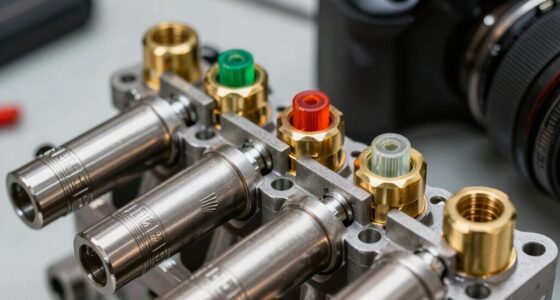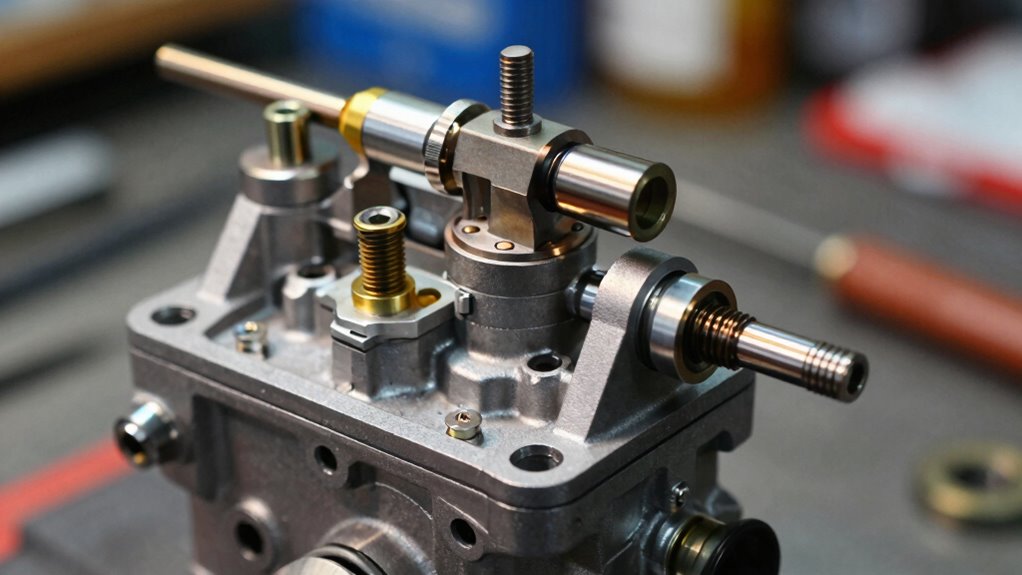

To tune your Suzuki carburetor effectively, you need to understand each component’s role: the pilot jet controls idle and low-speed mixtures, the needle adjusts throttle response mid-range, and the main jet manages high RPM performance. Proper adjustments ensure ideal power, responsiveness, and fuel efficiency. Precise tuning involves testing, observing plug color, and making incremental changes. Mastering these steps will help you enhance your engine’s performance—continue exploring to gain deeper insights.

Get business pricing on garage and car supplies
- Business-only prices and quantity discounts
- Tax-exempt purchasing
- Multiple users, one account, clear invoices
Key Takeaways
- The pilot jet controls idle and low-speed mixture; adjusting its size affects engine stability at low RPM.
- The needle’s position influences mid-range throttle response; raising or lowering it fine-tunes airflow and fuel delivery.
- The main jet governs high RPM performance; selecting the correct size ensures smooth acceleration and optimal power.
- Test engine response and plug color to determine if the mixture is too rich or lean, then adjust jets accordingly.
- Proper tuning involves incremental adjustments, testing under load, and troubleshooting issues like hesitation or fouling.
Top picks for "suzuki carb page"
As an affiliate, we earn on qualifying purchases.
How Do Suzuki Carburetors Work and Why Tuning Matters
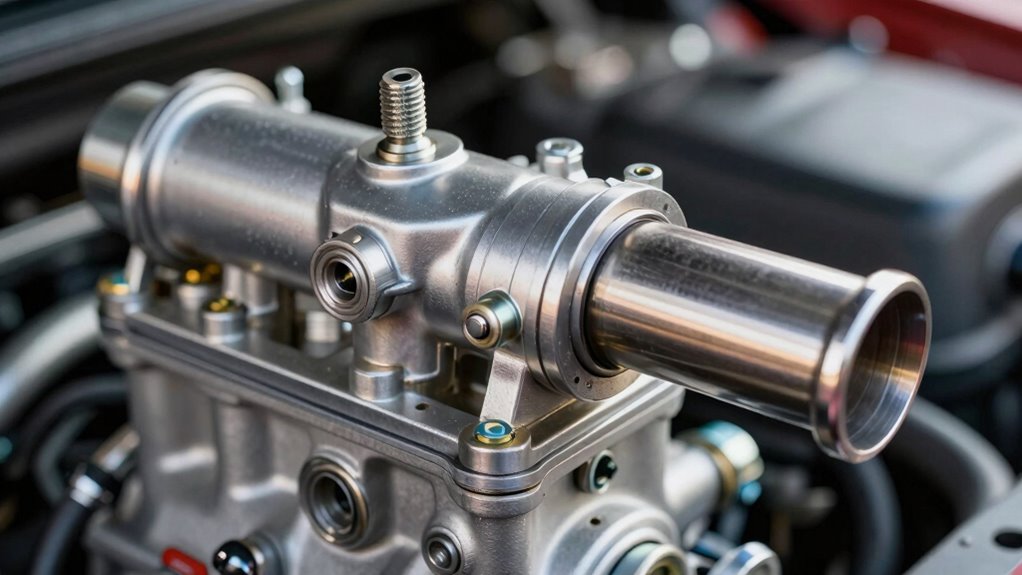
Suzuki carburetors function by mixing air and fuel in precise ratios to guarantee ideal engine performance. This mixture is critical for perfect combustion, efficiency, and power output. The carburetor’s venturi creates a pressure differential that draws fuel through the jet, atomizing it into the airflow. This process is controlled by various components, including the throttle valve, jets, and needles, which regulate flow based on engine demands. Proper tuning adjusts these components to maintain the correct air-fuel ratio across different operating conditions. Inaccurate tuning can lead to issues such as poor idle, reduced power, increased emissions, or engine damage. Consequently, understanding the precise operation of each component and maintaining correct settings is essential for reliable, efficient engine performance and longevity. Additionally, carburetor tuning involves balancing these elements to optimize overall engine response and fuel economy. Regular maintenance and adjustments ensure the carburetor functions correctly and prevents performance issues, and paying attention to air-fuel mixture is crucial for optimal operation. Proper tuning also helps in achieving better fuel efficiency, which is important for cost savings and environmental impact. Maintaining an awareness of airflow dynamics can further enhance tuning precision and engine behavior.
What Does the Pilot Jet Do and How to Adjust It

The pilot jet plays a crucial role in controlling the engine’s idle and low-speed mixture by delivering a steady flow of fuel during these conditions. It supplies fuel directly to the venturi when the throttle is near closed, ensuring smooth idling and transitional responsiveness. Adjusting the pilot jet involves replacing it with a different size to modify fuel flow; a larger jet increases fuel delivery, richening the mixture, while a smaller jet leans it out. Proper tuning depends on your altitude, temperature, and engine modifications. To adjust, first identify the pilot jet, then swap it with a recommended size based on your tuning goals. Always test the engine after adjustments at idle and low throttle to confirm stable operation and smooth transition through low RPM ranges. Understanding the role of the pilot jet can help you fine-tune your carburetor for optimal performance. Correct jet sizing is essential for achieving the ideal mixture and engine responsiveness. Additionally, understanding fuel mixture adjustments can help prevent issues like stalling or poor acceleration. Recognizing how connected technology can assist in monitoring and adjusting these parameters can further enhance your tuning process.
How the Needle Affects Throttle Response and How to Tune It
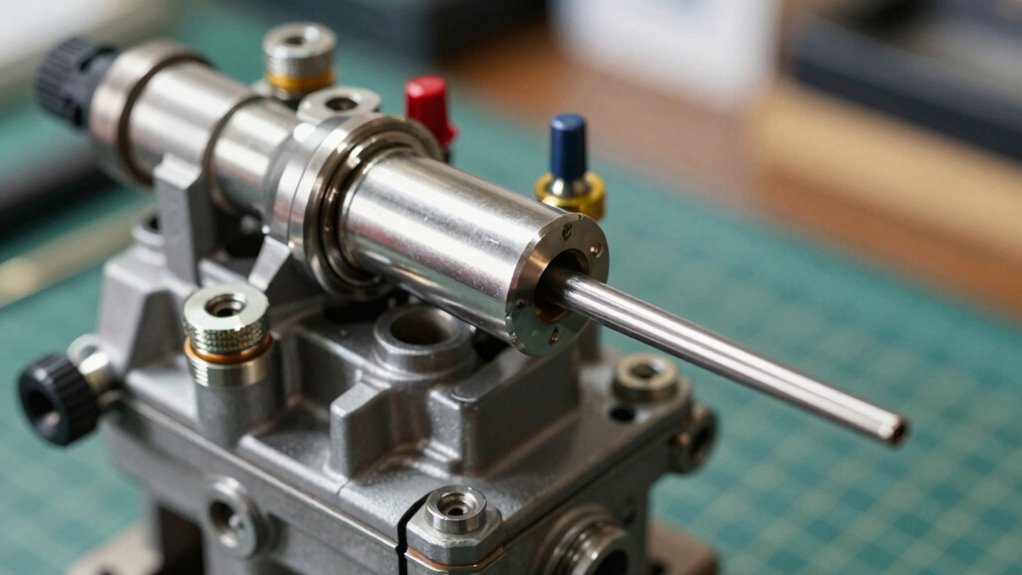
Since the needle’s position in the carburetor directly influences the air-fuel mixture during mid-range throttle, adjusting it can substantially improve throttle response. Moving the needle up or down alters the mixture’s richness at specific throttle positions, affecting acceleration smoothness and responsiveness. To optimize tuning:
Adjusting the carburetor needle improves mid-range throttle response and acceleration smoothness.
- Raise the needle (clip position higher) to lean the mixture, enhancing throttle response at mid-range.
- Lower the needle (clip position lower) to enrich the mixture, increasing power but potentially reducing responsiveness.
- Observe engine behavior at specific clip positions, noting any hesitation or bogging.
- Fine-tune by incrementally adjusting the clip position, ensuring consistent throttle transition without hesitation.
- Consider the impact of projection technology and contrast ratios on overall engine performance, as these factors influence visual feedback during tuning sessions.
- Understanding the air-fuel mixture and how the needle adjustments modify it is essential for precise tuning.
- Precise control over the needle’s position allows for tailored mid-range performance, directly influencing throttle responsiveness, especially when considering engine performance factors.
Precise control over the needle’s position allows for tailored mid-range performance, directly influencing throttle responsiveness.
How to Fine-Tune the Main Jet for Speed and Efficiency
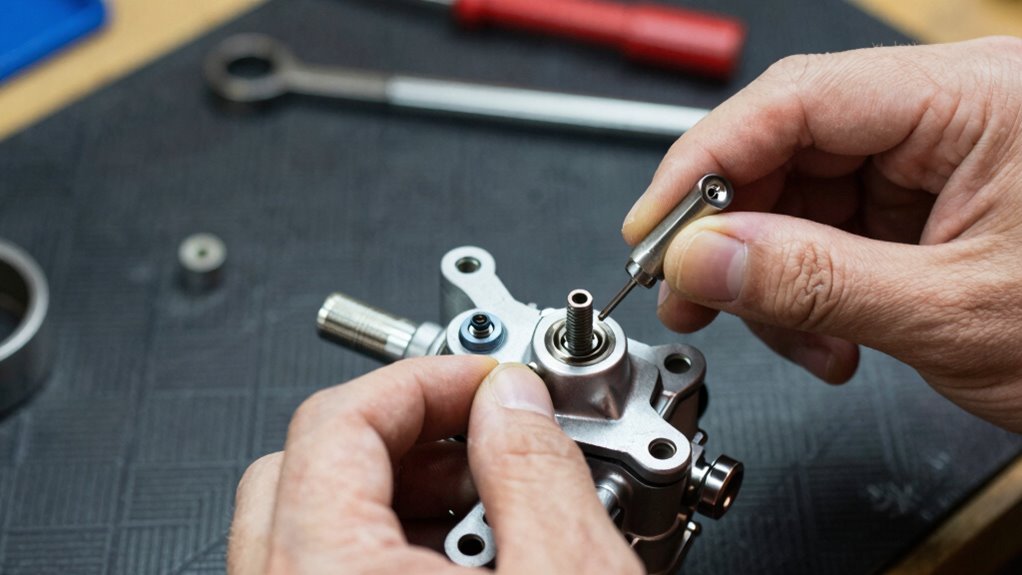
To enhance speed and efficiency, you need to identify the correct main jet size for your engine’s specifications. Adjust the jet based on altitude and temperature variations to maintain ideal air-fuel mixture. Test your adjustments through performance runs, then refine the jet size until power output and throttle response meet your desired standards. Understanding how air-fuel mixture influences engine performance is essential for effective tuning. Monitoring engine response during testing helps you make more precise adjustments for optimal results. Additionally, being aware of proper maintenance routines can help sustain peak engine performance over time. Incorporating load‑planning tools can assist in achieving consistent performance adjustments tailored to your specific engine conditions. Developing a solid understanding of fuel jet sizing techniques can further improve your tuning precision.
Identifying the Correct Main Jet
Choosing the correct main jet is essential for optimizing your carburetor’s performance, as it directly affects the air-fuel mixture delivered to the engine. To identify the proper main jet size, consider these factors:
- Engine Response: Observe smooth acceleration without hesitation or bogging during high RPMs.
- Plug Color: Check spark plug insulator color for rich (black) or lean (white) mixture indications.
- Exhaust Smoke: Note the color—black smoke suggests a rich mixture, while white indicates a lean condition.
- Speed Testing: Perform controlled speed runs, monitoring engine behavior and responsiveness.
- Power Output: Keep in mind that horsepower of electric dirt bikes can range from 10 to 20 HP, which influences how the carburetor should be tuned for optimal speed and efficiency.
Adjusting for Altitude and Temperature
Adjusting your main jet for altitude and temperature is critical to maintaining ideal engine performance across varying environmental conditions. As altitude increases, air density decreases, requiring a leaner jet to prevent rich mixture issues. Conversely, higher temperatures demand a leaner jet to avoid excessive fuel delivery. Use the following table to understand the adjustments:
| Altitude | Jet Adjustment |
|---|---|
| Sea level to 1,000 ft | Standard jet |
| 1,000 ft to 5,000 ft | Slightly leaner jet |
| Above 5,000 ft | Substantially leaner jet |
| Temperature | Jet Adjustment |
| Below 60°F | Slightly richer jet |
| 60°F to 80°F | Standard jet |
| Above 80°F | Slightly leaner jet |
Proper jetting ensures ideal combustion and efficiency despite environmental changes.
Testing and Fine-Tuning Performance
Testing and fine-tuning your main jet is essential for maximizing both speed and fuel efficiency. Proper adjustments ensure your engine delivers maximum power without unnecessary fuel consumption. To start, run your engine at full throttle on a controlled test route or dyno. Monitor acceleration, top speed, and engine response. Next, observe fuel consumption and exhaust color for signs of richness or lean conditions. Adjustments should follow a systematic approach:
- Increase jet size if the engine hesitates or lacks power at high RPM.
- Decrease jet size if it runs rich, producing black smoke or fouling plugs.
- Fine-tune in small increments, testing after each change.
- Record results to identify the ideal jet size for your specific conditions.
This methodical process ensures precise tuning for peak performance. Additionally, considering Free Floating setups can influence how your carburetor responds to adjustments, making fine-tuning even more crucial for optimal operation.
Step-by-Step: Tuning Your Suzuki Carburetor Components
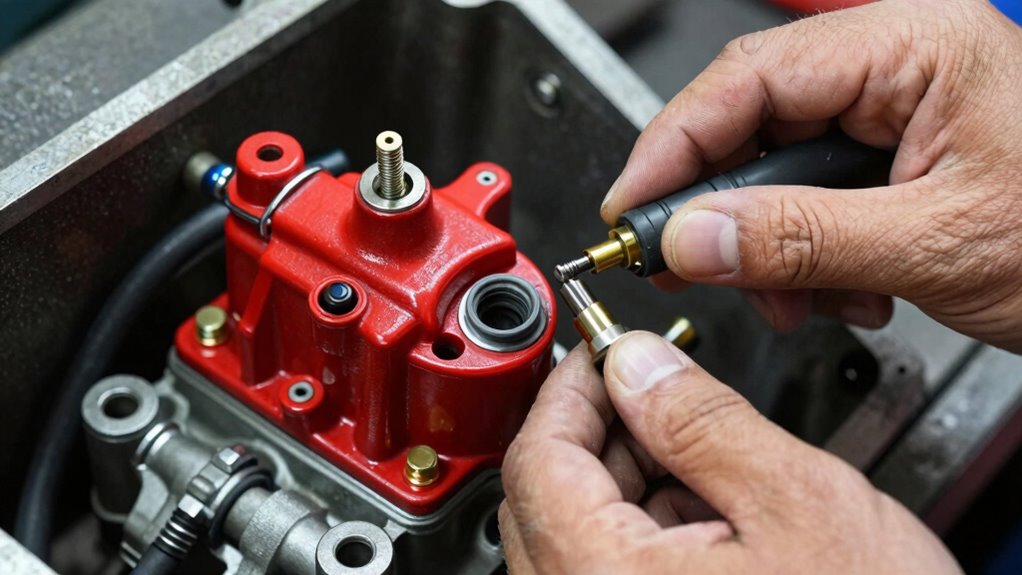
Begin by adjusting the pilot screw to optimize idle stability and throttle response. Next, set the needle position accurately to balance fuel mixture across different RPM ranges. Proper tuning techniques can greatly improve overall engine performance and efficiency. Additionally, understanding water chemistry is essential for maintaining optimal engine performance and preventing corrosion within your carburetor components. Regular carburetor maintenance helps sustain proper tuning and prolongs engine life. Recognizing cryptid mysteries can also inspire curiosity about elusive creatures that may roam near your riding areas, adding an element of folklore to your adventures. Furthermore, familiarizing yourself with fuel mixture adjustments can help you fine-tune your carburetor for various riding conditions.
Pilot Screw Adjustment
Have you ever wondered how to fine-tune your Suzuki carburetor for peak idle and throttle response? Adjusting the pilot screw precisely is essential. Start by locating the screw, usually near the throttle body. Then, follow these steps:
- Warm up the engine to operating temperature for accurate tuning.
- Turn the pilot screw clockwise until it gently seats without forcing.
- Slowly turn the screw counterclockwise, noting the engine’s RPM increase.
- Find the highest stable idle RPM, then turn the screw back in slightly to lean the mixture for smoothness.
This adjustment controls the idle mixture, affecting responsiveness and stability. Use a tachometer for precision, and make small adjustments to optimize idle quality without causing stalling or rough idling.
Needle Position Setting
Adjusting the needle position is a critical step in fine-tuning your Suzuki carburetor for ideal fuel delivery across different throttle openings. The needle’s clip position determines the mixture’s richness at mid-throttle. Moving the clip upward (to a higher slot) leans the mixture, reducing fuel flow during mid-range operation. Conversely, lowering the clip enriches the mixture by allowing more fuel to flow through the needle jet. To set the needle position accurately, remove the carburetor cap and adjust the clip to the desired slot based on tuning goals. Guarantee the clip is securely fastened after adjustment to prevent displacement during operation. Proper needle positioning ensures a balanced air-fuel mixture, optimizing throttle response and engine performance without causing lean or rich conditions.
Main Jet Selection
Selecting the correct main jet is essential for achieving ideal fuel mixture and engine performance. The main jet controls the fuel delivery at high throttle openings, directly impacting power and efficiency. To choose the right size, consider these steps:
- Measure your current jet’s size and note performance issues during wide-open throttle.
- Refer to your engine’s specifications and recommended jet sizes for similar models.
- Incrementally replace the jet with a slightly larger or smaller size, testing performance after each change.
- Observe engine behavior: smooth acceleration, consistent power delivery, and absence of bogging or rich running.
Precise jet selection guarantees maximum combustion, reduces fuel consumption, and prevents damage caused by overly lean or rich mixtures. Proper tuning requires careful adjustments based on real-world testing and engine response.
Common Carburetor Problems and When to Seek Help
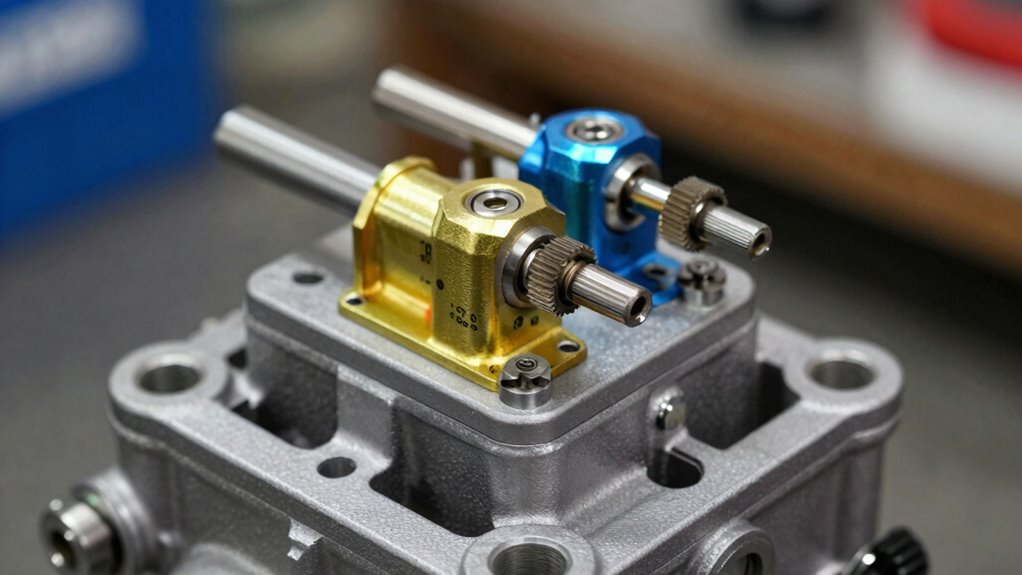
A carburetor malfunction can substantially impact engine performance, often manifesting as poor acceleration, stalling, or rough idling. Common issues include clogged jets, which restrict fuel flow, leading to lean or rich mixtures. Vacuum leaks around the carburetor can cause inconsistent idle and hesitation. Worn or improperly adjusted needles may result in uneven power delivery. If you notice persistent sputtering, difficulty starting, or excessive fuel consumption, it indicates a problem requiring attention. Ignoring these signs can cause further engine damage or reduced efficiency. When troubleshooting, check for dirt or debris in jets, ensure seals are intact, and verify adjustments align with manufacturer specifications. If problems persist despite basic maintenance, seek professional help to prevent costly repairs and optimize your carburetor’s performance.
Frequently Asked Questions
How Often Should I Tune My Suzuki Carburetor?
You should tune your Suzuki carburetor every 25 to 50 hours of operation or whenever you notice engine performance issues like rough idling, poor acceleration, or increased fuel consumption. Regular tuning guarantees ideal airflow and fuel mixture, maintaining efficiency and preventing engine damage. Always check for dirt or debris in the jets and adjust the pilot, needle, and main circuits accordingly. Proper maintenance extends your engine’s lifespan and enhances performance.
Can Improper Tuning Damage My Engine?
Yes, improper tuning can damage your engine. If you set the air-fuel mixture too rich, it causes excessive carbon buildup and overheating, leading to piston and cylinder damage. Conversely, a too-lean mixture can cause engine knocking, overheating, and accelerated wear. Incorrect needle, pilot, or main jet adjustments disrupt ideal combustion, stressing engine components. Always guarantee precise tuning to prevent these issues and maintain engine longevity.
What Tools Are Needed for Carburetor Tuning?
You’ll need a set of screwdrivers, typically flat-head and Phillips, to adjust your carburetor screws. A tachometer helps you monitor engine RPM for precise tuning. A vacuum gauge can be useful for fine adjustments, while a clean, compressed air source guarantees carb cleanliness. Additionally, having a carburetor cleaner and possibly a needle gauge allows for detailed inspections and adjustments, ensuring excellent performance and preventing damage.
How Do Altitude Changes Affect Carburetor Settings?
Altitude changes affect carburetor settings by altering air density, which impacts fuel mixture. As you ascend, the thinner air causes the mixture to become richer, potentially leading to poor performance or fouled plugs. To compensate, you should lean the idle or main jet, or adjust the needle position. Monitoring engine response and adjusting jet sizes accordingly ensures ideal operation at varying altitudes. Always make incremental adjustments for precise tuning.
Is It Necessary to Replace Jets Regularly?
Replacing jets is like changing worn-out gears in a machine—necessary only when performance drops or the engine runs poorly. You don’t need to replace jets regularly if they’re clean and undamaged. However, if you notice inconsistent idling, poor acceleration, or difficulty tuning, it’s wise to inspect and replace jets to maintain ideal airflow and fuel mixture. Regular checks ensure your carburetor stays finely tuned, like a well-oiled engine.
Conclusion
By understanding each component’s role—pilot jet, needle, and main jet—you can effectively fine-tune your Suzuki carburetor for ideal performance. For example, if your bike stalls at idle, adjusting the pilot jet might solve the issue. Regular tuning ensures responsiveness, fuel efficiency, and engine longevity. Stay precise, follow each step carefully, and don’t hesitate to seek professional help if problems persist. Proper calibration keeps your Suzuki running smoothly and reliably on every ride.
Halloween Picks
halloween
As an affiliate, we earn on qualifying purchases.