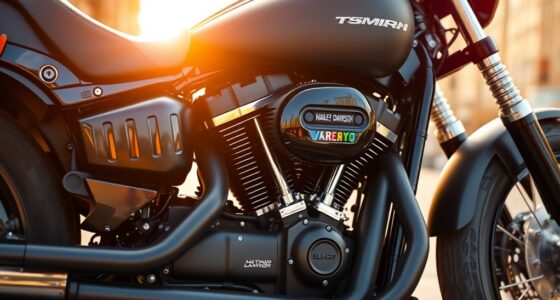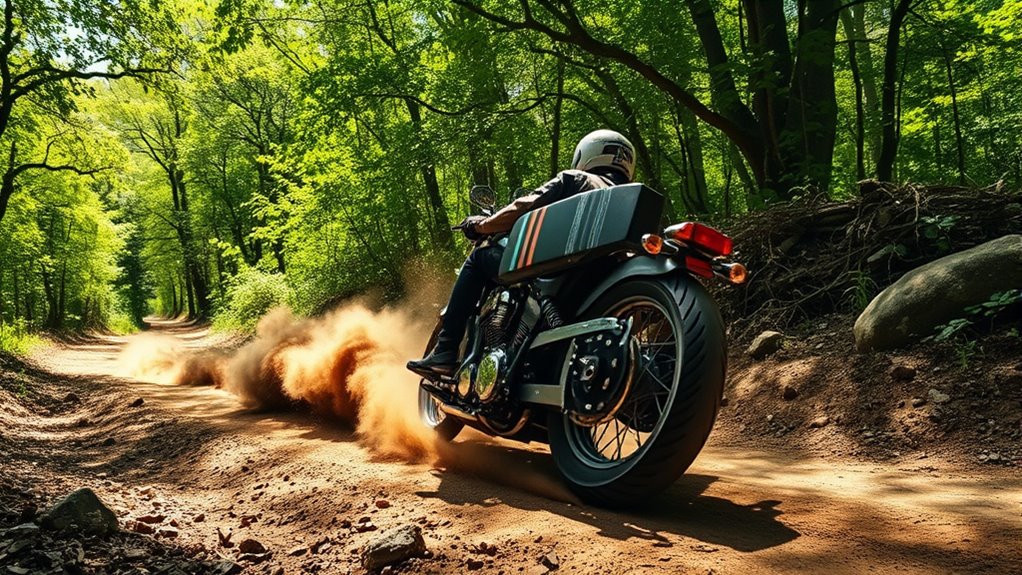

When trail riding your Harley, it is crucial to understand your bike’s lean angle limits for safety. Unlike paved roads, uneven terrain and loose surfaces reduce your bike’s capacity to lean safely. Factors like tire grip, suspension, and your riding style influence these limits. Staying within your bike’s lean parameters helps prevent slides or loss of control. Curious to learn how to better assess your Harley’s capabilities on trails? Keep going to discover practical tips and insights.
Key Takeaways
- Lean angle limits depend on Harley model, design, and rider weight, affecting trail riding safety.
- Trail terrain, such as uneven surfaces and loose gravel, reduces safe lean angles for Harley motorcycles.
- Proper suspension setup and tire condition are crucial to maintain stability at maximum lean during trail use.
- Riders should adjust speed and lean based on terrain complexity to prevent loss of traction or control.
- Experience and terrain awareness are essential for judging safe lean angles and avoiding accidents on trails.
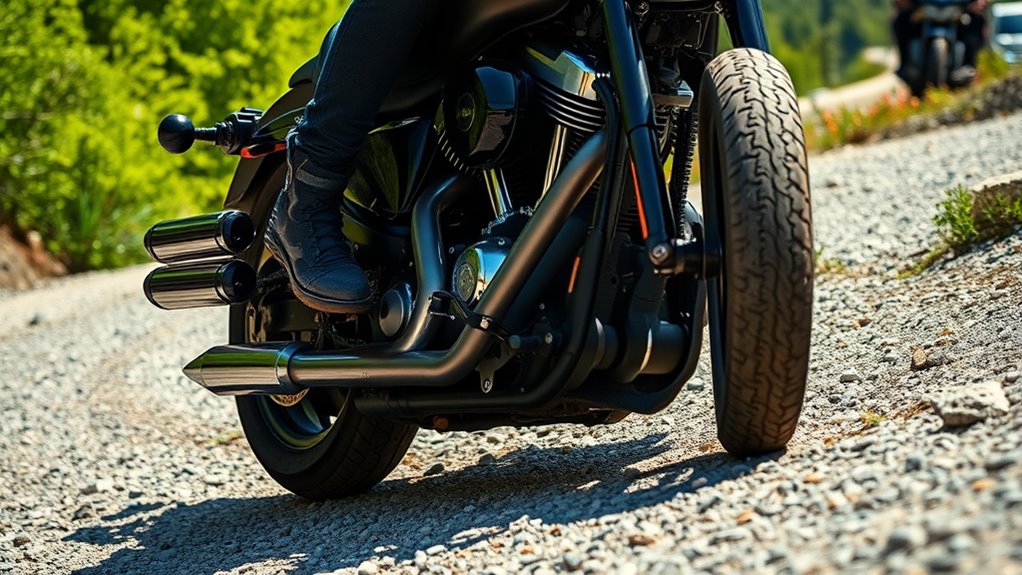
Understanding Harley lean angle limits is essential for safe and confident riding. When you’re handling your motorcycle on trails or winding roads, knowing how far you can lean without risking a fall is rooted in motorcycle physics. Lean angle isn’t just about how stylish you look; it’s about understanding the mechanics that keep you upright and in control. Motorcycle physics explains that as you lean into a turn, your bike’s tires generate lateral grip, counteracting the centrifugal force pushing you outward. If you lean too far, you risk exceeding the grip limit, causing a slide or crash. For Harley riders, this means paying attention to how the bike’s design and your riding style influence lean angle limits, especially in trail use where terrain and conditions vary. Additionally, the bike’s center of gravity and suspension setup can significantly affect how much you can lean safely. Your rider safety depends on respecting these limits. Harley-Davidson motorcycles, known for their cruiser style and low center of gravity, often have different lean capacities compared to sport bikes. While they may appear to have a more relaxed riding position, their lean angle limits can still be surprisingly significant. However, pushing beyond these boundaries can lead to loss of traction, especially on uneven surfaces or loose gravel common on trails. It’s vital to recognize that leaning isn’t just about the bike’s capabilities but also about your skill in controlling it under different conditions. When you ride on trails, you’re often dealing with unpredictable terrain, which makes understanding lean angle limits even more critical for rider safety. You should also keep in mind that Harley’s frame geometry, tire type, and suspension setup influence lean angles. For trail riding, where terrain is less predictable, you might find yourself leaning less than you would on paved roads, but the risks of exceeding safe angles are still present. To stay within safe limits, always adjust your speed and lean based on the trail’s terrain and your comfort level. Practice and experience will help you develop a sense of your motorcycle’s limits. Remember, the goal is to ride confidently without pushing beyond what’s safe. Motorcycle physics provides the foundation for understanding these limits, but your judgment and awareness are what keep you safe on every turn. Respecting lean angle limits isn’t just about avoiding falls; it’s about ensuring your rider safety and enjoying every ride with confidence.

USANOOKS Microfiber Cleaning Cloth Grey - 12 Pcs (12.5"x12.5") - High Performance - 1200 Washes, Ultra Absorbent Microfiber Towel Weave Grime & Liquid for Streak-Free Mirror Shine - Car Washing Cloth
- High Absorbency Microfiber: Locks in 8-10x its weight in liquids
- Durable 2.5mm Thick Design: Enhances grip and longevity during use
- Lint-Free and Scratch-Resistant: Prevents streaks, swirls, and damage
As an affiliate, we earn on qualifying purchases.
Frequently Asked Questions
How Do Harley’s Lean Angle Limits Compare to Other Motorcycle Brands?
You’ll find Harley’s lean angle limits are generally more conservative compared to sportbike brands, which focus on aggressive cornering techniques and higher tire grip. This means Harleys prioritize stability and comfort over extreme lean angles, making them ideal for relaxed riding. When comparing, sportbikes can lean further and handle sharper turns thanks to their advanced tire grip and design, but Harleys excel in smooth, controlled cornering suited for longer, scenic rides.
Can Modifying Suspension Components Increase Harley’s Lean Angle Capacity?
Modifying suspension components can definitely increase your Harley’s lean angle capacity. Suspension upgrades improve handling and reduce body roll, allowing you to lean further safely. Additionally, chassis modifications can optimize weight distribution and stability during trail use. By investing in quality suspension upgrades and chassis modifications, you’ll enhance your bike’s cornering capabilities, giving you more confidence and control when leaning into turns. Just make sure to consult professionals to guarantee proper setup.
What Safety Precautions Should Riders Follow When Approaching Lean Angle Limits?
When approaching your bike’s lean angle limits, you should take gentle steps to stay safe. Always wear your protective gear, including helmet, gloves, and riding jacket, to guard against surprises. Be mindful of road conditions—wet, uneven, or loose surfaces can reduce grip and increase risk. Slow down before corners, lean smoothly, and trust your skills. Staying alert and cautious helps you enjoy the ride while respecting your limits.
Do Different Harley Models Have Varying Lean Angle Restrictions?
Yes, different Harley models have varying lean angle restrictions due to their custom chassis designs and tire grip capabilities. You should check each model’s specifications because a custom chassis can influence how much you can lean safely. Generally, models with better tire grip and balanced chassis allow for more aggressive cornering, but always stay within your bike’s limits to avoid accidents. Prioritize safety and know your bike’s lean angle boundaries.
How Does Rider Weight Affect the Achievable Lean Angle on a Harley?
Imagine your weight as the anchor that stabilizes or shifts your lean angle. Heavier riders might find it harder to lean deeply without risking instability, while lighter riders can push further into corners. Your rider weight influences the achievable lean angle by affecting the bike’s balance and grip. To maximize lean, maintain proper body positioning and be mindful of how your weight distribution impacts control and comfort during turns.
Conclusion
Now that you know Harley’s lean limits, don’t dawdle or doubt. Plunge into details, drive with discipline, and develop your daring. Remember, respecting these restrictions keeps you riding safely and smoothly. Stay savvy, stay sheltered from slips, and steer smartly through every twist and turn. With awareness and awareness alone, you’ll confidently conquer corners while keeping control. So, seize the steering, stay steady, and savor every swift, safe, and sensational ride!