To master wheelies, jumps, and landings, you need to control your dirt bike’s physics. Maintain aerodynamic stability by adjusting your body position and bike shape, helping resist wobbling and stay balanced. Focus on tire traction to grip uneven terrain and prevent slipping during tricks. Balancing throttle, brake, and weight distribution is vital for safe execution. Keep these principles in mind, and you’ll unlock more techniques to improve your skills and confidence on the trail.
Key Takeaways
- Aero stability helps prevent wobbling during wheelies and jumps, ensuring smoother execution and control.
- Proper tire traction maintains grip on uneven terrain, aiding in safe landings and sharp turns.
- Balancing throttle, weight, and bike shape maximizes stability during high-speed maneuvers.
- Maintaining rear wheel contact during wheelies and jumps ensures better control and reduces slipping.
- Interaction between aero stability and tire traction ensures safe, predictable landings and trick execution.
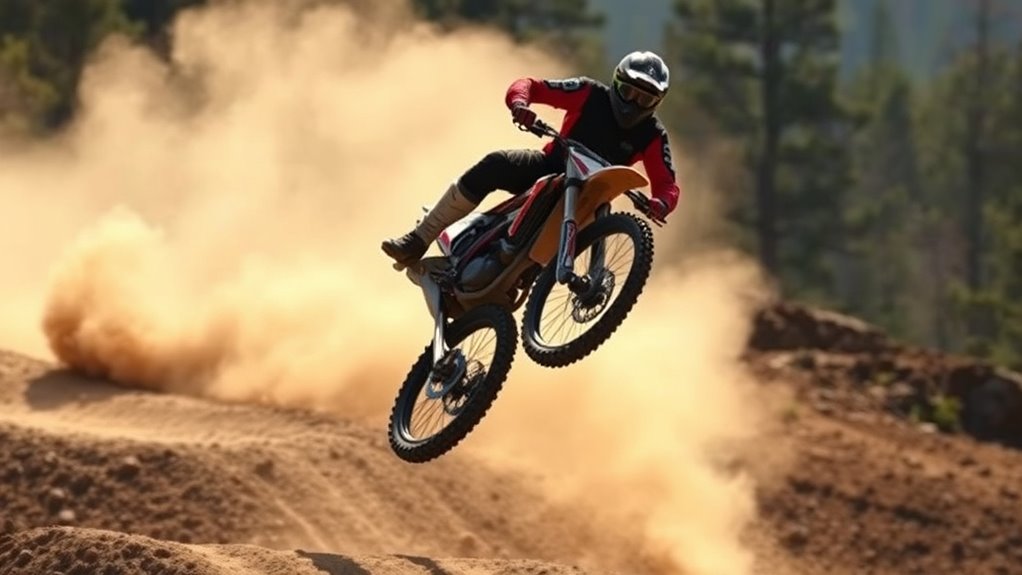
Have you ever wondered what makes a dirt bike so agile and capable on rough terrain? It all comes down to the physics behind its design and how you control it. When you’re riding over uneven ground, your bike’s ability to stay balanced and respond swiftly depends on factors like aero stability and tire traction. Aero stability refers to how well the bike resists aerodynamic forces that could cause it to wobble or lose control, especially during high-speed maneuvers. The shape of the bike, rider positioning, and fairings all contribute to reducing wind resistance and maintaining a steady course. By optimizing aero stability, you guarantee that the bike remains predictable and responsive, even when you’re pulling tricky wheelies or landing from a jump. Additionally, understanding weight distribution enhances your control and stability, especially during complex maneuvers.
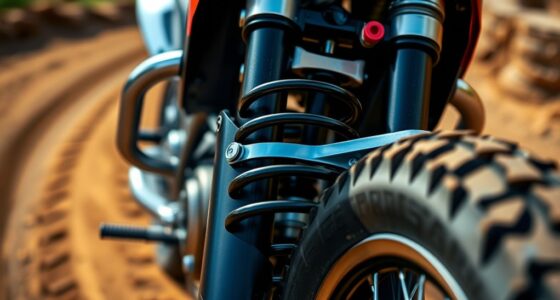
Tire traction plays an equally essential role. The grip your tires have on the dirt determines how effectively you can accelerate, turn, or land safely. When you hit a jump or come into a turn, good tire traction helps transfer your engine’s power to the ground without slipping. The design of the tires, including tread pattern and rubber compound, is tailored for maximum grip on loose or uneven surfaces. Proper tire traction allows you to control your bike’s tilt during wheelies or maintain stability during sharp turns. It also ensures that when you land after a jump, your tires grip the terrain efficiently, absorbing the impact and preventing slides or crashes.
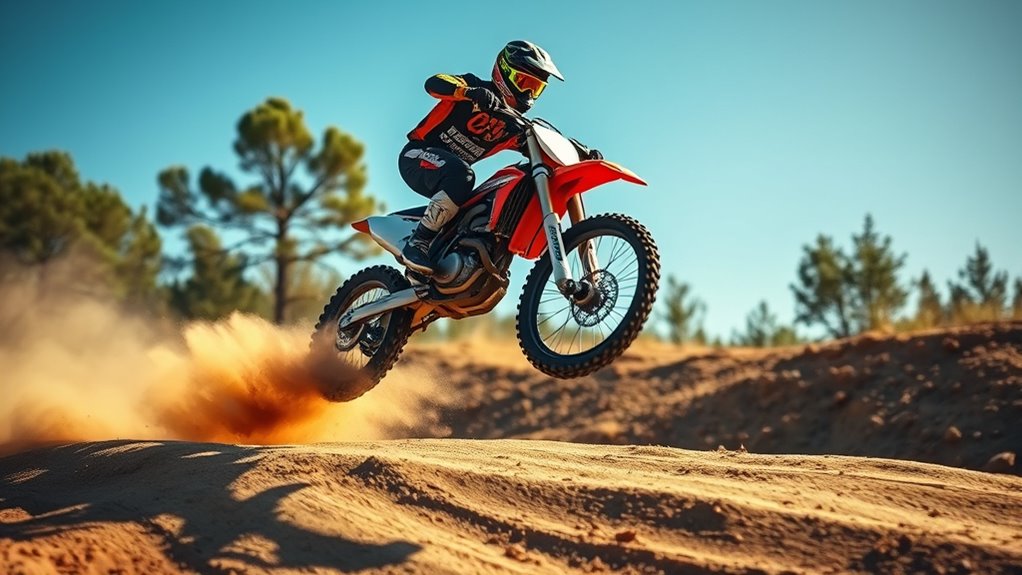
Understanding how these elements interact is fundamental when performing wheelies or jumps. During a wheelie, shifting your weight and maintaining a balance between throttle and brake, combined with your bike’s aero stability, keeps the front wheel off the ground smoothly. Tire traction ensures that your rear wheel maintains contact with the dirt, giving you control and preventing sliding backward. When jumping, your bike’s aero stability helps minimize lift and wobbling mid-air, while tire traction ensures a firm touch-down, reducing the risk of flipping or losing control. The physics behind these movements might seem complex, but they boil down to maintaining a delicate balance of forces.
Mastering wheelies and jumps relies on balancing throttle, brake, aero stability, and tire traction for control and safety.
In essence, mastering dirt bike physics involves understanding and leveraging the strengths of aero stability and tire traction. When you ride with awareness of these factors, you can perform tricks confidently and land safely. Whether you’re executing a wheelie or soaring through the air on a jump, knowing how your bike interacts with the terrain helps you stay in control, push your limits, and enjoy the thrill of riding.

USANOOKS Microfiber Cleaning Cloth Grey - 12 Pcs (12.5"x12.5") - High Performance - 1200 Washes, Ultra Absorbent Microfiber Towel Weave Grime & Liquid for Streak-Free Mirror Shine - Car Washing Cloth
- High Absorbency Microfiber: Locks in 8-10x its weight in liquids
- Durable 2.5mm Thick Design: Enhances grip and longevity during use
- Lint-Free and Scratch-Resistant: Prevents streaks, swirls, and damage
As an affiliate, we earn on qualifying purchases.
Frequently Asked Questions
How Does Rider Weight Affect Wheelie Stability?
Your rider weight considerably impacts wheelie stability by influencing rider balance and weight distribution. When you’re heavier at the front, it becomes harder to lift the front wheel and maintain balance, making wheelies more challenging. Conversely, shifting your weight slightly backward helps distribute your weight evenly, improving stability. Properly adjusting your body position ensures better control, allowing you to hold wheelies longer and land safely.
What Are the Best Techniques for Smooth Landings?
To land smoothly, focus on proper landing techniques and shock absorption. As you approach, keep your body relaxed and slightly flex your knees and elbows to absorb impact. Aim for the balls of your feet on the pegs, not the heels, to better control shock absorption. Land with your bike straight and centered, then roll through the landing to maintain balance. This approach minimizes impact and keeps you stable after each jump.
How Does Tire Pressure Influence Jump Performance?
You’ll notice that tire pressure considerably impacts your jump performance. When you maintain consistent pressure, your tire grip improves, giving you better control and stability in the air and upon landing. Lower pressure increases grip and shock absorption, making landings smoother, while higher pressure reduces rolling resistance but can decrease grip. Regularly check and adjust your tire pressure to match terrain, ensuring ideal performance and safer jumps.
Can Bike Suspension Impact Wheelie Control?
Think of your bike’s suspension as its nervous system; it can make or break your wheelie control. Proper suspension tuning guarantees ideal shock absorption, helping you stay balanced and in control during wheelies. When your suspension is dialed in, it responds smoothly to your movements, preventing unwanted nose dives or flips. So, yes, a well-tuned suspension considerably impacts your ability to master wheelies with confidence and precision.
What Safety Gear Is Recommended for High-Impact Jumps?
For high-impact jumps, you should wear protective clothing like a chest protector, knee and elbow pads, and sturdy gloves to prevent injuries. Always prioritize helmet safety by choosing a well-fitted, certified helmet to protect your head during falls. Proper gear minimizes risks, so double-check that all equipment fits well and is in good condition before hitting the jumps. Safety gear is essential for staying safe and confident on challenging terrain.
Conclusion
Now that you understand the physics behind wheelies, jumps, and landings, you’re ready to take your riding to the next level. But remember, each move comes with its own risks and surprises lurking just ahead. Are you prepared to master these secrets and push your limits? The thrill of conquering dirt bike physics is just a ride away—if you dare to embrace the challenge, the next adventure could change everything. Will you take it?