

When weather conditions change, air density and humidity directly affect your two-stroke jetting, causing performance issues like bogging or hesitation. To maintain ideal power, monitor ambient temperature, humidity, and barometric pressure, then adjust your main jet and needle position accordingly—leaner or richer based on conditions. Using precise tools like AFR meters or a carb gauge ensures accurate tuning. For consistent performance across seasons, understanding these factors is crucial—stay tuned to learn how to fine-tune for every environment.

Get business pricing on garage and car supplies
- Business-only prices and quantity discounts
- Tax-exempt purchasing
- Multiple users, one account, clear invoices
Key Takeaways
- Understand how temperature, humidity, and barometric pressure affect air density and fuel mixture for accurate jetting adjustments.
- Monitor weather changes and engine response to identify if your carburetor needs richer or leaner jetting.
- Adjust main jets and needle positions based on altitude and environmental conditions for optimal performance.
- Use tools like AFR analyzers and spark plug inspections to fine-tune jetting under varying weather scenarios.
- Regularly track weather patterns and perform proactive jetting modifications to prevent engine bogging, fouling, or power loss.
two-stroke carburetor jetting tools
As an affiliate, we earn on qualifying purchases.
As an affiliate, we earn on qualifying purchases.
How Weather Changes Impact Your Two-Stroke Jetting

Weather fluctuations directly influence the air-fuel mixture in your two-stroke engine, requiring adjustments to jetting for ideal performance. As temperature, humidity, and barometric pressure change, the density of the air varies, affecting combustion. Higher temperatures decrease air density, leading to a richer mixture if jetting remains constant. Conversely, cold weather increases air density, potentially causing a leaner mixture. Humidity adds water vapor, which displaces oxygen and alters combustion efficiency. Barometric pressure shifts can either enrich or lean the mixture depending on altitude changes. If you ignore these variations, engine response becomes inconsistent, leading to power loss, fouled plugs, or overheating. Precise jetting adjustments are essential to compensate for these atmospheric changes, ensuring optimal fuel delivery and engine performance across different weather conditions. Additionally, understanding air density helps in fine-tuning jetting to adapt to varying environmental factors effectively, and being aware of weather changes can help prevent common jetting issues before they affect your ride. Recognizing the impact of atmospheric pressure can further refine your jetting adjustments for stable engine behavior.
How to Detect Weather-Related Jetting Issues

To identify weather-related jetting issues, you should observe performance fluctuations such as bogging, hesitation, or inconsistent power delivery. Monitoring environmental conditions like temperature, humidity, and barometric pressure helps correlate these symptoms with weather changes. Consistent tracking allows you to make precise adjustments and guarantee ideal engine performance. Additionally, being aware of piercing hygiene and ensuring your equipment is clean can prevent potential complications during adjustments. Recognizing the impact of environmental factors on carburetor tuning can further enhance your troubleshooting accuracy. Understanding how air density influences jetting can help you fine-tune your setup more effectively. Being familiar with weather patterns can also assist in predicting and preparing for these fluctuations proactively, especially since altitude changes can significantly affect engine behavior.
Spotting Performance Changes
Understanding how your two-stroke engine responds to changing conditions is essential for accurate jetting adjustments. When testing, observe throttle response and acceleration consistency across different RPM ranges. A lean condition often manifests as hesitation or bogging during acceleration, especially at mid to high RPM. Conversely, a rich condition may cause sluggish throttle response, excessive smoke, or fouled plugs. Note changes in engine sound—sharpness or dullness—and monitor exhaust output for color and smell, which can indicate mixture issues. Temperature-induced jetting problems often result in performance shifts that become apparent after sustained riding or during shifts between weather conditions. Precise detection relies on consistent testing techniques and recognizing subtle deviations in engine behavior, enabling you to identify whether jetting adjustments are required due to weather influences. Additionally, understanding the science behind LED masks, radio-frequency wands, microcurrent devices, and other cutting‑edge gadgets can help fine-tune your approach to at-home maintenance and troubleshooting. Recognizing weather-related performance changes is crucial for maintaining optimal engine function and preventing potential damage. Being aware of environmental factors, such as humidity and altitude, can further improve your ability to diagnose and adapt to weather-induced jetting issues. Monitoring air density can also be beneficial, as it directly impacts combustion efficiency and engine response, especially when considering changing atmospheric conditions.
Monitoring Environmental Conditions
Monitoring environmental conditions is essential for detecting weather-related jetting issues because changes in ambient temperature, humidity, and barometric pressure directly affect air density and fuel mixture. To accurately assess these conditions, you should:
- Measure ambient temperature using a calibrated thermometer.
- Record relative humidity with a hygrometer.
- Check barometric pressure via a reliable altimeter or barometer.
- Observe weather patterns, noting sudden shifts like storms or cold fronts.
- Understand how air density influences combustion and fuel mixture adjustments.
- Keep track of yarn weight and stitch type if you’re also considering modifications to your engine tuning, as both can impact performance under varying conditions.
- Recognize that environmental monitoring enhances your ability to make timely jetting adjustments, preventing performance issues before they occur. Regularly updating your observations allows for more precise tuning based on changing weather conditions.
- Understanding the performance impact of environmental changes helps you anticipate jetting adjustments needed for ideal performance. Variations in air density can cause lean or rich conditions, affecting throttle response and power output. Consistent monitoring enables proactive tuning, ensuring your bike runs efficiently regardless of weather changes.
How to Adjust Your Jetting for Temperature and Humidity?
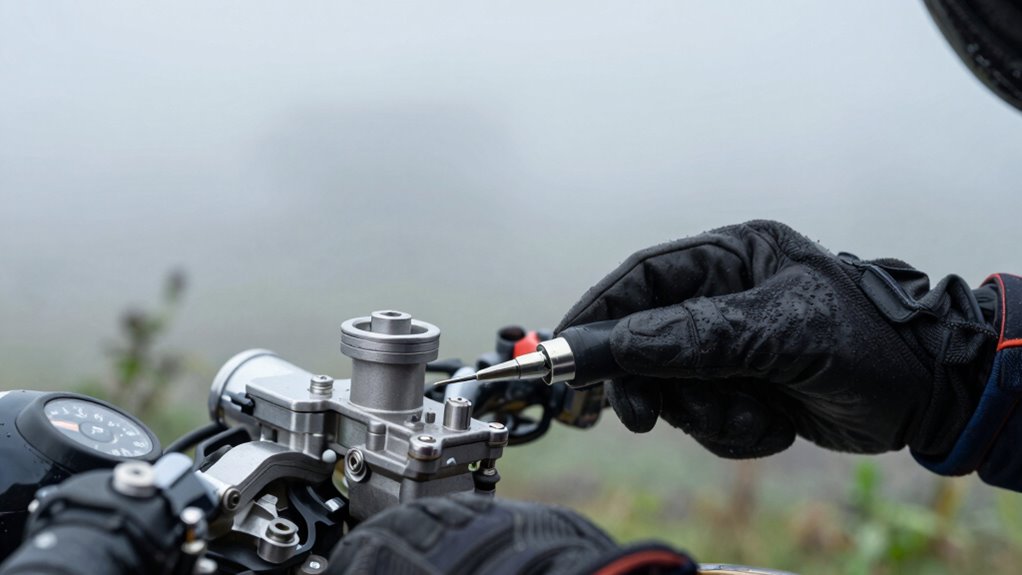
Temperature and humidity directly influence air density, which in turn affects your two-stroke jetting setup. As temperature increases, air becomes less dense, requiring a leaner jetting to prevent over-fueling. Conversely, cooler temperatures increase air density, necessitating richer jetting to maintain ideal combustion. Humidity also plays a critical role; higher humidity reduces air density, prompting leaner jetting adjustments, while low humidity increases density, requiring richer settings. To modify your jetting, start by adjusting the main jet—select a leaner jet for hot, humid conditions and a richer jet for cold, dry air. Always perform test runs after adjustments, listening for smooth throttle response and ideal power. Precise jetting ensures reliable performance and prevents potential engine damage caused by improper air-fuel mixture. Additionally, understanding best heat pump features can help optimize your climate control, especially if you need consistent temperature regulation in varying weather conditions. Regular maintenance of your jetting system can also prevent performance issues caused by debris or wear, and staying informed about air density changes can improve your tuning accuracy. Being aware of the properties of herbal remedies can further enhance your understanding of how different conditions affect your setup. Moreover, consulting reliable standby generator guides can help ensure your engine remains protected under different weather scenarios, preventing unexpected failures.
Fine-Tuning Your Jetting for Altitude Changes

When adjusting for altitude, you need to modify your main jet size to compensate for thinner air. Changing the needle position can refine throttle response, while monitoring the air-fuel ratio guarantees ideal combustion. Precise tuning of these points guarantees consistent performance across varying elevations. Additionally, utilizing modern tech such as digital carburetor analyzers can help you achieve more accurate adjustments quickly and reliably.
Adjust Main Jet Size
Adjusting the main jet size is essential for maintaining ideal engine performance as altitude changes. An incorrect main jet causes rich or lean conditions, leading to power loss or engine damage. To determine the proper main jet size:
- Start with the stock jet and test ride at the new altitude.
- Observe throttle response and power delivery during acceleration.
- If the engine bogs or sputters, switch to a leaner jet (smaller size).
- If it runs rich, fouls plugs, or loses top-end power, select a larger jet (bigger size).
Use a calibrated spark plug or exhaust gas analyzer to confirm perfect air-fuel mixture. Precise jetting ensures reliable throttle response, maximum power, and engine longevity at varying altitudes. Regular testing and incremental adjustments are key for accurate tuning.
Modify Needle Position
Modifying the needle position provides a refined approach to jetting adjustments, allowing you to optimize the air-fuel mixture within the mid-range throttle. Moving the needle clip position upward raises the needle, enriching the mixture, which is beneficial at higher altitudes where air density drops. Conversely, lowering the clip leanens the mixture, suitable for lower altitudes with denser air. Precise adjustment involves repositioning the clip to the appropriate slot, which directly influences the needle’s height and shape. This change impacts throttle response and power delivery without markedly affecting idle or top-end performance. Ensure the needle is securely clipped to prevent inconsistent fuel flow. Fine-tuning the needle position offers a targeted method to adapt your bike’s carburetion for altitude variation, resulting in smoother throttle response and optimized power delivery.
Monitor Air-Fuel Ratio
Monitoring the air-fuel ratio is essential for guaranteeing ideal engine performance as altitude changes. An improper ratio can cause sluggish response, increased emissions, or engine damage. To optimize jetting:
- Use a wideband O2 sensor to measure the real-time AFR during rides at different altitudes.
- Adjust the main jet to achieve an AFR of approximately 13.5:1 to 14.0:1 under load conditions.
- Fine-tune the pilot jet for smooth idle and low-speed throttle response, targeting an AFR near 14.7:1.
- Record AFR readings at various altitudes to identify trends and refine jetting parameters systematically.
Consistent monitoring allows precise adjustments, preventing lean or rich conditions that compromise power and durability. Accurate AFR management ensures ideal performance across varied elevation changes.
Essential Tools and Quick Tips for Adjusting Jetting on the Trail

To effectively fine-tune your two-stroke jetting on the trail, you need the right tools and quick-reference techniques. A precise carburetor screwdriver allows you to make fine adjustments to the pilot screw and main jet without damaging components. A calibrated spark plug wrench helps you remove and inspect the spark plug for proper combustion signs, indicating correct jetting. A digital tachometer ensures accurate engine speed readings during testing. Carry a small, clean container with fuel to perform quick jet swaps if needed. Keep a detailed jetting chart for reference, noting altitude, temperature, and throttle response. These tools enable rapid, precise adjustments, minimizing guesswork. Quick tips include noting changes after each adjustment and always testing in consistent conditions to isolate effects.
Planning Seasonally to Prevent Jetting Confusion

Seasonal changes considerably impact your two-stroke jetting, making proactive planning essential for consistent performance. To optimize your setup across seasons, consider these key factors:
- Track temperature fluctuations—adjust jet sizes based on ambient temperature shifts.
- Monitor humidity levels—higher humidity may require leaner jetting to prevent bogging.
- Assess altitude changes—lower elevations often need richer jetting, while higher elevations demand leaner settings.
- Record weather patterns—keeping detailed notes helps anticipate jetting needs for upcoming conditions.
Frequently Asked Questions
How Often Should I Re-Jet My Bike for Changing Weather Conditions?
You should re-jet your bike whenever weather conditions change considerably, such as temperature drops or increases, humidity shifts, or altitude variations. Typically, check your jetting every few rides in new conditions, or if you notice performance issues like bogging or poor acceleration. Regularly inspect your plug color for signs of incorrect jetting, and make adjustments promptly to maintain peak engine response and efficiency.
Can Weather Changes Cause Permanent Damage to My Engine?
Weather changes don’t typically cause permanent engine damage if you adjust your jetting accordingly. Sudden temperature or humidity shifts can lead to improper fuel mixture, risking overheating or fouling, but these issues are preventable with proper tuning. Regularly inspect and re-jet your bike as needed, especially during seasonal shifts. Proper maintenance and adjustments minimize the risk of long-term damage, ensuring ideal engine performance and longevity.
What Signs Indicate My Jetting Is Incorrect Due to Weather?
Ironically, your engine’s performance can betray you when jetting is off due to weather. Look for signs like inconsistent acceleration, bogging, or hesitation at certain RPMs. If your bike stalls or runs rough under specific conditions, it’s a clear indicator that your jetting needs adjustment. Pay close attention to changes in temperature and humidity, as these directly affect air-fuel mixture, requiring precise jetting modifications for peak engine response.
Are There Specific Jetting Settings for Different Riding Environments?
Yes, you should adjust jetting settings based on riding environments. In hot, humid conditions, lean the mixture slightly by increasing the needle height or jet size to prevent bogging. Conversely, in cold or dry environments, richen the mixture with a smaller main jet or lower needle position to maintain smooth power delivery. Always test adjustments on a controlled ride, monitoring engine response and exhaust color for ideal tuning.
How Does Seasonal Weather Variation Affect Long-Term Jetting Performance?
Seasonal weather variations considerably impact long-term jetting performance by altering air density and fuel requirements. As temperatures rise, air becomes less dense, necessitating a richer jetting setting to maintain ideal power. Conversely, cooler temperatures increase air density, requiring leaner jetting. Humidity also affects fuel combustion, so you should regularly adjust your jetting based on seasonal conditions. Regular testing and incremental adjustments ensure consistent engine performance year-round.
Conclusion
By understanding how weather shifts influence your two-stroke jetting, you can anticipate changes and fine-tune your bike with confidence. Whether it’s a sudden temperature drop or humidity spike, having the right tools and knowledge guarantees seamless adjustments on the trail. Remember, seasonal planning isn’t just smart—it’s essential for peak performance. Coincidentally, the same principles that keep your engine running smoothly also prepare you for unexpected weather, making every ride safer and more predictable.
Evergreen bestsellers Picks
bestsellers
As an affiliate, we earn on qualifying purchases.