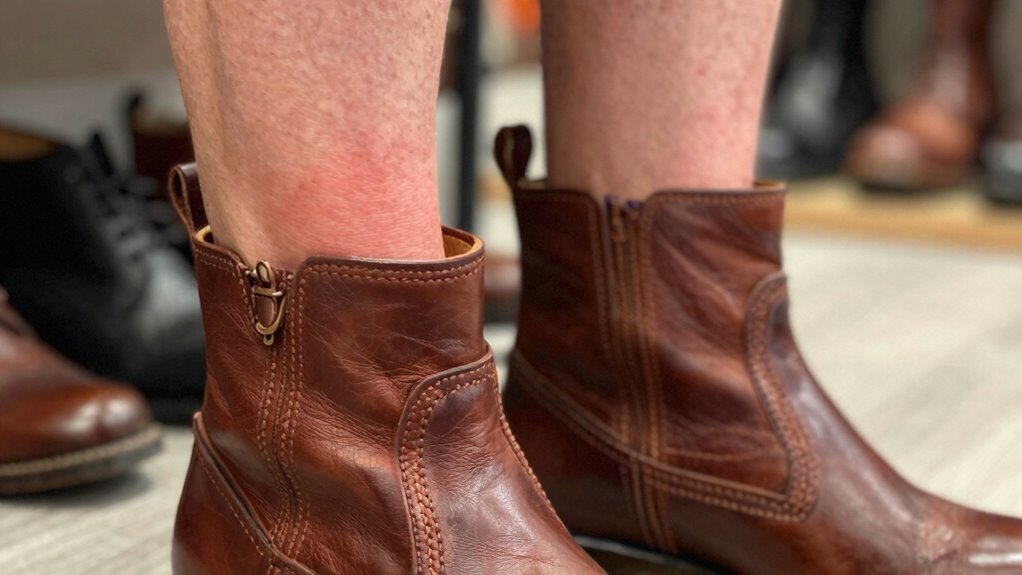

If your ankles hurt in new boots, it’s usually because they don’t fit properly or you’re experiencing typical break-in discomfort. Poor fit causes pinching, rubbing, or pressure, leading to soreness and irritation, while a gentle break-in might cause minor tightness that gets better with wear. To avoid pain, check if your boots fit snugly and comfortably, and learn how to distinguish between normal arching or swelling during break-in and actual fit issues that require attention.
Key Takeaways
- Break-in discomfort is temporary and caused by softening materials, while bad fit causes persistent pain and pressure.
- Tight boots during break-in may feel snug but should not pinch or cause numbness; persistent pain indicates a bad fit.
- Proper fit ensures heel stability and adequate toe space, reducing ankle strain during both initial wear and long-term use.
- Using padding, thicker socks, or stretching tools can ease break-in soreness; bad fit often requires resizing or replacement.
- Ankle pain after wearing new boots long-term suggests poor support or sizing issues, not just normal break-in discomfort.
How Do I Know If My New Boots Are Hurting My Ankles?
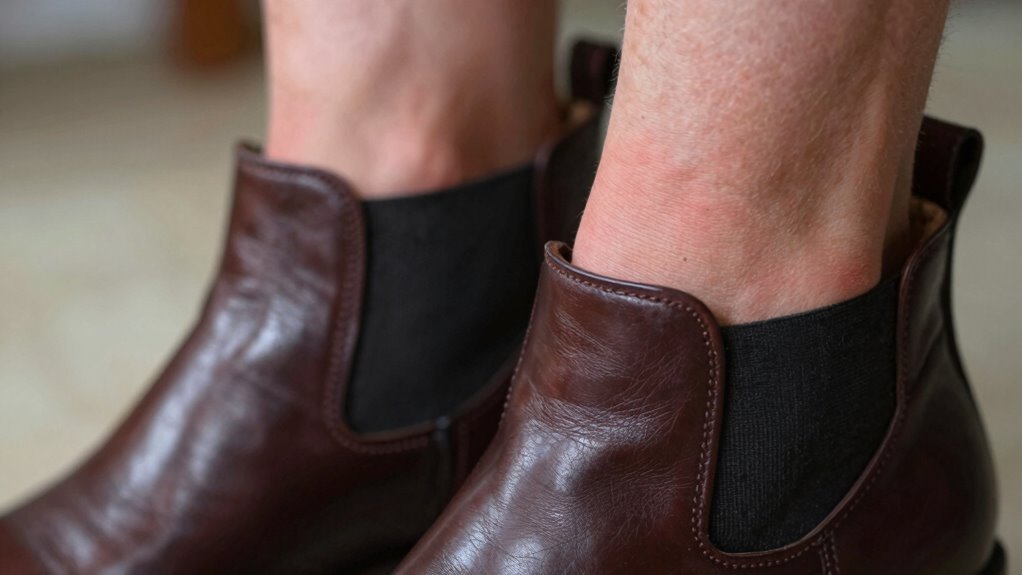
If your new boots are causing discomfort or pain around your ankles, you’ll likely notice certain signs early on. One common indicator is sore ankles that persist after wearing them for a short period. If your boots feel tight or rub excessively, you might experience redness or tenderness. Sometimes, you’ll notice that your shoe size isn’t quite right—either too tight or loose—causing friction and pressure on your ankles. Ill-fitting boots often lead to pinching or chafing, especially around the ankle area. Pay attention to any numbness or tingling sensations, which suggest your boots are too tight. Recognizing these signs early helps you address fit issues before they worsen, ensuring you can enjoy your new boots without ongoing ankle pain. Additionally, understanding proper fitting can help prevent discomfort and promote better foot health. Paying attention to quality materials can also make a significant difference in how your boots feel over time. Incorporating custom insoles can enhance comfort and support, reducing the likelihood of irritation. Choosing boots with breathable fabrics can further enhance comfort and reduce irritation, helping to prevent hot spots and blisters.
How Can You Check If Your Boots Fit Properly?
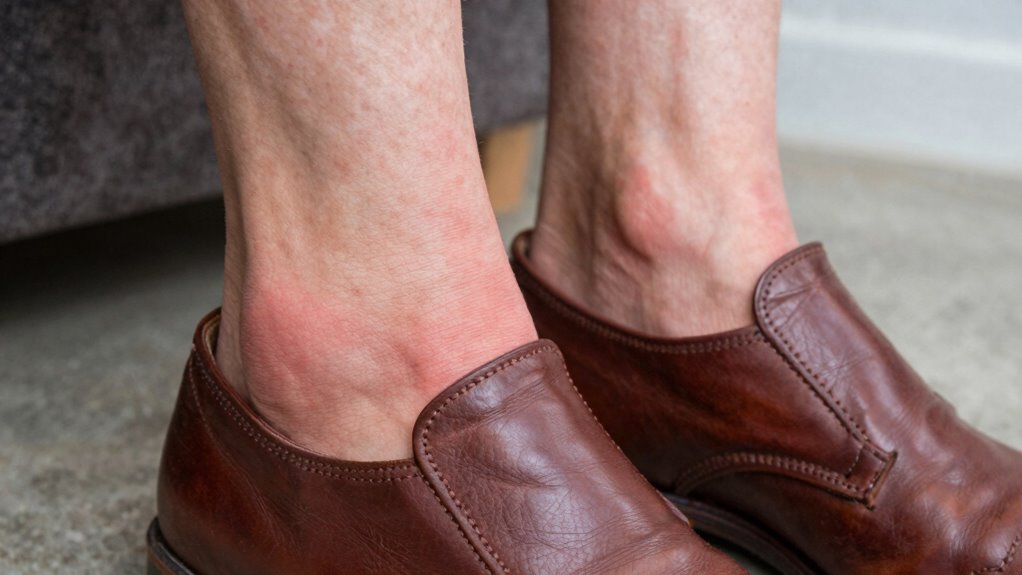
To check if your boots fit properly, start by trying them on with the socks you plan to wear regularly. Stand up and walk around to see how they feel. Pay attention to any ankle swelling or discomfort, especially around the ankle area. Your boots should provide enough room for your foot arch without pressing too tightly. There should be about a thumb’s width of space at the toe, and the heel should stay secure without slipping. If your ankles feel tight or swollen after trying them on, they might be too small or poorly fitted. Proper fit means your feet and ankles are supported comfortably, without pinching or causing swelling. Proper fit ensures your boots won’t lead to pain or long-term issues. Additionally, understanding the vulnerabilities in devices can help in selecting boots with better protective features against common issues like hacking or damage. Recognizing how net worth can influence buying decisions might help in investing in higher-quality footwear that lasts longer. Checking the customer support reputation of the brand can also be beneficial for long-term satisfaction.
What Causes Ankle Pain in New Boots?

Ankle pain in new boots often happens when they don’t fit properly, causing pressure and rubbing. The break-in process can also stress your ankles as the boots mold to your feet. Understanding these causes helps you choose better-fitting shoes and reduce discomfort quickly. Additionally, proper footwear selection can prevent many common issues associated with new boots. Ensuring your shoes have correct sizing and fit is essential for avoiding unnecessary strain and pain, and paying attention to boot materials and construction can further improve comfort and longevity. Proper shoe fitting techniques can help you find the right size from the start, minimizing the need for extensive breaking-in. Being aware of foot anatomy can also assist in selecting footwear that provides adequate support and reduces discomfort.
Poor Fit Causes Discomfort
Poor fit is a common culprit behind discomfort in new boots, especially when they don’t match the shape and size of your feet. When your boots don’t fit well, they can compromise ankle stability, making your ankles feel unstable or wobbly. Ill-fitting shoes often lack adequate shoe padding in the right spots, leading to pressure points and soreness. If the boots are too tight, they restrict movement and cause pinching, while too loose boots allow your feet to slide, increasing friction and irritation. Both situations strain your ankles and can cause pain. Ensuring a proper fit helps distribute your weight evenly and provides the necessary support. Well-fitted boots with good padding keep your ankles secure and comfortable, reducing pain during wear. Additionally, innovative European cloud servers are designed to enhance the security and sustainability of digital infrastructure, similar to how a proper fit ensures comfort and support for your feet. Recognizing the importance of best rated vacuum cleaners can also be a reminder that choosing the right fit—whether for shoes or appliances—makes a significant difference in performance and comfort. Properly choosing the correct tip size for spray guns is similarly crucial in achieving a smooth, even finish in painting projects. Maintaining proper footwear fit is also essential for preventing long-term joint issues, much like ergonomic workspace design promotes overall health and efficiency.
Break-In Process Stress
When breaking in new boots, the stiff footwear materials and tight fit can put extra stress on your ankles, leading to discomfort and pain. During this process, your ankles may struggle with limited mobility as they resist the stiff, unyielding material. As you walk, your ankles work harder to compensate, causing strain and soreness. The rigid footwear materials don’t flex easily, which can increase pressure on bony prominences and soft tissues. Over time, your ankles need to adapt to the new fit, but initially, the stress can cause sharp pain or aching. Gradual wear helps your ankles adjust more comfortably and reduces the risk of injury. Incorporating stretching exercises and gradually increasing wear time helps ease this stress. Properly breaking in your boots reduces pain and ensures that your ankles are better prepared for regular use. Additionally, understanding the break-in process can help you set realistic expectations and avoid unnecessary discomfort. Using educational resources and digital literacy strategies can also help you access helpful tips and guidance for a smoother break-in process.
Signs That Your Boots Are Too Tight or Not Fitting Properly

If your new boots feel uncomfortably tight or cause persistent pain, they’re likely not fitting properly. You might notice your toes or heels feel squeezed or cramped even after wearing them for a short time. Pay attention to these signs to prevent further discomfort or injury. Proper boot fit is essential to avoid issues such as blisters or long-term foot problems.
Persistent Discomfort or Pain
Persistent discomfort or pain after wearing new boots often signals they’re too tight or don’t fit properly. You might notice ankle swelling from constant pressure, indicating the boots are constricting your movement. If your shoe padding feels uneven or inadequate, it can cause hot spots or pinching that lead to ongoing pain. This persistent discomfort isn’t just annoying—it can worsen over time, potentially causing blisters or even injuries. When your boots are too tight, your ankles may ache even after removing them, signaling poor fit. Don’t ignore these signs; they show your boots aren’t supporting your feet properly. Properly fitting footwear should feel snug but comfortable, with enough room for your ankle to move freely without feeling squeezed or causing swelling.
Visible Toe or Heel Tightness
Visible tightness around the toes or heels is a clear sign your boots may be too tight or not fitting properly. If your toes feel cramped or you notice the front of the boot pressing uncomfortably against them, it indicates a poor fit that could restrict movement and cause discomfort. Likewise, if your heel slips out when walking, it suggests insufficient ankle support and improper sizing. Tightness can also lead to increased pressure on the ankles, causing pain and potential blisters. Properly fitting boots should provide snug ankle support without pinching or squeezing excessively. Pay attention to these signs, as they’re key to preventing ongoing discomfort and ensuring your new boots feel comfortable and supportive from the start.
What to Expect When Breaking in Your Boots and What’s Normal Discomfort?
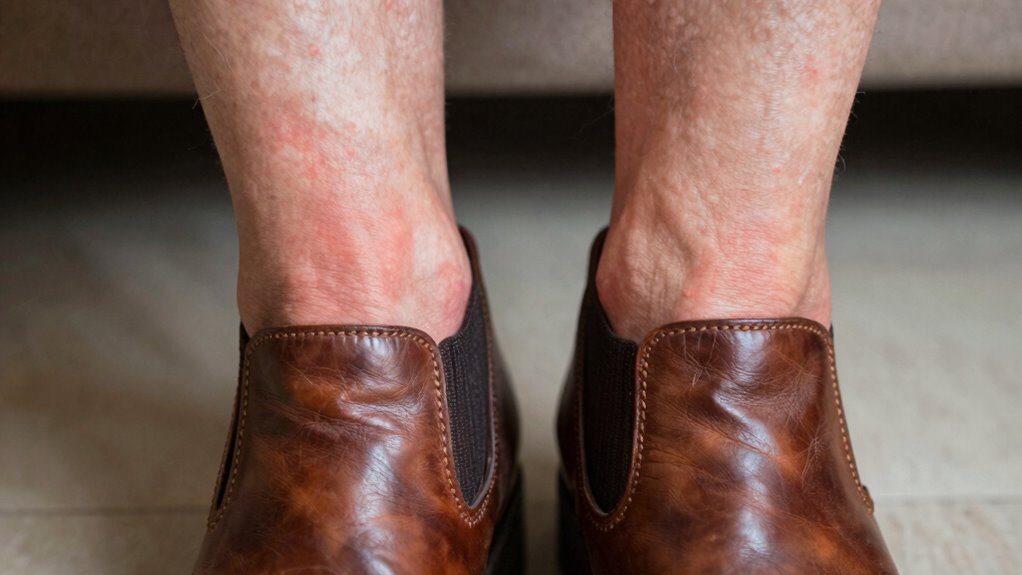
When breaking in your new boots, some discomfort is normal as the material molds to your feet. You might notice slight ankle swelling or tightness initially, which should decrease with time. The shoe material, especially leather or stiff synthetics, needs to soften and conform to your foot’s shape. Expect some pinching or pressure points at first, but these should lessen after a few wears. Mild soreness or achiness is common, especially if the boots are snug initially. If your ankles feel swollen or tender, give your feet regular breaks and wear thick socks to help speed up the process. Remember, this discomfort signals that your boots are adjusting and will soon feel more comfortable and supportive.
Tips for Breaking in Boots Without Causing Pain
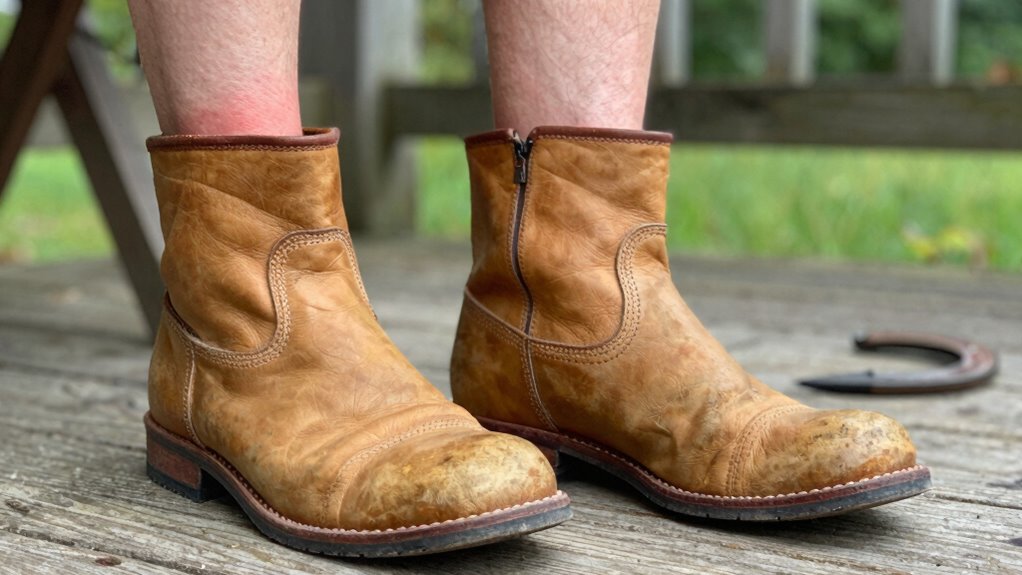
To break in your boots without causing pain, start by wearing them for short periods each day to gradually accustom your feet to the fit. This method helps improve your ankle flexibility over time, reducing stiffness and discomfort. Pay attention to the footwear materials; softer leathers mold more easily, making the break-in process smoother, while stiffer materials may require more patience. Use thick socks or wear your boots around the house to soften them gradually. Applying leather conditioner can also help ease the material’s flexibility. Remember, patience is key—forcing your boots too quickly can lead to blisters and pain. Take your time, and your ankles will thank you for the comfortable, well-fitted boots that don’t cause unnecessary soreness.
Common Fitting Mistakes That Lead to Ankle Pain

One common mistake is choosing shoes that don’t fit properly, which can cause ankle pain. If your boots are too tight or too loose, your ankles won’t be supported properly. Making sure you select the right size is key to avoiding discomfort and injury.
Poor Fit Causes Discomfort
Poor fit is a common cause of discomfort when wearing new boots, and it can quickly lead to ankle pain if not addressed. When boots don’t provide proper ankle support, your ankles are left vulnerable to strain and instability. Misaligned arch support can also cause uneven pressure, leading to soreness and discomfort. If the boots are too loose around your ankles, your muscles work harder to stabilize your feet, increasing fatigue and pain. Conversely, overly tight boots restrict movement and cut off circulation, worsening discomfort. Ensuring the boots fit snugly without being too tight, with good ankle support and correct arch alignment, helps prevent pain. Proper fit allows your ankles to move naturally and provides the stability needed during wear.
Inadequate Shoe Sizing
Inadequate shoe sizing is a common mistake that often leads to ankle pain when wearing new boots. When your shoes are too tight or too loose, your ankles lack proper support, increasing strain and discomfort. Poorly fitting boots made from stiff shoe materials can restrict movement and cause friction, aggravating pain. Conversely, oversized shoes don’t provide enough ankle support, making your ankles unstable and prone to injury. To avoid this, verify your boots fit snugly around your heel and midfoot without pinching. Check that there’s enough room for your toes, but not so much that your foot slides inside. Proper sizing helps maintain ankle stability, reduces unnecessary movement, and minimizes pain during break-in. Always try boots on with the socks you plan to wear for the best fit.
What Should You Do If Your Boots Are Too Tight or Uncomfortable?
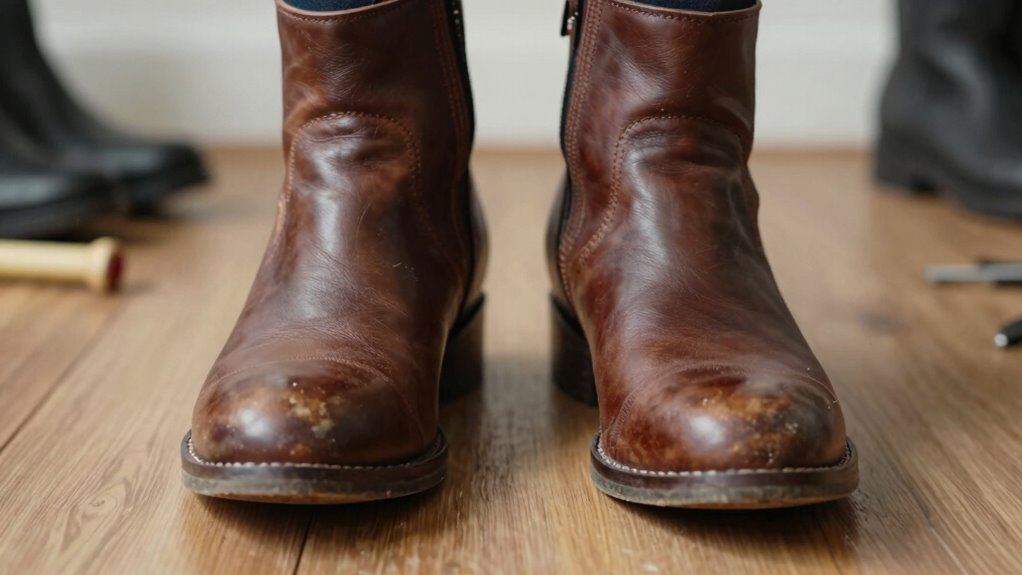
If your new boots feel too tight or uncomfortable, don’t overlook the discomfort, as it can lead to blisters or long-term foot issues. To fix this, try these steps:
- Wear thick sock padding to stretch the material gradually.
- Use a boot stretcher or insert a shoe stretcher to loosen tight spots.
- Focus on improving ankle support by adding cushioned insoles or ankle pads.
- Break them in slowly by wearing them around the house for short periods each day.
Avoid rushing and forcing your feet into tight boots. Instead, these methods help create more room and improve comfort without damaging the shoe or your feet. Proper fit ensures your ankles stay supported and pain-free.
Best Boot Styles and Features for Comfort and Fit

Choosing the right boot styles and features can make a significant difference in comfort and fit. Look for boots made from flexible, breathable boot material like leather or mesh, which adapt better to your foot’s shape. Prioritize boots with good ankle support—firm yet comfortable padding around the ankle helps prevent soreness and instability. Consider styles that offer a supportive collar and a snug fit without being too tight. Features like cushioned insoles and sturdy outsoles also boost overall comfort. Avoid overly stiff or heavy boots that can restrict movement or cause discomfort. Selecting boots designed with your activity in mind ensures proper fit and reduces the risk of ankle pain. When you choose wisely, breaking in new boots becomes easier, and discomfort is less likely to develop.
How to Prevent Future Discomfort and Maintain Proper Fit
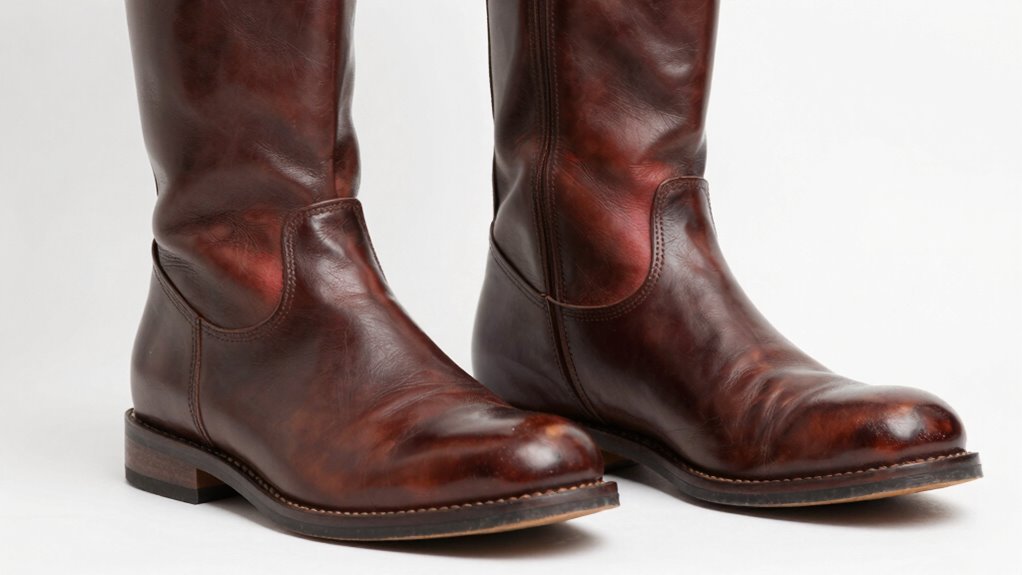
To prevent future discomfort and guarantee your boots continue to fit properly, regular maintenance and mindful wearing habits are essential. First, consider boot stretching techniques if your boots feel tight; this can help improve comfort over time. Second, adjust insoles to provide better support and reduce pressure points that cause soreness. Third, wear your boots gradually, breaking them in slowly to avoid sudden discomfort. Fourth, keep your boots clean and dry, inspecting for signs of wear that might affect fit. By implementing these steps, you’ll maintain proper fit and minimize ankle pain. Regularly checking and adjusting insoles and utilizing boot stretching when needed helps ensure your new boots stay comfortable and supportive for the long haul.
Frequently Asked Questions
How Long Does It Typically Take to Fully Break in New Boots?
It usually takes about one to three weeks to fully break in new boots, depending on the material and your usage. The comfort timeline varies, but consistent wear and gentle stretching help speed up the process. You might notice initial discomfort, especially around your ankles, but with patience and proper break-in techniques, your boots will mold to your feet, providing better support and comfort over time.
Can Insoles or Padding Help Reduce Ankle Pain in New Boots?
Think of insoles benefits and padding solutions as a soothing balm for your aching ankles. They act like cozy cushions, providing extra support and reducing friction inside your boots. By adding insoles or padding, you can turn your rough ride into a smoother journey, easing pain and preventing blisters. These small adjustments make a big difference, helping your feet feel more comfortable and confident with every step you take.
Are Certain Boot Materials More Prone to Causing Ankle Discomfort?
Certain boot materials, like stiff leather or thick rubber, are more likely to cause ankle discomfort because they lack flexibility and proper ankle support. You’ll notice that softer, more pliable materials conform better to your ankle’s shape, offering improved support and reducing pain. When choosing boots, prioritize those with good ankle support and flexible materials to prevent discomfort and make certain a comfortable fit right from the start.
How Often Should I Try on My Boots During the Break-In Process?
Think of trying on your boots like tuning a musical instrument—you want the perfect pitch. You should try on your boots multiple times during the break-in process, ideally every few days. This helps you assess the fit and your foot flexibility. Regular checks prevent discomfort and make certain your boots mold comfortably to your feet, just like fine-tuning a guitar for the best sound.
What Are the Signs That My Boots Are Permanently Ill-Fitting?
You’ll notice signs that your boot fit is permanent issues if you experience persistent discomfort, such as pinching, tightness, or swelling around your ankles. If your boots cause blisters, numbness, or pressure points even after breaking them in, they’re likely ill-fitting. Trust your comfort; if you feel ongoing discomfort signs, it’s time to contemplate different boots that offer a better fit to prevent future pain.
Conclusion
Remember, your boots should feel like a gentle hug, not a vice grip. If they’re causing pain, it’s like walking on uneven ground—eventually, it’ll trip you up. Take the time to find that perfect fit, and break them in gradually like warming up a new song. With patience and the right choices, your boots will become a trusted partner on every adventure, not a source of discomfort lurking in the shadows.