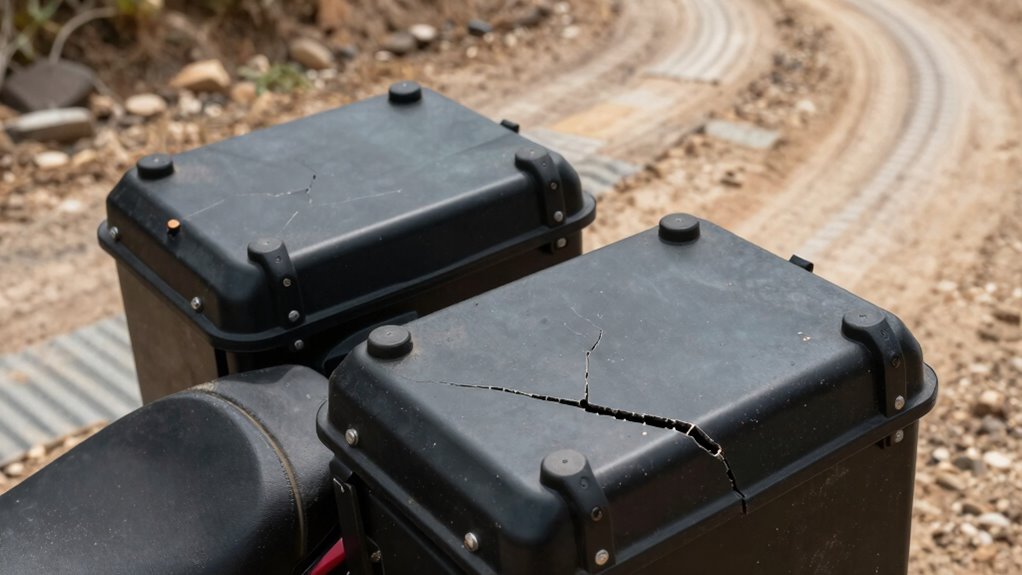

Aluminum panniers crack predictably on corrugations because repeated flexing causes microscopic fatigue, especially at impact points or thinner sections. When you ride over rough terrain, the continuous vibrations and impacts create stress cycles that weaken the material over time. These small cracks develop gradually, often along weld lines or vulnerable spots, making failure inevitable if not addressed. If you keep exploring, you’ll discover ways to prevent or slow this wear.

Get business pricing on garage and car supplies
- Business-only prices and quantity discounts
- Tax-exempt purchasing
- Multiple users, one account, clear invoices
Key Takeaways
- Repeated flexing from corrugations causes microscopic cracks to form and grow over time in aluminum panniers.
- Impact from rocks or debris at corrugation peaks creates stress points that initiate crack development.
- Cyclical loading during rides accelerates metal fatigue, making cracks more predictable along weld lines or thin sections.
- Regular inspection helps detect early cracks before they expand and compromise pannier integrity.
- Reinforcing vulnerable areas and minimizing impact exposure can slow crack progression on corrugated terrain.

If you’ve ever experienced cracks in your aluminum panniers, you’re not alone—it’s a predictable issue rooted in the material’s inherent properties. Aluminum is lightweight and strong, but it’s also susceptible to material fatigue, especially when exposed to repeated stress. Every time you ride over corrugations or rough terrain, your panniers absorb vibrations and impacts that gradually weaken their structure. Over time, this constant flexing causes microscopic cracks to develop, which can grow larger with each ride. This process isn’t sudden; it’s a slow deterioration that’s almost inevitable if you frequently traverse bumpy roads or uneven surfaces.
Aluminum panniers naturally develop cracks over time due to repeated stress and vibrations.
Impact damage also plays a significant role in causing cracks. Even minor hits from rocks, debris, or accidental bumps can create localized stress points. These impact sites become initiation points for cracks, especially if the panniers have already experienced some degree of material fatigue. When impact damage occurs, it compromises the integrity of the aluminum, making it more vulnerable to future stresses. Over time, the repeated combination of impact damage and ongoing flexing accelerates crack formation, particularly along weld lines or thinner sections of the pannier.
The problem is further compounded by the nature of corrugations—those repetitive, wave-like patterns in the road surface. Corrugations cause your panniers to flex repeatedly, stressing the same spots over and over. This cyclical loading leads to metal fatigue, a phenomenon where the material’s internal structure weakens due to repeated stress cycles. You might not notice it immediately, but with continued exposure, small cracks will emerge and expand, eventually compromising the pannier’s ability to protect your gear and withstand further impacts. Recognizing the material fatigue process can help you better understand how these cracks develop over time. Regular inspections and understanding the stress cycles involved can aid in early detection and maintenance. Being aware of the cyclical stress can also guide you in choosing more durable materials for future gear.
Understanding this predictable failure pattern helps you take preventative steps. Reinforcing vulnerable areas, avoiding excessive impact, and reducing exposure to continuous vibrations can slow down the progression of cracks. Additionally, using protective coatings or reinforcements in high-stress areas can help extend the lifespan of aluminum panniers. However, no matter how careful you are, the combination of material fatigue and impact damage makes aluminum panniers prone to cracking over time. Recognizing these factors allows you to plan for repairs or replacements before a small crack becomes a serious failure. In essence, your riding habits and the terrain you conquer directly influence how quickly aluminum panniers develop these predictable cracks, especially when navigating corrugated roads.
aluminum panniers crack repair kit
As an affiliate, we earn on qualifying purchases.
As an affiliate, we earn on qualifying purchases.
Frequently Asked Questions
How Can I Prevent My Aluminum Panniers From Cracking?
To prevent your aluminum panniers from cracking during mountain biking, especially on rough terrain, you should reinforce the mounting points and choose panniers with thicker, high-quality aluminum. Avoid overloading them, as excessive cargo capacity stresses the material. Also, regularly inspect for weak spots and guarantee the panniers are securely attached to reduce vibrations. Proper maintenance and cautious riding over corrugations will help extend their lifespan and prevent cracking.
What Are the Best Materials to Reinforce Panniers?
You should opt for materials with high material durability, like reinforced plastics or stainless steel, to strengthen your panniers. Using reinforcement techniques such as adding internal aluminum braces or external protective strips can also help prevent cracks. Combining sturdy materials with effective reinforcement methods guarantees your panniers withstand corrugations and rough terrains, reducing the risk of damage and extending their lifespan during your rides.
How Often Should I Inspect Panniers for Damage?
Like a seasoned explorer checking their gear before a mountain biking off-road adventure, you should inspect your panniers regularly—ideally after every few rides or weekly if you ride often. Focus especially on corrugations and rough terrain, where stress is highest. Look for cracks, dents, or weak spots. Regular inspections help catch damage early, preventing surprises during your journey and ensuring your gear keeps up with your adventurous spirit.
Are There Specific Brands More Resistant to Cracking?
Some brands are more resistant to cracking because of their strong reputation for quality and material innovation. Look for brands like Ortlieb or Tubus, known for their durable, lightweight designs that withstand rough terrain. These brands often incorporate advanced materials and manufacturing techniques that reduce the risk of cracking on corrugations. Investing in reputable brands can save you money and hassle in the long run, ensuring your panniers stay intact during your adventures.
Can Repair Kits Effectively Fix Cracked Aluminum Panniers?
A repair kit can be a lifesaver, but it’s not magic—don’t expect miracles. When your aluminum pannier cracks, a repair kit might temporarily patch it up, but it won’t restore original strength. For ideal pannier mounting and long-term durability, focus on the material’s resilience. While repair kits help with minor damage, investing in high-quality, durable aluminum panniers is your best bet for withstanding rough terrain.
Conclusion
Knowing why aluminum panniers crack on corrugations helps you avoid the same fate. Think of your bike setup like a delicate dance; every step needs balance and precision. By understanding the predictable stress points, you can reinforce or choose better materials, turning rough terrain into just another dance floor. With a little foresight, your panniers can withstand the bumps and jolts, keeping your adventure smooth and worry-free—like sailing a sturdy boat through choppy waters.
Halloween Picks
halloween
As an affiliate, we earn on qualifying purchases.