A 200W portable solar panel can add meaningful daytime charging for a power station or 12V battery, but the right pick depends on how you connect it and how often you move it. I’d start with the Renogy 200W Portable Solar Panel as the best overall choice for shoppers seeking an established, versatile option. The DOKIO 200W kit stands out for its included charge controller, while the HQST N-Type panel offers a different cell design for buyers comparing panel technology. Across this group, the main tradeoffs are connector compatibility, included charging hardware, panel format, and the effort required to position it in the sun. Read on for the full comparison and buying guidance.

Get business pricing on garage and car supplies
- Business-only prices and quantity discounts
- Tax-exempt purchasing
- Multiple users, one account, clear invoices
Complete the kit


Key Takeaways
- Connection type matters as much as wattage: Several panels target power stations, while the DOKIO kit and Renogy suitcase include charge controllers for battery-focused setups.
- The lineup splits between panel-only and ready-to-connect kits: Buyers who already own compatible cables may prefer a simpler panel; newcomers may value a controller included in the package.
- Portability is a design tradeoff, not a shared advantage: Foldable panels, suitcase formats, and panels with multiple kickstands each suit different transport and setup habits.
- Specialized designs narrow the field: HQST’s N-Type panel and LVYUAN’s 24V model deserve attention from buyers with specific system requirements, not as automatic fits for every setup.
- No 200W rating guarantees 200W in use: Sun angle, shade, temperature, and the receiving device affect real charging, so panel positioning and electrical compatibility can matter more than small feature differences.
| SOKIOVOLA 200W Foldable Portable Solar Panel |  | Best for Power-Station Compatibility | Maximum power: 200 watts | Conversion efficiency: Up to 25% | Output voltage: 18 volts | VIEW ON AMAZON | See Our Full Breakdown |
| DOKIO 200W Portable Foldable Solar Panel Kit for 12V Battery Charging |  | Best for Lightweight 12V Battery Charging | Maximum power: 220 watts listed | Output: 12V DC | Amperage capacity: 6.1 A | VIEW ON AMAZON | See Our Full Breakdown |
| Renogy 200W Portable Solar Panel |  | Best for Direct Device Charging | Power: 200 watts | Cell type: 16BB N-Type monocrystalline silicon | Conversion efficiency: 25% | VIEW ON AMAZON | See Our Full Breakdown |
| 200W Foldable Portable Solar Panel, IP67 Waterproof |  | Best for Built-In Charging Ports | Maximum power: 200 watts | Conversion efficiency: 23.5% | USB-C output: Up to 60W PD | VIEW ON AMAZON | See Our Full Breakdown |
| GRECELL UB200 200W Portable Foldable Solar Panel | 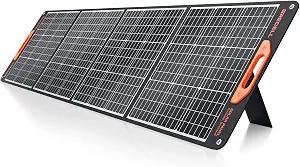 | Best Lightweight All-Rounder | Power: 200 watts | Cell type: Monocrystalline | Conversion efficiency: Up to 23.5% | VIEW ON AMAZON | See Our Full Breakdown |
| Ecosonique 200W Portable Foldable Solar Panel with MC4 Output |  | Best for Direct Device Charging | Maximum power: 200 watts | Output voltage: 20 volts | Amperage capacity: 10 A | VIEW ON AMAZON | See Our Full Breakdown |
| BougeRV 200W Portable Foldable Solar Panel |  | Best for Rugged Outdoor Use | Maximum power: 200 watts | Output voltage: 31.1 volts DC | Conversion efficiency: 25% | VIEW ON AMAZON | See Our Full Breakdown |
| 200W Portable Solar Panel with 4 Kickstands |  | Best for Stable Sun-Angle Positioning | Maximum power: 200 watts | Cell type: Monocrystalline silicon | Conversion efficiency: Up to 23.5% | VIEW ON AMAZON | See Our Full Breakdown |
| Twelseavan 200W Foldable Portable Solar Panel |  | Best for Higher-Wattage USB-C Charging | Maximum power: 200 W | Conversion efficiency: 24% | Maximum voltage: 19.8 V | VIEW ON AMAZON | See Our Full Breakdown |
| Renogy 200W Portable Solar Panel for Power Stations |  | Best Lightweight Pick | Power output: 200 W | Cell type: 16BB N-Type | Efficiency: Up to 25% | VIEW ON AMAZON | See Our Full Breakdown |
| Renogy 200W 12V Portable Foldable Solar Panel Suitcase with 20A Charge Controller |  | Best for 12V Battery Charging | Maximum power: 200 watts | Output voltage: 12 V DC | Maximum voltage: 21.47 volts | VIEW ON AMAZON | See Our Full Breakdown |
| HQST 200W Portable N-Type Solar Panel |  | Best Lightweight Pick | Maximum power: 200 watts | Cell type and efficiency: 16BB N-Type; up to 25% | Water resistance: IP67 | VIEW ON AMAZON | See Our Full Breakdown |
| ZOUPW 200W Portable Foldable Solar Panel |  | Best for Direct Device Charging | Cell type: Monocrystalline silicon | Conversion efficiency: Up to 23.5% | Folded dimensions: 25 × 21.06 × 1.97 inches | VIEW ON AMAZON | See Our Full Breakdown |
| EBL 200W Foldable Portable Solar Panel for Power Stations |  | Best for Rugged-Fabric Protection | Power output: 200 watts | Solar cell type: Monocrystalline silicon | Conversion rate: Up to 23.5% | VIEW ON AMAZON | See Our Full Breakdown |
| LVYUAN 200W Foldable Portable Solar Panel, 24V |  | Best Compact-Fold Option | Maximum power: 250W listed; product title and description identify it as 200W | Output voltage: 20–24V | Maximum voltage: 24V | VIEW ON AMAZON | See Our Full Breakdown |
| portable solar panel 200 watt | Weight | Maximum power | Conversion efficiency | Cell type |
|---|---|---|---|---|
| SOKIOVOLA 200W Foldable Portab | 16.3 pounds | 200 watts | Up to 25% | Monocrystalline silicon |
| DOKIO 200W Portable Foldable S | 9.7 pounds | 220 watts listed | — | Monocrystalline silicon |
| Renogy 200W Portable Solar Pan | 13.9 pounds | — | 25% | 16BB N-Type monocrystalline silicon |
| 200W Foldable Portable Solar P | — | 200 watts | 23.5% | — |
| GRECELL UB200 200W Portable Fo | 10.14 pounds | — | Up to 23.5% | Monocrystalline |
| Ecosonique 200W Portable Folda | 11 lbs (5 kg) | 200 watts | Up to 23.5% | — |
| BougeRV 200W Portable Foldable | 13.8 pounds | 200 watts | 25% | N-Type |
| 200W Portable Solar Panel with | 17.94 lb | 200 watts | Up to 23.5% | Monocrystalline silicon |
| Twelseavan 200W Foldable Porta | 15.7 pounds | 200 W | 24% | — |
| Renogy 200W Portable Solar Pan | 8.82 lbs | — | — | 16BB N-Type |
| Renogy 200W 12V Portable Folda | — | 200 watts | — | — |
| HQST 200W Portable N-Type Sola | 11 pounds | 200 watts | — | — |
| ZOUPW 200W Portable Foldable S | 18.96 pounds | — | Up to 23.5% | Monocrystalline silicon |
| EBL 200W Foldable Portable Sol | 17.95 pounds | — | — | — |
| LVYUAN 200W Foldable Portable | 11.6 pounds | 250W listed; product title and description identify it as 200W | — | — |
More Details on Our Top Picks
SOKIOVOLA 200W Foldable Portable Solar Panel
The SOKIOVOLA’s strongest selling point is its five-in-one cable, which gives buyers several connection options without needing to source an adapter separately. That makes it a more flexible match for a mixed collection of portable power stations than the Renogy 200W Portable Solar Panel, whose 4-in-1 adapter is sold separately. Its ETFE coating and IP68 rating also suit outdoor use, while the 21 × 23-inch folded footprint is easier to store than its full 78.68-inch span suggests. The tradeoff is weight: at 16.3 pounds, it is heavier than both the Renogy and GRECELL UB200, so I would favor it for car camping over long carries. The stated 200W is a peak rating, and the connected power station’s input limits still govern charging.
Pros:- Five connector options are included for matching a range of power-station inputs.
- Folds to a 21 × 23-inch footprint for vehicle storage.
- ETFE surface and IP68 rating are designed for outdoor exposure.
- Up to 25% stated conversion efficiency.
Cons:- At 16.3 pounds, it is a poor fit for backpacking or frequent long carries.
- Actual charging speed depends on sunlight and the connected power station’s input limits.
Best for: Car campers and portable-power-station owners who want several common connector options included in the kit.
Not ideal for: Hikers and buyers prioritizing the lightest carry; at 16.3 pounds, it outweighs the Renogy and GRECELL options here.
- Maximum power:200 watts
- Conversion efficiency:Up to 25%
- Output voltage:18 volts
- Cell type:Monocrystalline silicon
- Folded size:21 × 23 inches
- Weight:16.3 pounds
- Water protection:IP68
- Included connector options:XT60, DC5521, DC7909 (8 mm), DC8020, Anderson
- Warranty:12 months
Our verdict“Choose the SOKIOVOLA if included connector flexibility and a high stated water-protection rating matter more than minimizing carry weight.”
DOKIO 200W Portable Foldable Solar Panel Kit for 12V Battery Charging
The DOKIO is the lightest panel in this five-product group at 9.7 pounds, and its included PWM controller makes it a different proposition from panel-first choices such as the SOKIOVOLA 200W Foldable Portable Solar Panel. It is aimed at charging a 12V battery directly, with alligator clips and a long cable that let you place the panel in sun while keeping the battery or other gear shaded. Dual USB ports add a simple way to charge small devices. The listed maximum power is 220W, even though the product is marketed as a 200W panel, so I would check the connected equipment’s input limits rather than assume a particular charging rate. The PWM setup and direct-battery orientation are less compelling if your main goal is plugging into a power station with a specific solar-input requirement.
Pros:- At 9.7 pounds, it is lighter than the other panels in this group.
- Includes a standalone PWM controller and alligator clips for 12V battery charging.
- A 9.84-foot cable allows more flexible panel placement.
- Dual USB ports can charge small devices.
Cons:- PWM control is a more basic approach than a setup built around an MPPT controller.
- USB output may vary when used without a connected battery in direct sunlight.
- Charging speed depends on the connected battery or power station’s input limits.
Best for: RV, van, boat, and emergency-kit owners who want a light folding panel with a controller for charging a 12V battery.
Not ideal for: Buyers focused on direct power-station charging or higher-end controller features; the included controller is PWM, and compatibility still depends on the equipment.
- Maximum power:220 watts listed
- Output:12V DC
- Amperage capacity:6.1 A
- Maximum voltage:18 volts
- Cell type:Monocrystalline silicon
- Folded dimensions:20 × 27 × 1.1 inches
- Weight:9.7 pounds
- Controller:PWM
- Warranty:1 year
Our verdict“Pick the DOKIO for a lightweight, controller-included 12V battery setup, not for buyers seeking a feature-rich power-station panel.”
Renogy 200W Portable Solar Panel
Renogy stands apart because this panel can charge devices directly through 45W USB-C PD and two USB-A ports, rather than relying only on a power station. That is handy when phones and small electronics need power alongside a larger battery. Its four kickstands also give it several positioning angles, while the 13.9-pound weight keeps it more manageable than the SOKIOVOLA. The tradeoff is the missing 4-in-1 adapter: the panel has MC4 output, but buyers may need to obtain an additional adapter for their power station. Compared with the GRECELL UB200, Renogy offers direct USB-C PD charging and a longer stated warranty, but it weighs more and costs buyers an extra accessory step for some setups.
Pros:- 45W USB-C PD and dual USB-A ports support direct device charging.
- Four kickstands allow several panel angles for changing sun positions.
- 16BB N-Type monocrystalline cells have a stated 25% efficiency.
- Includes a 2-year material and workmanship warranty.
Cons:- The 4-in-1 adapter is sold separately.
- At 13.9 pounds, it is heavier than the DOKIO and GRECELL UB200.
- Power-station compatibility depends on the station’s input requirements.
Best for: Campers and road-trippers who want to charge USB-C devices directly while also having MC4 output for a compatible power station.
Not ideal for: Buyers who want a ready-to-connect multi-brand power-station cable in the package or need the lightest panel for frequent carrying.
- Power:200 watts
- Cell type:16BB N-Type monocrystalline silicon
- Conversion efficiency:25%
- Maximum voltage:21.6 volts
- Amperage capacity:11.3 A
- Weight:13.9 pounds
- Folded dimensions:23.72 × 22.99 × 1.97 inches
- Outputs:MC4, USB-C PD 45W, dual USB-A
- Warranty:2-year material and workmanship warranty
Our verdict“Choose Renogy if direct USB-C device charging and adjustable positioning matter more than having every power-station adapter included.”
200W Foldable Portable Solar Panel, IP67 Waterproof
This panel combines a 7-in-1 MC4 cable with USB-C PD, QC3.0 USB, and standard USB outputs, giving it broad connection options for power stations and small devices. The USB-C output is listed at up to 60W, which is higher than the Renogy’s 45W USB-C PD rating; that makes this a stronger paper fit for buyers who want to charge a compatible laptop directly. Its adjustable brackets and IP67-rated protection add useful flexibility for outdoor setups. I would be cautious about relying on the listed dimensions, which are described as unusually small for a 200W panel, and the stated 23.5% efficiency is not a guarantee of real-world output. Compared with the SOKIOVOLA, the port selection is broader, but its supplied information gives less confidence about overall size and handling.
Pros:- USB-C PD is listed at up to 60W, alongside QC3.0 and standard USB outputs.
- A 7-in-1 MC4 cable supports several stated power-station connections.
- Adjustable brackets allow the panel angle to be changed.
- ETFE construction and an IP67 rating are designed for outdoor use.
Cons:- Listed dimensions appear unusually small for a 200W panel, making fit and packing harder to judge.
- Actual output varies with sunlight and operating conditions.
- The available product details do not specify weight or folded dimensions.
Best for: Campers who want a panel with several built-in USB outputs and a multi-connector cable for compatible power stations.
Not ideal for: Buyers who need well-established size and weight details before packing or have a strict solar-input compatibility requirement.
- Maximum power:200 watts
- Conversion efficiency:23.5%
- USB-C output:Up to 60W PD
- QC3.0 USB output:Up to 18W
- Standard USB output:5V/3A
- Cable:3.5 ft 7-in-1 MC4
- Water protection:IP67
- Materials:Monocrystalline silicon, ETFE, high-density polyester canvas, aluminum
- Certifications:CE, RoHS, FCC
Our verdict“Consider this option if built-in USB ports and connector variety lead your priorities, but verify its dimensions and compatibility before buying.”
GRECELL UB200 200W Portable Foldable Solar Panel
At 10.14 pounds, the GRECELL UB200 is easy to favor when portability matters but a bare-bones panel is not enough. It folds to 21.46 × 22.95 inches and includes four adjustable kickstands, so it is simpler to position and pack than the heavier SOKIOVOLA. Multiple connectors cover several power stations and 12V battery types, while the 23.5% stated efficiency and ETFE surface add useful features without much carry weight. Its main limitation is that it is not a complete battery-charging kit: the charge controller and alligator clips are not included. The IP65 rating is also limited to splash resistance, unlike the higher protection rating stated for the SOKIOVOLA, so I would pack it away during rain rather than leave it exposed.
Pros:- Weighs 10.14 pounds and folds to a compact 21.46 × 22.95-inch size.
- Four adjustable kickstands help set the panel angle.
- Multiple connectors support compatible power stations and 12V battery types.
- ETFE surface is described as flexible and scratch-resistant.
Cons:- Charge controller and alligator clips are not included.
- IP65 protection covers splashes, not leaving the panel in rain or submerging it.
- Actual charging depends on sunlight and the connected equipment’s input limits.
Best for: Car campers and RV owners who want a light, foldable panel with several connectors and adjustable stands, and already have the needed controller or power station.
Not ideal for: Buyers who need a complete 12V battery-charging kit or expect to leave the panel out in rain.
- Power:200 watts
- Cell type:Monocrystalline
- Conversion efficiency:Up to 23.5%
- Folded size:21.46 × 22.95 × 1.77 inches
- Weight:10.14 pounds
- Water resistance:IP65
- Connectors:DC7909/8, XT60, aviation connector, Anderson
- Stand and mounting features:4 adjustable kickstands and 4 reinforced mounting holes
- Compatible batteries:12V LiFePO4, lithium, AGM, lead-acid, and GEL
Our verdict“Choose the GRECELL UB200 for a light, versatile panel if you already have the controller or power station needed to use it.”
Ecosonique 200W Portable Foldable Solar Panel with MC4 Output
The Ecosonique stands out for buyers who want one panel to feed a power station and charge smaller devices directly. Its USB-C PD 3.0 and USB-A QC 3.0 ports add flexibility that the BougeRV, with its XT60 and DC7909 connections, does not list. The six-fold format and four adjustable kickstands make it easier to aim the panel as the sun shifts, while the multiple adapters cover a range of compatible stations.
At 11 pounds, it is lighter than the BougeRV and the 17.94-pound four-kickstand panel, though still a sizable carry for long hikes. Its stated efficiency reaches 23.5%, below the 25% listed for Renogy. I’d choose it for campsite or vehicle use where direct device ports matter; buyers focused on maximum stated efficiency or the lightest carry have better-matched alternatives.
Pros:- USB-C PD 3.0 and USB-A QC 3.0 support direct charging of compatible devices.
- MC4, XT60, Anderson, and DC connections offer broad power-station compatibility.
- Four adjustable kickstands help position the panel toward the sun.
- Six-fold design packs into a relatively compact 18.04 × 16.35-inch footprint.
Cons:- At 11 pounds, it may be heavy for extended hikes.
- Its stated efficiency of up to 23.5% is lower than the 25% figures listed for BougeRV and Renogy.
- Actual output depends on sunlight and panel positioning.
Best for: Campers and road-trippers who want to charge a compatible power station and USB devices from one panel.
Not ideal for: Backpackers prioritizing a very light load, or buyers seeking the lineup’s highest stated conversion efficiency.
- Maximum power:200 watts
- Output voltage:20 volts
- Amperage capacity:10 A
- Conversion efficiency:Up to 23.5%
- Weight:11 lbs (5 kg)
- Folded dimensions:18.04 × 16.35 × 2.95 inches
- USB-C output:PD 3.0, 45 W
- Connectors:MC4, XT60, Anderson, DC7909, DC5525, USB-A, USB-C
Our verdict“Choose the Ecosonique if direct USB charging and varied power-station connectors matter more than achieving the highest stated efficiency.”
BougeRV 200W Portable Foldable Solar Panel
The BougeRV is the durability-focused choice in this group. Its fiberglass-reinforced construction is intended to resist cracking and abrasion, and an IP65 rating adds protection from dust and water jets. That combination suits frequent campsite setup better than the Ecosonique, whose listed strengths lean toward lighter weight and direct USB charging rather than reinforced construction.
BougeRV also lists 25% conversion efficiency, matching the stated figure for the lighter Renogy panel. The tradeoff is carrying weight: at 13.8 pounds, it is substantially heavier than Renogy’s 8.82-pound unit. Its XT60 and DC7909 connectors keep the setup straightforward for compatible stations, but the connection selection is narrower than the Ecosonique’s. I’d favor this panel for rougher outdoor handling, not for long walks from a vehicle or charging phones directly from the panel.
Pros:- N-Type cells have a stated conversion efficiency of 25%.
- Fiberglass-reinforced construction is designed to resist cracking and abrasion.
- IP65 rating provides water and dust resistance.
- Included 8.2-foot extension cable allows more flexible panel placement.
Cons:- At 13.8 pounds, it is heavier than the Renogy and Ecosonique options.
- XT60 and DC7909 connectors may not match every power station without an adapter.
- No USB-A or USB-C output is listed for direct device charging.
Best for: Vehicle campers and frequent outdoor users who value a reinforced panel and IP65 protection.
Not ideal for: Hikers seeking a low-weight panel, or buyers who need built-in USB charging ports for phones and tablets.
- Maximum power:200 watts
- Output voltage:31.1 volts DC
- Conversion efficiency:25%
- Cell type:N-Type
- Weight:13.8 pounds
- Connectors:XT60, DC7909
- Ingress protection:IP65
- Included cable:8.2 ft extension cable
Our verdict“Pick the BougeRV for a more rugged, weather-resistant setup when its weight and limited connector selection suit your gear.”
200W Portable Solar Panel with 4 Kickstands
This panel’s clearest advantage is how it can be set up: four adjustable kickstands support positioning across the panel, and the included 4-in-1 cable is intended to connect with a range of power stations. That makes it a practical choice for a fixed campsite or vehicle-side setup. The Twelseavan also has four kickstands and adds direct USB outputs, so it is a better fit for charging phones without relying on a power station.
The tradeoff is portability. At 17.94 pounds and 25.82 inches across when folded, this is the heaviest option here, well above the Renogy’s 8.82 pounds. Its stated efficiency reaches 23.5%, and its IP65 protection is described as splash resistance; the panel is not meant to sit in rain or be submerged. I’d choose it when stable positioning and the included cable matter more than a light, compact carry.
Pros:- Four adjustable kickstands allow the panel to be aimed toward available sunlight.
- Included 4-in-1 cable supports connection to compatible power stations.
- ETFE lamination and monocrystalline cells are specified for the panel.
- IP65 rating offers protection against water splashes.
Cons:- At 17.94 pounds, it is the heaviest of these five options.
- Folded dimensions of 25.82 × 21.1 × 2.95 inches take up substantial storage space.
- Not intended to be left in rain or submerged; a controller and 12V battery alligator clip are not included.
Best for: Car campers who set up beside a compatible power station and want multiple kickstands for panel positioning.
Not ideal for: Backpackers or travelers with tight storage space, and buyers who need a panel intended to remain outdoors in rain.
- Maximum power:200 watts
- Cell type:Monocrystalline silicon
- Conversion efficiency:Up to 23.5%
- Weight:17.94 lb
- Folded dimensions:25.82 × 21.1 × 2.95 inches
- Kickstands:4 adjustable
- Included cable:4-in-1 cable
- Water protection:IP65; not intended to be left in rain or submerged
Our verdict“Choose this panel for a stationary campsite setup where adjustable support and the included 4-in-1 cable outweigh bulk.”
Twelseavan 200W Foldable Portable Solar Panel
The Twelseavan is the strongest match here for buyers who want a panel that can charge a power station and feed USB devices directly. Its 60 W USB-C PD output exceeds the Ecosonique’s listed 45 W USB-C port, while QC3.0 and standard USB ports add more ways to connect smaller devices. Four adjustable kickstands and a magnetic handle also support campsite setup and carrying.
Its 24% stated efficiency sits between the Ecosonique’s 23.5% and the 25% figures listed for BougeRV and Renogy. At 15.7 pounds, it is not the light carry; Renogy weighs 8.82 pounds, though it does not list the Twelseavan’s 60 W USB-C output. The IP65 rating and ETFE surface suit outdoor use, but output still depends on sunlight. I’d pick it for direct charging versatility, not for minimizing pack weight.
Pros:- USB-C PD output rated up to 60 W supports compatible higher-draw devices.
- QC3.0 and standard USB outputs add direct charging options.
- Four adjustable kickstands and a magnetic handle support setup and carrying.
- ETFE surface and IP65 rating are suited to outdoor use.
Cons:- At 15.7 pounds, it is heavier than the Ecosonique and much heavier than Renogy.
- MC4 is the listed connector type, so some power stations may require an adapter.
- Maximum output depends on receiving ample sunlight.
Best for: Campers who want to charge a power station and higher-draw USB-C devices directly from the panel.
Not ideal for: Hikers prioritizing a light load, or buyers whose power station requires a connector other than MC4 without an adapter.
- Maximum power:200 W
- Conversion efficiency:24%
- Maximum voltage:19.8 V
- Amperage capacity:10.8 A
- USB-C output:PD, up to 60 W
- USB outputs:QC3.0 up to 18 W; USB 5 V/3 A
- Weight:15.7 pounds
- Warranty:24 months
Our verdict“Choose the Twelseavan if 60 W USB-C charging and multiple direct-device ports matter more than keeping your kit light.”
Renogy 200W Portable Solar Panel for Power Stations
Renogy earns the lightweight role by a wide margin: at 8.82 pounds, it weighs less than every other panel in this group. Its compact folded dimensions also make it easier to stow in a vehicle or carry to a nearby campsite than the 13.8-pound BougeRV or the bulky four-kickstand panel. Despite that low weight, it lists 16BB N-Type cells with up to 25% efficiency, matching the highest stated efficiency among these five.
The compromises are in carrying options and direct-device output. Renogy lists one USB-C and two USB-A ports, but the supplied cable is only 6.56 feet, and the Ecosonique offers a broader set of power-station connectors. Its IP65 rating and ETFE lamination suit outdoor use, though a separate power station or battery may be needed for some charging setups. I’d choose it for a mobile kit where low weight matters more than connector variety.
Pros:- At 8.82 pounds, it is the lightest panel in this five-product group.
- 16BB N-Type cells have a stated efficiency of up to 25%.
- Compact folded dimensions suit vehicle storage and short carries.
- USB-C and two USB-A ports support direct charging of compatible devices.
Cons:- The included cable is 6.56 feet, shorter than the BougeRV’s extension cable.
- A separate power station or battery is needed for some charging setups.
- Its listed port selection is less varied than the Ecosonique’s connector array.
Best for: Campers and van travelers who move their panel often and want a 200W unit with a low listed weight.
Not ideal for: Buyers who need multiple power-station connector types, a longer cable, or an all-in-one battery-charging setup.
- Power output:200 W
- Cell type:16BB N-Type
- Efficiency:Up to 25%
- Weight:8.82 lbs
- Folded dimensions:16.14 × 15.35 × 3.07 inches
- Ports:1 USB-C, 2 USB-A
- Cable length:6.56 ft
- Ingress protection:IP65
Our verdict“Choose Renogy if low carry weight and compact storage lead your priorities, while accepting fewer connection options than the Ecosonique.”
Renogy 200W 12V Portable Foldable Solar Panel Suitcase with 20A Charge Controller
The Renogy is the most self-contained choice here for buyers charging a 12V battery: its suitcase-style panel includes a waterproof 20A PWM controller and alligator-clip cables, so there is less need to source separate charging hardware. The adjustable kickstand helps aim its 200 watts toward the sun, while the tempered-glass and aluminum build is aimed at outdoor use. Compared with the lighter HQST 200W Portable N-Type Solar Panel, this is far heavier at 28.5 pounds and less convenient to move between spots. Its PWM controller is also a tradeoff against an MPPT setup, which can make better use of available solar input. I’d choose it for battery-focused camping, not for anyone prioritizing low carry weight or power-station adapters.
Pros:- Includes a waterproof 20A PWM charge controller and alligator-clip cables.
- Adjustable kickstand supports positioning toward the sun.
- Tempered-glass and aluminum construction is designed for outdoor use.
- Five-year materials and workmanship warranty.
Cons:- At 28.5 pounds, it is substantially heavier than the 11-pound HQST panel.
- PWM charging can be less efficient than an MPPT controller.
- The included charging setup is oriented toward compatible 12V batteries, not universal power-station connections.
Best for: Campers and RV owners charging compatible 12V batteries who want a panel and controller in one package.
Not ideal for: Hikers or frequent solo movers who need a light panel, and power-station owners whose setup depends on a specific adapter rather than the included clips.
- Maximum power:200 watts
- Output voltage:12 V DC
- Maximum voltage:21.47 volts
- Amperage capacity:11.89 A
- Cell type and efficiency:N-Type; up to 25%
- Charge controller:Waterproof 20A PWM
- Dimensions and weight:34.25 × 1.57 × 22.83 inches; 28.5 pounds
- Materials and warranty:Tempered glass and aluminum; 5 years
Our verdict“Choose the Renogy if you want a sturdy suitcase panel with its own 12V charging controller and can accept the weight.”
HQST 200W Portable N-Type Solar Panel
At 11 pounds, the HQST is the easiest panel in this group to carry repeatedly, while still offering 200 watts and stated efficiency up to 25%. Its 16BB N-Type cells and adjustable 40°–60° kickstands give buyers a portable, aimable option for campsites and RV stops. The included 3-in-1 adapter cable supports several common power-station inputs, a more direct fit for that use than the Renogy suitcase panel’s battery-oriented clips. The tradeoff is that the HQST is a panel, not a complete battery-charging kit: buyers need a compatible power station and must respect voltage and power limits when connecting panels in series or parallel. Its 12-month limited warranty is also shorter than Renogy’s five-year coverage.
Pros:- Light 11-pound weight makes setup and repositioning easier.
- 16BB N-Type cells have stated efficiency up to 25%.
- Includes XT60, DC7909, and DC5521 adapter connections.
- IP67 water resistance and adjustable kickstands.
Cons:- Requires a compatible power station rather than providing a complete battery-charging setup.
- Series and parallel connections require careful attention to voltage and power limits.
- 12-month limited warranty is shorter than the Renogy panel’s five-year warranty.
Best for: RV travelers and campers who frequently carry their panel and already own a compatible power station.
Not ideal for: Buyers who want a bundled 12V battery controller and clips, or those who need a longer stated warranty.
- Maximum power:200 watts
- Cell type and efficiency:16BB N-Type; up to 25%
- Water resistance:IP67
- Weight:11 pounds
- Dimensions:3 × 23 × 26 inches
- Folded thickness:1.97 inches
- Adapter connectors and cable:XT60, DC7909 (8mm), DC5521; 4.9 feet
- Kickstand adjustment:40°–60°
- Warranty:12-month limited warranty; lifetime technical support
Our verdict“Pick the HQST when low carry weight and power-station compatibility matter more than a bundled battery controller.”
ZOUPW 200W Portable Foldable Solar Panel
The ZOUPW stands apart from panels that focus only on power-station input: its built-in USB-A and 60W USB-C ports let you charge supported devices directly, which can be handy when you want to save the power station for larger loads. A 10-foot five-in-one cable also gives it broad connection options, while four kickstands help with sun positioning. Compared with the EBL 200W Foldable Portable Solar Panel, ZOUPW specifies IP67 protection for the panel surface; however, its junction box is water-resistant rather than submersible, so wet-weather use still calls for care. At 18.96 pounds, it is not as easy to carry as the 11-pound HQST, and its 12-month warranty is relatively short.
Pros:- Built-in USB-A QC3.0 and USB-C PD 60W outputs support direct device charging.
- Included 10-foot five-in-one cable covers several common power-station connectors.
- Four adjustable kickstands help angle the panel toward the sun.
- ETFE surface is rated IP67.
Cons:- Weighs 18.96 pounds, well above the 11-pound HQST.
- The junction box is water-resistant but not submersible.
- 12-month warranty offers less stated coverage than the Renogy.
Best for: Campers who want to charge phones or other compatible devices directly while keeping a power station available for larger gear.
Not ideal for: Buyers who need the lightest 200W option or expect every electrical component to tolerate immersion.
- Cell type:Monocrystalline silicon
- Conversion efficiency:Up to 23.5%
- Folded dimensions:25 × 21.06 × 1.97 inches
- Weight:18.96 pounds
- USB-A output:QC3.0
- USB-C output:PD 60W
- Included cable:10-foot five-in-one cable: XT60, Anderson, DC7909, DC8020, and DC5521
- Surface water resistance:ETFE surface rated IP67; junction box is water-resistant, not submersible
- Warranty:12 months
Our verdict“Choose the ZOUPW if direct USB charging and a broad connector bundle matter more than minimizing carry weight.”
EBL 200W Foldable Portable Solar Panel for Power Stations
EBL’s strongest distinction is its 840D Oxford cloth outer paired with PET lamination, giving this foldable panel a fabric-covered format for transport and campsite handling. Its 200W monocrystalline output and stated conversion rate up to 23.5% place it in the same general performance class as the ZOUPW, but the EBL’s listed details focus more on its protective exterior and power-station cabling than on direct USB outputs. The included MC4-to-4-in-1 cable covers XT60, Anderson, DC, and aviation connections, which helps reduce adapter hunting. At 17.95 pounds, it remains a substantial carry, and its unfolded length of over 94 inches needs clear ground space. Unlike ZOUPW, the description gives no specific waterproof rating, so I wouldn’t assume the whole assembly is rainproof.
Pros:- 840D Oxford cloth outer and PET lamination provide a protective foldable construction.
- Includes MC4-to-4-in-1 cable with multiple power-station connector types.
- Stated conversion rate reaches up to 23.5%.
- Listed short-circuit and surge protection.
Cons:- Unfolds to more than 94 inches long, requiring ample setup space.
- At 17.95 pounds, it is not a lightweight carry.
- The product description does not specify a waterproof rating.
Best for: Power-station owners who want a fabric-covered folding panel and need several connector options for campsite use.
Not ideal for: Buyers with limited setup space or those who need a clearly stated water-resistance rating for exposed conditions.
- Power output:200 watts
- Solar cell type:Monocrystalline silicon
- Conversion rate:Up to 23.5%
- Folded dimensions:25.31 × 20.87 × 2.17 inches
- Unfolded dimensions:94.17 × 20.83 × 0.25 inches
- Weight:17.95 pounds
- Outer material:840D Oxford cloth
- Included cable:MC4 to 4-in-1: XT60, Anderson, DC 7.9 × 0.9 mm, and aviation
- Certifications:FCC, RoHS, EMC
Our verdict“The EBL suits power-station users who value a cloth-covered panel and connector flexibility, provided they have room to deploy it.”
LVYUAN 200W Foldable Portable Solar Panel, 24V
The LVYUAN folds to a notably compact 15.3 × 15.3-inch footprint, making it the standout here for buyers trying to fit a panel into a crowded vehicle or storage compartment. At 11.6 pounds, it is also far easier to carry than the Renogy suitcase model. Its stated 20–24V output and supplied MC4 cables and adapter plugs offer useful flexibility, though compatibility depends on the power station’s connector and voltage requirements. The listed maximum power is 250W even though the product title and description frame it as a 200W panel, so I would verify the intended operating rating before pairing it with equipment. Ports are not fully waterproof, and the included hooks do not remove the need for a stable, well-placed setup. Its 24-month warranty sits between HQST and Renogy.
Pros:- Compact 15.3 × 15.3-inch folded footprint is easy to store.
- 11.6-pound weight is close to the lightweight HQST.
- Includes MC4 cables, multiple adapter plugs, carabiners, and S-hooks.
- Built-in chips provide overload and overcharge protection.
Cons:- Listed 250W maximum power conflicts with the 200W title and description.
- Compatibility depends on the connected station’s voltage and may require a separate adapter.
- Ports are not fully waterproof, so heavy rain exposure should be avoided.
Best for: Travelers with tight vehicle storage who want a lightweight panel and can confirm voltage and connector compatibility before purchase.
Not ideal for: Buyers who need a clearly consistent power rating, full weather protection, or a panel that connects to every power station without checking specifications.
- Maximum power:250W listed; product title and description identify it as 200W
- Output voltage:20–24V
- Maximum voltage:24V
- Amperage capacity:12.5A
- Efficiency and cell material:Up to 23%; monocrystalline silicon
- Folded dimensions:15.3 × 15.3 × 2.16 inches
- Unfolded dimensions:56 × 44.6 inches
- Weight:11.6 pounds
- Connectors and warranty:MC4, XT60, DC5521, DC7909, Anderson; 24 months
Our verdict“Choose the LVYUAN for compact storage and modest carry weight only after confirming its power rating and compatibility with your equipment.”

How We Picked
I compared these 15 panels around the decisions that most often determine whether a 200W panel works well for a buyer: connection and system compatibility, included charging hardware, setup and repositioning, portability, and the intended use stated in each product name. I gave extra weight to options whose format or included components make their role clear, such as a suitcase with a controller, a kit aimed at 12V battery charging, or a panel presented for power stations. I also separated specialized options from general-purpose models rather than treating every 200W label as interchangeable.
The order reflects how broadly useful each product appears for the category, then how well its specific design serves a narrower buyer. A versatile panel ranks ahead of a model that requires a particular voltage or connection unless that specialization offers a clear benefit to the right user. I did not treat advertised wattage as a promise of constant output, and I would check the manufacturer’s electrical specifications and included cables before choosing any panel for a particular battery or power station.
Factors to Consider When Choosing Portable Solar Panel 200 Watt
Before choosing among these panels, I’d match the product to the equipment it will charge and the way it will be deployed. A 200W rating describes a panel class, not a complete charging system or a guarantee of daily energy. These checks can prevent a panel that looks suitable on paper from becoming a cable, controller, or setup mismatch.
Match the Panel’s Output to Your Power Station or Battery
Start with the receiving device’s solar input limits, including its supported voltage, current, and connector. A panel can have the right nominal wattage and still fall outside the input range of a power station or battery controller. Check whether the panel has a built-in controller, an included controller, or panel output only; those are different arrangements. For a 12V battery, a suitable charge controller is generally part of the charging setup, while many power stations manage charging internally. Avoid choosing by connector shape alone, since adapters do not make incompatible electrical specifications safe. If the product information does not clearly state electrical output and connection details, ask the manufacturer before buying.
Choose Between Panel-Only, Controller, and Kit Formats
A panel-only design can make sense when you already have compatible cables and charging equipment, and it may avoid paying for parts you do not need. A kit or suitcase with a controller can reduce setup decisions for a battery-charging system, though the included controller still needs to suit your battery type and system. Do not assume that a controller is included just because a panel is described as portable or foldable. Also check whether the package includes the cable you need to reach your power station, battery, or campsite setup. Buyers new to solar may value fewer separate components; experienced users may prefer choosing each part to match an existing system. The tradeoff is convenience versus flexibility.
Think About Carrying and Setup, Not Just Folded Size
Portable panels vary in how they fold, stand, and move between sunny spots. A suitcase format may be easier to carry and deploy as a single unit, while a multi-section foldable panel may pack differently and suit another storage space. Kickstands can help angle a panel, but their usefulness depends on the ground, wind, and how often you plan to reposition it. Check the product’s packed dimensions and weight against your vehicle storage and carrying distance rather than relying on the word “portable.” A panel that is awkward to move may spend more time in shade, undermining its practical value. If you expect frequent stops, easy repositioning can matter more than a small difference in feature list.
Plan for Changing Sun and Real-World Output
Rated wattage is measured under test conditions, not as a steady promise throughout the day. Clouds, shade, heat, panel angle, and the receiving device’s charging limits can all reduce power reaching your battery. A branch shadow across part of a panel can have a larger effect than a buyer expects, so plan for an open spot and the ability to shift the panel as the sun moves. Avoid sizing a setup around the assumption that a 200W panel will deliver its rated output for a full day. Instead, compare your expected energy use with the hours of useful sun at your destination and allow a margin for poor conditions. If your load is time-sensitive or substantial, consider whether one panel can meet it or whether the system needs more capacity.
Check Voltage and System Design Before Choosing a Specialty Model
Some products in this roundup are presented for particular system needs, including the LVYUAN 24V model and the HQST N-Type panel. Those labels may matter to buyers building a compatible system, but they do not make a panel a better fit for every portable power station or battery. Confirm the panel’s actual electrical specifications against the receiving equipment rather than assuming a “12V” or “24V” label describes every operating condition. A mismatch can limit charging or make the setup unsuitable, even if the connectors appear to fit. Specialty panels make the most sense when their characteristics solve a defined system requirement. For a general-purpose purchase, prioritize clear compatibility information over a technical label alone.
Decide When Included Features Are Worth the Extra Complexity
Features such as kickstands, waterproof ratings, and included controllers can be useful, but only when they address how you will use the panel. Multiple stands may help with aiming on uneven ground, while a weather-protection rating may suit a buyer who expects exposure; neither removes the need to protect cables and connections. A controller can simplify a battery setup, but an extra component also adds something to store and verify. Compare each feature with your actual routine: car camping, emergency charging, and a fixed campsite call for different priorities. Pay for a feature when it reduces setup friction or addresses a real environmental or electrical need. Skip extras that duplicate equipment you already own or do not fit your use.
Frequently Asked Questions
Can I connect any 200W portable solar panel to my power station?
No. The panel’s electrical output and connector must fit within the power station’s solar input limits. Check the station’s supported voltage and current, then compare those figures with the panel’s specifications and any adapter requirements. Products described for power stations may be a natural starting point, but the description alone does not prove compatibility with every brand or model. If you are unsure, confirm the pairing with both manufacturers before connecting them.
Do I need a charge controller with a 200W portable solar panel?
It depends on what you are charging. Many power stations have their own solar charge management, while a standalone battery setup generally needs an appropriately matched charge controller between the panel and battery. Some products in this roundup are sold with a controller or as a battery-focused kit; others are panel-only. Check the package contents and your existing equipment rather than buying a second controller by default. The controller must also match the battery chemistry and system requirements.
Will a 200W panel provide 200 watts of power throughout the day?
No. The 200W figure is a rated output under specified test conditions, not a constant daily output. Sun angle, clouds, shade, temperature, and the receiving device’s input limit affect the power you get. A well-placed panel in strong direct sun can perform very differently from the same panel under partial shade or behind a windshield. For planning, use realistic local sunlight expectations and leave a margin rather than building a schedule around full rated output.
Is a panel with a charge controller better for a first solar setup?
It can make the parts list simpler, especially when charging a compatible 12V battery, because the controller is already included. It is not automatically the better choice if you plan to use a power station with built-in solar charging or already own a suitable controller. Check the included controller’s specifications, supported battery types, and connection method before treating the kit as ready to use. A beginner benefits most from a setup with clear compatibility, complete cables, and instructions—not just a longer list of included parts.
Should I choose the LVYUAN 24V model or a panel labeled for 12V batteries?
Choose based on the input requirements of your system, not the voltage label by itself. A panel’s operating voltage can differ from the nominal voltage used to describe a battery system, so compare the detailed panel and controller specifications. The LVYUAN 24V model may suit a buyer with a compatible setup, while a 12V battery-focused kit may be a more direct starting point for another system. A power station has its own allowable solar input range that must be checked separately. If the product page does not provide enough detail to confirm a match, contact the manufacturer before purchase.
Conclusion
For a broadly useful starting point, I’d choose the Renogy 200W Portable Solar Panel as the best overall pick, while buyers who want battery-charging hardware included should compare the DOKIO 200W kit and Renogy suitcase with 20A charge controller. For best value in terms of included setup components, the DOKIO kit is the one to investigate, though the right value depends on whether its controller and connections fit your system. For a premium or specialized choice, the HQST N-Type panel is worth a closer look if its design suits your priorities and its electrical details match your equipment. Beginners should favor a clearly documented kit with the needed controller and cables; power-station owners should prioritize verified input compatibility and a suitable connection. Choose the LVYUAN 24V only for a compatible system, and look at panels with kickstands or weather-focused designs when those specific setup needs matter more than a general-purpose format.
Halloween Picks
halloween
As an affiliate, we earn on qualifying purchases.