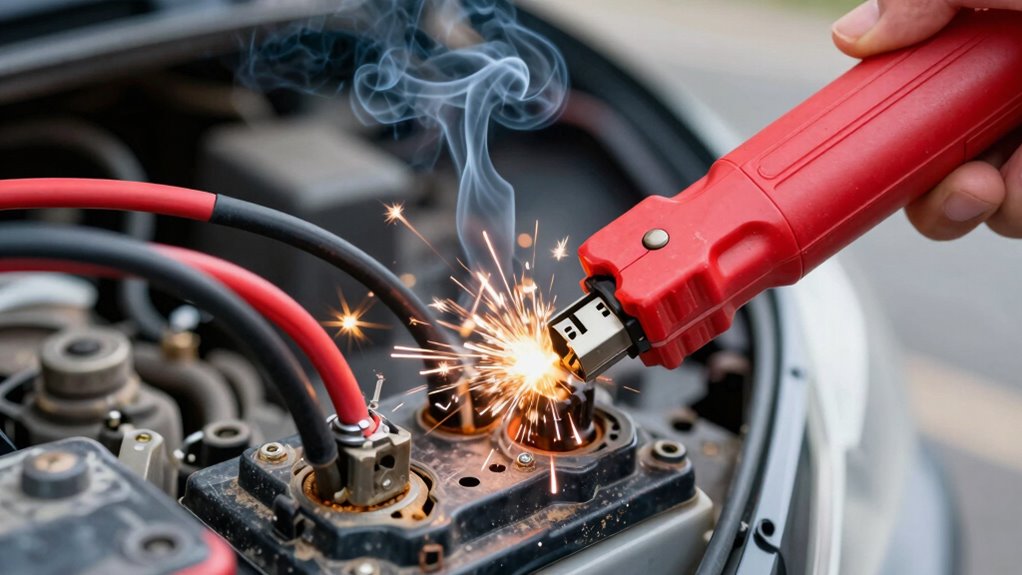

To avoid frying your electronics when using a jump starter, always check your car’s battery voltage first, ensuring it’s healthy and fully charged. Connect the cables properly, starting with the positive terminal and then ground. Be careful with the clamps—reverse polarity or loose connections can cause severe damage. Always disconnect in the correct order after starting your vehicle. Staying cautious during each step helps protect your electronics—stick with us to learn more about safe jump-start practices.

Get business pricing on garage and car supplies
- Business-only prices and quantity discounts
- Tax-exempt purchasing
- Multiple users, one account, clear invoices
Key Takeaways
- Incorrectly connecting jump cables, especially reversing polarity, can cause severe electrical damage to electronics.
- Always verify the battery voltage and health before jump-starting to prevent unnecessary risks.
- Properly connecting and disconnecting cables in the correct order avoids sparks and short circuits.
- Using an uncharged or faulty jump starter may lead to insufficient power or damage to your vehicle’s electronics.
- Damaged electronics from improper jump-start procedures often require professional repair rather than DIY fixes.
How to Check Your Car Battery Before Jump-Starting
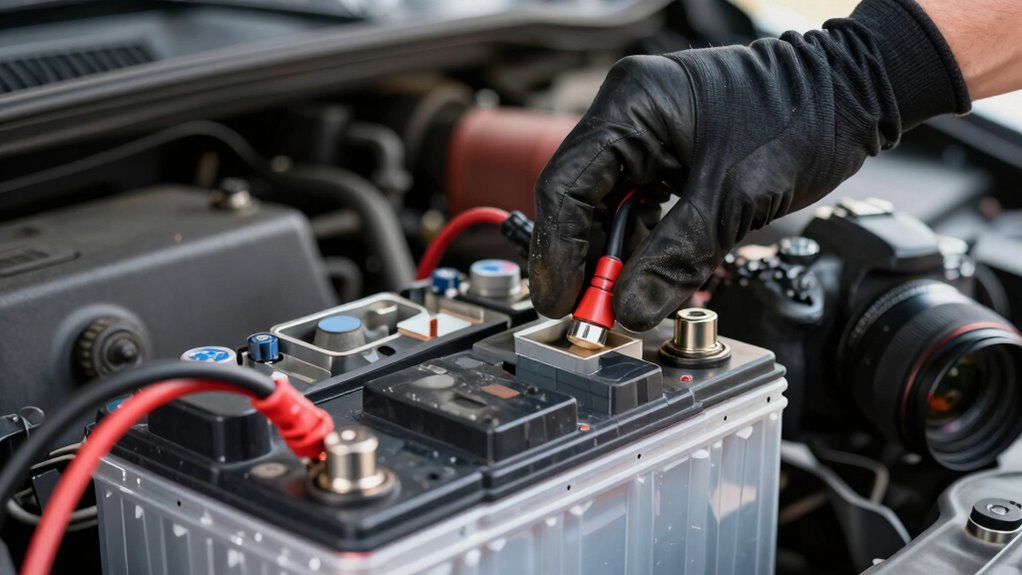
Before attempting to jump-start your car, it’s important to check the battery to verify it’s the actual problem. Start by evaluating the battery health, which can be done with a simple voltage test. Use a multimeter to measure the voltage across the battery terminals. A healthy, fully charged battery should read around 12.6 volts or higher. If your reading is considerably lower, like 11.5 volts or less, the battery might be too drained or faulty. Keep in mind, a low voltage doesn’t always mean the battery is dead, but it indicates it may need replacement or further testing**. Performing this quick check helps prevent unnecessary jump-starts and confirms whether your battery is the real culprit. Battery maintenance is crucial to ensure your vehicle’s electrical system remains reliable, and understanding battery capacity can help you better assess its condition. Additionally, conducting regular battery inspections** can extend its lifespan and prevent unexpected failures.
Preparing Your Jump Starter and Cables
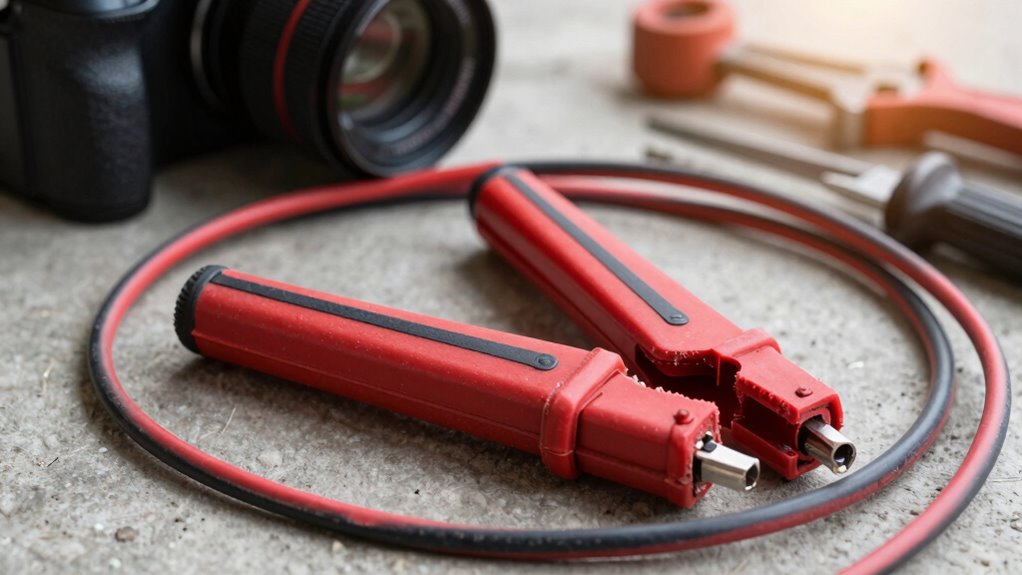
Before you connect your jump starter, make sure it’s fully charged and ready to go. Next, attach the cables correctly, starting with the positive terminal and then the negative. Proper setup guarantees a safe and effective jump-start process. If you’re using a bike generator to power your electronics, ensure it’s functioning efficiently and providing the appropriate electric power output to prevent damage. Additionally, verify that your compact living environment has adequate ventilation and space to safely operate such equipment. Ensuring proper projector calibration can also help prevent electrical issues and optimize performance. Always double-check that your wellness devices are compatible with your power source to avoid potential electrical mishaps, especially considering the importance of safe caregiving practices in a senior care environment.
Check Power Status
Ensuring your jump starter and cables have sufficient power is a crucial first step before attempting to jump-start your vehicle. You should check the battery voltage and verify the power indicator is active. A low battery voltage or an inactive indicator could mean your jump starter isn’t ready, risking damage or an ineffective jump-start. Use the table below to understand the importance of proper power levels:
| Power Indicator Status | Battery Voltage | Action |
|---|---|---|
| On and steady | ≥ 12.6V | Ready to use |
| Blinking or off | Below 12.4V | Recharge before use |
| Flashing warning | Critical level | Do not attempt to jump-start |
| Off or damaged | Unknown | Replace or repair |
| Fully charged | ≥ 13.0V | Ideal for jump-starting |
Always confirm your jump starter is fully charged to prevent mishaps. Proper power levels are essential for a safe and successful jump-start, especially since power management can significantly impact your device’s performance and longevity. Regularly inspecting your jump starter’s battery health can help ensure reliable operation when needed, as battery condition directly influences its readiness and safety during use. Additionally, keeping the storage environment in mind can prolong the lifespan of your jump starter, ensuring it’s ready when needed most.
Connect Cables Properly
Once you’ve confirmed your jump starter is fully charged and ready, it’s time to connect the cables properly. Proper connection prevents damage and ensures safety. Follow these steps:
- Attach the charging cables to the jump starter first, ensuring they’re secure and free of corrosion.
- Connect the red clamp to the positive (+) terminal on your car and the other end to the jump starter’s positive port.
- Connect the black clamp to the negative (–) terminal and the other end to an unpainted metal surface on the vehicle for grounding.
- Always verify that the jump starter has built-in voltage regulation to prevent overvoltage issues. Proper cable connection and voltage regulation are key to safe, effective jump-starting.
- Use European cloud innovation to ensure your devices are protected with advanced, energy-efficient solutions. Additionally, ensure your jump starter features wave and wind protection to guard against power fluctuations during operation. Incorporating proper electrical safety measures can further reduce the risk of damage to your electronics. Also, selecting a jump starter with advanced safety features can help mitigate potential hazards during operation. Regular maintenance and inspection of your jump starter can also help prevent issues caused by toilet maintenance and repairs, ensuring reliable performance when needed.
How to Connect Your Jump Starter Safely
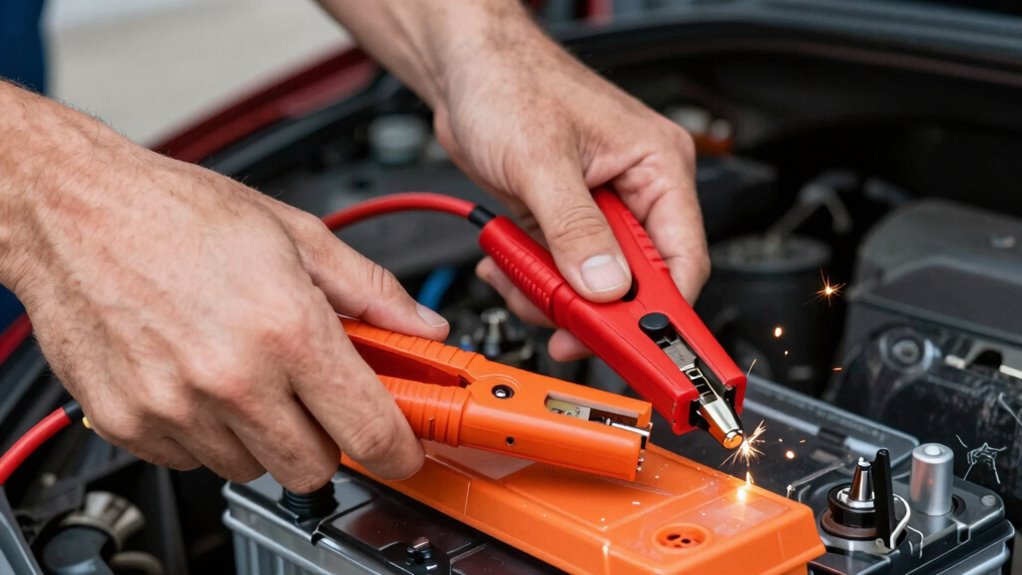
Wondering how to connect your jump starter safely? First, make certain your vehicle is off and the parking brake is engaged. Always prioritize battery safety by wearing gloves and eye protection. Connect the red clamp to the positive terminal of your dead battery, then attach the black clamp to a solid, unpainted metal ground point away from the battery—this helps prevent sparks and ensures proper electrical grounding. Before powering up the jump starter, double-check all connections for a secure fit. Never connect the clamps in reverse or to a damaged battery. Keep the jump starter’s cables clear of moving parts. Following these steps minimizes risks, prevents electrical mishaps, and protects both your vehicle and electronics from potential damage.
Starting Your Vehicle Without Damaging Electronics
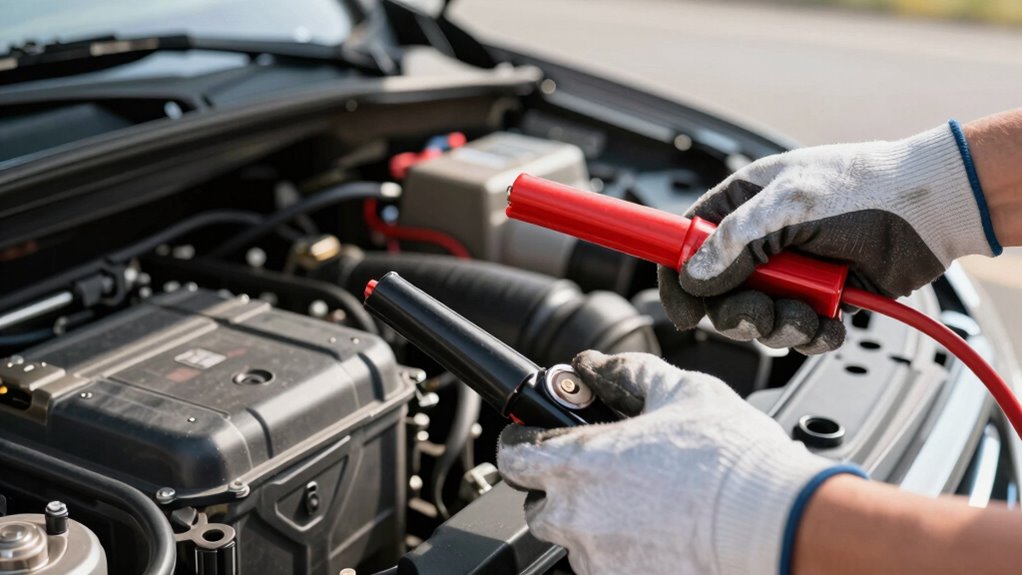
To start your vehicle without damaging sensitive electronics, it’s vital to follow a cautious approach. Proper battery maintenance and understanding your electrical system are key. Here are four essential steps:
Follow these careful steps to safely jump-start your vehicle and protect sensitive electronics.
- Confirm the jump starter’s voltage matches your vehicle’s battery specifications.
- Connect the cables in the correct order—positive to positive, then negative to ground—to prevent voltage spikes.
- Avoid revving the engine immediately; give the electrical system time to stabilize.
- Once started, disconnect cables carefully, starting with the negative ground to protect your electronics.
Additionally, being aware of electrical system safety helps prevent voltage surges that can fry delicate components. Proper handling and awareness of your vehicle’s electrical system ensure a safe start without risking costly damage to your electronics. Familiarizing yourself with your vehicle’s electrical system components can further help in avoiding potential mishaps. Moreover, understanding how voltage regulation works in your vehicle can assist in preventing overloads during the jump-start process. Knowing the battery health status can also be crucial in avoiding unexpected failures during such procedures. Being attentive to electrical system diagnostics can help identify issues before attempting a jump-start, reducing the risk of damage.
Safely Disconnecting Your Jump Starter
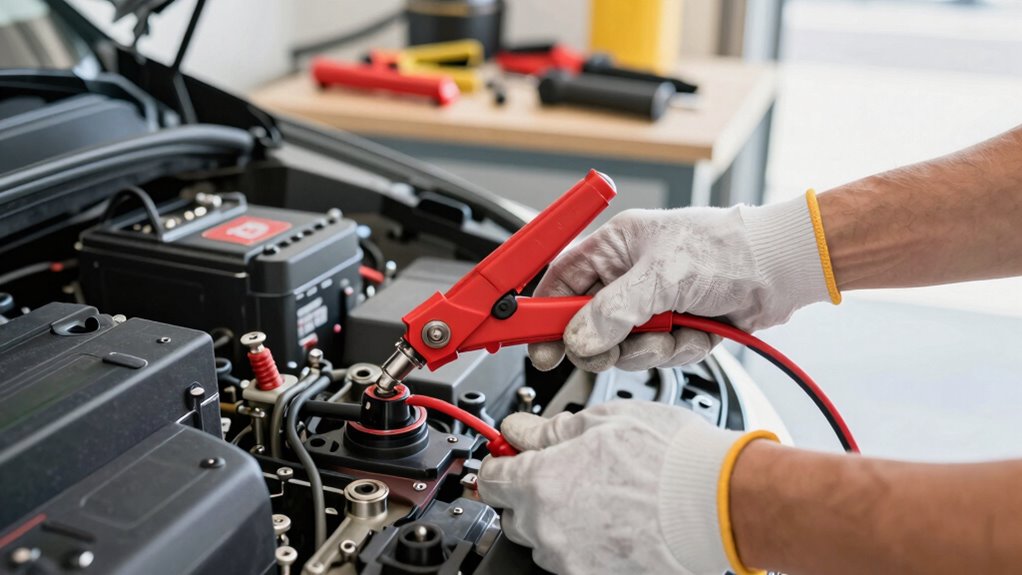
After starting your vehicle with a jump starter, it’s important to disconnect the cables carefully to avoid electrical issues. Always remove the negative (black) clamp from the vehicle first, then the positive (red), ensuring no contact between the clamps. This practice protects your vehicle’s electrical system and supports proper battery maintenance over time. Proper disconnection is also essential for emergency preparedness, preventing sparks or shorts that could cause damage or injury. Take your time and double-check that all clamps are fully removed before turning off or storing the jump starter. Being cautious ensures your electronics stay safe and your battery remains in good condition, ready for future emergencies. Safe disconnection prolongs your jump starter’s lifespan and maintains your vehicle’s electrical health.
Common Clamping Mistakes That Can Fry Electronics

Incorrectly clamping jump starter cables is a common mistake that can quickly fry your vehicle’s sensitive electronics. Poor clamp placement or improper attachment can cause dangerous voltage spikes, risking damage to your battery and electronics. To prevent clamp mistakes, pay attention to these key points:
- Clamp the positive (red) cable to the positive terminal, and the negative (black) cable to the negative terminal.
- Avoid touching the clamps together or attaching them to each other.
- Never connect the clamps to a different terminal or part of the vehicle.
- Make sure the clamps are securely attached to prevent loose connections that could cause sparks or voltage surges.
Following proper battery safety and clamp techniques is essential to avoid costly damage.
Why Reverse Polarity Is Dangerous: And How to Avoid It
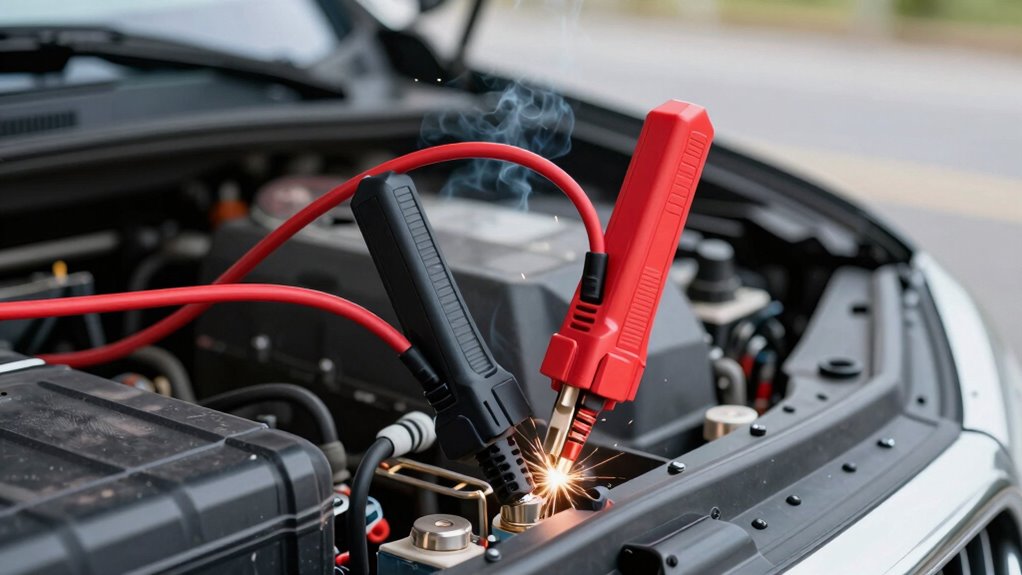
Reversing the polarity when connecting jump starter cables can cause immediate and severe damage to your vehicle’s electrical system. Polarity reversal occurs when you connect the positive cable to the negative terminal and vice versa. This mistake can lead to electrical damage, such as blown fuses, damaged alternators, or fried electronic components. To avoid this, always double-check your connections before starting the jump. Confirm that the red clamp is on the positive terminal and the black clamp on the negative terminal. Use your vehicle’s manual if you’re unsure. Properly connecting the cables prevents polarity reversal, reducing the risk of costly repairs. Staying vigilant and cautious ensures your jump-start is safe and effective without risking electrical damage.
What to Do If Your Electronics Get Damaged During Jump-Start
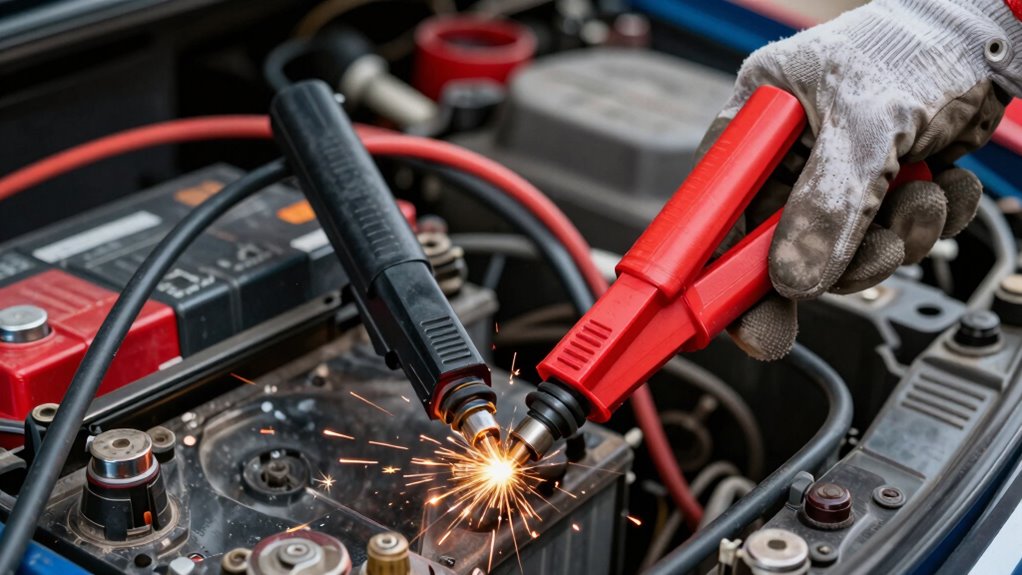
If your electronics seem to be malfunctioning after a jump-start, you need to evaluate the damage right away. Make sure to disconnect the devices safely to prevent further issues. Then, seek professional repair to ensure your electronics are properly checked and restored.
Assess Damage Immediately
When your electronics malfunction or behave unexpectedly after a jump-start, it is crucial to assess the damage immediately. Quick action can prevent further issues and guide your next steps in battery maintenance or electrical troubleshooting.
Here are four steps to follow:
- Check for visible damage, such as burnt components or melted wires.
- Test the device’s power supply and look for irregularities.
- Disconnect the device from power to prevent additional harm.
- Consult your device’s manual or a professional technician for detailed assessment.
Disconnect Power Safely
After identifying damage to your electronics following a jump-start, the next vital step is to disconnect the device from its power source safely. Turn off the device immediately to prevent further damage and unplug it from the power outlet if applicable. Proper battery maintenance is essential to avoid costly repairs, so handle damaged batteries with care, wearing protective gloves if needed. When disconnecting, make sure you follow charging safety guidelines—avoid pulling on cables roughly or touching internal components. Inspect the cables and connectors for signs of damage before proceeding. Taking these precautions minimizes the risk of electrical shock or short circuits. Remember, safely disconnecting your electronics helps prevent additional harm and preserves your device’s integrity after a jump-start mishap.
Seek Professional Repair
Damaged electronics from a jump-start can be complex and costly to repair, so consulting a professional is crucial. If your device shows signs of damage, avoid DIY fixes and seek expert help. A qualified technician will perform thorough electrical diagnostics to identify issues and assess the extent of damage. They can also provide proper battery maintenance advice to prevent future problems. When visiting a repair shop, ask about their experience with jump-start-related damages, especially to sensitive electronics. Keep in mind that timely professional intervention minimizes long-term harm and ensures safe, effective repairs. Trusting specialists helps you avoid further damage and restores your device’s functionality efficiently. Remember, professional repair is your best bet for safeguarding your electronics from the risks of improper jump-start procedures.
Frequently Asked Questions
Can Using a Higher Wattage Jump Starter Harm My Car?
Using a higher wattage jump starter won’t harm your car if you guarantee battery compatibility and avoid voltage mismatch. Modern jump starters are designed to match your vehicle’s battery voltage, typically 12V. Just double-check that the jump starter’s output matches your car’s requirements. If you overlook these factors, you risk damaging your vehicle’s electrical system. Always read the instructions carefully to prevent any issues.
Is It Safe to Jump-Start a Hybrid or Electric Vehicle?
Jump-starting a hybrid or electric vehicle isn’t like sending a telegram; it’s more complex. You need to check battery compatibility and follow safety precautions carefully. Many hybrids have delicate high-voltage systems, so using a compatible jump starter and consulting your owner’s manual is essential. If you’re unsure, it’s better to call a professional. Don’t think you can wing it like a cowboy—safety first keeps you from turning your ride into a flaming torch.
How Long Should I Leave the Jump Starter Connected?
You should leave the jump starter connected just long enough to safely start your vehicle, usually about 30 seconds to a minute. This helps guarantee proper battery longevity and prevents overheating. Once the engine starts, promptly disconnect the jump starter to avoid any risk of damage. Always follow the manufacturer’s instructions for proper disconnect timing, as leaving it connected too long can cause electrical issues or damage your electronics.
What Are the Signs of a Damaged Jump Starter?
If your jump starter shows signs of battery corrosion or the indicator lights are flickering or dim, it’s likely damaged. Corrosion around the terminals can hinder performance, and faulty indicator lights suggest internal issues. You should also notice reduced power output or difficulty charging. Don’t ignore these signs; inspect and replace the jump starter if necessary to avoid risking your electronics or experiencing failure during emergencies.
Can Environmental Factors Affect Jump-Starting Safety?
Environmental factors definitely impact jump-starting safety. You should watch out for ground interference, which can cause electrical surges, and weather hazards like rain or snow that increase the risk of short circuits and shocks. Always guarantee you’re in a dry, stable environment, and avoid using the jump starter in wet conditions. Taking these precautions helps prevent damage to your electronics and keeps you safe during the process.
Conclusion
By following proper jump-start procedures, you can avoid turning your electronics into a smoldering ruin. Think of it as dancing carefully on a tightrope—one wrong step can cause a costly fall. Always double-check connections, watch for reverse polarity, and stay alert to prevent damage. When you respect the process, you’ll keep your electronics safe and your vehicle ready to roll, rather than caught in a spark of costly mistakes.
Halloween Picks
halloween
As an affiliate, we earn on qualifying purchases.