
To strap your motorcycle without damaging the fork seals, make certain straps are snug but not overly tight, and use padded or soft straps to distribute pressure evenly across the forks. Avoid metal hooks directly on delicate parts and secure straps to solid anchoring points. Regularly check strap tension and inspect the seals for leaks or damage before and during transport. For detailed steps and tips, keep exploring to protect your motorcycle’s sensitive components.

Get business pricing on garage and car supplies
- Business-only prices and quantity discounts
- Tax-exempt purchasing
- Multiple users, one account, clear invoices
Key Takeaways
- Use padded or soft straps to evenly distribute pressure and prevent fork seal damage.
- Avoid over-tightening straps; secure snugly without applying excessive force on the forks.
- Attach straps to solid, stable anchor points away from delicate parts like fork seals.
- Cross straps in a crisscross pattern to prevent lateral movement and uneven pressure.
- Regularly inspect straps and fork seals during transit to ensure proper tension and prevent damage.
padded motorcycle tie-down straps
As an affiliate, we earn on qualifying purchases.
As an affiliate, we earn on qualifying purchases.
Prepare Your Motorcycle for Safe Transportation
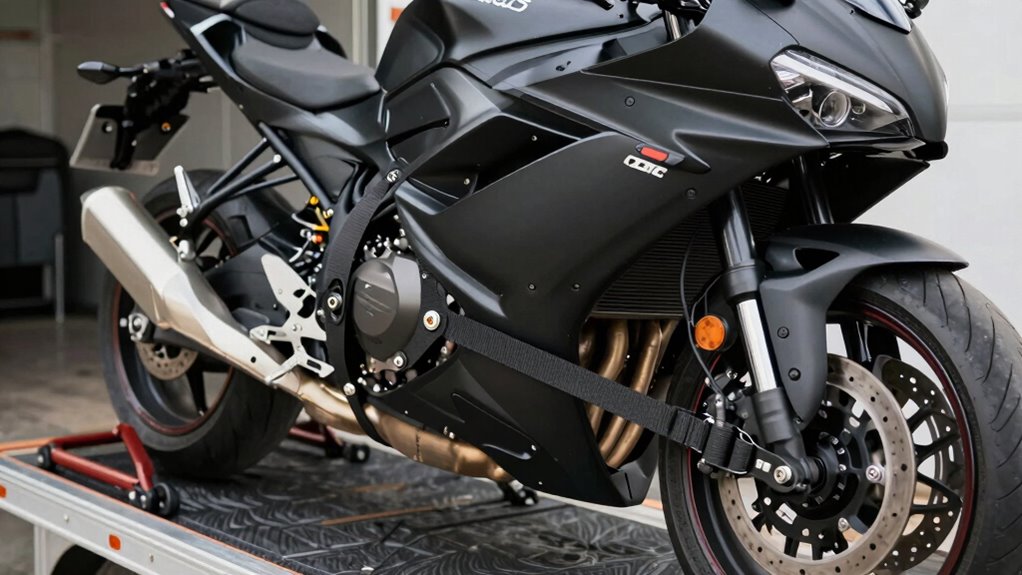
Before you start strapping your motorcycle for transport, it is *essential* to prepare it properly to prevent damage. First, check your tire pressure and inflate the tires to the manufacturer’s recommended levels. Properly inflated tires help maintain stability and prevent flat spots during transit. Next, inspect the chain tension; it should have a slight slack but not be too loose or tight. Incorrect chain tension can cause damage or affect handling while riding. Ensuring these elements are in good condition minimizes unnecessary movement during transport, reducing the risk of damaging your fork seals or other components. Additionally, modern safety standards emphasize the importance of secure strapping techniques to prevent accidents and component damage during transit. Taking these simple steps before securing your motorcycle sets a solid foundation for safe, damage-free transportation. Properly maintaining your motorcycle’s components also helps in preventing leaks, which is crucial to avoid blowing fork seals during or after transport. Regular inspections and maintenance contribute to component longevity, ensuring your motorcycle stays in optimal condition even after being transported. Being attentive to vibration control during packing can further protect sensitive parts from stress and wear. Implementing proper padding can also absorb shocks and reduce vibrations during transport, further safeguarding your motorcycle.
Choose the Best Motorcycle Straps to Protect Fork Seals
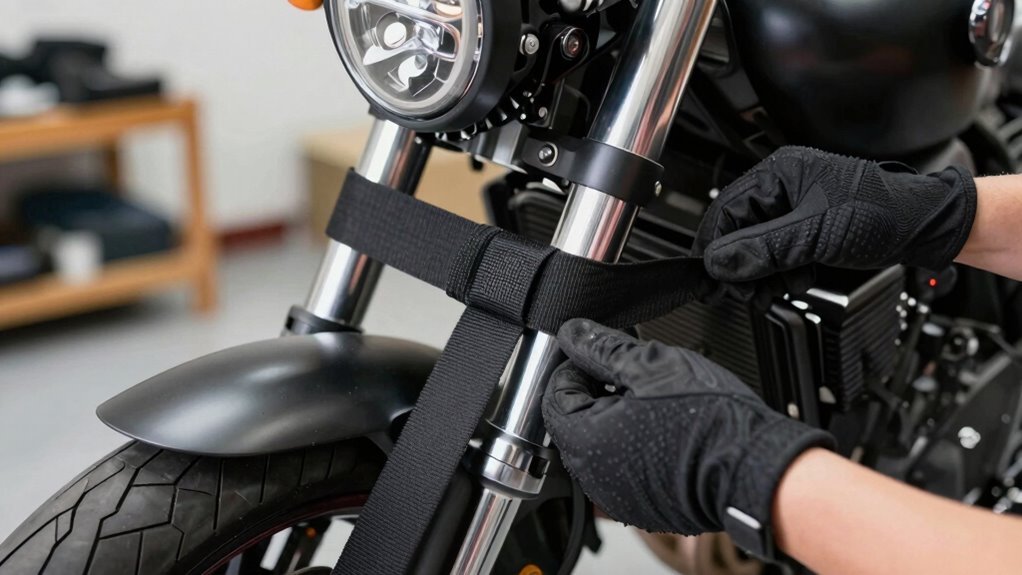
Choosing the right motorcycle straps is essential to protect your fork seals during transport. The key is selecting straps that provide fork seal protection without causing damage. Focus on strap material selection to avoid slippage or pressure points. Here are the top considerations:
- Use soft, padded straps to prevent scratching and distribute pressure evenly. Proper padding can significantly reduce the risk of damage to fork seals during securing.
- Opt for nylon or polyester straps — these materials are strong yet gentle enough to avoid damaging fork seals.
- Avoid ratchet straps with metal hooks directly on the forks; instead, use soft hooks or padding to reduce risk.
- When securing your motorcycle, consider the filtration properties of the straps to prevent debris from contaminating sensitive components. Additionally, selecting straps with non-abrasive surfaces can further protect delicate parts during transit. Choosing straps with anti-slip coating can help keep the load secure without compromising safety.
How to Secure Your Motorcycle Without Damaging Fork Seals
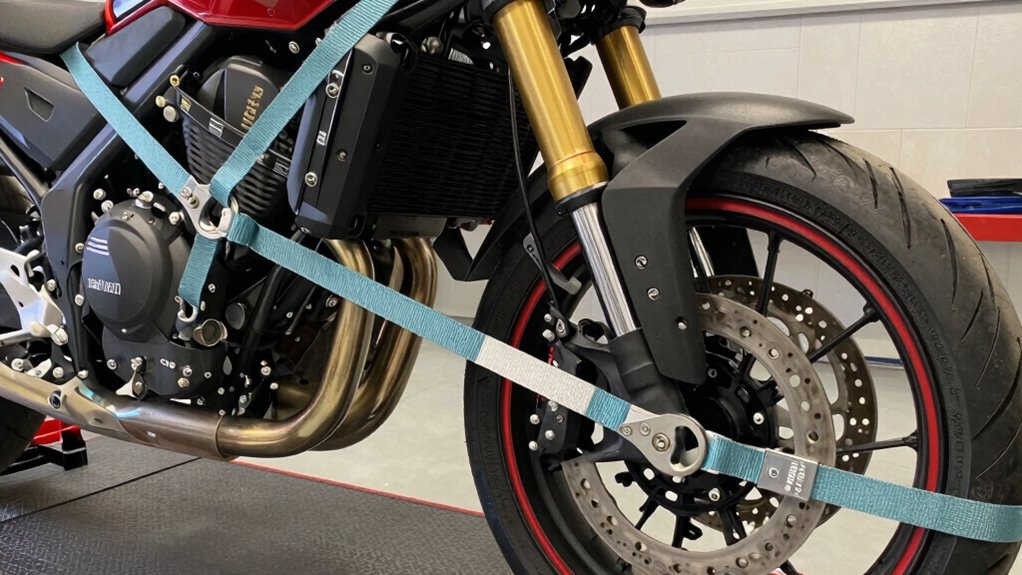
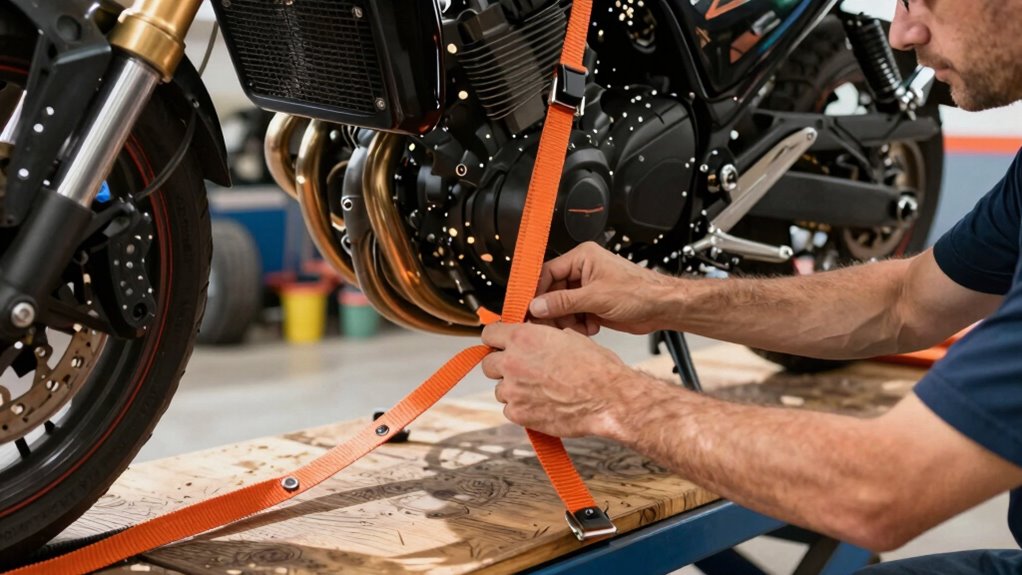
Securing your motorcycle without damaging the fork seals requires careful technique and proper equipment. To prevent fork seal damage, avoid over-tightening straps, which can put excessive strain on the seals. Instead, maintain appropriate strap tension—firm enough to hold the motorcycle securely but not so tight that it compresses or stresses the forks. Use straps with padded or rubberized contact points to distribute pressure evenly and protect the fork surfaces. Position straps at multiple points to balance tension and prevent uneven force on the forks. Check your straps frequently during transit to ensure they haven’t loosened or shifted. Remember, proper tension and padding are key to safeguarding your fork seals while keeping your motorcycle stable during transportation. Additionally, understanding proper transportation techniques can further help in maintaining your motorcycle’s overall condition. Incorporating recommended securing methods can also reduce the risk of damage during transit. Being aware of common mistakes in securing motorcycles can help you avoid damaging your equipment. Moreover, selecting the right strapping materials can enhance both safety and protection during transit. To further minimize stress on the forks, consider using specialized fork protectors designed for transportation.
Step-by-Step: Properly Strap Your Motorcycle Safely
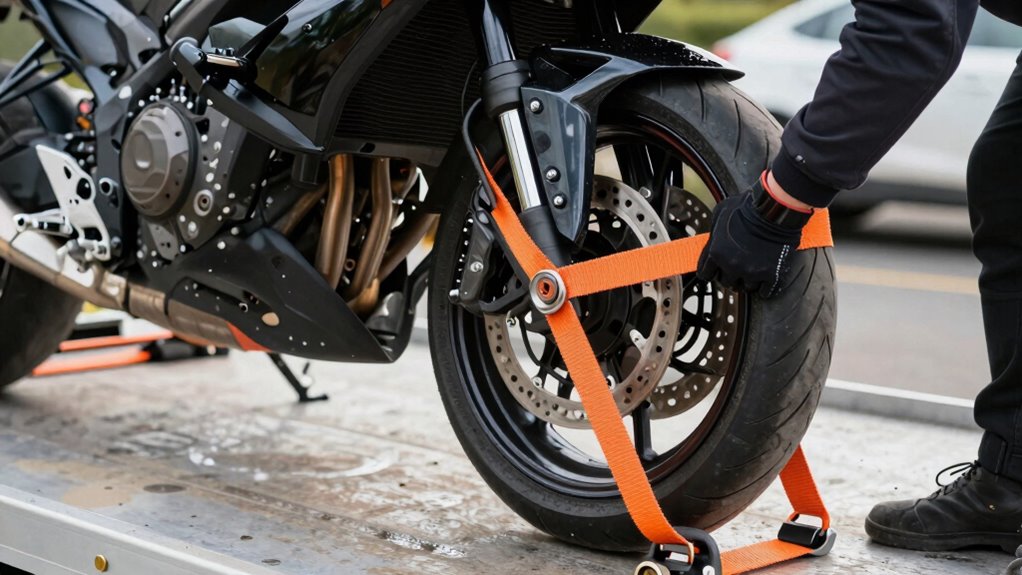
To strap your motorcycle safely, you need to secure the straps tightly without overdoing it. Make sure they hold the bike firmly in place while avoiding pressure on the fork seals. Always double-check that the straps are secure and won’t cause damage during transit. Incorporating proper strapping techniques ensures your motorcycle remains stable and prevents damage to sensitive components like the fork seals. Using correct tensioning methods helps distribute pressure evenly and protects your bike’s delicate parts. Proper body jewelry measurements and materials can also influence how well your bike is secured if straps need to fit around certain components. Additionally, understanding proper load distribution can further enhance the safety of your motorcycle during transport. Applying appropriate padding around vulnerable areas can also prevent accidental damage during transit.
Secure Straps Properly
Before you start strapping down your motorcycle, it’s vital to make sure that your straps are properly secured to prevent movement during transit. Proper tension is key—tight enough to hold the bike steady, but not so tight that you risk damaging components. Focus on strap placement to ensure stability:
- Attach straps to solid anchor points on your trailer or truck, avoiding delicate parts like forks or brake lines.
- Cross the straps over the motorcycle to create a crisscross pattern, which keeps the bike from shifting side to side.
- Check that each strap has proper tension, with no slack, but avoid over-tightening that could cause damage or blow seals.
- Regularly inspect your straps during transit to maintain safer riding habits and prevent accidents caused by shifting loads.
- Remember that proper tension helps protect your motorcycle’s components and maintains overall safety during transport.
- Using quality straps can make a significant difference in securing your motorcycle effectively.
- Additionally, understanding the horsepower of your electric dirt bike can help you better secure and balance it during transport, especially for high-performance models.
- Ensuring your straps are compatible with water-resistant gear can help prevent deterioration during rainy conditions, keeping your motorcycle safe and dry.
Proper tension and strategic strap placement are essential for safe, secure transport.
Check Fork Seal Safety
Ensuring your fork seals stay intact during transit is essential to avoid costly repairs or leaks. Before tightening straps, check the fork seals for any signs of damage or leaks. Damaged or worn seals are more vulnerable to additional strain, which can lead to fork seal damage during transport. Make sure your straps are snug but not overly tight, as excessive strap tension can put unnecessary pressure on the forks and seals. Use soft or padded straps to distribute tension evenly and prevent pinching or deformation. Regularly inspect the straps during transit to ensure they haven’t loosened or shifted. Properly checking fork seal safety helps protect against leaks and costly repairs, giving you peace of mind that your motorcycle is secure without risking damage.
Common Mistakes When Strapping Your Motorcycle and How to Avoid Them
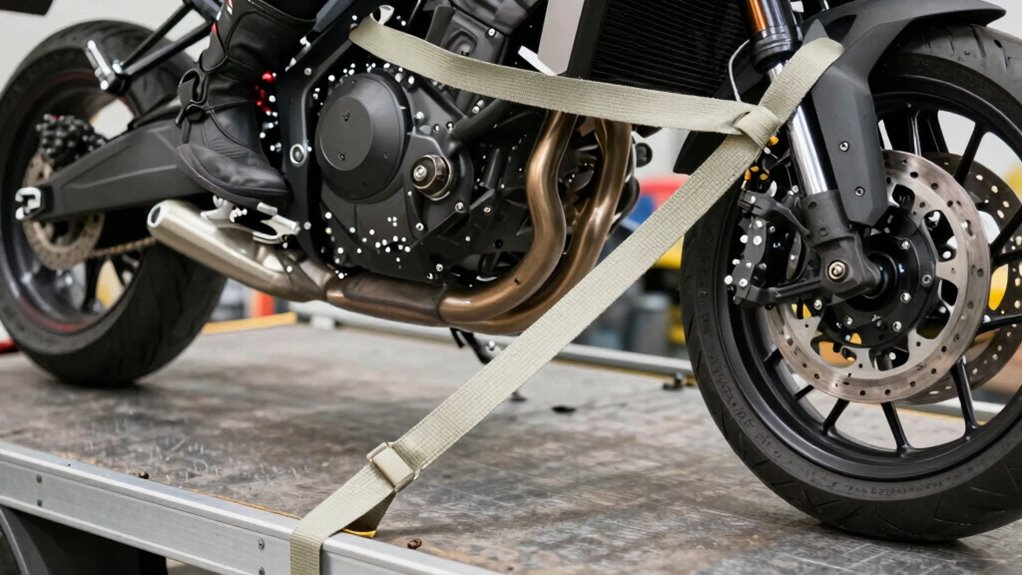
One of the most common mistakes when strapping your motorcycle is not securing it tightly enough, which can lead to shifting or falling during transit. Incorrect tension can cause straps to loosen or damage components, while improper anchoring may result in instability. To avoid these issues, keep these points in mind:
- Ensure straps are taut but not overly tight, preventing damage and maintaining proper tension.
- Anchor straps securely to solid points on your vehicle, avoiding weak or unstable attachment points.
- Double-check that all straps are evenly tensioned, avoiding uneven pressure that could cause the motorcycle to shift.
Tips for Troubleshooting and Ensuring Seal Safety
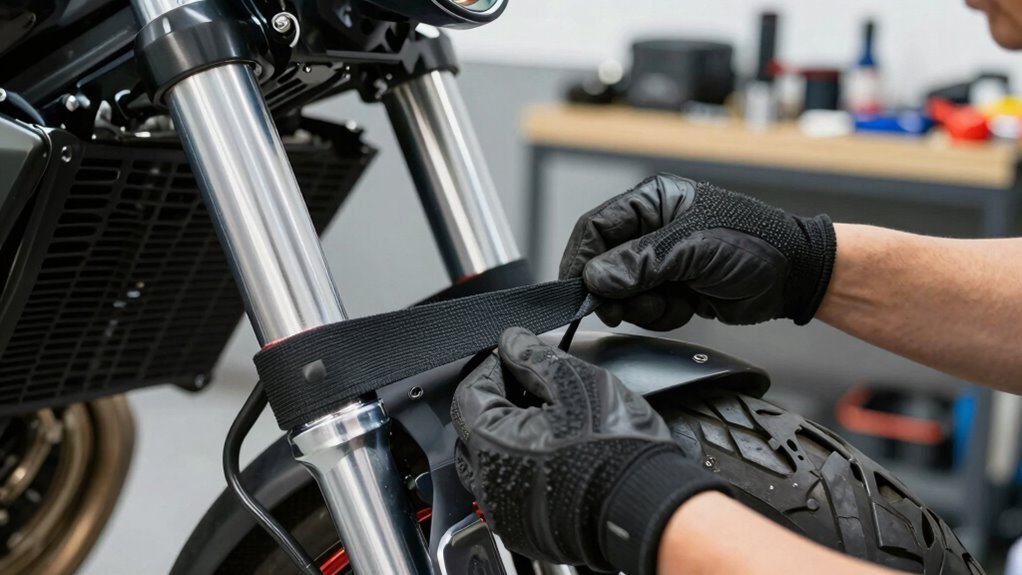
When troubleshooting seal safety, start by inspecting the fork seals regularly for signs of leaks, cracks, or wear. Conduct thorough fork seal inspections after each trip or when you notice any unusual handling. If you detect leaks or damage, address them immediately to prevent further issues. Proper strap material selection is vital; choose straps that are gentle on your forks, like soft nylon or rubberized straps, to avoid unnecessary stress. Always verify straps are tight enough to secure the motorcycle without over-compressing the forks. Avoid using rough or abrasive strap materials that can damage the seals. Keep the fork area clean and free of debris, and check the straps periodically during transit. Regular inspection and careful strap material selection help maintain seal integrity and guarantee safe, damage-free transport.
Frequently Asked Questions
Can Improper Strapping Cause Long-Term Fork Seal Damage?
Yes, improper strapping can cause long-term fork seal damage. When you don’t secure your motorcycle correctly, excessive pressure or movement can lead to seal wear or tears. This disrupts fork seal lubrication and may require seal replacement procedures. To avoid this, make certain your bike is strapped evenly and gently, preventing stress on the seals. Proper strapping helps maintain seal integrity and prolongs the lifespan of your fork components.
Are There Specific Strap Materials to Avoid Near Fork Seals?
You should avoid rubber straps near fork seals because they can degrade and cause leaks over time. For example, a rider once used rubber straps to secure his bike, leading to seal damage from chemical interaction. Instead, opt for nylon straps, which are gentle on seals and provide strong, reliable support. Always choose straps that won’t slip or deteriorate, ensuring your forks stay sealed and protected during transport.
How Often Should I Check My Straps During Transport?
You should check your straps at least every 30 minutes during transport. Keep an eye on strap tension to make certain it stays firm without over-tightening, which can stress the forks. Also, verify strap placement regularly to prevent shifting that could damage forks or other parts. Frequent checks help you maintain secure, safe transport while avoiding blowout of fork seals or other issues caused by loose or improperly placed straps.
Do Different Motorcycle Models Require Different Strapping Techniques?
Different motorcycle models can require variations in strapping techniques, especially for fork seal maintenance and suspension alignment. You should always check your owner’s manual for specific recommendations, as some bikes have unique frame or suspension setups. Properly securing your motorcycle helps prevent damage to the forks and maintains alignment during transport. Adjust your strapping approach accordingly, ensuring that you don’t overtighten and cause unnecessary stress on sensitive components.
What Are Signs of Fork Seal Damage After Transportation?
You’ll notice signs of fork seal damage after transportation if you see oil leaks around the forks, decreased suspension performance, or uneven tire wear. These issues indicate that the seals may have been compromised. If you spot these signs, consider fork seal replacement promptly to maintain transportation safety. Regularly inspecting your forks after shipping helps prevent further damage and guarantees your motorcycle remains safe and reliable on the road.
Conclusion
By blending careful preparation, choosing the right straps, and following proper procedures, you can securely strap your motorcycle without damaging its delicate fork seals. Remember to remain mindful, methodical, and meticulous in your methods. This diligent discipline prevents pitfalls and preserves your motorcycle’s pristine condition. With patience and precision, you’ll protect your prized ride from potential pitfalls, ensuring your next journey is joyful, safe, and seal-safe. Stay smart, secure, and saddle up with confidence!
Halloween Picks
halloween
As an affiliate, we earn on qualifying purchases.