If you’re installing a 270-degree awning, you need mounts that are stronger than standard racks can offer. These awnings exert significant weight, wind resistance, and environmental stress, which typical racks aren’t designed to handle. Properly reinforced mounts, heavy-duty brackets, and durable hardware are essential for safety and durability. Skimping on strength can lead to damage or failure, risking your vehicle and awning. For expert tips on choosing the right setup, keep exploring further details.

Get business pricing on garage and car supplies
- Business-only prices and quantity discounts
- Tax-exempt purchasing
- Multiple users, one account, clear invoices
Key Takeaways
- Standard rack mounts are often insufficient for supporting the heavy weight and wind forces of 270-degree awnings.
- Heavier-duty materials and reinforced hardware are necessary to ensure secure, long-term installation.
- Proper mounting points must be evaluated for structural integrity to handle increased load and stress.
- Reinforcing mounts with gussets or cross braces distributes weight evenly and enhances stability.
- Regular inspection and maintenance of mounts prevent failure and ensure safety during adverse weather conditions.
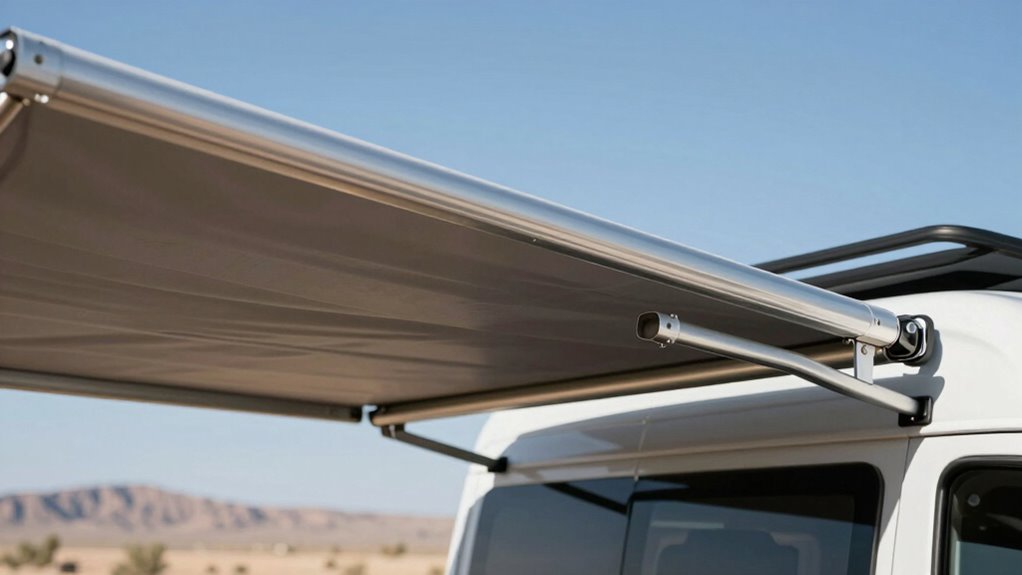
When installing a 270-degree awning, you might assume that standard rack mounts will suffice, but in reality, they often fall short. These wide, heavy-duty awnings exert significant force and require a mounting system that’s up to the task. Many racks are designed for lighter loads and narrower accessories, making them inadequate for supporting the substantial weight and wind resistance of a 270-degree awning. If you try to rely solely on these mounts, you risk damaging your vehicle, your awning, or both. Proper mounting is essential to guarantee safety, durability, and long-term performance.
The choice of awning material plays a key role in how you approach installation. High-quality fabrics like acrylic or polyester blends offer durability and resistance to weather elements, but they also add weight. Heavier awning material demands stronger, more secure mounts. When selecting the right awning material, consider both the weight and the environmental conditions you’ll face. This helps you determine the appropriate installation techniques to maximize stability. Using reinforced brackets, heavy-duty bolts, and anchors designed for outdoor use ensures your setup can withstand high winds and frequent use.
Installation techniques are just as important as choosing the right awning material. You’ll want to start by evaluating your vehicle’s mounting points—these should be solid, structural parts of your roof rack or vehicle frame. Once you identify the best locations, use a drill to affix heavy-duty brackets that distribute the load evenly. Secure all bolts tightly, using thread locker if necessary, to prevent loosening over time. It’s also wise to reinforce the mounts with additional support, such as gussets or cross braces, especially if you anticipate strong wind gusts or frequent travel. Recognizing the importance of mounting system strength is crucial for ensuring your awning’s stability and safety. Additionally, selecting installation hardware that is corrosion-resistant and designed for outdoor environments can significantly extend the lifespan of your setup.
Additionally, it’s essential to understand that proper installation techniques can significantly impact the longevity and safety of your awning, especially in challenging weather conditions. Paying attention to installation best practices can help you achieve a more secure and durable setup, preventing potential mishaps on the road.
heavy-duty awning mounting brackets
As an affiliate, we earn on qualifying purchases.
As an affiliate, we earn on qualifying purchases.
Frequently Asked Questions
What Materials Are Best for Mounting 270-Degree Awnings?
For mounting 270-degree awnings, you should choose heavy-duty steel or aluminum brackets, as they offer superior strength and durability. These materials handle the strain better, especially considering fabric durability and installation techniques. Steel provides maximum strength, while aluminum is lighter and resistant to corrosion. Use high-quality bolts and anchors to guarantee secure installation, and follow proper techniques to prevent damage and ensure your awning stays sturdy in all weather conditions.
How Do Weather Conditions Affect Mounting Strength Requirements?
When it comes to weather conditions, you need mounts that can stand the test of time. Strong wind resistance is key, especially in stormy areas, so your mounts should be reinforced and securely anchored. Corrosion resistance also matters, as rain and humidity can weaken weaker materials over time. You might want to choose stainless steel or coated metals to guarantee your awning stays sturdy and lasts longer through all weather conditions.
Can Existing Racks Be Reinforced for 270-Degree Awnings?
Yes, you can reinforce existing racks for 270-degree awnings. Start by upgrading your mounting brackets to heavy-duty, weather-resistant ones that can handle extra weight and stress. Use reinforcement techniques like adding additional support bars or brackets to distribute the load evenly. Make certain all connections are secure and anchored into sturdy surfaces, such as wall studs or reinforced beams. This approach enhances stability and prevents damage during strong weather conditions.
What Safety Considerations Are Essential During Installation?
Think of installation safety as your shield against accidents. You must carefully follow mounting precautions, ensuring the awning’s brackets are secure and the structure can handle the weight. Wear protective gear, use proper tools, and double-check measurements. Never rush through the process. By prioritizing installation safety, you prevent injuries and damage, making sure your 270-degree awning stays sturdy and reliable, turning your outdoor space into a safe, shaded haven.
Are There Specific Brands Known for Stronger Mounting Solutions?
You should look into brands like Lippert, Camco, or Dometic, known for their stronger mounting brackets and better weight distribution. These brands design mounts that can handle the weight and stress of 270-degree awnings, guaranteeing safety and durability. Always check product specifications to confirm they support your awning’s weight, and consider professional installation to ensure maximum mounting strength and safety during use.
Conclusion
So, next time you’re thinking about installing a 270-degree awning, remember that stronger mounts are a must—don’t settle for just any rack. It’s funny how life often lines up when you realize your gear needs the right support just as much as your adventure does. By choosing sturdier mounts, you guarantee your awning stays put, even when the unexpected hits. After all, a little extra effort now means worry-free outdoor experiences later.
Fall Picks
fall essentials
As an affiliate, we earn on qualifying purchases.