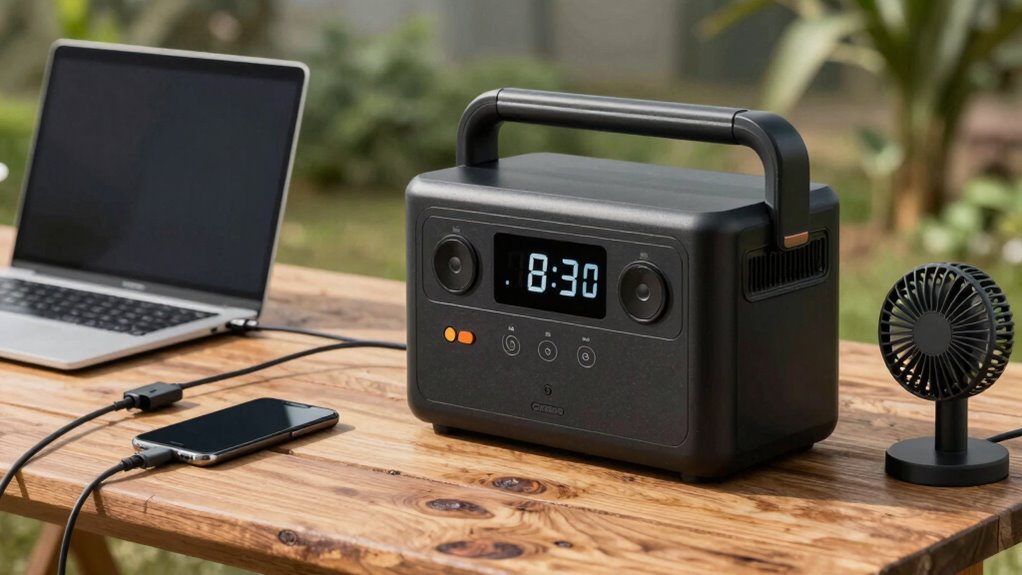

Many portable power stations advertise big battery capacities, but the true test is how much usable energy you get. Internal losses and efficiency reduce the actual power available to your devices. A 1,000Wh station might only provide around 700Wh in real use. Look beyond flashy numbers and focus on efficiency and actual output. If you keep exploring, you’ll discover how to pick a station that truly meets your needs.
Key Takeaways
- Advertised capacity often exceeds the actual usable energy due to internal losses and inefficiencies.
- Focus on real-world usable output instead of high capacity numbers for accurate performance expectations.
- Efficient power management and conversion systems maximize the actual energy available for devices.
- Fast charging speeds improve usability but may affect battery lifespan, so balance is crucial.
- Practical performance depends on real output and efficiency, not just advertised capacity figures.
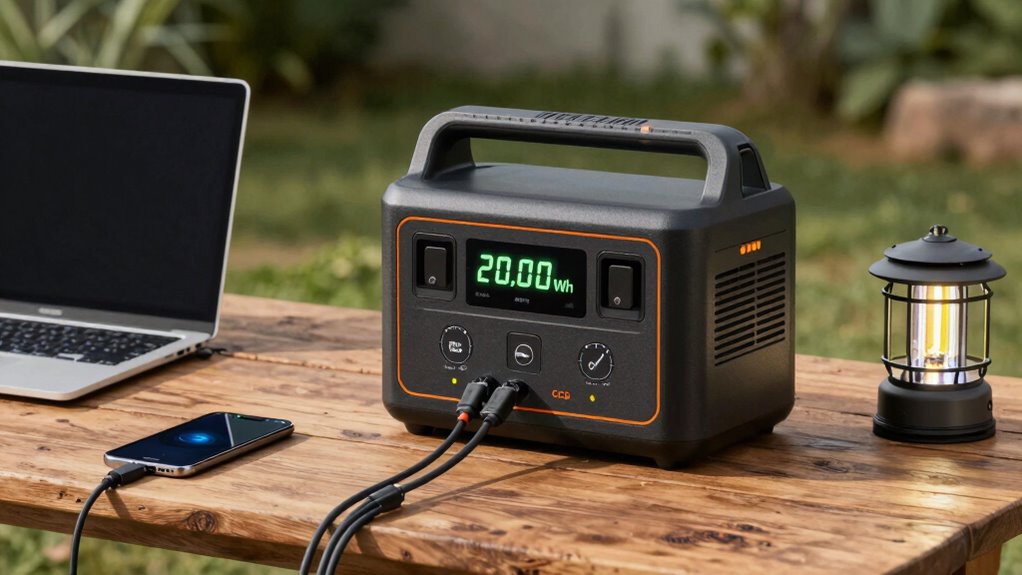
Have you ever been caught without power when you needed it most? It’s frustrating, isn’t it? You see those big numbers on portable power stations claiming enormous wattages and capacities, but the real question is: how much usable power do you actually get? Many models advertise impressive battery capacity, like 1,000Wh or more, but in real-world use, that number can be misleading. The key isn’t just how much energy a portable station can store; it’s how much you can actually draw from it when you need to run your devices.
Big capacity numbers can be misleading; focus on usable power and real-world performance for reliable energy.
The advertised battery capacity might seem impressive at first glance, but it’s essential to look beyond that. Many stations list their total battery capacity, but because of internal conversions and efficiency losses, the usable output is often less. For example, a station with a 1,000Wh capacity might only provide 700Wh of actual usable energy for your devices, depending on its design and power management. It’s a subtle difference, but one that can markedly impact your plans, especially during emergencies or outdoor adventures. Recognizing power efficiency can help you choose a station that truly meets your needs.
Another critical factor to evaluate is charging speed. A portable power station with a high battery capacity but slow charging speed might leave you waiting longer than you’d like to replenish it. Quick charging capabilities can make a huge difference, especially if you’re using the station frequently or need to top it off quickly before heading out again. Fast charging helps ensure you’re never left in a pinch, giving you peace of mind that your station is ready when you are. But keep in mind, rapid charging can sometimes impact the longevity of the battery, so it’s a balance between speed and long-term durability. Understanding power management systems can also help you optimize performance and lifespan. Moreover, it’s important to consider the actual usable output because it directly affects how well your devices will perform during power needs. Being aware of battery efficiency can further aid in selecting a device that offers the best real-world performance.
Additionally, understanding the usable output of a power station is crucial because it reflects the actual power available for your devices, not just the total battery capacity. When analyzing these stations, focus on the actual usable output and charging speed rather than just the flashy numbers on the box. A higher battery capacity doesn’t necessarily mean more usable power if the station’s design isn’t efficient. Similarly, a quick-charging feature is valuable, but it’s worth checking if it’s safe for the battery over the long term. The bottom line is, don’t be fooled by big numbers alone. Look for real-world performance specifications—how much power you can draw and how fast you can recharge—to make sure your portable power station will serve you well when you need it most.

STARYLINE 1000W Portable Power Station 1024Wh LiFePO4 for Outdoor & Home
- Power Capacity: 1024Wh LiFePO4 battery with 1000W output
- Emergency & Camping Use: Supports lights, routers, mini fridges for days
- Device Charging: Charges iPhone 28x, laptops 8h
As an affiliate, we earn on qualifying purchases.
As an affiliate, we earn on qualifying purchases.
Frequently Asked Questions
How Do Temperature Changes Affect Portable Power Station Performance?
Temperature changes directly impact your portable power station’s performance. High temperatures cause temperature sensitivity, which can reduce battery efficiency and lead to quicker degradation. Cold weather also hampers battery efficiency, making it harder to generate and store power effectively. To keep your power station running smoothly, avoid extreme temperatures, and store it in a cool, dry place. Proper care guarantees you get the most usable output, regardless of climate conditions.
Are There Safety Risks Using High-Capacity Power Stations Outdoors?
Using high-capacity power stations outdoors can pose safety risks, especially if you disregard battery chemistry and charging safety. Imagine a hiker’s station overheating in the sun due to poor ventilation, risking battery failure or fire. Always follow manufacturer guidelines, avoid exposing units to extreme temperatures, and guarantee proper ventilation. Proper handling of battery chemistry and charging safety minimizes risks, so you can enjoy outdoor adventures without worrying about safety hazards.
Can Portable Power Stations Power Sensitive Electronics Safely?
Yes, portable power stations can power sensitive electronics safely if they offer sufficient battery capacity and stable power output. You should check the station’s specifications to guarantee it provides clean, consistent power, minimizing risks to delicate devices like cameras or laptops. Look for features like pure sine wave inverters, which help maintain power stability, protecting your electronics from surges or irregularities during use.
What Is the Typical Lifespan of a Portable Power Station?
You can expect a portable power station to last around 3 to 5 years, depending on usage cycles and battery degradation. Each charge cycle gradually reduces the battery’s capacity, impacting overall lifespan. If you frequently use and recharge the station, it might wear out sooner. Proper care, like avoiding extreme temperatures and not overcharging, helps extend its usable life, ensuring you get the most out of your investment.
How Do I Properly Maintain and Store My Portable Power Station?
You gotta keep your portable power station in peak shape! Regularly calibrate the battery to maintain accuracy and guarantee ideal performance. Don’t forget firmware updates—they’re like giving your device a shot of adrenaline. Store it in a cool, dry place, and charge it periodically, even if you’re not using it. This way, you’ll keep your power station ready to save the day when you need it most, every single time.
Conclusion
When shopping for portable power stations, don’t be fooled by flashy numbers on the box. Think of these stations as a garden hose—big numbers can look impressive, but if the flow isn’t steady, it’s useless. Focus on the usable output and real-world capacity, not just the hype. That way, you guarantee your device will actually power your needs, not just look good on paper. Remember, what counts is the flow, not just the size of the hose.