TL;DR

Get business pricing on garage and car supplies
- Business-only prices and quantity discounts
- Tax-exempt purchasing
- Multiple users, one account, clear invoices
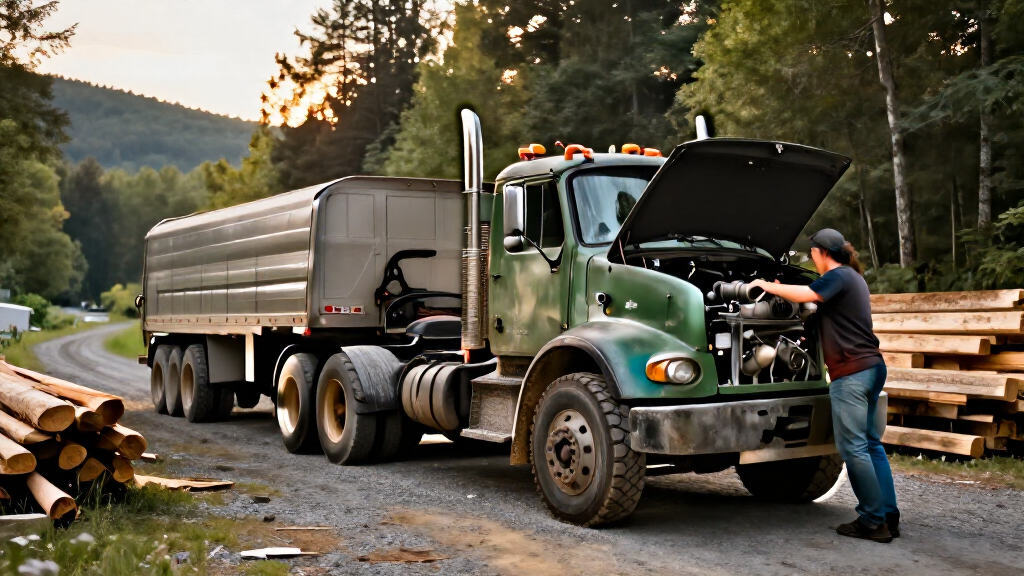
A Pacific P510 logging truck filmed in New Zealand in 1991 used a turbocharged 14.6-liter Caterpillar diesel in the tractor and a second, similar engine in its lead trailer. The two engines reportedly produced about 900 horsepower combined; former colleagues say the truck is being restored, though the trailer’s whereabouts are uncertain.
A Pacific P510 logging truck filmed in New Zealand in 1991 used a second, turbocharged 14.6-liter Caterpillar diesel mounted on its lead trailer, creating a two-engine rig rated at about 900 horsepower combined, according to a report by The Drive. The unusual setup helped the truck haul logs through the country’s demanding Kaingaroa State Forest, and a former colleague says the truck is now being restored.
The truck was commissioned by the Magee family to operate for Marathon Trucking. Its tractor carried a mechanical Caterpillar 3406B, while the lead trailer carried a Caterpillar 3406A of the same 14.6-liter displacement. Both engines were turbocharged and connected to their own Allison automatic transmissions. The Drive describes their combined output as about 900 horsepower; the source does not give a precise measured figure.
The trailer engine supplied power to the trailer’s rear axles, rather than merely adding an engine to the tractor. The installation also brought practical engineering problems. A firsthand commenter on the video said dust damaged the first engine, prompting the crew to move the second engine’s air intake above the truck’s subframe, where it could draw cleaner air. The report says each engine had a separate throttle control in the cab.
The 23-minute footage was filmed in Kaingaroa State Forest and was later posted by the YouTube channel Trucks on Video – CP Productions, which The Drive credits with finding the original material. Video and the report show the rig working on logging roads and at a mill. A commenter who said he worked alongside the Magee family reported that former driver Lance Magee had received the truck and was restoring it. That account also said the lead trailer may have been scrapped, but its status has not been independently established in the supplied reporting.
Why the Trailer Had Its Own Engine
The rig shows how logging operators addressed the demands of hauling heavy loads across steep, remote roads: instead of relying only on the tractor, the builders put a second diesel engine on the lead trailer. The arrangement added power where it was needed in a multi-trailer combination, while also requiring separate transmissions, controls, air-intake routing and driveline hardware.
That makes the truck more than an unusual visual curiosity. Its design reflects a specific working environment and the practical trade-offs of moving timber through a large plantation forest. The firsthand account describes the combined transmission retarders as effective on descents, but also says the rig could be unsettlingly powerful downhill. That is an individual recollection, not an independently measured performance assessment.
heavy-duty diesel engine for trucks
As an affiliate, we earn on qualifying purchases.
As an affiliate, we earn on qualifying purchases.
Built for Kaingaroa Logging Roads
New Zealand logging trucks may pull three or four trailers, according to The Drive’s account, and the work can demand substantial power. The report identifies Kaingaroa as the country’s largest plantation forest, covering almost 1,100 square miles. The forest was developed for commercial planting in the 1920s and 1930s, including radiata pine and Douglas fir.
The Pacific P510 was not the only attempt to add power to multi-trailer truck combinations. The Drive notes that Freightliner tested a powered-axle connector called the Power Dolly in the 1960s, using a Cummins V6 to assist a combination on steep climbs; it did not progress beyond the prototype stage. More recent powered trailers generally use electric drivetrains, a different approach from the P510’s diesel engine and mechanical driveline.
“Combined, they made something like 900 horsepower.”
— The Drive, citing the truck’s video description
Trailer and Restoration Status
The report does not establish the truck’s current mechanical condition, the restoration’s progress or whether it is expected to return to the road. The claim that Lance Magee received the truck and is restoring it comes from a video commenter who described firsthand connections to the operation, not a direct statement from Magee in the source material.
The lead trailer’s fate is also unresolved. The commenter said he had been told it may have been cut up for scrap, and that Magee had asked where it was. No independent confirmation is provided about whether the trailer survives, whether its engine and drivetrain remain, or whether the complete two-engine combination can be reassembled.
Whether the Original Trailer Survives
The next useful update would come from the restoration effort or from people connected to the Magee family, particularly on the truck’s condition and the search for the powered lead trailer. Until its whereabouts are confirmed, it is not clear whether the restored vehicle could again operate as the original twin-engine combination or whether work is limited to the Pacific tractor.
The footage remains the clearest source in the supplied material for how the rig operated in 1991. No public restoration schedule, completion date or planned display has been reported.
Key Questions
What engines powered the Pacific P510 combination?
The tractor used a turbocharged 14.6-liter Caterpillar 3406B. Its lead trailer carried a turbocharged Caterpillar 3406A with the same displacement.
How much power did the two engines produce?
The Drive reports a combined output of about 900 horsepower. The source describes this as an estimate and does not provide a precise test figure.
Why was an engine installed on the trailer?
The extra engine helped the logging combination haul heavy loads. The report describes New Zealand logging rigs working with several trailers, where additional power could be useful on demanding forest roads.
Is the truck being restored, and does the trailer still exist?
A commenter who said he worked with the Magee family reported that Lance Magee was restoring the truck. The same commenter said the lead trailer may have been scrapped, but neither the restoration status nor the trailer’s fate is independently confirmed in the supplied report.
Source: rss
Halloween Picks
halloween
As an affiliate, we earn on qualifying purchases.