TL;DR

Get business pricing on garage and car supplies
- Business-only prices and quantity discounts
- Tax-exempt purchasing
- Multiple users, one account, clear invoices
BMW plans to add lithium iron phosphate batteries to selected Neue Klasse electric vehicles, CEO Milan Nedeljkovic said during the company’s third-quarter earnings call. The lower-cost chemistry could support less expensive versions, but BMW has not named the vehicles, set a launch date outside China or said whether savings will reduce sticker prices.
BMW will add lithium iron phosphate (LFP) batteries to selected Neue Klasse electric vehicles, CEO Milan Nedeljkovic said during the company’s third-quarter earnings call. The move could give buyers a lower-cost battery option, but BMW has not identified which models will get it or said whether battery savings will reduce vehicle prices.
Nedeljkovic said BMW would use LFP selectively, rather than replacing the nickel-manganese-cobalt (NMC) cells used in most Neue Klasse vehicles. He described NMC as better suited to delivering range, while LFP offers a different balance between cost and driving range. He did not give a launch date for LFP-equipped models outside China.
BMW already sells a version of the strategy in China. The entry-level, long-wheelbase iX3 30L uses a 77-kilowatt-hour LFP battery, while the more expensive 40L and 50L versions use NMC packs. BMW quotes a range of 630 kilometers, or 391 miles, for the 30L under the CLTC test cycle. That figure should not be directly compared with EPA or WLTP ratings, which use different testing procedures.
The company has confirmed that a smaller, Europe-focused Neue Klasse EV is due in 2028, but has not said it will use LFP. A lower-cost battery could suit a more affordable model, though that remains a possibility, not a confirmed product plan. BMW has also not committed to passing any battery-cost reduction on to customers through lower prices.
A Lower-Cost Choice Within BMW’s Lineup
LFP batteries use iron and phosphate in their cathodes instead of the nickel and cobalt used in NMC cells. Those materials can make LFP a less expensive battery chemistry, potentially giving automakers more room to offer lower-priced configurations. For buyers, the approach could mean a choice between a less costly model with less range and a more expensive, longer-range version.
The trade-off is energy density: LFP generally stores less energy for a given battery weight or size than NMC. That can make it less suitable when a manufacturer’s priority is maximum range. LFP is also generally associated with long service life and thermal stability, and can tolerate regular charging to 100% better than some alternatives. These are general characteristics, not guarantees about a particular BMW pack’s performance.
Even if cheaper cells reduce BMW’s production costs, that does not establish that a vehicle’s retail price will fall. BMW’s positioning and the cost of the complete vehicle also affect pricing. The practical impact for shoppers will depend on which models receive LFP, their specifications and their eventual prices.
Products Worth Considering

Autel Home EV Charger up to 50A, J1772 Hardwired Level 2 Charger, 25ft Cable
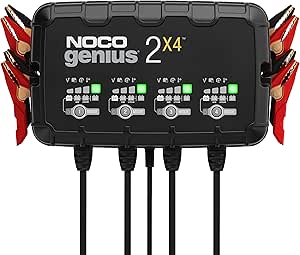
NOCO GENIUS2X4 6V/12V Four-Bank Battery Charger and Maintainer

DEWALT 20V MAX XR 3-Speed Cordless Impact Driver Kit with Battery and Charger (DCF845P1)
As an affiliate, we earn on qualifying purchases.
China Offers a Preview of the Plan
The Chinese iX3 30L shows how BMW can offer different battery chemistries within one model family: the entry version uses LFP, while higher-priced versions use NMC. Its 630-kilometer CLTC rating is a China-market figure; the source report cautions that CLTC is more optimistic than WLTP and EPA testing, so it should not be treated as an equivalent range rating for other markets.
BMW is also broadening its battery-cell supply relationships. It has announced that Samsung SDI will supply Gen6 cells from Europe and LG Energy Solution will supply them from the United States, with supply expected to start toward the end of the decade. Samsung joins CATL and EVE Energy in BMW’s European cell network. Those sourcing agreements do not identify the cells as LFP, and regional production alone does not establish that batteries or vehicles will cost less.
Mercedes offers another example of battery choice within one vehicle line: the electric CLA has an NMC option with an 85-kilowatt-hour battery and an entry-level version with a 58-kilowatt-hour LFP pack. That comparison illustrates a possible market approach, but it does not confirm BMW’s future model specifications.
“We will add the LFP technology in our vehicles, but we will be very specific in which vehicle and for which purpose.”
— BMW CEO Milan Nedeljkovic, during the company’s third-quarter earnings call
Models, Prices and Timing Remain Open
BMW has not named the Neue Klasse vehicles planned to receive LFP batteries, confirmed whether the compact EV due in 2028 is among them, or announced launch timing outside China. The company also has not provided specifications for future LFP packs, including capacity or range, or said whether lower battery costs will translate into lower customer prices.
The announced European and U.S. cell-supply arrangements do not specify battery chemistry. It is also unclear how BMW would divide LFP and NMC supply across markets. Until the company releases model-level details and pricing, the scale of any savings for buyers cannot be established.
Watch for Model and Pricing Details
The next useful milestones will be BMW’s announcements naming the vehicles and markets that will receive LFP batteries, along with their battery specifications, range ratings and prices. The company’s confirmed 2028 compact Neue Klasse EV is a model to watch, but BMW has not linked it to LFP.
Cell deliveries from the announced Samsung SDI and LG Energy Solution agreements are expected to begin toward the end of the decade, according to BMW’s plans. Those agreements do not confirm LFP supply. Until BMW gives further details, its stated direction is selective adoption—not a confirmed timetable or price cut for particular cars.
Key Questions
What has BMW confirmed about LFP batteries?
CEO Milan Nedeljkovic said BMW will add LFP batteries to selected Neue Klasse vehicles. BMW has not named the models or announced timing outside China.
Will LFP make BMW electric cars cheaper?
LFP cells can cost less than NMC cells, which could support lower-cost vehicle versions. BMW has not promised that any savings will lower sticker prices.
Which BMW already uses an LFP battery?
In China, the entry-level long-wheelbase iX3 30L has a 77-kilowatt-hour LFP battery. BMW quotes 630 kilometers, or 391 miles, under the CLTC test cycle.
Will BMW’s 2028 compact EV use LFP?
BMW has confirmed that a compact, Europe-focused Neue Klasse EV is due in 2028. It has not confirmed which battery chemistry that model will use.
How do LFP and NMC batteries differ?
LFP uses iron and phosphate and is generally less costly, while NMC uses nickel and cobalt and typically offers higher energy density. That can make NMC a better fit for longer-range applications, while LFP can suit lower-cost options.
Source: insideevs.com