
TL;DR
The supplied source is a technical history and explanation of Citroën’s hydropneumatic systems, not a report of a newly announced development. It describes how pressurised hydraulic fluid and nitrogen spheres provide suspension, ride-height adjustment and, in some models, other powered functions. The source also recounts early reliability problems and later improvements, but does not establish current repair guidance or the status of every model listed.
A technical reference on Citroën’s hydropneumatic system explains how the automaker used pressurised hydraulic fluid and nitrogen-filled spheres to combine suspension springing, damping and automatic ride-height control. The source traces the system from a 1954 Traction Avant prototype to later models including the DS, XM and Xantia; it is a historical explainer, not an announcement of a new system or vehicle.

Get business pricing on garage and car supplies
- Business-only prices and quantity discounts
- Tax-exempt purchasing
- Multiple users, one account, clear invoices
The system uses nitrogen gas as the spring and hydraulic fluid to transmit force, provide damping and adjust the suspension’s height. In the source’s description, when a vehicle load makes the body sink, a height corrector connected to the anti-roll bar detects the movement and admits pressurised fluid to the suspension strut. The strut extends until the car returns to its set ride height.
An engine-driven pump supplies pressure. That arrangement supported functions beyond suspension on some Citroën models, including powered braking and steering. In the DS, the source says, hydraulics also operated the clutch and gear change. Ride height could be changed using a control in the car, including to assist with wheel changes.
Later electronic systems added adjustment of suspension firmness. The source describes Hydractive 2, fitted to high-specification XM and Xantia variants, as using sensors and an onboard computer to select between soft and firm modes. It also describes the Xantia Activa’s SC-CAR system as adding hydraulic jacks to counter body roll.
How Hydraulics Changed the Ride
The design matters because it linked ride comfort and vehicle control to one pressurised system. Instead of relying only on steel springs, the gas-filled spheres provided springing while fluid handled damping and levelling. Automatic height correction helped keep the body at its intended level as passenger or cargo loads changed.
The same architecture could also power other vehicle functions, making it more than a suspension feature. That integration helps explain both its distinctive driving characteristics and its reputation for technical complexity. For owners and readers researching a particular car, the system’s generation and fluid type matter: the source documents a history in which early materials and design issues affected reliability.
Products Worth Considering

Autel MaxiCharger Level 2 50A Hardwired EV Charger with Wi-Fi and 25-Foot Cable

Innova 5610 OBD2 Bidirectional Scan Tool

NOCO Boost X GBX155 4250A 12V Lithium Jump Starter
As an affiliate, we earn on qualifying purchases.
From Traction Avant to Hydractive
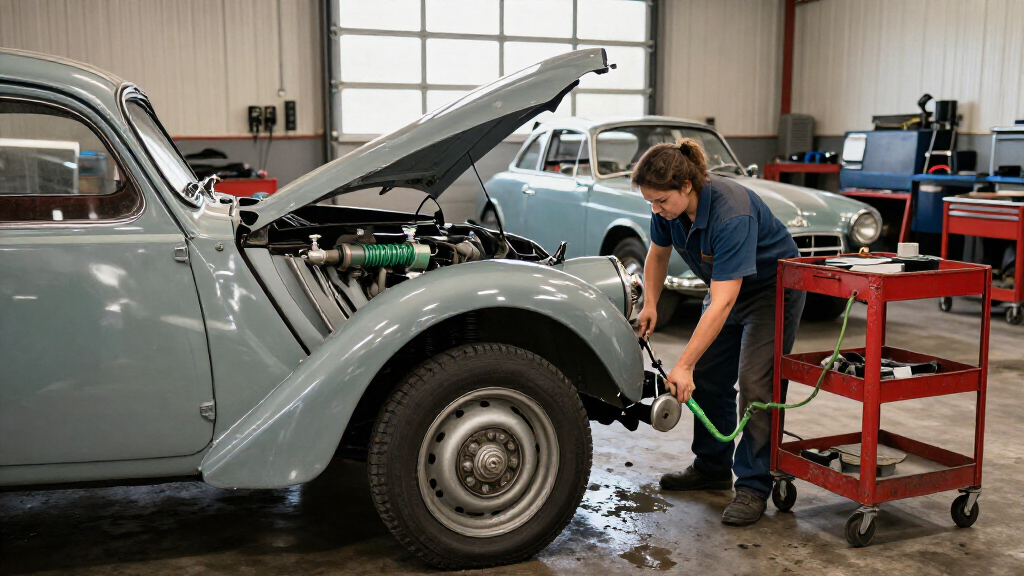
The source dates an early demonstration to 1954, when hydropneumatic suspension was fitted to the rear of a 15CV H Traction Avant. The system then appeared on the DS 19, introduced in 1955, and later versions were used in models including the GS, SM, CX, BX, XM, Xantia, many C5s and the C6. The page also mentions a number of prototypes and licensed applications; it does not give full production details for each.
Citroën’s early hydraulic system faced problems, according to the reference. It says seals and the original fluid contributed to failures, including fluid leaks and cars settling low. The original fluid absorbed water, which could lead to oxidation. The source says a change to mineral LHM fluid in the mid-1960s made the system thoroughly reliable. This is the reference’s historical account, not a present-day assessment of every surviving vehicle.
With the XM, Citroën introduced Hydractive electronic control. The system used sensor inputs, including vehicle speed and body movement, to choose between softer and firmer suspension settings. Later versions were also fitted to some Xantias and XMs, though equipment varied by model and specification.
“The system takes advantage of the fact that you can compress a gas but cannot compress a fluid.”
— Citroën technical-history page at citroenet.org.uk
Model-Specific Details Still Matter
The supplied source is a reference page, not a dated news release, and it does not identify a new event. It provides no current production announcement, fleet data or independent reliability study. Its list of models is broad, but does not establish which trims, markets or model years received each system; descriptions should not be treated as applying to every example of a named model.
The source also does not provide a full, up-to-date maintenance procedure, approved fluid specifications for individual cars, or repair costs. The historical account of improved reliability after the move to LHM does not establish the condition of any particular used vehicle. Owners should consult documentation specific to the model and year and seek qualified service for faults in a pressurised hydraulic system.
Check the Exact Model and System
No follow-up event or release date is given in the supplied material. For readers considering a particular Citroën, the practical next step is to identify its model year, system generation and specified fluid using the owner’s manual or service documentation. A vehicle inspection can establish whether the suspension holds height and whether there are visible leaks or warning signs.
Because the system is pressurised and can also operate safety-related functions such as braking on some models, suspected faults should be assessed by a qualified mechanic familiar with Citroën hydraulics. The source does not confirm a current recall or safety notice; owners can check applicable records with the relevant national vehicle-safety authority.
Key Questions
What makes Citroën hydropneumatic suspension different?
It uses nitrogen gas in spheres as the springing medium and pressurised hydraulic fluid for damping and ride-height adjustment. The precise arrangement varies by system generation and vehicle.
How does the car maintain its ride height?
As described in the source, a height corrector detects body movement when a load is added or removed and directs pressurised fluid to the suspension strut to restore the set height.
Which Citroën models used the system?
The source lists models including the DS, GS, SM, CX, BX, XM, Xantia, C5 and C6. Availability depended on model and specification, so the list does not mean every version had the system.
Was the system always reliable?
No system can be described as uniformly reliable across all cars from this overview alone. The source reports early DS-era issues involving seals and fluid, and says the later introduction of mineral LHM improved reliability. The condition and maintenance history of an individual car still matter.
What should an owner do if the suspension appears faulty?
Check the vehicle’s model-specific service information and have suspected leaks or pressure-system faults assessed by a qualified mechanic familiar with Citroën hydraulics. The supplied source is not a repair manual.
Source: citroenet.org.uk