TL;DR

Get garage and car supplies delivered free — and shop member deals
- Fast, free delivery on millions of items
- Access to Prime Big Deal Days deals on October 6–7
- Prime Video, Amazon Music and more included
A 2021 federal law requires NHTSA to develop a standard for advanced drunk- and impaired-driving prevention technology in new vehicles. The law does not authorize police or other officials to remotely disable cars, but it could require systems that monitor drivers and intervene when impairment is detected. NHTSA missed its original 2024 deadline; the rule is now due by November 2027.
A federal law does not authorize authorities to remotely shut down cars, despite online claims about a coming government “kill switch.” Instead, the 2021 Infrastructure Investment and Jobs Act directs the National Highway Traffic Safety Administration (NHTSA) to set a standard for impaired-driving prevention technology in new vehicles, with the agency’s deadline now set for November 2027.
Section 24220, known as the Halt Drunk Driving Act, instructs NHTSA to establish a standard requiring advanced technology to prevent or limit vehicle operation if impairment is detected. The law describes systems that may monitor driver behavior or assess blood alcohol concentration. It does not use the phrase “kill switch,” and the report says it gives police and other authorities no power to remotely disable a vehicle.
The proposed requirement would differ from an ignition interlock device, which generally requires a driver to pass a breath test before starting a vehicle and is used in specific circumstances, such as after a court order. The law points toward a system built into new cars generally that could monitor drivers and intervene. The precise technology and how it would work are matters for the agency’s rulemaking.
Congress originally directed NHTSA to finalize its rules in 2024. The agency missed that deadline, and the source report says the rules are now due by November 2027. No finalized standard is described in the supplied material, so claims that a new nationwide system is about to take effect go beyond what it confirms.
How Driver Monitoring Could Change
The proposal matters because it could make impairment detection a feature of new vehicles broadly, rather than a device installed only for drivers subject to particular restrictions. If a system detects impairment, the law calls for technology that can prevent or limit operation. That could shift some control over whether a car can be driven from the person behind the wheel to an automated system designed and implemented by manufacturers under federal standards.
The safety goal is reducing impaired driving, but the system’s reach and operation will matter to drivers as well. Questions about what is measured, how accurately impairment is identified, and when a vehicle may intervene are not answered by the statute’s broad direction alone. The source report also warns that creating this framework could make later changes possible, but that is a concern about future policy choices—not evidence that officials currently have remote shutdown authority.
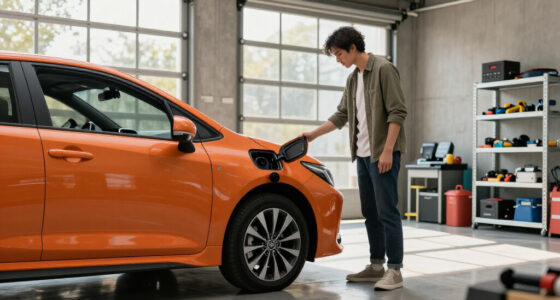
driver impairment detection system for cars
As an affiliate, we earn on qualifying purchases.
As an affiliate, we earn on qualifying purchases.
From 2021 Law to 2027 Deadline
The requirement is part of the Infrastructure Investment and Jobs Act, a $1.2 trillion law enacted in 2021. The legislation included provisions beyond infrastructure spending, including Section 24220’s direction to NHTSA on drunk- and impaired-driving prevention technology.
The law describes two broad approaches: monitoring a driver’s behavior for signs of impairment or monitoring blood alcohol concentration to determine whether it exceeds the legal limit. In either case, the technology is meant to prevent or limit vehicle operation after detecting impairment. The source material says modern vehicles may already contain sensors and cameras that could be used, but it does not establish which hardware or approach NHTSA will require.
““prevent or limit motor vehicle operation if an impairment is detected.””
— Section 24220 of the Infrastructure Investment and Jobs Act, as described in The Drive’s report
Technology and Safeguards Still Pending
The source material does not specify what sensors or tests will satisfy NHTSA’s standard, how impairment will be determined, or what kinds of intervention vehicles must make. It also does not describe proposed safeguards for errors, driver privacy, system failures, or appeals when a driver believes the technology has misidentified impairment. Those details depend on the agency’s rulemaking and are not settled in the material provided.
It is also unclear when any final requirement would begin applying to new vehicles after the standard is issued. The missed 2024 deadline and revised November 2027 deadline mean the rule is not described as finalized or already operating nationwide. The possibility of future lawmakers expanding government authority is a policy concern raised in the report, not a power established by the current provision.
NHTSA Rulemaking Due in 2027
The next key milestone is NHTSA’s deadline to finalize the standard by November 2027. The agency’s rule will need to spell out the technology and performance requirements before readers can know what automakers would have to install and how the systems would respond to detected impairment.
Until that rule is issued, the confirmed development is the law’s direction to create an impairment-prevention standard—not a current federal power to remotely disable vehicles. Further details about implementation, safeguards, and the timing of any vehicle requirements remain pending.
Key Questions
Does the law give police a remote kill switch for cars?
No. The report says Section 24220 gives police and other authorities no authority to remotely shut down a vehicle.
What does the law require?
It directs NHTSA to establish a standard for technology in new cars that can detect drunk or impaired driving and prevent or limit vehicle operation when impairment is detected.
When is the rule expected?
The original deadline was 2024. NHTSA missed it, and the source report gives the revised deadline as November 2027.
Is the technology already finalized?
The supplied report does not describe a finalized standard. The specific detection methods, intervention requirements, and implementation details remain to be set by NHTSA.
Source: rss
Halloween Picks
halloween
As an affiliate, we earn on qualifying purchases.