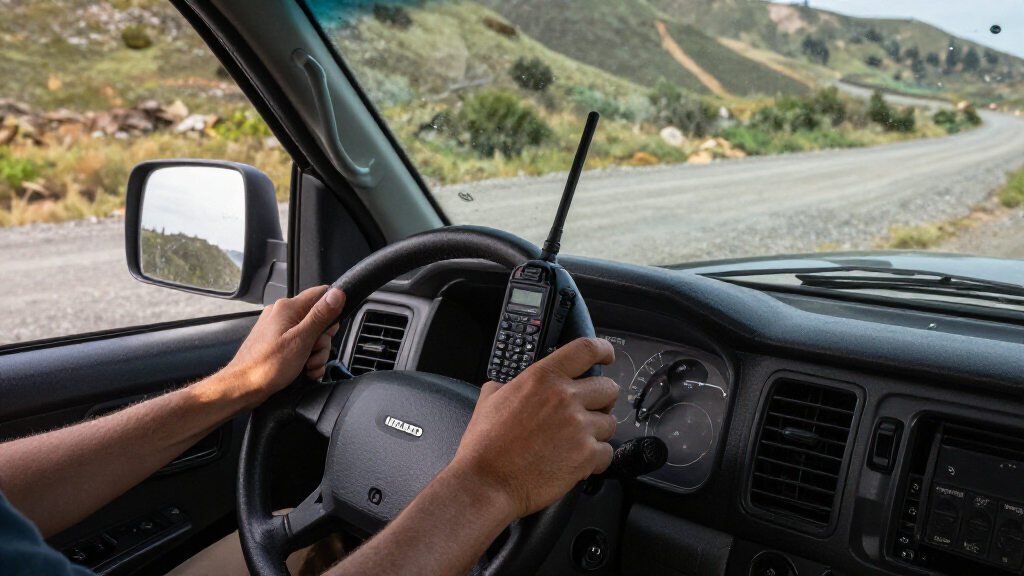

The Midland MXT275 is a compact 12-volt GMRS mobile radio aimed at drivers who want vehicle-mounted communication without a large control unit. Its strongest advantage is the control microphone, which puts the main controls within reach, while 15 watts of power, repeater channels, and NOAA weather alerts make it more capable than a basic handheld. The tradeoff is that it depends on vehicle-style 12-volt power and offers less output than higher-powered mobile radios. It is worth buying for modest, vehicle-based GMRS use, but buyers who need maximum range or portable operation should look elsewhere.

Get business pricing on garage and car supplies
- Business-only prices and quantity discounts
- Tax-exempt purchasing
- Multiple users, one account, clear invoices

Midland MXT275 15W MicroMobile GMRS Two-Way Radio
- ✔ Brand: Midland
- ✔ Model: MXT275-FBA
- ✔ Power: 15W
Why This Product Stands Out
The MXT275’s defining choice is its separation of the radio body and controls. Rather than putting a full console of controls on the main unit, it integrates controls into the microphone. That arrangement suits drivers who want the radio mounted out of sight or in a tight space while keeping operation close at hand. It is a practical design feature, especially in vehicles where dashboard room is already spoken for.
Its channel selection also gives it a useful middle ground for small vehicle groups and local GMRS users. The 15 high-power channels cover direct radio communication, while eight repeater channels allow use of compatible local repeaters when one is available and the user has access. This is more flexible than a simple short-range walkie-talkie setup, but it does not guarantee long-distance coverage. A repeater’s location, terrain, antenna, and operating conditions matter as much as the radio’s stated maximum range.
In its category, the MXT275 is best understood as a compact, convenience-focused mobile unit, not a high-output flagship. NOAA weather alerts and the IP55 rating add useful versatility, though the listing’s separate statement that it is “not water resistant” makes it sensible to treat the rating as protection against limited exposure rather than permission to leave it in wet conditions. Buyers who want a complete kit with handheld radios could compare the Retevis RA86 bundle; those who put output ahead of compactness may prefer the 40W Radioddity DB40-G or 50W Rugged Radios Rambler G4.
Key Features and What They Mean
The control microphone is the feature most likely to shape day-to-day usability. With controls on the microphone, a driver can keep the radio unit tucked into a suitable mounting spot and operate the system from the front seat. That can reduce clutter and make the setup easier to fit into a vehicle. It is a design advantage rather than a performance upgrade, so buyers focused mainly on range should not treat it as a substitute for higher output or a suitable antenna installation.
Fifteen high-power channels and eight repeater channels support two common kinds of GMRS use. Direct channels can connect compatible radios within the limits of local conditions; repeater channels let users reach a compatible repeater, which can extend coverage when one is accessible. This is valuable for organized trail trips, family caravans, and local communication groups. Repeater support is only useful when a suitable repeater is within reach and the user can operate on it.
The NOAA weather scan and alert adds a safety-oriented convenience for drivers and outdoor groups. It can help users monitor weather broadcasts without carrying another device, which is most useful when a vehicle is the group’s communications hub. It does not replace a dedicated weather plan or guarantee reception in every location, but it is a meaningful extra for trips where conditions may change.
The listed IP55 rating suggests resistance to dust and water spray, which can help with the occasional outdoor exposure common to vehicle-mounted equipment. The listing also says “not water resistant,” so the safest interpretation is limited protection rather than waterproofing. Mounting location still matters: avoid placing the radio where it may be soaked, submerged, or continuously exposed to dirt and moisture.
Performance and Real-World Use
In normal use, the MXT275’s most practical performance advantage is likely to be ease of access from the driver’s seat. The microphone-based controls can make it easier to operate than a radio whose controls are fixed on a unit mounted under a seat or behind a panel. Its compact dimensions—listed as 1 by 5 by 5.25 inches—also give installers more flexibility when choosing a mounting location. Setup still requires suitable 12-volt power and an appropriate installation, so it is not as simple as charging a handheld and turning it on.
Communication range should be approached with realistic expectations. The stated 50-mile maximum range is a best-case claim, not a reliable distance for everyday driving. Hills, buildings, vegetation, antenna placement, and the other radio’s capabilities all affect results. The eight repeater channels can improve reach where a compatible repeater is available, but they do not make that coverage universal. For buyers who regularly need the strongest available mobile signal, the 40W or 50W alternatives are more aligned with that priority.
The radio’s weather and exposure features suit occasional outdoor use around a vehicle, but they do not remove the need for sensible placement and care. It needs vehicle-style power, and the specification mentioning nonstandard batteries raises a practical question for buyers planning backup operation. Confirm the intended power arrangement before purchase, particularly if the radio must work when the vehicle is off or away from a standard 12-volt supply.
Who Should Buy This
Choose the MXT275 if you are a driver or trail-group organizer who wants a compact GMRS radio installed in a vehicle, expects to communicate with compatible Midland handhelds, and values convenient microphone controls over maximum output. It is a good fit for road trips, local convoys, and outings where NOAA weather alerts and occasional repeater access add value. It makes the most sense when vehicle power is readily available and your range needs are moderate.
Who Should Skip This
Skip it if you need a portable radio for use away from your vehicle, want a higher-powered mobile unit for the best possible reach, or expect the advertised 50-mile figure to describe routine performance. Buyers who need handhelds included with the radio may find the Retevis RA86 bundle a closer match. Those prioritizing 40W or 50W output should compare the Radioddity DB40-G or Rugged Radios Rambler G4, while checking each model’s installation and feature tradeoffs.
Value for Money
The MXT275 is worth its mid-range price for drivers who will use its compact installation and microphone-based controls. Repeater channels and NOAA weather alerts make it a capable, convenient vehicle radio, and those advantages can justify the cost for local communication, road trips, and trail convoys. It is less compelling for buyers paying mainly for reach: 15W trails the listed 40W and 50W alternatives, and no radio can promise routine 50-mile coverage. Since no verified price is provided, the value judgment is conditional: buy it if the in-vehicle layout solves a real need and moderate output is enough; otherwise, a higher-powered mobile radio or a handheld system is a better use of the budget.
Midland MXT275 15W MicroMobile GMRS Two-Way Radio
The MXT275’s defining choice is its separation of the radio body and controls . Rather than putting a full console of controls on the main unit, it integrates controls into the microphone.
Pros:
- The integrated control microphone keeps everyday operation within reach, while the radio body can be mounted separately to save dashboard space.
- Fifteen high-power channels and eight repeater channels give users options for direct communication and access to compatible repeaters where available.
- NOAA weather scan and alert can provide useful weather information during road trips and outdoor outings, without requiring a separate weather radio.
- The stated IP55 rating offers some protection against dust and water spray, a helpful safeguard in a vehicle or outdoor setting.
- Compatibility with Midland FRS and GMRS walkie-talkies makes it a practical base for communicating with compatible handhelds in a group.
Cons:
- The radio requires a 12-volt power source, so it is not a self-contained option for walking, camping away from a vehicle, or emergency use without vehicle power.
- Fifteen watts is modest for a mobile GMRS radio compared with the listed 40W and 50W alternatives; output alone does not determine range, but buyers prioritizing maximum reach may want more power.
- The advertised 50-mile maximum range is not a dependable expectation for ordinary use; terrain, obstructions, antenna setup, and repeater access affect real communication distance.
- The specifications list nonstandard batteries, which may complicate replacement planning; buyers should confirm what the battery requirement refers to for their intended setup.
Best for: Drivers who want a compact GMRS radio with microphone-based controls for road trips, trail convoys, or local group communication.
Not ideal for: Buyers who need a portable radio, maximum mobile output, or communication across long distances without repeater coverage.
Bottom line: The Midland MXT275 is worth buying for vehicle-based GMRS users who want a small radio with controls on the microphone, practical repeater support, and NOAA weather alerts.
Frequently Asked Questions
Can the Midland MXT275 really communicate over 50 miles?
Do not treat 50 miles as a routine range. Actual distance depends on terrain, obstructions, antenna installation, the other radio, and whether a repeater is available. The figure is best read as a maximum claim under favorable conditions.
Does the MXT275 work with Midland handheld radios?
The listed compatibility includes Midland FRS and GMRS walkie-talkies. Both radios still need to use compatible channels and settings, and their practical range will depend on the surroundings and the handheld’s capabilities.
Is the MXT275 waterproof?
The product data lists an IP55 rating, which indicates some protection against dust and water spray, but it also says “not water resistant.” Treat it as suitable for limited exposure only: keep it away from immersion and sustained wet conditions.
Should I choose the MXT275 or a 40W or 50W mobile radio?
Choose the MXT275 for compact installation and microphone-based controls when 15W suits your needs. Compare the Radioddity DB40-G or Rugged Radios Rambler G4 if higher listed output is your main priority, while keeping in mind that range also depends on antenna, terrain, and repeater access.
Final Thoughts
The Midland MXT275 is worth buying for vehicle-based GMRS users who want a small radio with controls on the microphone, practical repeater support, and NOAA weather alerts. Its 15W output is adequate for buyers with local or moderate communication needs, but it is not the pick for maximum mobile range, and its dependence on 12-volt power rules out true portability. Buy it when convenient in-vehicle operation matters more than raw output; choose a more powerful mobile radio or a handheld-focused package when your priorities point elsewhere.