TL;DR
Southwire says cable-in-conduit can lower the total cost of an EV charging site by 25% to 30%, with installation savings covering the added investment before the job is complete, according to the company’s calculations. A Charged EVs report also describes engineering pressures on charging cables as sites grow, current rises and the industry shifts toward NACS. The savings figure is Southwire’s estimate; project-level costs and performance were not independently verified in the report.
Southwire says cable-in-conduit can reduce the total cost of building an EV charging site by 25% to 30%, a savings estimate the Georgia cable maker attributes to lower installation costs and a simpler way to protect underground conductors. The figure was discussed in a report published Nov. 18 by Charged EVs, which also examined how higher charging power, larger fleet depots and the shift to NACS are changing cable design.

Get business pricing on garage and car supplies
- Business-only prices and quantity discounts
- Tax-exempt purchasing
- Multiple users, one account, clear invoices
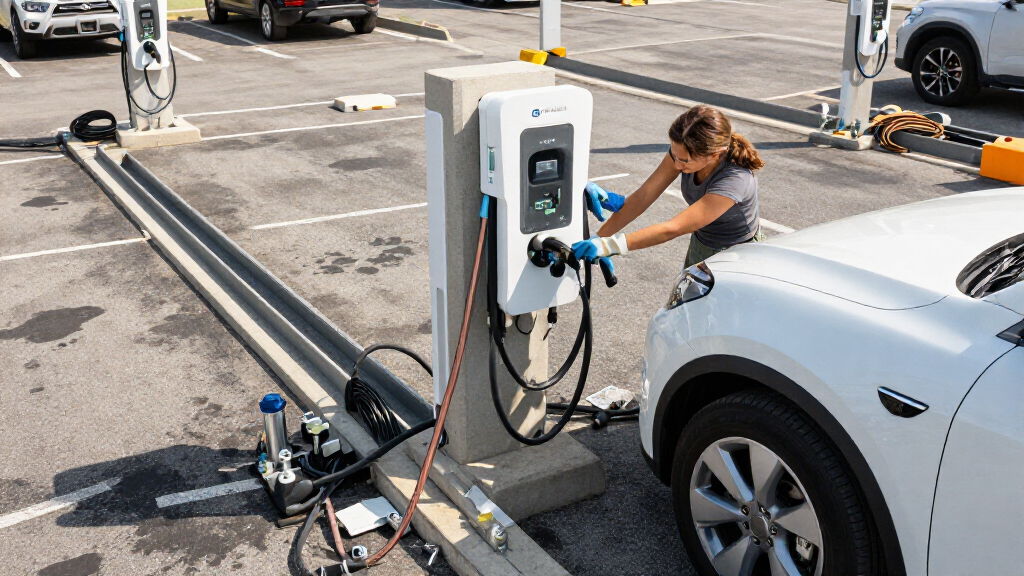
Southwire’s cable-in-conduit, or CIC, product arrives on a reel with conductors already placed inside high-density polyethylene conduit. That differs from a conventional installation in which cable is delivered separately and pulled through conduit at the jobsite. Joe Fawcett, Southwire’s business development sales manager for eMobility Infrastructure Solutions, told Charged EVs the company calculates that CIC saves 25% to 30% on total project cost, with larger savings on labor.
Fawcett described the payback as occurring during installation: “By the time we’re done installing it, you’ve paid back the investment in it.” This is Southwire’s assessment, not a reported independent comparison across completed projects. The article does not provide a project sample, a cost breakdown, or the assumptions behind the calculation, so the estimate should not be read as a guaranteed saving for every site.
The report also describes damage risks associated with underground installation. Fawcett recounted that a field engineer found tire tracks on cable that had been left on the ground before it was pulled into conduit. At another site, debris inside conduit reportedly wore through cable jackets and caused a hot-to-neutral short, shutting down a dispenser. These examples illustrate risks Southwire says CIC can help address; the report does not establish how frequently such failures occur across the industry.
At the vehicle end, Kevin Wahl, a lead consulting engineer in Southwire’s CableTechSupport Services group, said cable makers are trying to make charging cables lighter, smaller and more flexible without sacrificing durability. The move toward NACS connectors changes cable configurations and signal wiring, while some regulations may still require CCS1 or Type 1 connectors at new sites. At megawatt charging levels, the report says, currents of about 1,500 amps can require chilled liquid to circulate inside the cable rather than relying on passive cooling.
Installation Costs and Site Reliability
For charging developers and fleet operators, underground electrical work is a substantial part of getting a site connected, and installation methods can affect both labor requirements and exposure to jobsite damage. If Southwire’s estimate applies to a particular project, a 25% to 30% reduction in total cost could change the economics of building multiple chargers or expanding a depot. The report, however, gives no universal cost benchmark, so buyers would need project-specific bids to judge the potential savings.
Protection and installation are linked: cable left exposed during construction may be driven over, while debris in a conduit can damage insulation. A preassembled cable-and-conduit product may reduce some handling steps and keep conductors enclosed earlier in the process. That does not remove all installation risks or demonstrate a particular failure-rate improvement. Site design, workmanship, conduit conditions and operating loads still matter.
The cable issues also reflect a broader infrastructure challenge. Larger fleet sites and higher-power charging put more demand on electrical equipment, while medium-voltage cables and transformers can have long lead times, Fawcett said. Planning and standardizing cable specifications may help suppliers stock materials and fill orders, but the report does not quantify how much that could shorten construction schedules.
Products Worth Considering

NOCO Boost GBX45 1250A 12V Lithium Jump Starter

VIOFO A229 Plus Dual-Channel 2K Dash Cam with Front and Rear HDR

Vantrue N4 Pro S 4K 3-Channel Dash Cam with Triple STARVIS 2 Sensors
As an affiliate, we earn on qualifying purchases.
Rising Power, Changing Connectors
The report examines both sides of an EV charging installation: the underground connection from the utility transformer to the dispenser, discussed by Fawcett, and the flexible cable connecting the dispenser to a vehicle, discussed by Wahl. The two applications face different physical demands, but both have to manage heat as more current moves through compact equipment.
Wahl said public charging cables are often handled roughly, making flexibility and durability competing design goals. The industry’s shift toward NACS adds another design change: Wahl said its smaller connector and different signal-wire requirements affect cable construction. He also said some government rules may continue to call for CCS1 or Type 1 connectors at new charging sites even as many automakers move toward NACS.
Southwire told Charged EVs in a 2025 interview that roughly 95% of its EV charging cables were built to project-specific requirements. That company figure points to the range of specifications cable manufacturers may face, but the report does not give a broader industry comparison. On the site side, Fawcett said plans to expand capacity by replacing aluminum with copper may no longer fit some projects because later expansions can be much larger than the original installation.
“People aren’t treating these with the most respect, love and care, as you would maybe something that’s your own, especially with public charging.”
— Kevin Wahl, Southwire CableTechSupport Services lead consulting engineer
Savings Depend on Project Details
The 25% to 30% savings estimate is attributed to Southwire’s calculations. The report does not disclose the projects used, compare CIC with named alternatives, separate material and labor costs, or provide independent verification. Actual savings could vary with site size, installation conditions, local labor rates and design requirements.
The report also does not quantify how often cable damage, debris-related shorts or other installation problems occur, nor does it establish that CIC prevents them. It provides no comparative durability data for charging cables using different connector standards. The stated current level of about 1,500 amps is linked to megawatt charging in the report, but no project schedule or specific deployment is identified.
It remains unclear how quickly NACS will replace other connector requirements across all new sites, given Wahl’s account that some regulations still call for CCS1 or Type 1. The report does not identify specific rules or jurisdictions, and it does not describe a regulatory timetable.
Planning for Larger Charging Sites
For developers considering CIC, the next practical step is to compare project-specific bids that include materials, labor, installation time and protection requirements. Southwire’s estimate provides a company-reported point of comparison, but buyers will need local cost and design information to determine whether the approach reduces their total spend.
Fawcett said early planning and more standardized medium-voltage cable configurations could help suppliers prepare stock, particularly as charging sites grow and transformers and cables face long lead times. The report did not announce a new product launch, delivery date or formal industry standard. It also did not identify a follow-up study that would test the cost claim against completed projects.
As charging power and fleet demand increase, cable design will continue to depend on site requirements, connector rules and thermal limits. The report leaves open how quickly standards will align around NACS and how common liquid-cooled cable systems will become. Those details, along with transparent project cost comparisons, will help determine whether Southwire’s stated savings translate broadly across charging construction.
Key Questions
What is Southwire’s cable-in-conduit product?
Cable-in-conduit (CIC) is a product supplied on a reel with electrical conductors already inside high-density polyethylene conduit. It is intended to reduce the need to pull separately delivered cable through conduit at the jobsite.
How much does Southwire say CIC can save?
Southwire says CIC can reduce total EV charging site cost by 25% to 30%, with greater savings on labor. The figure is the company’s calculation; the report does not provide an independent study or project-by-project breakdown.
Does the report show that CIC prevents cable failures?
No. The report recounts examples of cable damage and a short circuit, and describes CIC as a way to change how underground cable is installed and protected. It does not provide failure-rate data showing how much the product reduces incidents.
Why are NACS and higher charging power affecting cable design?
Southwire engineer Kevin Wahl said NACS changes connector and signal-wire requirements, affecting cable configuration. At around 1,500 amps for megawatt charging, the report says chilled liquid may be needed inside the cable to manage heat.
Source: chargedevs.com