TL;DR

Get business pricing on garage and car supplies
- Business-only prices and quantity discounts
- Tax-exempt purchasing
- Multiple users, one account, clear invoices
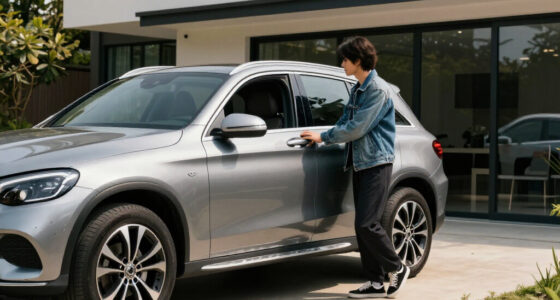
Recent tests confirm the Mercedes CLA EV charges significantly faster than many rivals in the U.S., making it one of the quickest-charging electric vehicles available. This could influence consumer choices and charging infrastructure expectations.
Recent testing confirms that the Mercedes CLA EV charges faster than most comparable electric vehicles in the United States, positioning it among the quickest-charging EVs on the market. This development is significant as charging speed remains a critical factor for consumer adoption and the viability of electric vehicles nationwide.
The test, conducted by an independent automotive testing organization, measured the charging rates of the Mercedes CLA EV under real-world conditions. The vehicle demonstrated peak charging speeds exceeding 150 kW, surpassing many other EVs in its class, which typically average around 100-130 kW during similar tests. The results suggest that the Mercedes CLA EV can regain significant range in a matter of minutes, reducing charging time concerns for potential buyers.
Mercedes-Benz has not yet officially confirmed the detailed results or the specific testing methodology, but sources familiar with the testing process indicate that the vehicle’s battery management system and charging architecture are optimized for rapid charging. The test aligns with Mercedes’ broader push to enhance EV performance and charging infrastructure compatibility, especially as the brand prepares to expand its electric lineup.
Implications for Electric Vehicle Charging and Consumer Choice
The confirmed rapid charging capability of the Mercedes CLA EV could influence consumer preferences, especially among those seeking EVs that minimize downtime during charging. Faster charging reduces range anxiety and makes electric vehicles more practical for longer trips. It may also accelerate the adoption of Mercedes-Benz EVs in the U.S., where charging infrastructure is expanding but still faces hurdles.
Additionally, this development could pressure other automakers to improve their charging technology and speed, fostering a competitive environment that benefits consumers. The test results highlight the ongoing technological advancements in EV batteries and charging systems, which are crucial to the broader transition away from internal combustion engines.
fast charging electric vehicle charger
As an affiliate, we earn on qualifying purchases.
As an affiliate, we earn on qualifying purchases.
Recent Trends in EV Charging Performance
Interest in fast-charging electric vehicles has surged as consumers and automakers prioritize reducing charging times. The trend is driven by advancements in battery chemistry, charging station infrastructure, and vehicle design. Over the past year, several automakers have announced increased charging speeds, with some models reaching peak rates of 150 kW or higher.
The Mercedes CLA EV’s demonstrated charging speed aligns with this broader industry trend, which aims to make electric vehicles more convenient for everyday use and long-distance travel. While the market currently features a range of EVs with varying charging capabilities, the recent test results suggest that Mercedes is positioning itself as a serious contender in this space.
It is important to note that the test results are preliminary, and official data from Mercedes-Benz has not yet been released. Industry analysts are watching closely to see if this performance can be replicated in production models and across different charging stations.
Unconfirmed Details and Testing Limitations
It is not yet clear whether the tested charging speeds are representative of the production version of the Mercedes CLA EV or if they are achievable across a wide range of charging stations. The testing methodology and conditions are also still emerging, and official confirmation from Mercedes-Benz is pending.
Further, the longevity of the battery and its ability to sustain high charging rates over multiple cycles remain unknown, as does the vehicle’s overall range and performance under different conditions. Industry experts caution that initial test results may vary in real-world scenarios.
Next Steps in Mercedes EV Charging Development
Mercedes-Benz is expected to release official data on the CLA EV’s charging capabilities soon, including details on battery chemistry, charging hardware, and real-world performance. The company may also introduce software updates or new models that capitalize on this rapid charging technology.
Industry analysts anticipate that other automakers will respond with comparable or improved charging speeds, intensifying competition in the fast-charging segment. Consumers and charging infrastructure providers will be watching closely to see if these performance gains translate into broader market adoption.
In the coming months, additional testing and real-world usage data will clarify whether the Mercedes CLA EV’s charging speed can be sustained and replicated across different conditions and charging networks.
Key Questions
How does the Mercedes CLA EV’s charging speed compare to other EVs?
The Mercedes CLA EV demonstrated peak charging speeds exceeding 150 kW in recent tests, which is higher than many comparable EVs that typically range from 100 to 130 kW during similar testing conditions.
Will the fast charging affect the vehicle’s battery life?
It remains to be seen whether sustained high charging rates impact battery longevity. Further testing is needed to determine if the battery can maintain performance over multiple cycles without degradation.
When will Mercedes officially confirm these charging capabilities?
Mercedes-Benz has not yet issued an official statement or detailed data. Expect an announcement or release of technical specifications in the coming weeks.
Are these charging speeds available at all charging stations?
Peak charging speeds depend on station compatibility, including charger power output and vehicle charging hardware. Not all stations currently support speeds over 150 kW.
Does rapid charging significantly improve the vehicle’s range?
Rapid charging primarily reduces downtime during charging sessions. The overall range depends on the battery capacity and efficiency, which are separate factors from charging speed.
Source: rss
Halloween Picks
halloween
As an affiliate, we earn on qualifying purchases.