
When comparing Norton’s monocoque and tubular frames, you’ll notice that monocoque designs offer higher rigidity, resulting in precise handling and stability, but they can be more costly and harder to repair. Tubular frames are simpler, more flexible, and easier to maintain, providing good strength-to-weight ratios and customization options. If you want to understand how each frame impacts performance and maintenance, exploring further will reveal the key differences that make each suitable for different riding styles.
Key Takeaways
- Monocoque frames are single-shell structures offering higher rigidity and precise handling, ideal for high-performance Norton models.
- Tubular frames consist of interconnected tubes, providing greater flexibility, easier repairs, and cost-effective manufacturing.
- Monocoque construction enhances stability at high speeds but requires advanced fabrication, increasing production costs.
- Tubular frames allow for easy customization and targeted repairs, making them suitable for varied riding styles and maintenance.
- The choice between monocoque and tubular frames impacts Norton bikes’ handling, repairability, manufacturing complexity, and overall performance.
When choosing a frame for a Norton motorcycle, understanding the differences between monocoque and tubular designs is essential. Each frame type offers distinct advantages and challenges that impact how your bike handles, its durability, and how easy it is to produce. The core difference lies in their structural construction, which directly influences frame rigidity and manufacturing complexity.
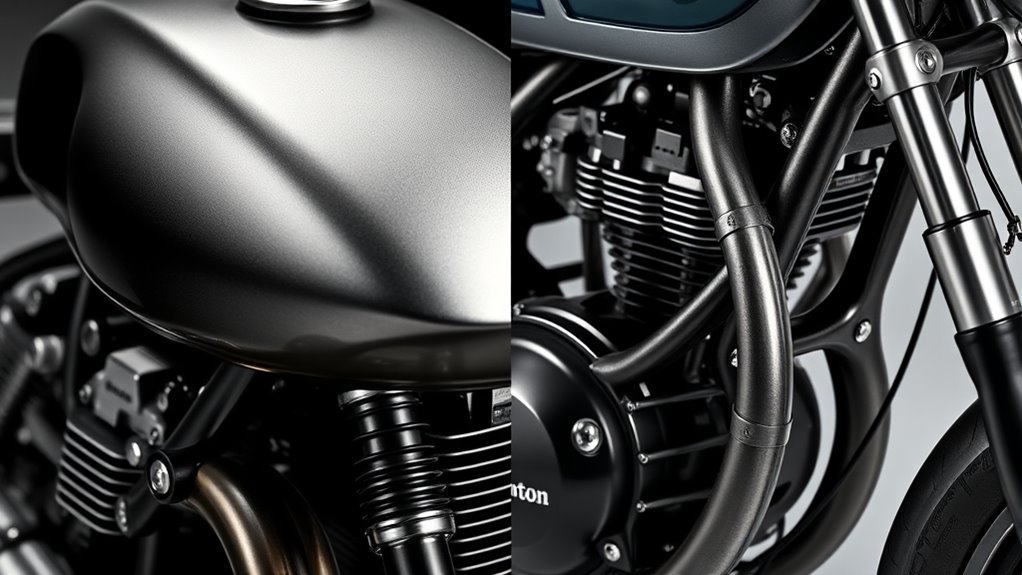
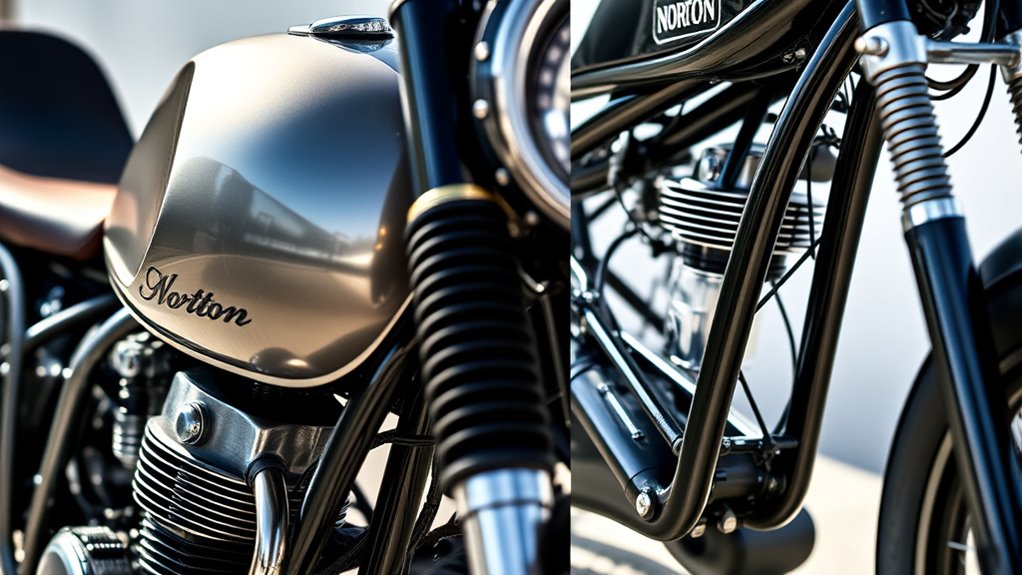
A monocoque frame is built as a single, integrated shell, where the body panels and structural elements form a unified unit. This design typically results in increased frame rigidity because the entire shell acts as a cohesive structure. When you ride, this rigidity translates into more precise handling and stability, especially at high speeds or through tight corners. Since the frame is a single piece, it minimizes flexing and enhances responsiveness, giving you a more direct connection to the road. However, this advantage comes with a trade-off in manufacturing complexity. Producing a monocoque frame requires advanced fabrication techniques, precise molds, and often more time-consuming assembly processes. As a result, manufacturing costs tend to be higher, and repairs can be more challenging since damage to one part might compromise the entire shell.
On the other hand, tubular frames are constructed from interconnected steel or aluminum tubes welded together into a lattice structure. This approach is more traditional and has been favored for decades due to its relative simplicity. The tubular design is generally easier to manufacture because individual tubes can be produced separately and then assembled with straightforward welding. This modularity makes repairs more accessible; if one tube gets damaged, it can often be replaced without affecting the entire frame. From a performance perspective, tubular frames provide good strength-to-weight ratios and flexibility in design, allowing customization to suit different riding styles. Additionally, manufacturing techniques for tubular frames are well-established, which can reduce production costs and lead times. However, they usually offer less frame rigidity compared to monocoque frames, which might result in slightly less precise handling, especially under aggressive riding conditions.
Frequently Asked Questions
Which Frame Type Is More Cost-Effective to Produce?
A tubular frame is generally more cost-effective to produce because it involves simpler manufacturing processes and cheaper materials, leading to lower manufacturing costs. You’ll find that tubular frames require less complex tooling and assembly, making them ideal if you’re prioritizing cost efficiency. Monocoque frames, while lighter and more aerodynamic, tend to have higher manufacturing costs due to their intricate design and specialized materials.
How Does Frame Choice Impact Motorcycle Resale Value?
Think of your motorcycle’s frame as its backbone—your choice directly influences resale value. A frame with superior durability and aesthetic appeal attracts buyers, boosting its worth. Monocoque frames often give a sleeker look and are corrosion-resistant, enhancing appeal. Tubular frames may appeal to enthusiasts for their classic charm and strength. Ultimately, a well-chosen frame elevates your bike’s resale value by combining durability and eye-catching design.
Are There Specific Models That Exclusively Use One Frame Type?
Some motorcycle models do favor specific frame types due to their design and manufacturing techniques. For example, sport bikes often use monocoque frames for lightweight strength, while cruiser models might stick with tubular steel frames for durability and ease of repair. You’ll find that high-end racing bikes typically feature monocoque frames, thanks to advanced manufacturing techniques that optimize weight and rigidity. Always check the model specifications to see the chosen frame material.
What Maintenance Differences Exist Between Monocoque and Tubular Frames?
You might think maintenance is similar for both, but with monocoque frames, you’ll find better frame durability and corrosion resistance, meaning less upkeep over time. Tubular frames, however, need more regular inspections and possible rust treatments due to their metal joints. So, if you want lower maintenance and longer-lasting strength, go for a monocoque; it’s designed to withstand the elements better and keep your bike in top shape.
How Do Frame Choices Influence Rider Comfort and Ergonomics?
Your frame choice considerably impacts rider comfort and ergonomics. A monocoque frame offers better aerodynamics considerations, reducing wind resistance and providing a sleek aesthetic appeal, which can enhance your riding experience. Tubular frames, on the other hand, often allow for more customizable ergonomics, giving you tailored comfort. Consider how each frame’s design influences your posture and riding style, balancing aerodynamics with personal comfort for an ideal experience.
Conclusion
Choosing between monocoque and tubular frames is like picking between a sleek sailboat and a rugged mountain bike; each has its own adventure. Monocoque frames offer lightweight strength, making your ride smooth and nimble, while tubular frames provide durability and classic charm. Consider your riding style and needs—whichever you pick, you’re steering your Norton toward exciting journeys. Remember, the right frame is the heart that keeps your machine beating strong on every twist and turn.