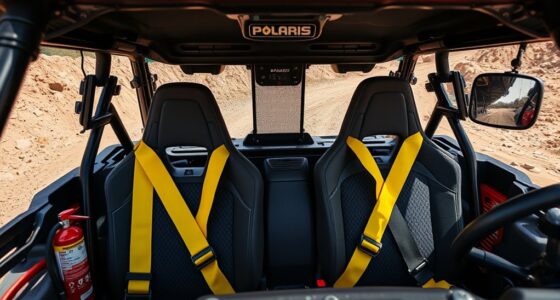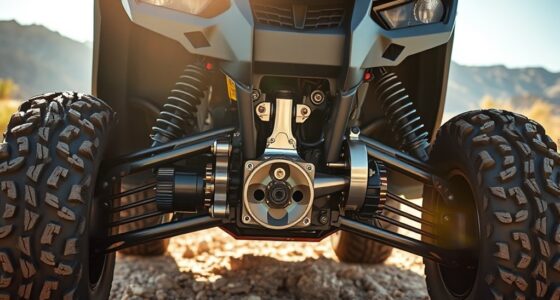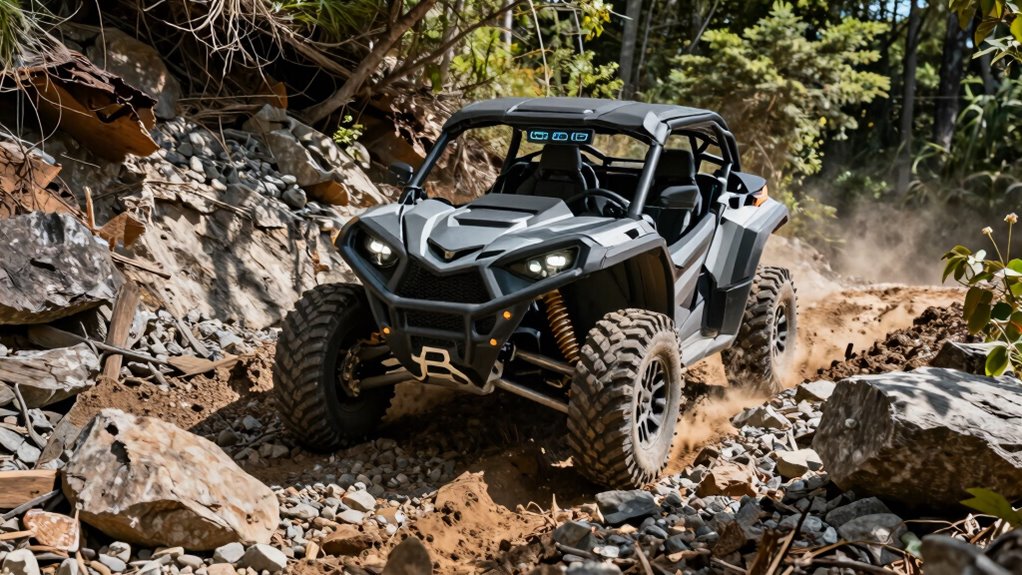

Can-Am’s 4×4 systems use electronic sensors and torque management algorithms to adjust power distribution in real time, optimizing traction and stability across uneven terrain. You can switch between modes like 2WD, full 4WD, limited slip, and auto, which activate different torque and differential settings suited for sand, mud, snow, or rocky trails. Proper mode use enhances performance and prevents mechanical stress; more details reveal how these intelligent controls truly improve your off-road experience.
Key Takeaways
- Can-Am’s 4×4 systems detect terrain conditions in real-time to optimize torque distribution and traction.
- Main modes include 2WD, 4WD Full Traction, Limited Slip, and Auto, each suited for different trail surfaces.
- Seamless mode switching is possible via a dial, but should be done at low speeds or stationary for safety.
- Proper mode selection enhances grip, prevents wheelspin, and reduces drivetrain wear during challenging trail conditions.
- Customizing settings like differential lock and traction control helps adapt the system for specific trail terrains.
What Are Can-Am’s 4×4 Modes and Why Do They Matter?

Can-Am’s 4×4 modes are engineered to optimize performance and safety across diverse terrains by automatically adjusting power distribution and traction settings. These modes utilize sophisticated sensors and real-time data to evaluate terrain conditions, then modify torque allocation between front and rear axles. This ensures maximum grip and stability, whether you’re steering through loose gravel, mud, or snow. Each mode is tailored to specific driving scenarios, such as standard, high, or low traction environments, enabling precise control without driver intervention. The system continuously monitors wheel slippage, adjusting power flow instantly to maintain optimal traction. This proactive, adaptive approach reduces driver fatigue, minimizes loss of control, and enhances vehicle capability, making your off-road experience safer and more efficient regardless of terrain complexity. Additionally, understanding vehicle systems can help you better appreciate how these modes contribute to overall safety and control. Recognizing the importance of system integration can also improve your ability to utilize these features effectively during various trail conditions. Furthermore, these adaptive systems rely heavily on sensor technology, which plays a crucial role in providing real-time data for optimal mode selection. Incorporating real-time data analysis allows the system to adapt even more swiftly to changing conditions, ensuring consistent performance.
How Do Can-Am’s 4×4 Systems Work and Improve Off-Roading?
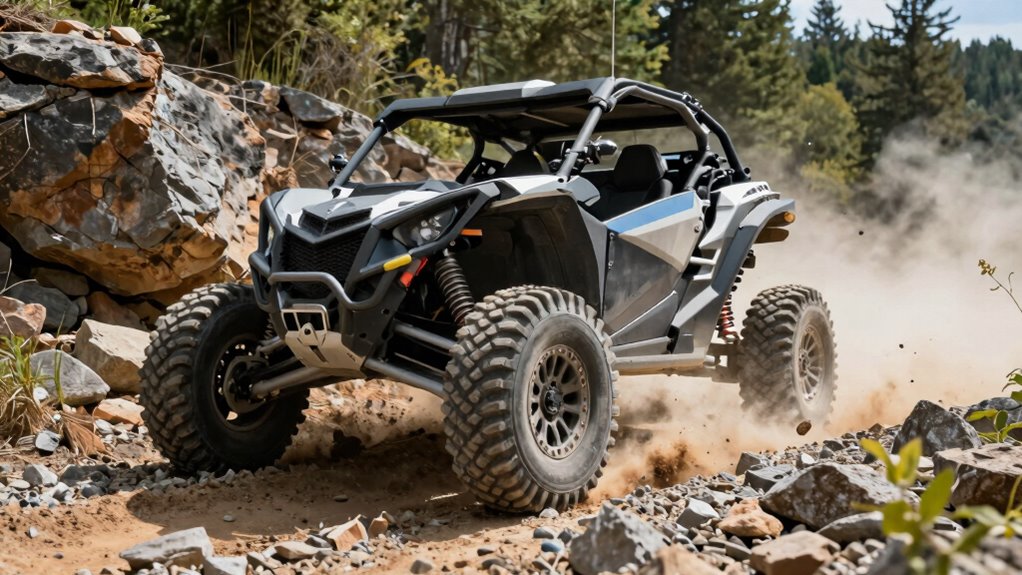
Can-Am’s 4×4 systems operate through a combination of electronic sensors, torque management algorithms, and quick-acting actuators that constantly monitor terrain conditions and wheelslip. Sensors detect differences in wheel speed, slip, and traction levels in real-time. When slip is detected, the system’s ECU adjusts torque distribution across axles and wheels, optimizing grip. Actuators then engage differentials or transfer cases swiftly to redirect torque where needed most. This dynamic process minimizes wheelspin and enhances traction on uneven or loose surfaces. By continuously analyzing data and adjusting power delivery instantaneously, the system maintains stability and control. This precise, responsive operation allows you to confidently navigate challenging terrain, improving off-road performance, reducing driver fatigue, and preventing loss of control in unpredictable trail conditions. Understanding system sensors helps in appreciating how these systems adapt seamlessly to various trail challenges. Additionally, traction control technology is fundamental to maintaining consistent grip in diverse off-road environments.
Meet the Four Main Can-Am 4×4 Modes Explained
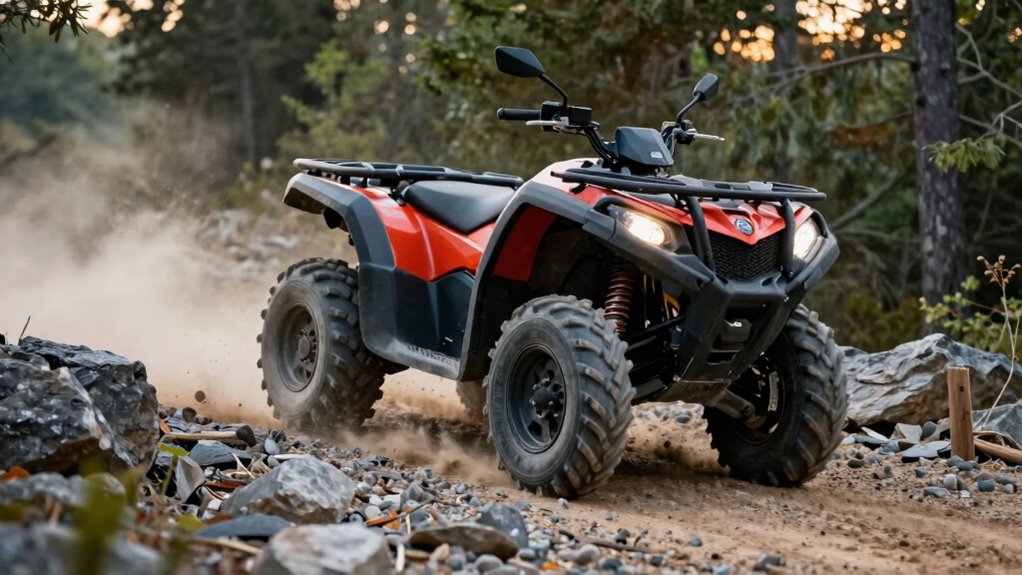
Understanding the four main 4×4 modes available on Can-Am vehicles is essential for optimizing performance across diverse terrain conditions. Each mode adjusts power distribution, traction control, and drivetrain engagement to suit specific environments. The modes include:
- 2WD Mode: Sends power solely to the rear wheels for fuel efficiency on smooth surfaces.
- Full Traction (4WD) Mode: Distributes torque evenly, maximizing grip on uneven, loose terrain.
- Limited Slip Mode: Enables torque transfer to wheels with traction, preventing wheel spin during moderate slips.
- Auto Mode: Automatically adjusts between 2WD and 4WD based on real-time traction data for seamless handling.
- High/Low Range: Alters gear ratios, providing either increased torque for steep inclines or higher speeds on open trails.
- Additionally, traction management systems enhance vehicle control by adapting to changing trail conditions in real-time, ensuring optimal vehicle performance in all situations. Understanding drivetrain engagement helps drivers select the most effective mode for varying trail challenges and improves overall off-road capability.
When Should I Use 2WD on My Can-Am?
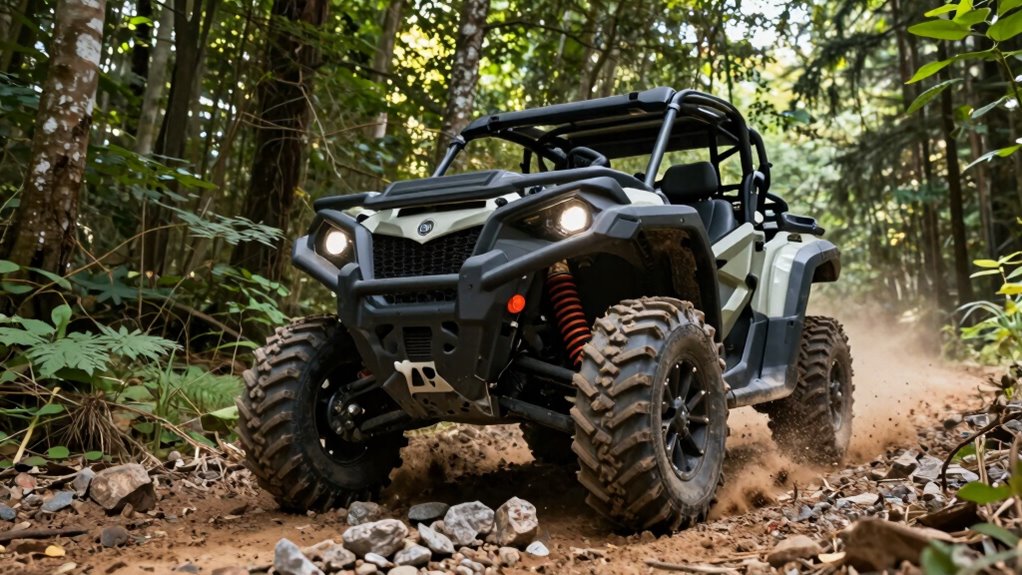
Using 2WD is ideal when you’re steering dry, firm trails where traction isn’t an issue. It reduces drivetrain resistance, which conserves fuel and battery life, enhancing overall efficiency. Switch to 2WD only when conditions are stable to maximize performance and resource savings. Engaging 2WD can also be beneficial when navigating trusted resources or well-maintained roads where minimal traction is required. Additionally, understanding the different 4×4 modes helps optimize your vehicle’s performance based on trail conditions. Recognizing how smart technology integrates with your Can-Am system can further improve your trail experience and safety. Being aware of terrain types ensures you select the appropriate drive mode for optimal control and efficiency. Monitoring vehicle settings allows you to adapt quickly to changing trail conditions for safer and more effective riding.
Optimal for Dry Trails
On dry, firm trails, engaging 2WD maximizes efficiency by reducing drivetrain resistance and conserving fuel. In this mode, power is transmitted only to the rear wheels, lowering mechanical losses and enhancing fuel economy. Use 2WD when terrain is predictable, with minimal loose gravel or loose dirt, and no significant obstacles. It’s ideal for maintaining steady speeds on smooth surfaces. When engaging 2WD, the system minimizes torque transfer components, reducing heat buildup and wear. Monitoring trail conditions guarantees ideal performance, preventing unnecessary drivetrain strain and conserving power for when extra traction is genuinely needed. Utilizing 2WD optimizes fuel efficiency on suitable surfaces, extending your ride time and reducing the need for refueling. Being aware of terrain conditions helps prevent drivetrain damage and ensures smooth operation. Additionally, understanding 4×4 modes allows you to adapt quickly to changing trail dynamics, enhancing safety and performance. Recognizing the importance of vehicle maintenance can also ensure your Can-Am system remains reliable during off-road adventures.
Saves Fuel and Battery
Wondering when to switch your Can-Am to 2WD for peak fuel and battery efficiency? You should engage 2WD during smooth, low-resistance surfaces like paved roads or dry, hard-packed trails. In this mode, power is directed solely to the rear wheels, reducing drivetrain drag and minimizing energy consumption. Avoid 4WD when traction isn’t compromised, as unnecessary engagement increases mechanical resistance and drains fuel and battery more rapidly. When steering through flat terrains with consistent grip, 2WD optimizes efficiency by decreasing component load and reducing torque transfer to the front axle. Regularly shifting to 2WD during extended drives conserves fuel and prolongs battery life, especially when the terrain doesn’t demand the additional traction provided by 4WD or 4×4 modes. Understanding drivetrain efficiency can help you make smarter decisions about when to switch modes and maximize your vehicle’s performance. Additionally, being aware of traction conditions can guide you to use the appropriate mode for different trail scenarios, ensuring optimal energy use and vehicle longevity. Recognizing energy-saving techniques can further enhance your overall trail experience by reducing unnecessary power usage.
How to Use Sand, Mud, and Snow Modes Effectively
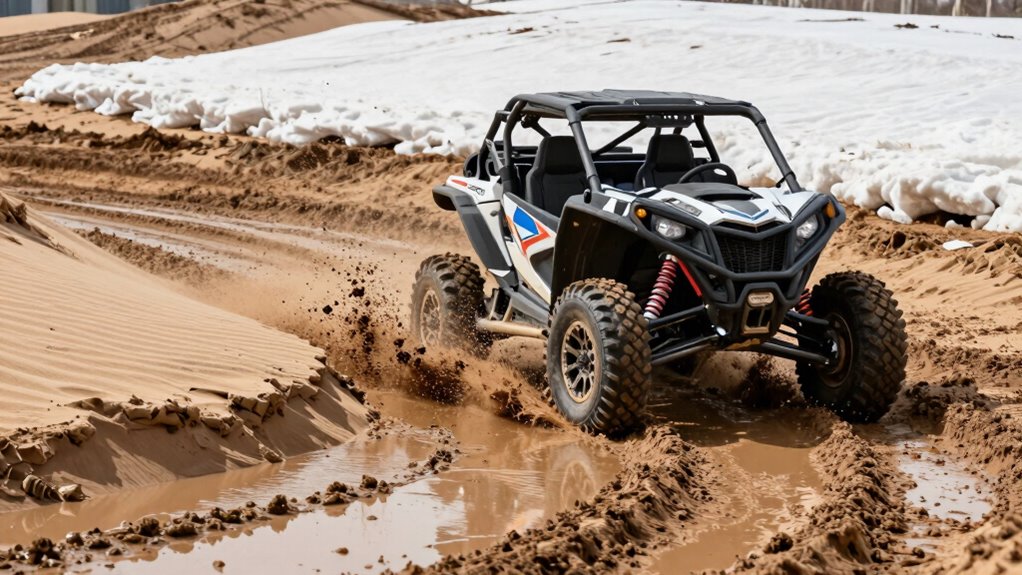
To maximize traction and vehicle control when driving in sand, mud, or snow, it’s essential to select the appropriate mode and adjust driving techniques accordingly. Proper mode selection optimizes power delivery, throttle response, and torque distribution for challenging terrains.
Choosing the right driving mode and techniques enhances traction on sand, mud, and snow.
- Maintain steady throttle input to prevent wheel spin and avoid abrupt acceleration.
- Use lower gears to increase torque and improve traction.
- Keep momentum consistent; avoid sudden stops or sharp turns.
- Distribute weight evenly to prevent sinking or slipping.
- Monitor tire pressure; lower pressures can improve grip in soft conditions.
How to Switch Between Can-Am 4×4 Modes Seamlessly

Switching between Can-Am 4×4 modes is straightforward with the mode selector dial, designed for quick and reliable shifts. Make certain the vehicle is stationary or moving at a low speed, as specified in the user manual, to prevent damage to the drivetrain. By understanding the correct procedures, you can optimize performance and maintain vehicle longevity during mode changes.
Easy Mode Switching
Seamlessly shifting between Can-Am 4×4 modes requires understanding the intuitive controls designed for quick adjustments. You can switch modes efficiently through dedicated interfaces that minimize driver distraction and maximize responsiveness. The system typically features a clearly labeled mode selector button, which you press to cycle through options, or a rotary dial with tactile feedback. Visual indicators on the dashboard provide real-time confirmation of mode changes, ensuring you’re always aware of the current setting. The conversion process is rapid, often taking less than a second, enabling you to adapt quickly to trail conditions. Key elements include:
- Tactile, easy-to-locate mode selector button
- Bright, unambiguous dashboard indicators
- Short reaction time for mode change
- Clear labeling for each mode on controls
- Feedback mechanisms confirming mode engagement
Using Mode Selector Dial
Using the mode selector dial on your Can-Am vehicle offers a precise and tactile method for changing 4×4 modes efficiently. To switch modes, rotate the dial smoothly until the desired setting aligns with the indicator mark. The dial’s detents provide tactile feedback, making certain you know when the system has registered the change. Confirm mode selection via the instrument cluster display, which updates instantly to reflect the new setting. This process minimizes distraction and allows quick adjustments even in dynamic trail conditions. When shifting between modes, avoid forcing the dial beyond its stops to prevent mechanical damage. The system is engineered for durability, allowing seamless, confident mode changes while maintaining maximum traction and control. Proper use of the dial ensures precise engagement of each 4×4 setting, enhancing trail performance.
What Are Common Mistakes When Using Can-Am 4×4 Modes?
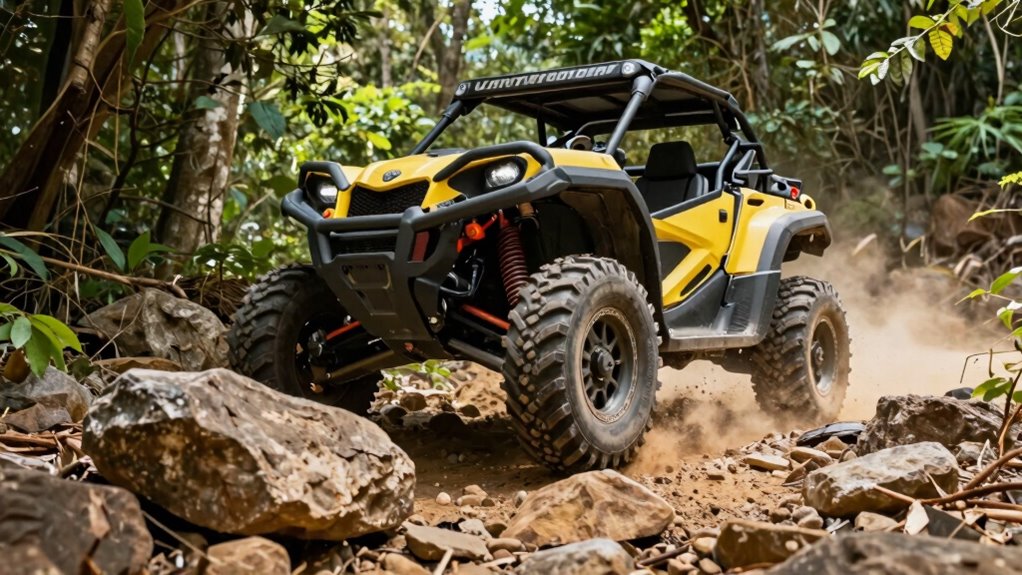
One common mistake when using Can-Am 4×4 modes is selecting the incorrect mode for the terrain, which can lead to reduced traction or drivetrain damage. Misapplication of modes compromises vehicle performance and longevity. To prevent this, make sure you understand each mode’s function and terrain suitability.
- Ignoring mode indications during changes, causing improper engagement
- Switching modes at high speeds, risking system overload
- Using high-traction modes on loose or muddy surfaces, reducing control
- Failing to engage 4×4 before encountering challenging terrain
- Overreliance on a single mode, neglecting terrain-specific adjustments
These errors can result in inefficient power distribution, increased component wear, and compromised safety. Always verify your mode selection aligns with trail conditions and follow manufacturer instructions for mode transitions.
Customizing Your Can-Am 4×4 Settings for Different Trails
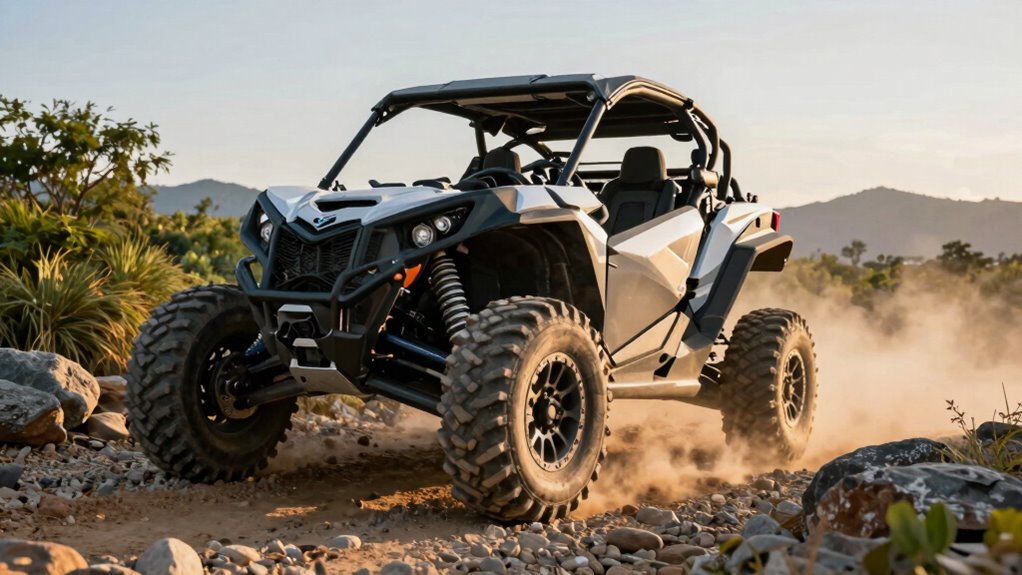
To optimize your Can-Am 4×4 performance across various trail conditions, you need to customize the vehicle’s settings based on terrain specifics. Adjust the differential mode—select locking for loose or uneven surfaces like mud or snow to enhance traction, or switch to automatic for mixed terrains requiring less intervention. Fine-tune the traction control by enabling or disabling it depending on terrain grip; for example, disable it in deep snow to allow wheel spin and better momentum. Modify suspension stiffness and damping through available electronic controls to suit rocky or sandy trails, guaranteeing stability and comfort. Additionally, set the engine response modes if available, to optimize power delivery for climbing steep inclines or steering technical sections. Precise configuration makes certain maximum control, safety, and efficiency tailored to each trail’s demands.
Maintaining and Troubleshooting Your Can-Am 4×4 System
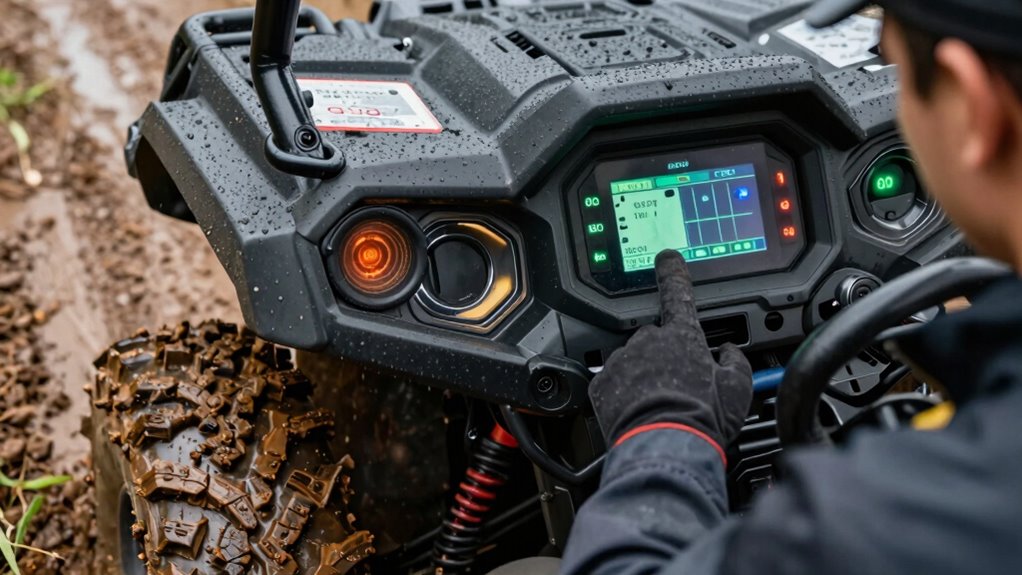
Regular maintenance and vigilant troubleshooting are essential to guarantee your Can-Am 4×4 system operates reliably and performs at its best. To assure ideal function, inspect fluid levels regularly, focusing on transmission and transfer case oils. Check for sensor malfunctions by scanning for diagnostic trouble codes (DTCs) with a specialized scanner. Examine the drive shafts, CV joints, and axles for wear or damage, paying attention to unusual vibrations or noises. Verify that electronic components like switches and wiring harnesses are secure and free of corrosion. Address issues promptly by resetting system fault codes and replacing worn parts.
- Fluid level and quality checks
- Sensor diagnostics and calibration
- Drive shaft and CV joint inspection
- Wiring and connector integrity
- Fault code reading and clearing
Frequently Asked Questions
Can I Manually Override Can-Am’s 4×4 Modes?
Yes, you can manually override Can-Am’s 4×4 modes. Most models feature a manual lock or override setting accessible via a dedicated switch or lever, allowing you to engage or disengage 4×4 drive manually. This gives you control over traction and power distribution, especially in challenging terrain. Make sure you consult your vehicle’s manual to understand the specific override procedure and safety precautions before attempting manual engagement or disengagement.
How Do 4×4 Modes Affect Fuel Efficiency?
You’ll notice that engaging 4×4 modes reduces fuel efficiency by approximately 15-20%, as the system increases power demands on the engine to optimize traction. When you switch modes, the drivetrain components operate more actively, causing higher fuel consumption. This is especially true in challenging terrain, where the added power and torque are essential. So, using 4×4 modes judiciously helps balance performance needs with fuel economy.
Are 4×4 Modes Suitable for All Terrain Types?
Yes, 4×4 modes are suitable for most terrain types, including mud, snow, rocks, and loose gravel. They automatically adjust power distribution to optimize traction and stability, enabling you to navigate challenging conditions safely. However, avoid using 4×4 on dry pavement or hard surfaces, as it can cause drivetrain stress and reduce efficiency. Always select the appropriate mode for the terrain to maximize performance and minimize wear.
Can I Use 4×4 Modes While Towing?
You can use 4×4 modes while towing, but it depends on your vehicle’s specifications. Always consult your owner’s manual for maximum towing capacity and recommended drivetrain settings. Engaging 4×4 can improve traction and stability, especially on uneven terrain or slippery surfaces, but excessive strain might damage components. Remember, “A chain is only as strong as its weakest link,” so guarantee your system is rated for towing with 4×4 engaged.
Do 4×4 Modes Impact Vehicle Warranty or Maintenance?
Using 4×4 modes typically doesn’t impact your vehicle warranty or maintenance requirements if used correctly and according to manufacturer guidelines. However, improper use—such as engaging modes outside recommended conditions—could lead to increased wear or damage, potentially affecting warranty coverage. Always consult your Can-Am owner’s manual and follow prescribed maintenance schedules to guarantee warranty validity and peak vehicle performance when utilizing 4×4 modes.
Conclusion
Mastering your Can-Am’s 4×4 modes activate trail capabilities that can turn your ride into a legendary adventure. By understanding each setting’s technical nuances and proper switching techniques, you optimize traction, control, and safety across diverse terrains. Neglecting proper usage or maintenance risks compromising system performance—potentially turning your machine into a sluggish, unreliable beast rather than the unstoppable force it’s meant to be. Stay precise, informed, and proactive—your off-road mastery depends on it.