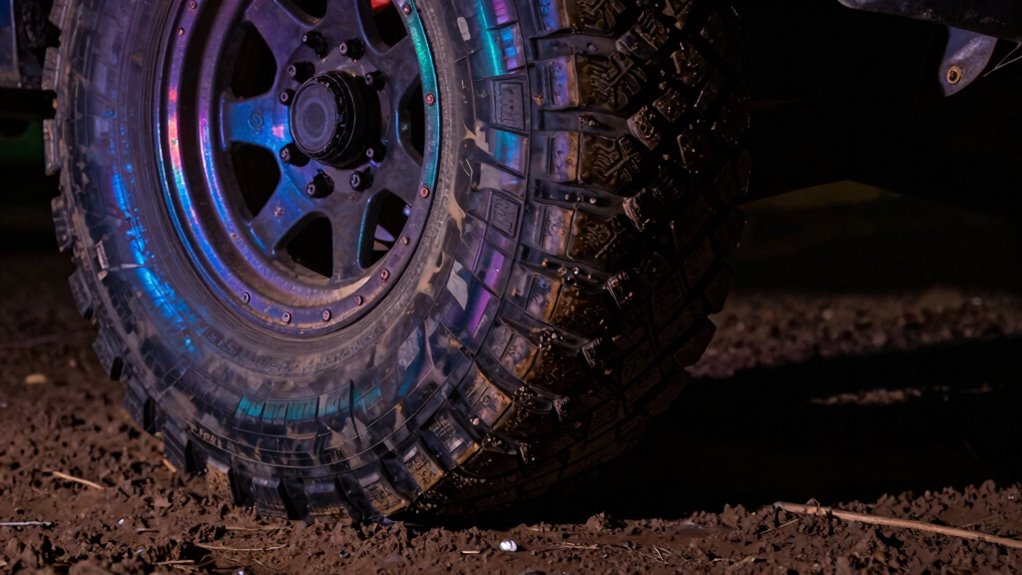

If your rock lights don’t illuminate the tire contact patch, they mainly serve an aesthetic purpose and don’t help with obstacle detection or tire control, especially off-road. Properly lighting this area is essential for safety and vehicle performance, as it helps you spot hazards and reduces tire spin. Investing in high-quality, weatherproof LEDs and correct installation makes all the difference. Keep exploring to discover how to maximize your lighting system’s effectiveness and off-road confidence.
Key Takeaways
- Proper placement of rock lights directly over the tire contact patch is essential for maximum obstacle visibility.
- High-quality, weatherproof LEDs ensure consistent brightness and durability in harsh off-road conditions.
- Secure wiring and sealing prevent moisture and dirt ingress, maintaining effective illumination over time.
- Effective installation techniques focus on accurate positioning and robust connections for reliable lighting.
- Testing in various conditions confirms that the lights effectively illuminate the contact patch, enhancing safety and control.
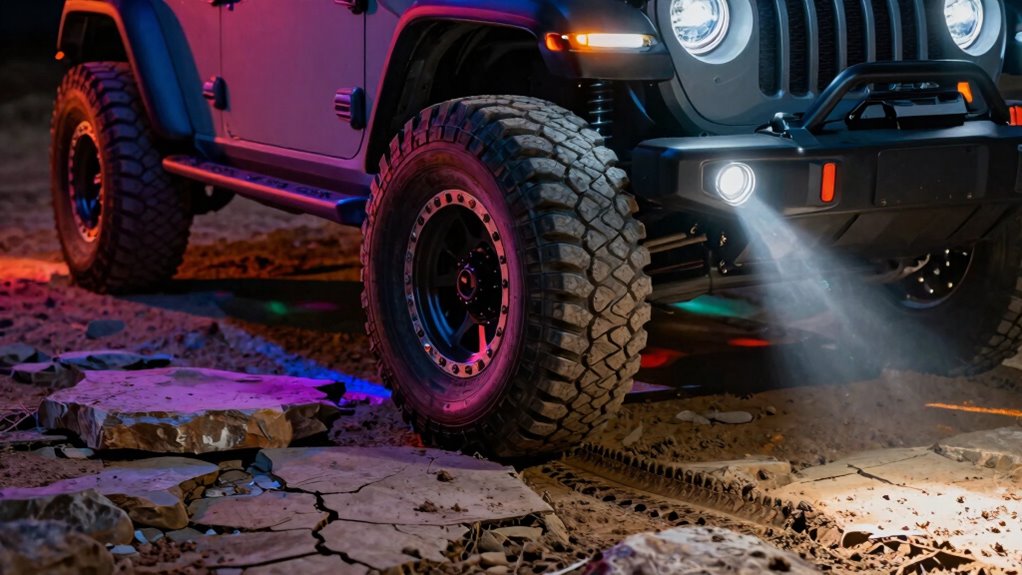
Rock lights can add a cool visual touch to your vehicle, but they’re pointless if they don’t illuminate the tire contact patch. That’s the essential zone you need to see if you want to get the most out of your off-road adventures or even just improve safety during nighttime driving. Without proper lighting there, your rock lights might look good, but they won’t serve their true purpose. To make certain they work effectively, you need to think about both LED durability and installation challenges. LEDs are popular for rock lights because they’re energy-efficient and long-lasting, but not all LEDs are created equal. Some cheap LEDs may fail prematurely, especially when exposed to mud, water, and vibrations typical of off-road environments. Prioritizing high-quality LEDs with proven durability ensures your lights stay bright and functional over time, saving you money and hassle. Additionally, ensuring your LEDs have proper weatherproofing helps prevent corrosion and failure in harsh conditions. Proper installation techniques are crucial for ensuring the lights function as intended, especially in demanding environments. Installation challenges are another factor you can’t ignore. Mounting rock lights in the right position to illuminate the tire contact patch isn’t always straightforward. It requires precise placement and secure wiring to withstand rough terrain. It’s also important to consider corrosion resistance when selecting components, as exposure to dirt, moisture, and salt can quickly degrade inferior materials. Choosing high-quality wiring and connectors can significantly reduce the risk of electrical issues over time. You might find yourself battling tight spaces, awkward angles, or difficult access points beneath your vehicle. Improper installation can lead to flickering lights, weak illumination, or even electrical failures. Plus, if you don’t seal the connections properly, moisture and dirt can cause corrosion, further impairing your lights’ performance. To get around these challenges, you’ll want to invest in quality connectors and waterproof wiring harnesses, and follow installation instructions carefully. Sometimes, it’s worth consulting or hiring a professional to make certain your rock lights are installed correctly and safely. When considering lighting effectiveness, proper placement and wiring are essential for ensuring the tire contact patch is adequately illuminated. Once installed, you’ll want to test your setup in various conditions to verify that the lights really illuminate the tire contact patch. If they don’t, you’ll need to troubleshoot wiring or placement issues. Remember, the goal isn’t just to have a flashy glow but to improve visibility and safety. If your lights are dim or misplaced, they won’t help you see obstacles or avoid tire spin on slick surfaces. Investing in durable LEDs and overcoming installation hurdles might take some effort upfront, but it pays off in the long run. Effective lighting transforms your vehicle into a more capable and safer machine, especially when tackling rugged terrain or steering at night. Ultimately, your rock lights should prioritize function over flash—lighting the tire contact patch makes all the difference.
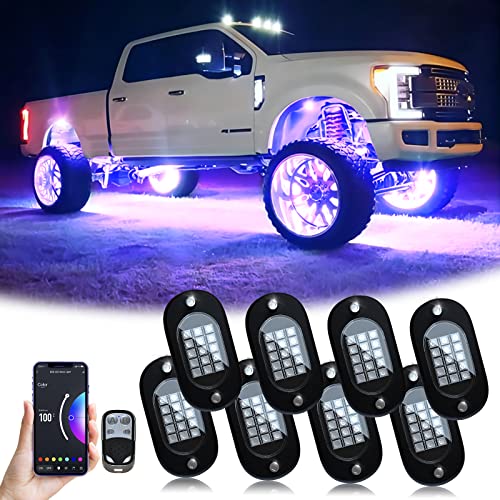
YiLaie Rock Lights for Trucks, 8 Pods RGB LED Rock Lights with APP/Remote Control & Music Mode, High Bright Multilcolor Waterproof IP68 Rock Neon Light Kits for Pickup Off Road RZR SUV ATV UTV Car
- Brake Warning Function: Syncs all lights to brake light
- Multi-Control Options: Quick 4-key and APP control
- High Brightness LEDs: 15 high-brightness 5050 RGB LEDs per pod
As an affiliate, we earn on qualifying purchases.
As an affiliate, we earn on qualifying purchases.
Frequently Asked Questions
How Do Rock Lights Improve Off-Road Vehicle Performance?
Rock lights boost your off-road vehicle’s performance by illuminating tricky terrain, making navigation safer and easier. With LED color options, you can customize your setup for better visibility and style. Proper wiring installation guarantees reliable lighting, preventing flickering or failure. By lighting up the tire contact patch and surroundings, you get better control, reduced risks of damage, and an overall enhanced off-road experience.
Are There Specific Rock Lights Designed for Tire Contact Patches?
Yes, there are specific rock lights designed for tire contact patches. These lights focus on tire illumination, highlighting the contact patch to improve visibility during off-road adventures. By lighting up the contact patch, you can better gauge traction and obstacles, ensuring safer navigation. Installing these specialized rock lights helps you monitor your tires in real-time, giving you an edge in challenging terrains and preventing unnecessary tire damage or loss of control.
Can Rock Lights Be Installed on Any Vehicle Type?
You can install rock lights on most vehicle types, but vehicle compatibility varies. Some vehicles, like trucks and SUVs, often have more suitable mounting points, making installation easier. However, installation challenges may arise with smaller or more complex vehicles due to limited space or wiring access. To guarantee proper fit and function, check your vehicle’s specifications and consider professional installation if needed, especially for custom setups.
What Maintenance Is Required for Rock Lights?
You need to regularly check your rock lights for lighting aesthetics and guarantee the electrical wiring remains secure and free from damage. Clean the lights and connections to prevent dirt buildup, which can dim the glow. Inspect for corrosion or loose wires, especially after off-road adventures. Replacing faulty bulbs or repairing wiring keeps your system functioning properly and maintains the visual appeal, making sure your vehicle looks sharp and well-maintained.
Do Rock Lights Affect Vehicle Battery Life?
Like a leaky faucet draining your resources, rock lights can impact your vehicle’s battery life if not managed properly. They cause some battery drain, especially if left on for extended periods. To maintain electrical efficiency, make certain you turn them off when not needed and consider installing switches or timers. Proper use minimizes battery drain, keeping your vehicle running smoothly without sacrificing the cool factor of your rock lights.
Conclusion
So, if your rock lights don’t illuminate the tire contact patch, are they truly serving their purpose? Without proper visibility of where your tires meet the ground, you might be missing out on essential traction insights and safety benefits. Don’t settle for flashy lights that don’t improve your drive—make sure they light up what really matters. After all, isn’t it smarter to illuminate the ground beneath you instead of just the night sky?