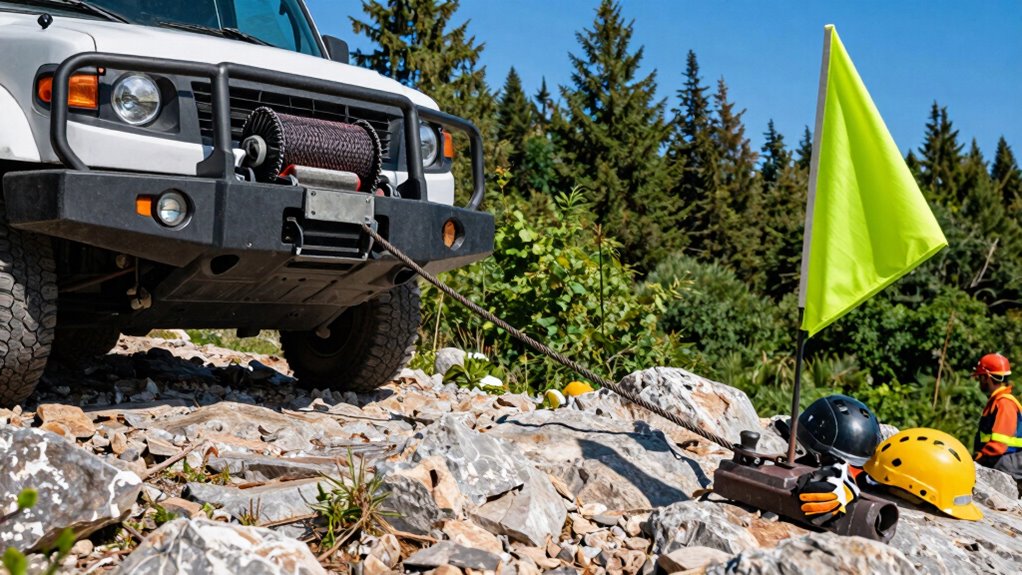

Understanding the safety zone in winching is essential to avoid injuries. This zone is the designated area where no one should stand during operation, preventing harm from snapbacks or sudden load shifts. You must set clear boundaries, communicate effectively, and keep everyone at a safe distance. Properly selecting and preparing your environment, using the right safety gear, and following step-by-step procedures help protect you and others. Keep going to learn how to master safe winching practices.
Key Takeaways
- Establish and respect a clearly marked safety zone where no personnel should stand during winching operations.
- Keep all bystanders, pets, and loose debris out of the hazard area to prevent injuries from snapbacks or debris.
- Use communication signals or radios to coordinate actions and ensure everyone is aware of the safety boundaries.
- Secure the winch on a stable, level surface and attach the cable to a strong anchor point before starting.
- Always wear safety gloves and protective eyewear to minimize injury risks during winching activities.
winch safety gloves
As an affiliate, we earn on qualifying purchases.
As an affiliate, we earn on qualifying purchases.
Understanding How Winching Works and When to Use It
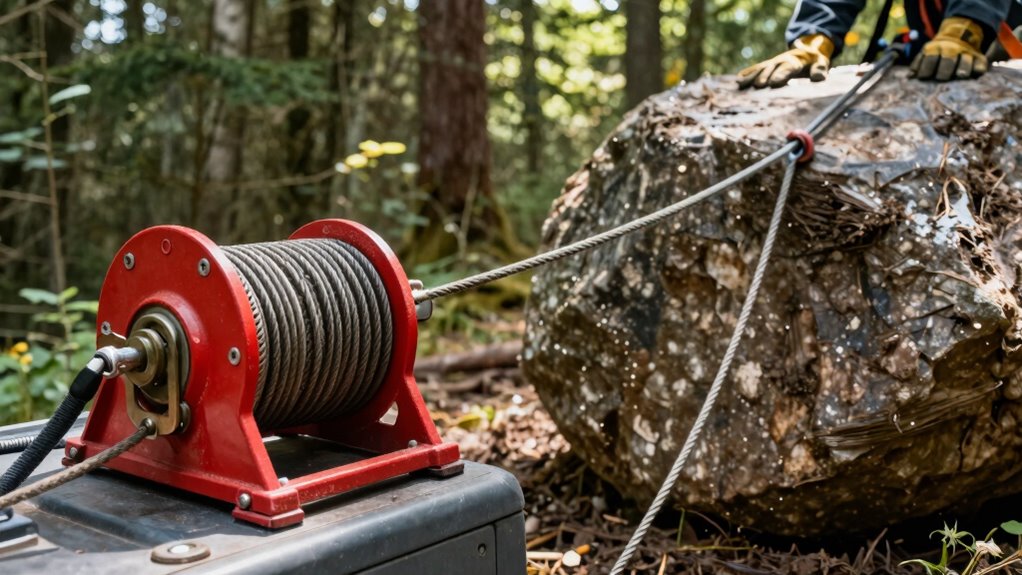
Understanding how winching works is essential to using it safely and effectively. To start, familiarize yourself with winch mechanics, which involve a motor that turns a drum to wind or unwind the cable. Knowing this helps you control the load and prevent accidents. Before operating, always perform a thorough cable inspection—look for frays, kinks, or signs of wear that could cause failure under tension. Using the winch at the right time, such as pulling a stuck vehicle or moving heavy objects, requires understanding load limits and proper attachment points. Remember, safety comes first: avoid overloading the winch, and never stand directly in line with the cable during operation. Proper attachment points are critical for ensuring a secure and safe winching process, especially when considering load limits to avoid equipment failure. Additionally, understanding winch mechanics helps you troubleshoot potential issues and operate the equipment more confidently. Familiarity with safety procedures is also vital to prevent accidents and injuries during winching tasks. Developing a comprehensive safety plan ensures all potential risks are mitigated before starting any winching operation. Mastering these basics ensures your winching tasks are safe, efficient, and effective.
winch protective eyewear
As an affiliate, we earn on qualifying purchases.
As an affiliate, we earn on qualifying purchases.
What Is the Safety Zone, and Why Is It Important?

The safety zone around a winching operation defines the area where no one should stand or approach during cable tensioning. Maintaining this zone is vital for safety awareness and hazard recognition. It helps prevent injuries caused by cable snapbacks or sudden movements if the load shifts unexpectedly. When you respect the safety zone, you reduce the risk of being caught in the line of fire or hit by debris. Recognizing potential hazards in the area ensures you and others stay out of harm’s way. Establishing and respecting this zone isn’t optional—it’s indispensable for safe winching. Always communicate clearly with your team and set boundaries to protect everyone involved. Remember, safety depends on proactive hazard recognition and following proper procedures. Being aware of best practices for winching can further enhance safety measures during operations, especially when considering personal protective equipment and other safety gear. Additionally, understanding the importance of safety zone boundaries can significantly mitigate risks associated with unexpected equipment failures or load shifts. Regular training and safety protocols help reinforce the importance of maintaining these boundaries and ensure everyone understands their role in a safe working environment. Incorporating hazard assessment procedures can also identify potential risks before starting the operation, further safeguarding all personnel involved.
winch cable inspection kit
As an affiliate, we earn on qualifying purchases.
As an affiliate, we earn on qualifying purchases.
How to Find and Set Up a Safe Winching Area
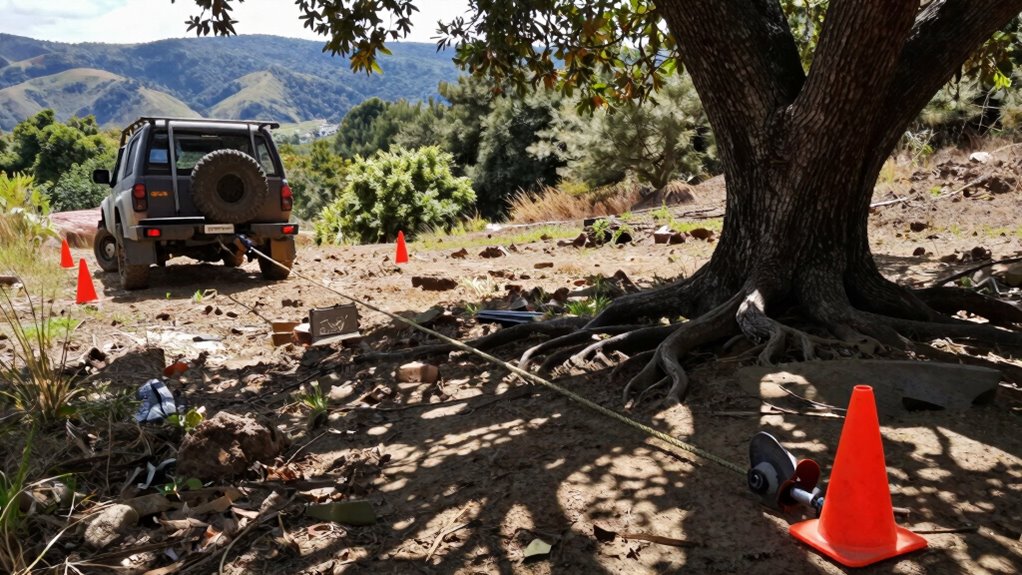
To find and set up a safe winching area, start by scanning the surrounding environment for potential hazards like uneven ground, loose debris, or nearby obstacles that could interfere with the operation. Identifying winching hazards early helps you avoid accidents. Follow these safety protocols to make certain a secure setup:
- Choose firm, level ground to prevent slipping or shifting
- Clear loose debris or rocks that could cause instability
- Keep the area free of bystanders and pets
- Ensure no overhead power lines or obstacles are nearby
- Be aware of field‑of‑view limitations to maintain clear visibility of the entire work zone, and consider the sound vibrations in the environment, as they can influence the effectiveness of sound-based safety signals. Additionally, understanding the safety zone guidelines helps establish a perimeter that keeps everyone safe during winching operations. Properly assessing the work zone can prevent unexpected hazards from arising during the process. Regularly inspecting the terrain for hidden hazards can further reduce the risk of accidents during winching activities.
vehicle recovery winch
As an affiliate, we earn on qualifying purchases.
As an affiliate, we earn on qualifying purchases.
Essential Gear and Setup for Safe Winching
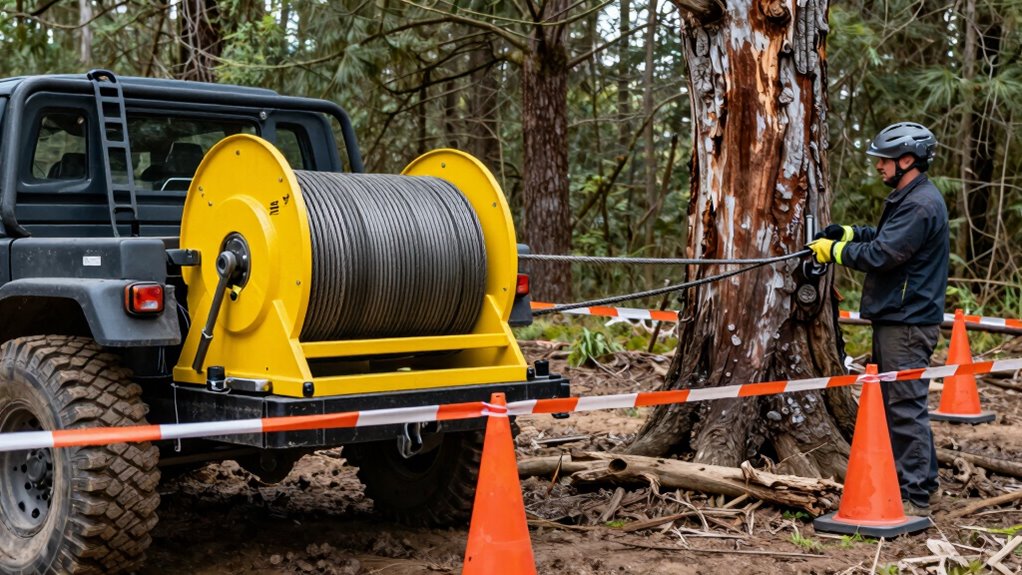
To guarantee safe winching, you need to choose the right winch for your vehicle and situation. Equipping yourself with essential safety gear like gloves and a recovery blanket is vital, along with understanding proper setup procedures. You should also familiarize yourself with safe installation practices to prevent accidents and ensure the reliability of your equipment. Proper gear selection can make a significant difference in how effectively and safely you handle recovery situations. Additionally, understanding ventilation considerations is important to prevent overheating of electrical components and ensure safe operation. Being aware of auditory safety procedures can help protect you from potential hazards caused by loud noises or unexpected equipment failure. By focusing on these key points, you’ll reduce risks and make the process more effective. Recognizing safety zone boundaries helps maintain a secure environment during winching operations.
Proper Winch Selection
Choosing the right winch is essential for safe and effective recovery, as using an undersized or unsuitable model can lead to equipment failure or accidents. To do this, consider your vehicle’s weight and the typical recovery scenarios. Key factors include:
- Winch capacity: Ensure it’s at least 1.5 times the weight of your vehicle.
- Cable type: Steel cables are strong but heavier; synthetic ropes are lighter and safer but require proper handling.
- Motor power: A higher horsepower motor handles tougher pulls more reliably.
- Gear ratio: A higher gear ratio provides more pulling power at the expense of speed.
Matching these elements ensures your winch can handle your recovery needs without risking failure or injury. Proper selection makes all the difference in safe winching. Additionally, understanding winch specifications helps you choose equipment aligned with your recovery requirements. Familiarity with power ratings can also guide you toward choosing a more reliable and durable model for demanding conditions.
Essential Safety Gear
Having the right winch is only part of a safe recovery; proper safety gear and setup are equally important. Before you start, equip yourself with safety gloves to protect your hands from frayed cables and sharp edges. Always wear protective eyewear to guard against flying debris or snapback if the cable fails. These items are essential for minimizing injury risks during winching. Ensure your gloves fit well and are durable enough for the task, while your eyewear provides clear, unobstructed vision. Never skip these safety essentials, even if you’re experienced. Proper gear creates a barrier between you and potential hazards, enabling a safer, more confident recovery. Remember, safety gear isn’t an optional accessory; it’s a critical part of responsible winching. Incorporating AI-powered safety analytics can also help in assessing risks and improving safety protocols during recovery operations. Additionally, understanding environmental considerations can help prevent damage to natural surroundings and promote sustainable practices.
Correct Setup Procedures
A proper winch setup is essential to guarantee safety and effectiveness during recovery. Start by ensuring your winch is correctly calibrated to handle the load, preventing overexertion or failure. Check that your cable is properly stored and free of kinks or frays to avoid weak spots. When setting up, secure the winch on a stable, level surface and attach the cable to a strong anchor point. Keep everyone at a safe distance and use a winch dampener to absorb shocks. Before pulling, double-check that the cable is properly spooled and not twisted. Proper cable storage after use prevents damage and makes future recoveries smoother. Remember, attention to detail reduces risks and ensures a safe, successful winching process.
How to Winch Safely: Step-by-Step Instructions
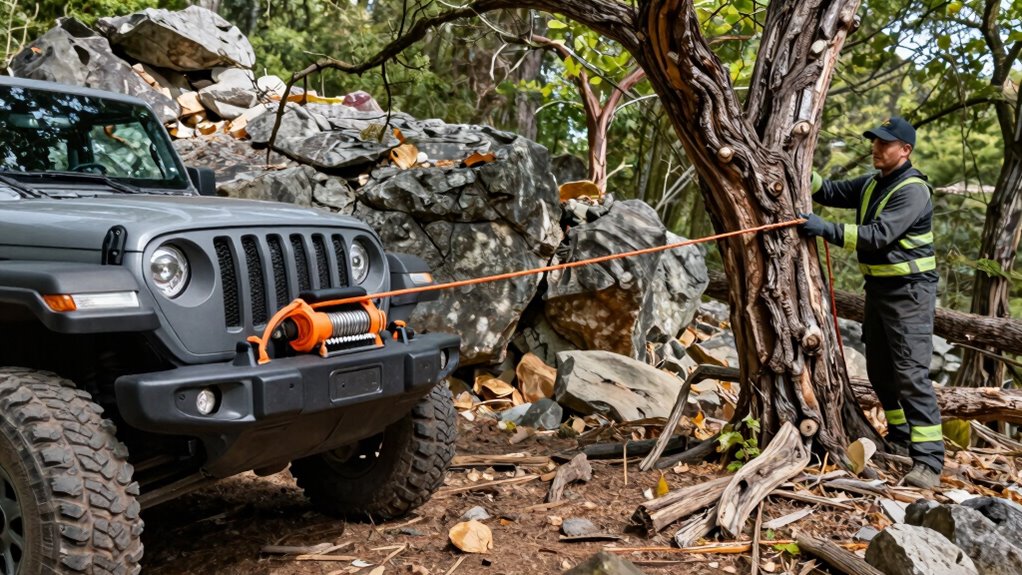
Before you start winching, make sure your equipment is properly prepared and secure. As you proceed, focus on executing each step carefully to avoid accidents. Following these safety steps helps guarantee a smooth and safe winching process.
Prepare Equipment Properly
Ensuring your equipment is prepared correctly is essential for a safe and effective winching operation. Properly inspecting your gear helps prevent accidents and guarantees reliability. Start by checking your winch for signs of wear or damage, performing regular winch maintenance to keep it in top shape. Store your equipment in a dry, organized space to avoid corrosion or damage. Before use, verify that all components—like hooks, cables, and pulleys—are in good condition. Make sure your winch’s rated capacity matches the task at hand. Additionally, inspect your recovery straps and shackles for frays or cracks. Proper equipment storage prolongs gear life and guarantees quick access when needed, while regular maintenance keeps everything functioning safely during critical moments.
Execute Winching Carefully
To winch safely, you need to follow a clear, step-by-step process to safeguard against risks and guarantee effective recovery. Begin by closely monitoring the winch controller, keeping a firm grip and steady pressure. As you operate, pay constant attention to cable tension, ensuring it stays controlled and even. Avoid sudden pulls or jerks, which can cause cable slack or snap the cable. Communicate clearly with your team, using signals or radios if necessary, and make sure everyone stays clear of the winch area. Always maintain focus and avoid distractions. When the vehicle begins to move, gradually and smoothly increase tension, never rushing the process. Proper execution minimizes accidents and assures a safe, successful winching operation.
Common Mistakes to Avoid When Winching
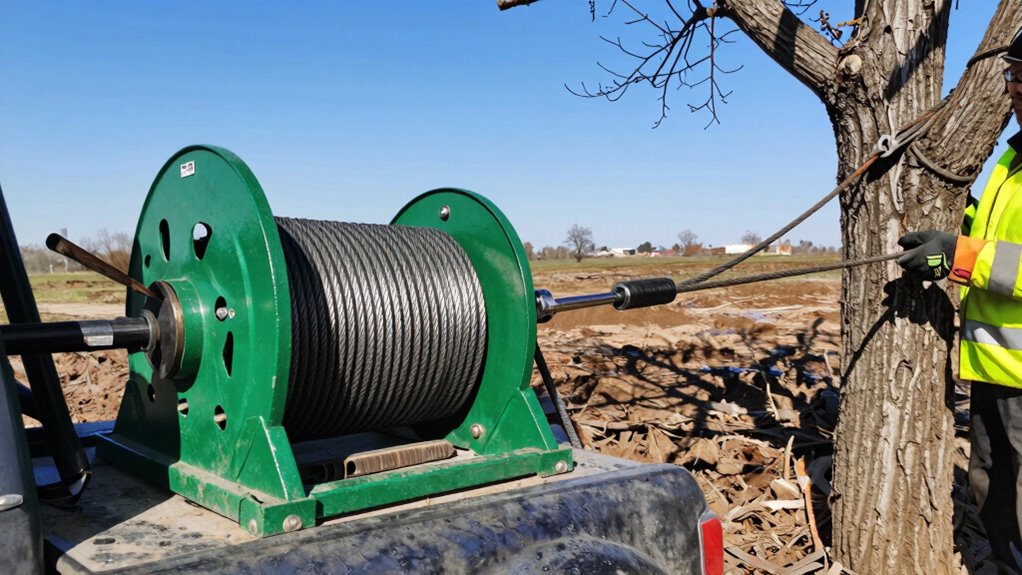
One common mistake when winching is neglecting to assess the situation thoroughly before starting. This oversight can lead to serious safety risks and exacerbate user errors. To avoid common pitfalls, always check your environment, load weight, and anchor points first. Failing to do so can cause equipment failure or accidents. Be cautious of these mistakes:
- Overlooking proper anchor stability
- Using the wrong winch or cable for the job
- Not inspecting gear before use
- Ignoring manufacturer load ratings
These errors often stem from rushing or assuming familiarity. Remember, taking time to plan and double-check can prevent injuries and equipment damage. Staying alert to potential hazards and understanding your gear reduces the chances of common pitfalls during winching operations.
What to Do in an Emergency During Winching
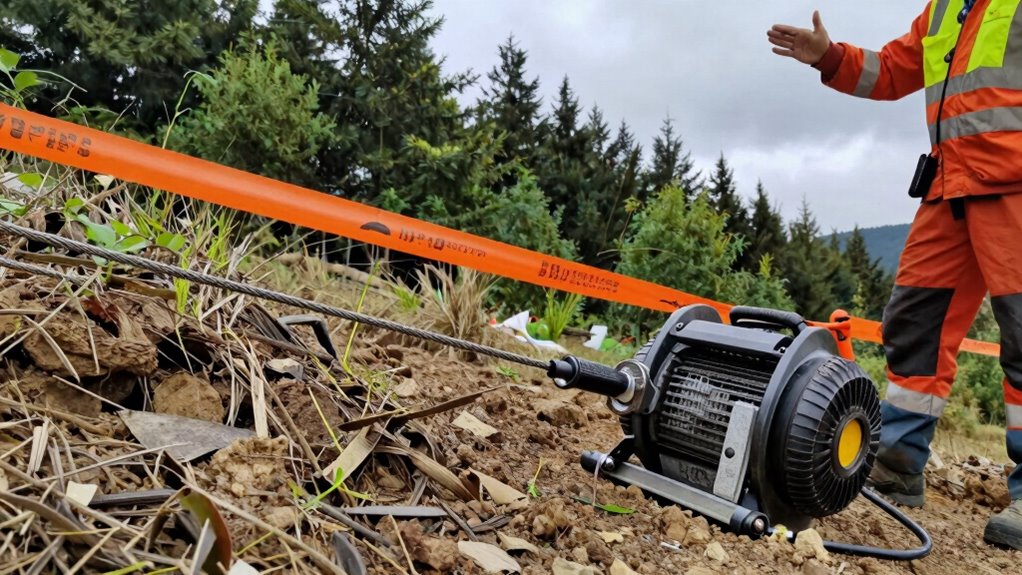
If an emergency arises during winching, quick and confident action can prevent injuries and further damage. Your first step is to stay calm and assess the situation. Implement emergency preparedness by immediately stopping the winch and disconnecting power if necessary. Use rescue techniques like signaling for help or stabilizing the load if it shifts unexpectedly. Keep a clear communication plan with others involved, and don’t attempt risky maneuvers without proper training. Always wear protective gear and ensure everyone stays at a safe distance. Knowing basic rescue techniques, such as using a snatch block or temporary anchor points, can be lifesaving. Remember, staying prepared and acting decisively minimizes risks and keeps everyone safe during unforeseen events.
How to Maintain Your Winch for Safe Use Over Time
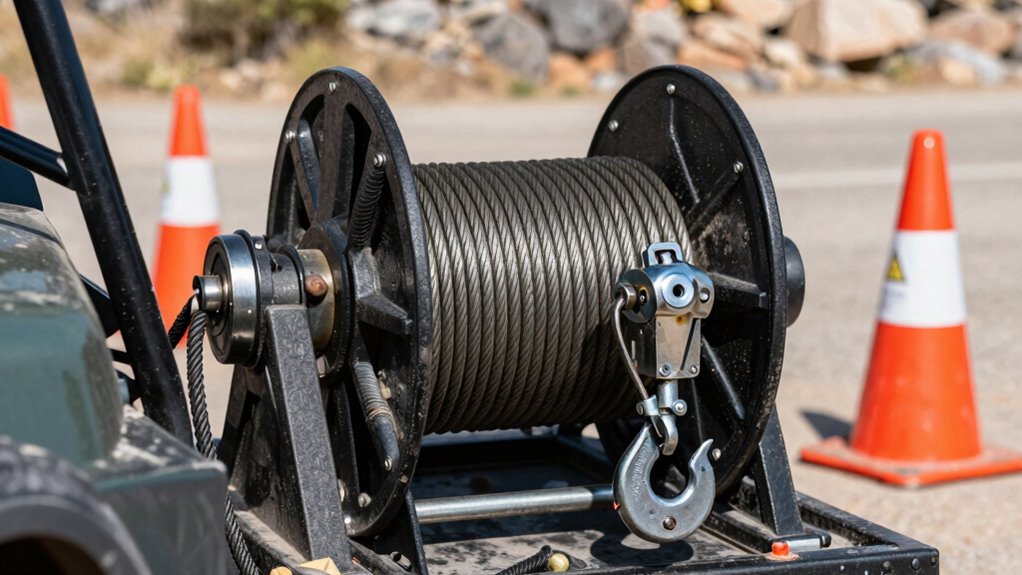
Regular maintenance is essential to keep your winch operating safely and reliably over time. Proper winch maintenance involves routine equipment inspection to catch issues early. Check the cable or rope for frays, kinks, or corrosion, and replace if needed. Ensure the drum and gears are clean and free of debris. Lubricate moving parts to prevent rust and ensure smooth operation. Test the electrical connections for corrosion or loose wires, which can cause malfunction. Additionally, inspect the mounting bolts to confirm they’re secure. By performing these simple steps regularly, you reduce the risk of failure during critical moments. Incorporate these practices into your maintenance routine to keep your winch in top shape and safe for use whenever you need it.
Improving Your Winching Skills: Training and Resources
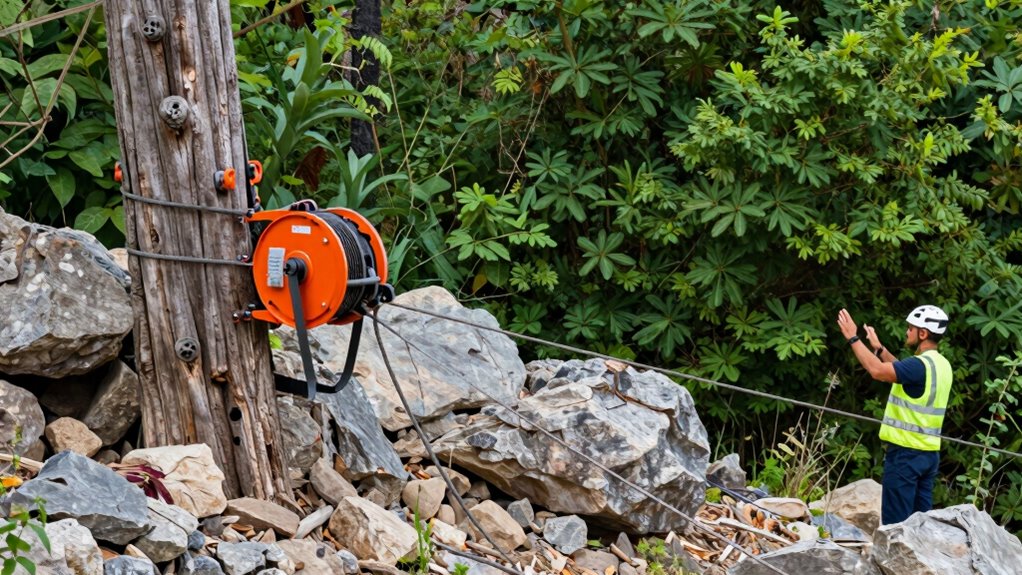
Enhancing your winching skills starts with seeking out proper training and reliable resources. You can learn essential winching techniques through hands-on courses, online tutorials, or local off-road clubs. These resources improve your off road navigation skills and build confidence in tricky situations. To visualize your progress, consider this table:
| Resource Type | Focus Area | Benefit |
|---|---|---|
| Hands-on classes | Winching techniques | Practical skill mastery |
| Online tutorials | Safety procedures | Accessible expert guidance |
| Off-road clubs | Real-world scenarios | Peer support and advice |
| Manufacturer guides | Equipment maintenance | Extended winch lifespan |
Frequently Asked Questions
What Are the Signs of a Winch Malfunction?
You’ll notice a winch malfunction if the cable shows signs of wear, fraying, or kinks, which can lead to snapping under tension. You might also hear unusual noises like grinding or squealing during operation. Always prioritize safety gear importance by wearing gloves and eye protection to prevent injuries. If the winch doesn’t respond or the motor overheats, stop using it immediately and inspect for damage before continuing.
How Do Weather Conditions Affect Winching Safety?
Weather impact can markedly affect winching safety, so you need to stay alert. Rain or snow can make surfaces slippery, increasing the risk of losing control or damaging the winch. Wind can cause environmental hazards like falling branches or debris, which could interfere with your operation. Always check weather conditions beforehand, and be prepared to adjust your approach or delay winching if environmental hazards become too dangerous.
Can I Use a Regular Tow Strap for Winching?
You shouldn’t use a regular tow strap for winching because it may not be designed for the towing terminology involved in heavy-duty recovery. Tow straps are usually made for simple towing, not the dynamic loads during winching. Always check equipment compatibility to verify your winch and strap are rated correctly. Using the right gear minimizes risks and ensures safety, preventing equipment failure and injuries during your recovery process.
What Are the Legal Considerations When Winching in Public Areas?
When winching in public areas, you need to guarantee legal compliance by following local regulations and obtaining any necessary permits. You should also check if your liability insurance covers winching activities to protect yourself from potential claims. Always use proper equipment, maintain safety protocols, and avoid obstructing public pathways. Being responsible and informed helps prevent legal issues and ensures a safe, hassle-free winching experience.
How Often Should I Inspect My Winching Equipment?
You should inspect your winching equipment before each use, as over 60% of winch failures are due to overlooked maintenance issues. An inspection schedule helps you catch wear and damage early, ensuring safety and reliability. Regular equipment maintenance, including checking cables, hooks, and connections, minimizes risks. Don’t skip these checks—think of it as a vital part of your safety routine that keeps you prepared and prevents costly accidents.
Conclusion
By mastering the safety zone, you create a clear boundary where confidence replaces chaos. Imagine your winch as a steady hand guiding your vehicle through the storm, the safety zone as the calm eye in the chaos. With proper setup, gear, and awareness, you’ll navigate the toughest pulls with ease. Remember, safety isn’t just a step—it’s the foundation that keeps you and your gear secure, no matter how wild the terrain gets.