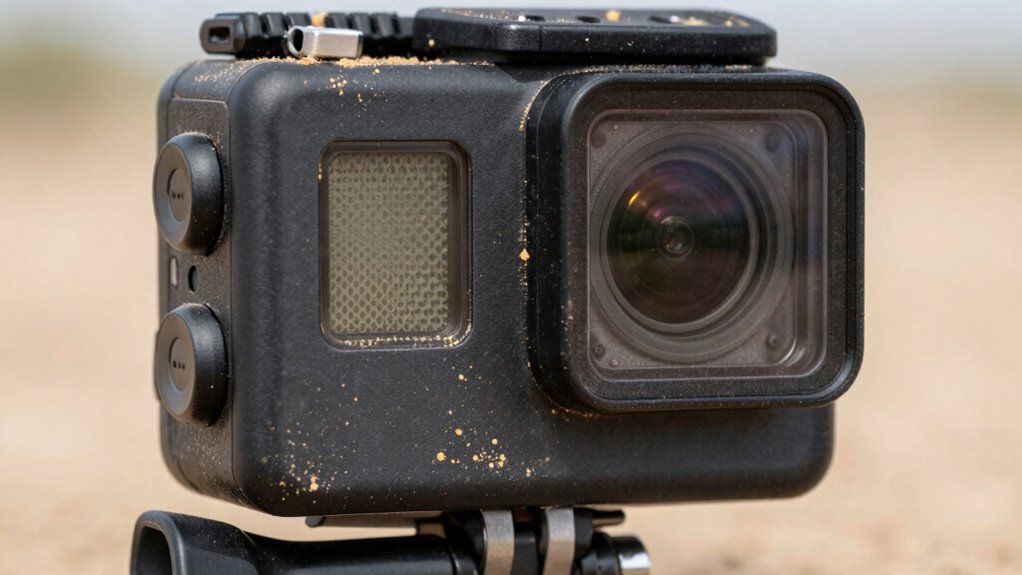

To protect your action camera in dusty conditions, you should use high-quality dust filters made from polycarbonate or optical glass, fitted over the lens. Pair these with dust-resistant housings that seal all vents and openings tightly. Regularly inspect and clean your filters and seals, and consider using impact-resistant enclosures for extra durability. Proper setup prevents dust from settling on sensitive components, ensuring clear footage. Stay tuned to discover more tips to keep your footage spotless during dusty adventures.
Key Takeaways
- Use high-quality dust filters over the lens and ensure housing seals are tightly secured to prevent particle intrusion.
- Select dust-resistant housings with sealed vents and durable enclosures tailored for outdoor environments.
- Regularly inspect and clean filters and housing seals to maintain optimal dust protection and image clarity.
- Implement protective filters made from polycarbonate or optical glass for effective dust sealing without compromising quality.
- Keep batteries fully charged and use remote monitoring to ensure continuous operation and prevent shutdowns in dusty conditions.
Why Dust Can Damage Your Action Camera and Ruin Footage
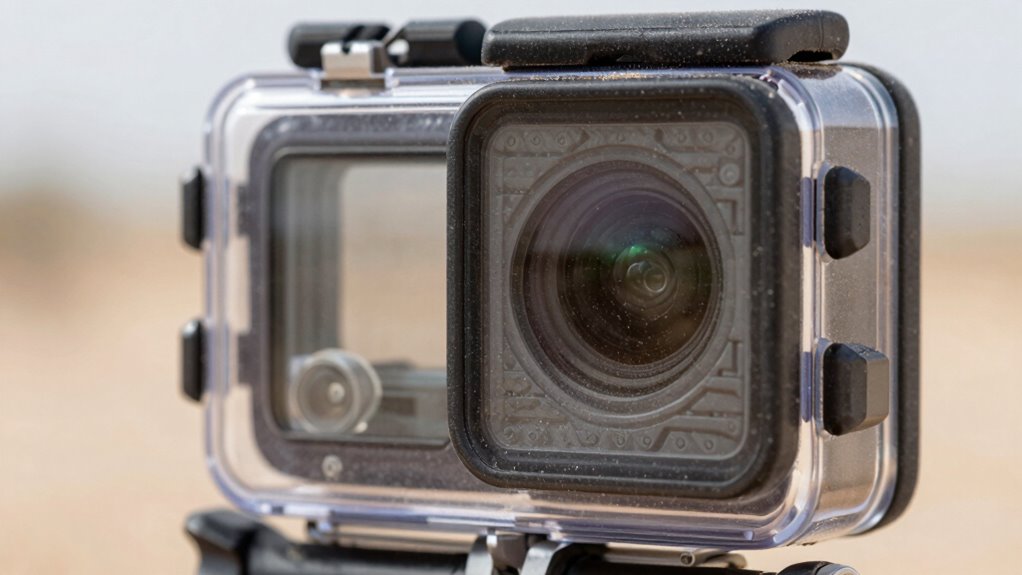
Dust can quickly cause serious damage to your action camera and ruin your footage if you’re not careful. When dust builds up inside your camera, it can interfere with the lens and sensor, leading to blurry or distorted images. Additionally, dust accumulation can block airflow, causing your camera to overheat during extended recording sessions. Overheating not only shortens your camera’s lifespan but also risks shutdowns or reduced performance, jeopardizing your footage. Small particles may also scratch the lens or sensor if they get inside, resulting in permanent damage. Ignoring dust issues may seem minor, but over time, these problems compound, leading to costly repairs or replacements. Proper dust prevention methods are crucial for maintaining your camera’s performance and ensuring high-quality footage. Using dust-resistant housings can provide an additional barrier against environmental particles and extend your gear’s operational life. Regular cleaning and using protective filters and housings can significantly reduce dust intrusion and prolong your camera’s lifespan. Incorporating dust mitigation strategies is essential for outdoor shooting in dusty environments to keep your gear in top condition. Staying aware of environmental factors can also help you better anticipate and prevent dust-related issues.
Best Dust-Protection Filters and Housings for Action Cameras

To keep your action camera protected from dust, you need the right filters and housings. Dust-resistant filters can block particles without sacrificing image quality, while durable housings provide an extra layer of defense. Choosing the best options guarantees your footage stays clear and your camera stays safe in harsh environments. Incorporating smart technology into your setup can also enhance monitoring and control of your camera in challenging conditions. Additionally, selecting dust-proof accessories designed specifically for your camera model can significantly improve durability and performance over time. For optimal results, consider using natural pool-inspired enclosures that blend seamlessly with outdoor settings while offering protection. Employing heat distribution principles in your housing design can also prevent overheating during extended use in exposed environments. Using advanced sealing techniques can further improve dust resistance and extend the lifespan of your gear.
Dust-Resistant Filter Options
When choosing dust-resistant filters and housings for your action camera, it’s essential to pick options designed specifically for harsh environments. Look for filters with high-quality filter materials that effectively block dust particles while maintaining image clarity. Dust sealing is critical to prevent fine particles from entering the camera body, ensuring your footage stays clean. Consider filters made from durable plastics or specialized composites that resist scratches and heat. Here’s a quick overview:
| Filter Material | Dust Sealing Level | Suitable Environments |
|---|---|---|
| Polycarbonate | High | Desert, construction sites |
| Optical Glass | Very high | Sandstorms, dusty trails |
| Nylon Mesh | Moderate | Light dust, recreational |
| Aluminum Frame | High | Heavy-duty outdoor use |
| Silicone Seal | Very high | Extreme dust conditions |
Durable Housing Solutions
Choosing the right housing for your action camera is essential to guarantee maximum dust protection during rugged adventures. Durable housings shield your device from dust, preventing lens fogging and damage. Waterproof cases are especially crucial, providing an airtight seal that keeps out fine dust particles and moisture. To further enhance dust protection, look for air quality features in housings, such as specially designed dust filters that prevent tiny particles from entering while maintaining clarity. Consider these options: 1. Heavy-duty waterproof cases that fully enclose your camera, preventing lens fogging and dust intrusion. 2. Shockproof housings to withstand drops and impacts in harsh environments. 3. Housings with dust filters designed specifically to block tiny particles while maintaining clarity. 4. Customizable enclosures that allow easy access while ensuring maximum dust and water resistance. Investing in quality housings keeps your footage clean, sharp, and free from dust-related lens fogging issues, even in the dustiest conditions.
How to Set Up Your Filters and Housings for Dusty Conditions
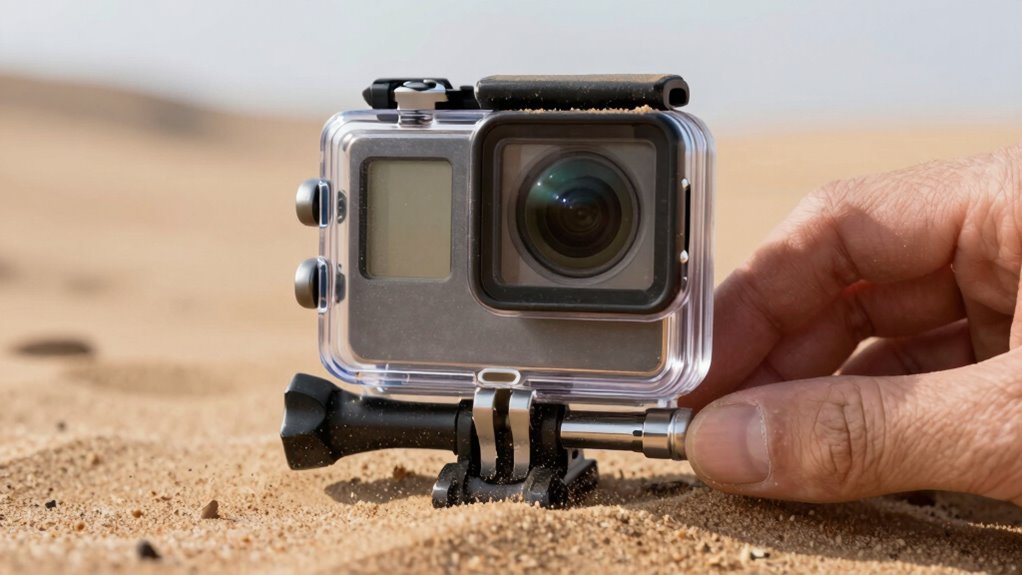
Setting up your filters and housings properly is essential for keeping dust out of your action camera. Start by installing a high-quality dust filter over your camera lens to prevent particles from settling on the glass, which can distort footage. Make sure your housing is sealed tightly, with all vents and openings covered or protected, especially around buttons and ports. Use anti-fog inserts if available to reduce internal condensation that can attract dust. Keep your battery life in mind; dusty conditions can cause your camera to work harder, draining power faster. Regularly check that the filter is clean and free of dust buildup, and replace it if necessary. Proper setup minimizes dust intrusion, preserves your camera’s clarity, and extends battery life during your dusty adventures. Additionally, understanding the importance of device security can help ensure your camera remains protected against environmental elements and potential hardware issues in challenging conditions. To further safeguard your equipment, consider using dust-resistant housings designed specifically for harsh environments.
Tips for Keeping Your Footage Clear During Dusty Adventures
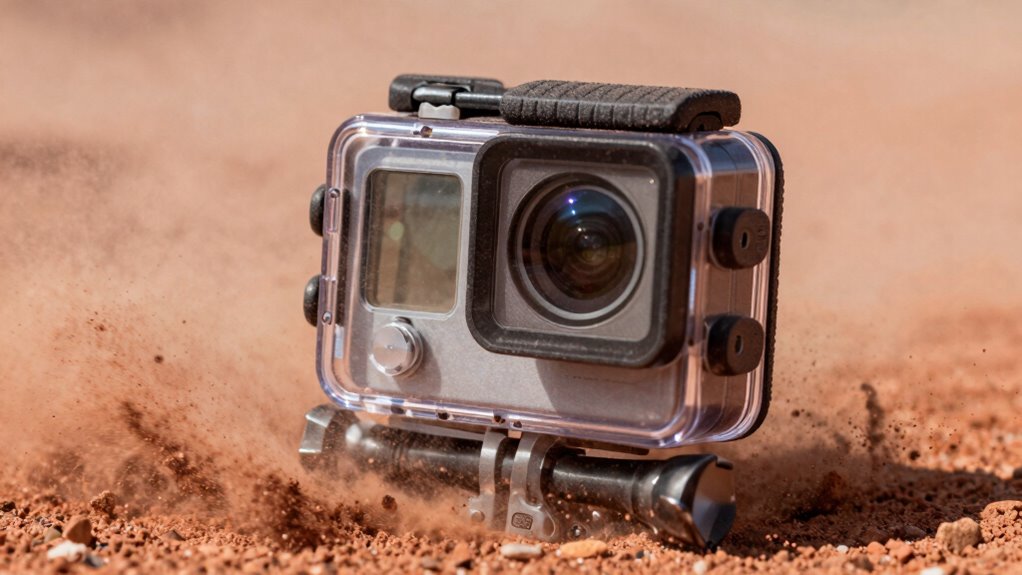
To keep your footage clear during dusty adventures, focus on minimizing dust particles in your camera’s field of view. Regular lens cleaning is essential—use a soft cloth or blower to remove dust without scratching the lens. Keep up with camera maintenance by inspecting seals and filters to prevent dust ingress. Here are four tips:
- Pause and wipe the lens whenever dust appears to avoid smudges or scratches.
- Use a protective filter to shield the lens from dust and facilitate quick cleaning.
- Keep spare lens cleaning supplies handy for on-the-go maintenance.
- Check and secure housing seals to prevent dust from entering your camera setup.
Following these steps ensures your footage remains crisp and dust-free, even in challenging environments.
Common Mistakes That Ruin Dusty Footage and How to Avoid Them
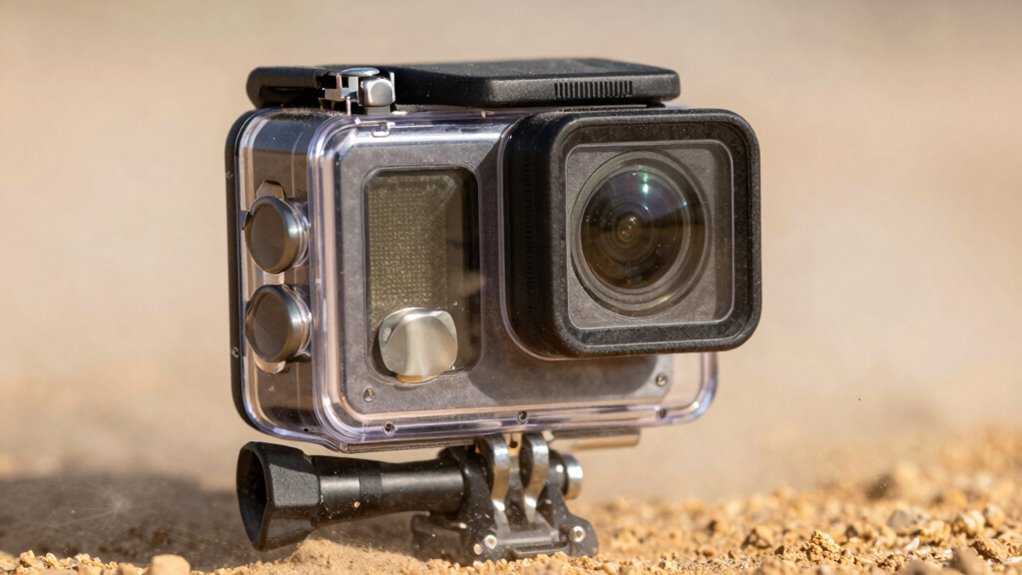
One of the biggest mistakes that can ruin your dusty footage is neglecting to keep the lens and housing seals properly maintained, allowing dust to enter and settle on your camera’s sensor or inside the housing. This contamination can cause blurry images and sensor damage over time. Additionally, ignoring regular lens calibration can result in misaligned focus, making footage appear fuzzy or out of focus in dusty conditions. Overlooking battery life is another common error; running out of power mid-shoot leaves you unable to capture critical moments or adjust settings. To avoid these mistakes, regularly inspect and clean seals, perform lens calibration before each trip, and carry extra batteries. Staying vigilant helps ensure your footage remains clear, sharp, and dust-free from start to finish.
Quick Guide to Maintaining Your Dust-Proof Action Camera Setup

Maintaining your dust-proof action camera setup is essential for capturing clear footage in challenging conditions. Regular lens cleaning prevents dust buildup that can ruin shots, ensuring crisp images every time. Proper battery management guarantees your camera stays powered through long shoots, avoiding unexpected shutdowns. To keep your setup in top shape, follow these steps:
Keep your action camera clean and charged for clear, reliable footage in tough conditions.
- Clean the lens with a microfiber cloth after each use to remove dust and smudges.
- Check and charge the battery fully before recording sessions, and carry spare batteries.
- Seal the housing tightly to prevent dust infiltration.
- Inspect filters and housings regularly for dust or debris, cleaning them gently.
- Incorporate connected equipment to monitor your camera’s status remotely and receive alerts about maintenance needs. Staying aware of dust intrusion risks helps you react promptly and protect your footage. Additionally, understanding environmental conditions can help you anticipate potential issues before they arise. Being familiar with dust particle size can guide you in choosing the most effective filters and housings for your environment. Regularly reviewing camera maintenance best practices ensures your gear remains in optimal condition for all shooting scenarios.
Staying proactive with these practices keeps your footage clean and your gear ready for action.
Frequently Asked Questions
How Do Filters Affect the Image Quality in Dusty Environments?
Filters improve image quality in dusty environments by reducing lens flare and protecting your camera lens. They can enhance clarity, but if you choose high-quality filters with durable lens coatings, you’ll avoid image degradation. Be sure to select filters with good filter durability, as they resist scratches and dust buildup. This way, your footage stays clear and sharp, even in harsh dusty conditions. Proper filters make a big difference in staying protected and capturing quality shots.
Can I Use Multiple Filters or Housings Simultaneously?
Ever wondered if you can stack filters or housings? Yes, you can, but pay attention to filter compatibility and housing durability. Using multiple filters can improve dust protection and image quality, but only if they fit well without causing vignetting or loss of clarity. Make certain your housing is sturdy enough to handle the added layers. Proper setup keeps your footage clean and your gear protected, even in the dustiest conditions.
What Is the Best Maintenance Routine for Dust-Proof Setups?
You should clean your dust-proof setup after each use by gently removing dust from filters and housings. Regularly check and calibrate your sensor to ensure peak footage quality, and keep batteries charged and stored properly to extend their longevity. Inspect seals for wear and replace them when needed. Following this routine helps maintain clear footage, protects your gear, and keeps your camera functioning smoothly in dusty environments.
Are There Specific Brands Recommended for Dust-Resistant Filters?
Ever wonder which brands stand out for dust-resistant filters? You should consider reputable names like PolarPro, Tiffen, and Hoya, known for their filter durability and quality. These brands offer filters that withstand harsh dust conditions, ensuring your footage stays clean and intact. By choosing trusted brands, you reduce the risk of filter failure, extending your setup’s lifespan—and keeping your action footage crystal clear even in tough environments.
How Does Temperature Variation Impact Dust-Proof Camera Performance?
Temperature variation can affect your dust-proof camera’s performance by impacting temperature stability, which may cause lens fogging or condensation inside the housing. Fluctuating temperatures can also influence dust adhesion, making dust particles more likely to stick to filters or housing surfaces. To maintain ideal footage quality, guarantee your camera is properly sealed and avoid extreme temperature shifts, especially in dusty environments. Regular maintenance helps keep dust and temperature effects in check.
Conclusion
By properly setting up your filters and housings, you’ll create a shield that keeps dust at bay like a fortress guarding your footage. Stay vigilant with maintenance and avoid common mistakes, so your camera remains a clear window into your adventures. With the right setup, you’ll capture every moment in crisp detail, even in the dustiest conditions—turning rough terrains into a smooth, unforgettable story. Keep your gear protected, and let your footage shine like a beacon through the haze.