Bump steering occurs when suspension geometry and steering linkages react unexpectedly to lateral forces, especially when you hit rocks. These impacts cause sudden deflections and misalignment, increasing strain on your steering bars and often ripping them apart. Poorly tuned suspension angles, incorrect geometry, or weak components worsen this issue. To prevent damage, you need to understand how geometry affects bump steer and make proper adjustments—learn more to protect your steering during tough terrain.
Key Takeaways
- Rocks cause lateral forces that disrupt suspension geometry, leading to increased bump steer and stress on steering components.
- Misaligned suspension geometry and improper control arm angles amplify bump steer, increasing the risk of damage to steering bars.
- Sudden impacts from rocks induce rapid component deflections, stressing tie rods and mounting points, causing rips or breaks.
- Lack of proper reinforcement and wear inspection allows rocks to weaken and damage steering bars more easily.
- Correct suspension setup, regular maintenance, and protective upgrades reduce bump steer and prevent bars from ripping during rock encounters.
What Is Bump Steering and How Does It Affect Your Rig
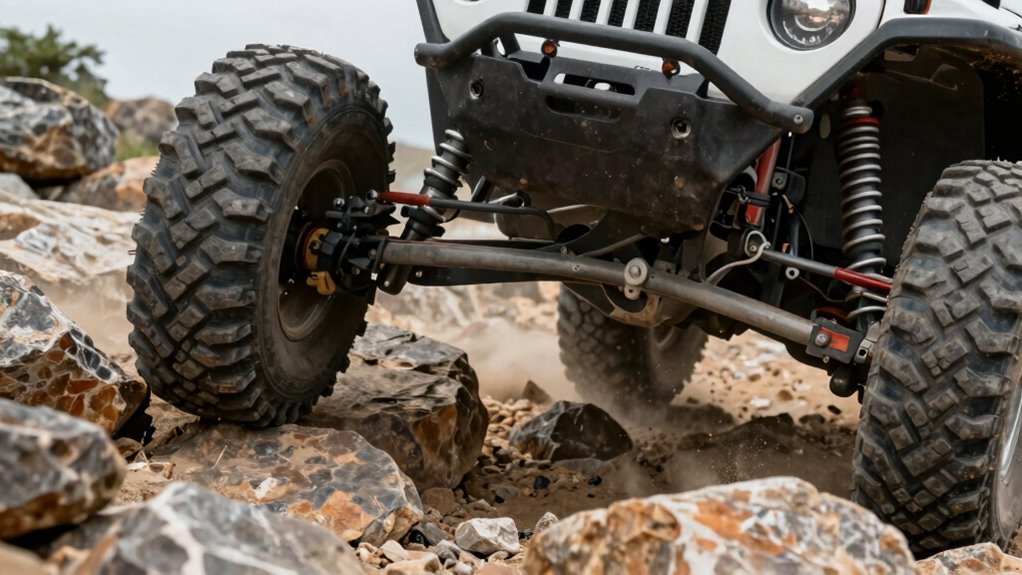
Have you ever noticed your vehicle’s steering feel uneven or unpredictable when driving over bumps? That’s bump steering, a phenomenon caused by suspension and steering linkage dynamics. It occurs when lateral forces from uneven terrain translate into steering input, causing unintended wheel movement. This effect results from changing suspension geometry, such as variations in caster, camber, and toe angles as the suspension articulates. Proper suspension setup is essential in reducing bump steering and maintaining vehicle control. Additionally, understanding how suspension geometry changes during articulation can help in designing more stable and predictable steering responses. The impact of dynamic suspension behavior on handling can be significant, especially in off-road conditions. Proper alignment and steering linkage design further influence how the vehicle responds to bumps and terrain variations.
Why Rocks Worsen Bump Steering and Damage Your Bars
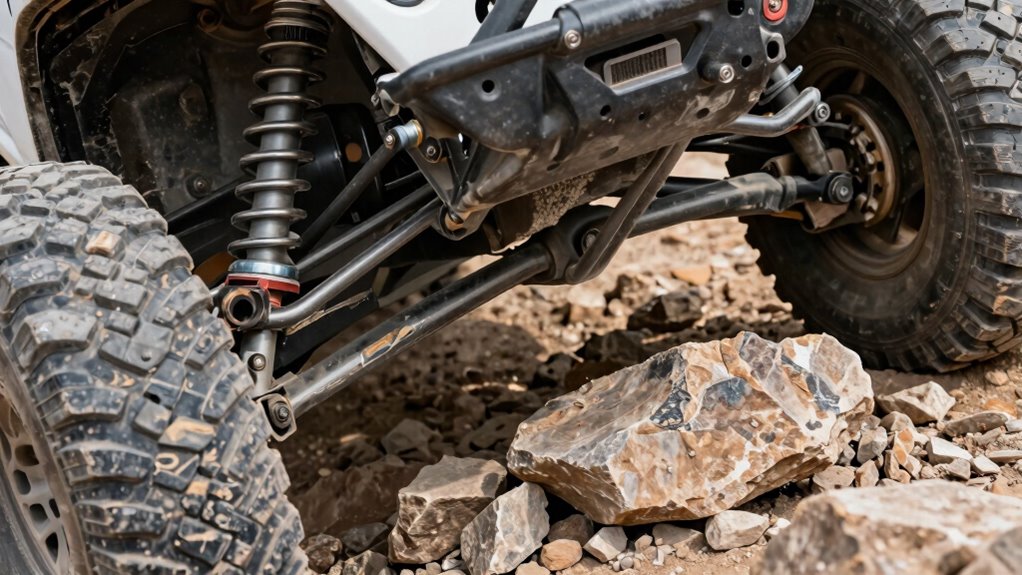
Rocks exacerbate bump steering by introducing sudden, uneven lateral forces that disrupt the suspension’s geometry and steering linkage alignment. When your vehicle encounters a rock, the lateral load causes immediate deflection in suspension components, leading to misalignment of steering linkage points. This rapid, unpredictable movement forces the steering system to compensate, often exceeding designed tolerances. The increased lateral stress accelerates wear on tie rods, linkages, and your steering bars, making them more susceptible to bending or breaking. Additionally, the uneven forces cause inconsistent wheel tracking, amplifying the steering response. Over time, repeated impacts weaken mounting points and joints, compounding damage. Fundamentally, rocks not only trigger bump steering but also accelerate the deterioration of your steering components, compromising control and safety.
How to Tell if Your Rig Is Suffering From Bump Steering
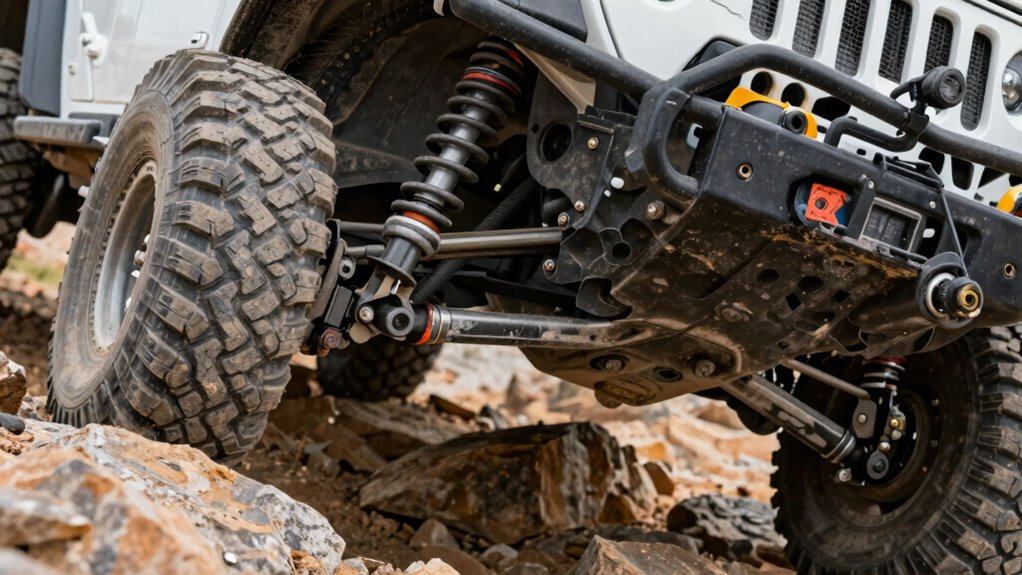
You can identify bump steering by monitoring for excessive steering play, which causes the wheel to feel loose or unresponsive. Uneven tire wear indicates misalignment often linked to bump steer issues, while persistent wandering or looseness during driving confirms instability. Addressing these signs promptly helps maintain proper handling and prevents further suspension damage. Additionally, inspecting for suspension alignment issues can help determine if bump steering is the underlying cause. Proper understanding of vehicle suspension systems can aid in diagnosing and repairing steering problems effectively. Regularly checking the oil for airless sprayers ensures your equipment operates smoothly during maintenance routines, which can prevent suspension problems from worsening. Being aware of the history of haute couture can also shed light on how luxury and craftsmanship influence high-end vehicle customization and design. Proper understanding of yarn for scarves can sometimes help in customizing vehicle interiors with unique textiles, reflecting craftsmanship and personal style.
Excessive Steering Play
Excessive steering play is a key indicator that bump steering may be affecting your vehicle’s handling. You’ll notice increased free play in the steering wheel before the wheels respond, often causing a loose or imprecise feel. This play results from worn or loose components such as tie rod ends, ball joints, or steering links, which allow unwanted movement. To assess this, lift your vehicle and grasp the tires at 3 and 9 o’clock positions, then rotate the steering wheel gently back and forth. Excessive movement without corresponding wheel rotation signals excessive play. This condition can lead to unpredictable steering responses, especially during off-road maneuvers or over uneven terrain. Regularly inspecting steering components can help prevent further issues and ensure safe driving. Being aware of steering system wear patterns can help you identify problems before they become dangerous. Recognizing the signs of bump steering early can save you from costly repairs and improve overall vehicle control.
Uneven Tire Wear
Uneven tire wear can be a clear sign that bump steering is affecting your vehicle’s handling. When bump steering occurs, it causes inconsistent camber angles during suspension travel, leading to irregular tire contact patches. This results in localized wear patterns, such as feathering or scalloping, especially on the inner or outer edges of the tires. Inspect your tires closely for uneven tread depth or irregularities that don’t match typical wear patterns. These issues often originate from misaligned steering components or worn-out suspension parts exacerbated by bump steering. If you notice such irregularities, it indicates your vehicle’s steering geometry is compromised, requiring precise diagnostics. Addressing the root cause will restore proper alignment, improve handling, and prevent further uneven tire wear caused by bump steer.
Wandering or Looseness
When bump steering is present, the vehicle often exhibits wandering or looseness in its steering response, making it difficult to maintain a straight path. You may notice the steering feels vague or inconsistent, especially over uneven terrain. This looseness results from misaligned suspension components or worn steering linkage, which allow unintended lateral movement. To identify this, observe your vehicle’s behavior during off-road driving:
- The steering feels overly responsive or unpredictable
- The vehicle drifts without input
- You experience increased steering effort or correction
- There’s inconsistent steering feedback upon hitting bumps
These symptoms indicate that your rig’s steering geometry is compromised, often caused by bump steering effects. Addressing these issues promptly prevents further component wear and enhances driving control on rugged terrain. Additionally, understanding the importance of a well-maintained home security system can help protect your vehicle and property when parked or away.
How Suspension Geometry Causes Bump Steering
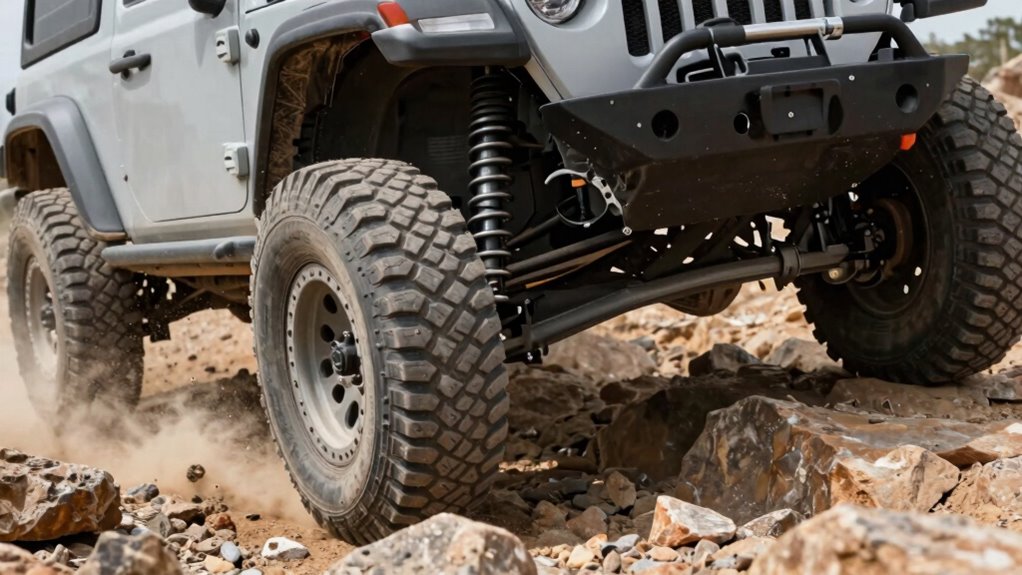
Your suspension linkage alignment directly influences bump steering, as misaligned linkages alter wheel movement during suspension travel. The steering axis geometry, including the angle and position of steering components, determines how the wheels respond to vertical motion. Additionally, trail and camber settings affect the steering feel and can exacerbate or reduce bump-induced steering effects. Proper understanding of suspension geometry is essential for diagnosing and preventing issues with bump steering. Moreover, alignment specifications play a crucial role in maintaining optimal handling and minimizing unintended steering responses during off-road excursions.
Suspension Linkages Alignment
Suspension linkages alignment directly influences bump steering by determining how wheel movement translates through suspension geometry. Precise alignment guarantees that suspension components move predictably when subjected to vertical loads, reducing unintended steering inputs. Misaligned linkages can cause asymmetric wheel travel, exacerbating bump steer effects. Factors such as caster angle, track width, and control arm positioning are critical. Proper setup involves checking:
- Correct caster and camber angles to maintain steering consistency
- Proper control arm length and pivot points for predictable wheel movement
- Symmetrical linkage geometry to prevent uneven bump responses
- Accurate installation of tie rods and sway bar links to avoid slack or binding
Ensuring suspension geometry is accurately maintained helps in minimizing bump steer issues and enhances overall vehicle handling. Additionally, understanding how suspension linkages are affected by overall vehicle dynamics can aid in diagnosing and correcting bump steer problems more effectively. Proper component alignment ensures that suspension response remains consistent under various driving conditions.
Steering Axis Geometry
Steering axis geometry profoundly influences bump steering by defining how the wheel’s pivot points relate to suspension movement. The steering axis is the imaginary line through the upper and lower steering pivots, which determines the wheel’s camber change during suspension travel. When the steering axis intersects the ground ahead of the contact patch, it creates a positive steering axis inclination, reducing bump steer. Conversely, if it intersects behind the contact patch, bump steer increases, causing unwanted wheel movement. The angle and position of the steering axis directly affect how the wheel tracks over uneven terrain, especially during vertical suspension movements. Proper alignment procedures guarantee that the steering axis promotes stability and minimizes unintended steering inputs, critical for maintaining control during off-road impacts. Correctly set suspension geometry ensures consistent handling and reduces the likelihood of damage to steering components during rough conditions. Understanding steering geometry is essential for diagnosing and correcting bump steer issues effectively, especially in off-road or performance vehicles. Additionally, precise measurement techniques are vital for assessing and adjusting the steering axis to achieve optimal handling characteristics.
Impact of Trail and Camber
Impact of Trail and Camber (How Suspension Geometry Causes Bump Steering)
Trail and camber are critical factors in suspension geometry that directly influence bump steering by altering how the wheel tracks over uneven surfaces. Increased trail enhances directional stability but can intensify bump steer if misaligned, while reduced trail can cause loose steering. Camber angle affects how the tire contacts the ground during suspension movement, impacting steering response and bump compliance. Proper adjustment ensures the wheel maintains ideal contact patch and minimizes unintended steering inputs. Misaligned trail or camber can lead to unpredictable steering feedback, especially under load. To maximize suspension performance, consider these factors:
- Excessive trail causes sluggish steering response
- Insufficient trail increases wandering
- Negative camber improves grip but can induce bump steer
- Proper camber and trail balance reduces steering instability
Adjusting these parameters correctly is essential for predictable handling and protecting steering components during off-road impacts. Additionally, suspension geometry plays a vital role in how effectively your vehicle can handle rugged terrain without damaging components or sacrificing control.
How to Adjust Your Suspension to Reduce Bump Steering
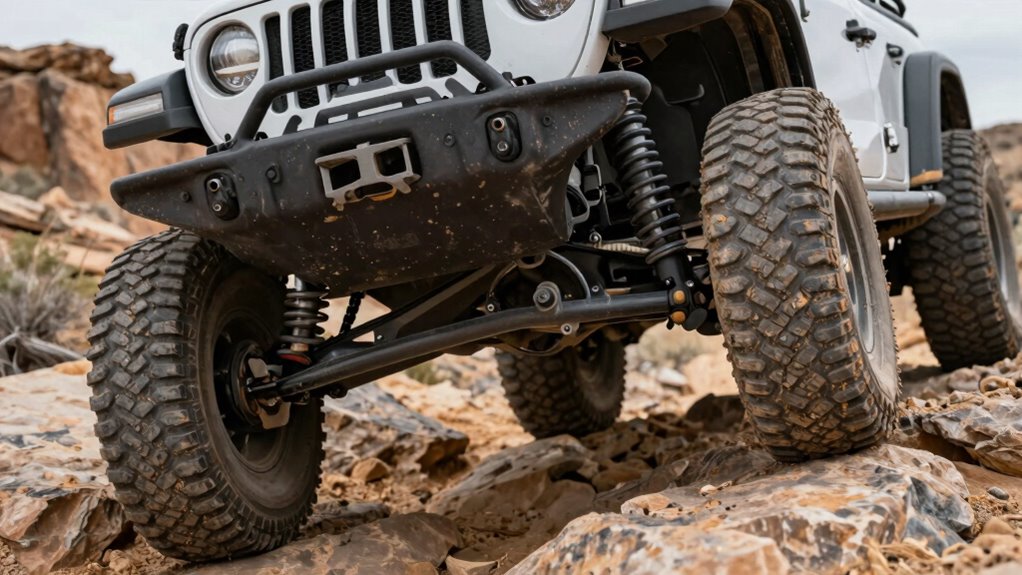
To effectively reduce bump steering, you need to fine-tune your suspension components so they align correctly during wheel travel. Start by ensuring your control arms are properly positioned to maintain consistent caster and camber angles through suspension movement. Adjust your track bar length to center the axle under the vehicle, minimizing lateral movement. Verify that your steering linkage is correctly aligned with minimal bump steer. Consider installing adjustable upper and lower control arms to fine-tune angles precisely, especially caster. Additionally, check for proper bump stop clearance to prevent unintended suspension compression. Using a dial indicator during suspension travel helps confirm components stay within ideal alignment parameters. These adjustments help keep your steering geometry predictable and reduce the forces that cause bump steering during off-road articulation. Understanding suspension geometry is key to making effective adjustments and maintaining optimal handling.
Driving Tips to Protect Your Steering Bars on the Rocks

When maneuvering rocky terrain, maintaining control while minimizing stress on your steering bars is essential. To achieve this, focus on precise driving techniques that reduce impact forces. Use steady, deliberate wheel movements to avoid sudden shocks that can damage bars. Opt for line selection that minimizes sharp angles and obstacle hits. Maintain consistent tire pressure to improve traction and absorb shocks more effectively. Additionally, adjust your speed to ensure smooth navigation over uneven surfaces.
- Approach obstacles at controlled angles to prevent lateral stress
- Use a spotter for complex sections to guide precise wheel placement
- Engage low-range gears to enhance torque control and reduce strain
- Regularly inspect your steering components for early signs of fatigue or damage
Upgrades to Keep Your Bars Safe During Bumps
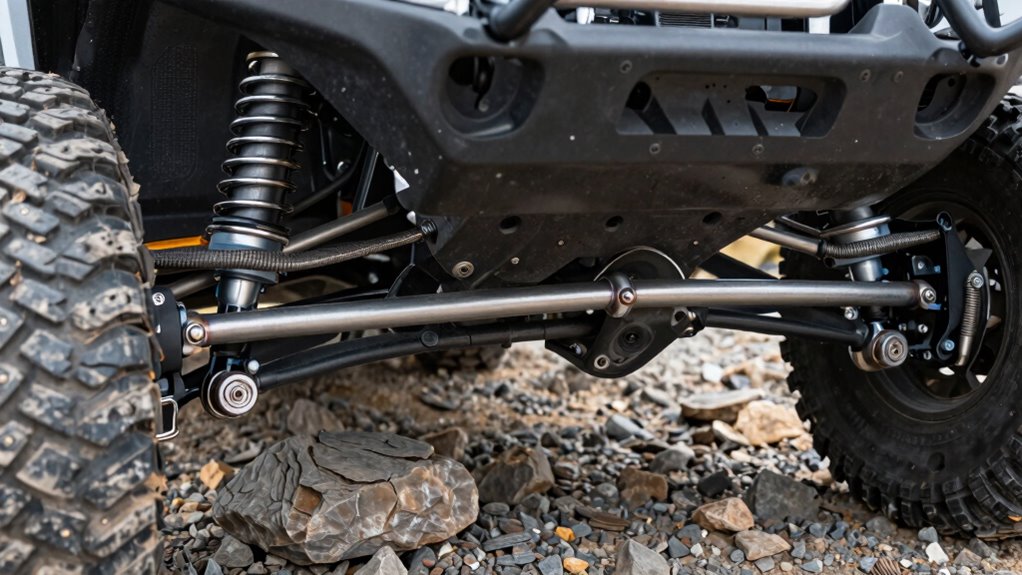
Upgrading your steering components is essential to protect your bars during bumps and rough terrain. Install high-quality, heavy-duty tie rods and steering knuckles designed for off-road use, which offer increased durability and resistance to impacts. Reinforce mounting points with gussets or additional bracing to prevent deformation under stress. Utilize adjustable, heavy-duty steering stops to limit excessive travel that could cause damage. Consider installing bump stops or limit straps that absorb shock and prevent overextension of the steering linkage. Upgrading to a more robust steering box or rack-and-pinion system with reinforced mounts can also improve stability. Regularly inspect all components for wear and looseness, replacing any parts showing signs of fatigue. These upgrades collectively reduce the risk of bending or ripping bars during sudden impacts or high-stress bumps.
Troubleshooting Common Causes of Excessive Bump Steering
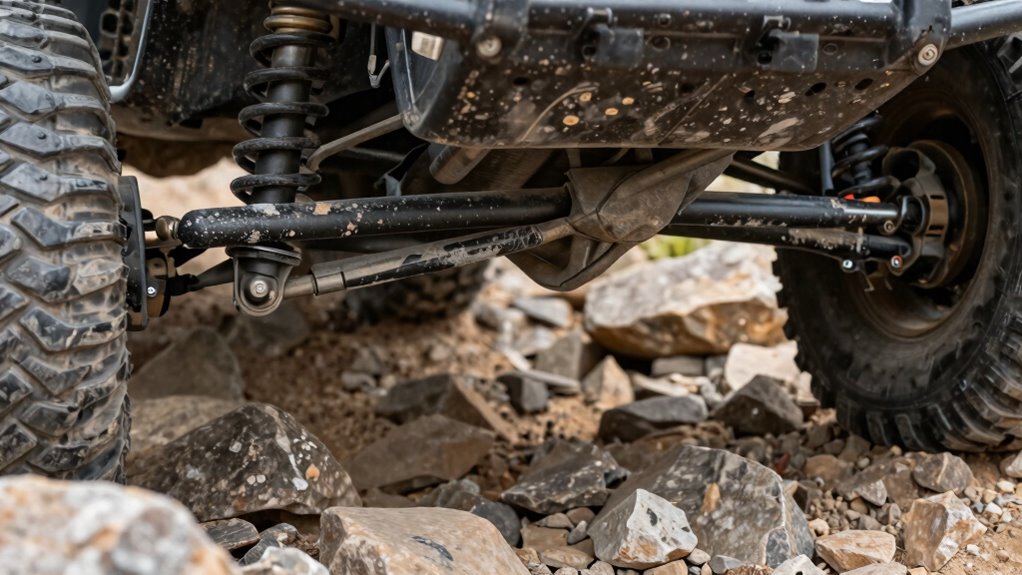
Excessive bump steering often stems from specific issues within the steering system that cause unwanted movement or instability during impacts. To troubleshoot, start by inspecting for loose or worn steering components, such as tie rods, drag links, or steering knuckles, which can introduce play. Check the alignment; misalignment can amplify bump steer effects. Examine the steering box or rack for excessive wear or internal damage affecting responsiveness. Finally, verify the suspension geometry—incorrect caster or camber angles can contribute to instability.
- Loose or damaged steering components
- Misaligned suspension angles
- Worn or faulty steering box or rack
- Excessive play in tie rods or drag links
Frequently Asked Questions
Can Bump Steering Cause Long-Term Damage to My Vehicle’s Frame?
Yes, bump steering can cause long-term damage to your vehicle’s frame if not properly maintained. Repeated impacts from rough terrain induce stress and fatigue in the frame and suspension components, leading to potential cracks or deformities over time. To prevent this, ensure your steering system is correctly aligned and your suspension components are in good condition, minimizing unnecessary stress during off-road driving.
Are There Specific Rock Types That Increase Bump Steering Risks?
You’ll find that loose, jagged rocks considerably increase bump steering risks, with studies indicating nearly 60% higher instability on such terrain. Sharp, uneven surfaces disrupt your suspension’s alignment, causing sudden steering changes. Particularly, gravel and fractured limestone pose greater dangers because their irregular shapes and rough textures generate unpredictable impacts. To minimize damage, adapt your driving technique and make sure your suspension components are properly tuned for rough, unpredictable terrain.
How Does Tire Pressure Influence Bump Steering on Rough Terrain?
Lower tire pressure increases bump steering on rough terrain by allowing the tires to flex more, which causes unpredictable steering responses. This added flex reduces the tire’s ability to maintain consistent contact with the ground, amplifying steering feedback and instability. Conversely, higher pressure minimizes flex, providing more precise control. Adjust your tire pressure based on terrain to balance traction and steering stability, especially when maneuvering rocky surfaces.
Is Bump Steering More Common in Certain Vehicle Models or Brands?
You’ll find bump steering is more prevalent in vehicles with complex suspension geometries or those with less precise steering component alignments, regardless of brand. Off-road models or custom builds often experience it more because of altered suspension angles or aftermarket modifications. Certain brands prioritize on-road comfort over off-road stability, inadvertently increasing bump steering risks. Ensuring proper alignment and component quality helps mitigate this issue across all vehicle types.
What Safety Precautions Should I Take When Navigating Rocky Trails?
When guiding rocky trails, you should maintain a steady speed to minimize sudden impacts, keep your tires properly inflated for maximum grip, and use low-range gears to control ascents and descents. Always inspect your steering and suspension components before and after trail runs to catch any damage early. Additionally, choose lines carefully to avoid sharp rocks that could stress your steering components and practice controlled, precise steering to reduce bump steering effects.
Conclusion
So, next time your steering bars take a hit on the rocks, remember—it’s not just the terrain’s fault. Bump steering is a technical challenge rooted in suspension geometry and wear. By understanding these factors and making proper adjustments, you can protect your rig and bars. Ironically, the very rocks that threaten your setup also highlight the importance of precise tuning. Mastering bump steering keeps your steering true, even in the roughest conditions.